NAR Explained: Who Made These Men Apostles?
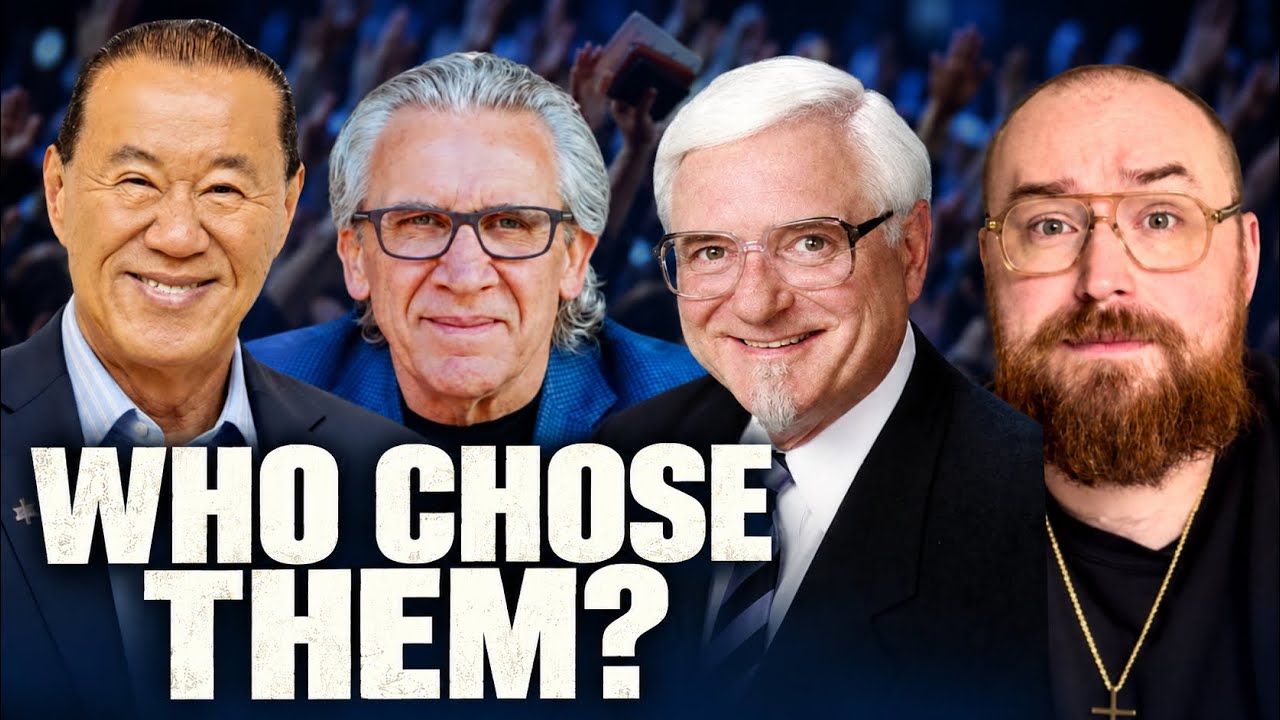
🔗 **Source:** [NAR Explained: Who Made These Men Apostles?](https://www.youtube.com/watch?v=B2fzerzAg84)
[00:00:00] In 2008, 17 apostles stood with Todd Bentley at the Lakeland Revival. They weren't just there to wish him well. See Peter Wagner called it a public ceremony of apostolic alignment. Three of those leaders, Jayon, Bill Johnson, and John Arnot, laid hands on Bentley and commissioned him as an evangelist. And then within weeks, Bentley's marriage separation became public and he left the revival. Now, I've already done a whole video about Lakeland last week. I'm not going to make you sit through that story all over again. But while I was working on it, I kept getting stuck on one question. Who made those guys apostles? And I don't mean that as a cheap shot. I actually want to know. What does the [00:00:44] title mean? How does somebody get it? How much authority even comes with it? And if you're going to stand on stage and put your spiritual reputation behind somebody, what happens when you get it all wrong? because it seems to me that the bigger your claim of authority is, the bigger your responsibility is when people trust you. And that's what this video is going to be about. So, welcome back everybody. Welcome back to the channel. My name is Donald Schroed. And on this channel, we look at church history, the charismatic world, and the stuff we'd sometimes rather leave unexamined. Now, if you want to support these videos, I encourage you to visit our new Patreon. The link will be down below. There are some extra materials over there, extra videos. We're going to be putting up our notes for the videos up
[00:01:27] there as well. And again, the link is down below in the description. So, this is the first video in a three-part series on the New Apostolic Reformation or NAR. Today, we're talking about its apostles. The next video, we will get into the teachings. In the third, we will look at what the system means for actual churches and the people that are in them. So, before we get into this, let me tell you where I'm actually coming from. So, I am a charismatic. I'm a charismatic pastor. I've been around churches and networks that other people would call NAR. A lot of the people in those churches would probably have no idea that the label was being applied to them. And honestly, for a long time, I didn't think NAR was much of a real thing. I'd mostly heard it used as a boogeyman, a way to lump together [00:02:11] everybody who believes in prophecy, healing, and spiritual gifts. And I think that still happens, and I don't think it's fair. But I also can't pretend there aren't real people making real claims about apostles, prophets, and who gets to lead the church today. And we should be able to talk about those claims without turning every charismatic we don't like into part of some giant conspiracy. And I'll be even clearer with my own position about all of this. I believe that apostles are real. I believe apostolic ministry can and should continue. So this is a question I have to take seriously, too. I'm asking whether the authority claimed by some modern apostles actually follows from the Bible. And if it doesn't, being a charismatic doesn't require me to go
[00:02:54] along with it. And I need you to understand that studying this has been really sobering for me. It's been difficult. Some of the people we're talking about have been heroes of mine. They've helped shape how I think about God and ministry. So looking closely at their teaching means I also have to take a closer look at what I actually believe and why I still believe it. And I don't think that that's deconstruction as it's uh trending. I think it's part of growing up. I can be grateful for what somebody gave me and still come to the conclusion that they got something wrong. But knowing that doesn't make it easy and it hasn't been. So I'm not sitting here foaming at the mouth excited to do another takedown. And I think you should be wary of channels [00:03:36] that are like that. I'm grieved by some of what I'm finding. And I'm still willing to do the work because I want clarity. I want integrity. If I'm going to teach people, I need to be willing to examine the things that I've accepted even when that gets very uncomfortable for me. Okay. So, what is NAR in the first place? Like what are we even talking about? So, see, Peter Wgner was the guy who gave the New Apostolic Reformation its name. In his explanation, he said he tested the name back in 1994. He described a change he saw happening in churches around the world. And the biggest part of that change in his view was apostolic governance. That phrase, it sounds complicated, sounds vague. And here's
[00:04:19] what it means in plain English. Churches and ministries voluntarily connect with an apostle and that apostle helps lead, guide, or oversee them. Wgner said NAR was a movement, not an organization. There's no NAR office where you buy a membership card and wear dark hoods. There's no complete list of everybody who belongs to it. And that's, I think, why the label gets really messy. One critic might use NAR to describe a specific set of ideas. Another might use it basically for every charismatic church they don't like, maybe because they have flags and tambourines. And a pastor could follow some of Wagner's ideas without ever calling their church NAR. So for this series, I want to look at the actual claims like what does a leader even teach? What do they ask the [00:05:04] church to do? What authority do they say God has given them? Those questions are more useful than trying to pin a label on somebody. You know, there's a pastor and theologian named Sam Storms who's been very helpful with all of the study. He believes some form of apostilhip continues today. He also rejects nar the NAR model of apostles governing local churches. And like you don't have to agree with them, but he shows why the argument can't be reduced down to do you believe apostles exist? Yes or no? Because I do believe they exist. I still need to know what somebody means when they call themselves one, though. Like, are we talking about a missionary who's been sent to plant churches? Are we talking about a gifted leader other
[00:05:47] pastors go to for advice? Or someone who says their calling gives them authority to tell whole churches what to do in a network? Those are all very different claims. We have to stop treating them as though they automatically go together. And honestly, this language has frustrated me for years. In the charismatic movement, we say apostle like everybody in the room knows what it means. Then you start asking questions and find out we're using the same word completely different or completely differently. The same thing happens with the the term prophet. Sometimes I think these titles can become a way of feeding our own insecurity. We want to know that we matter, that God has called us, that people take us seriously, and a title can feel like it settles all of that. I am Prophet Donald Trod. Now, people have to recognize us now. They have to listen [00:06:31] to us and attend our conferences. And I can't tell you what's going on in every person's heart, but I do think we need to be honest about the temptation, especially those of us who are in ministry. Like, am I using this word to describe how I serve people? Or am I asking it to give me the validation that I feel like I've been missing? If somebody has a calling, we should be able to talk plainly about what they actually do, who they serve, and how they can be corrected. The title shouldn't make that conversation more confusing. And like on a side note, at Bethl, it was always very confusing because though they talked about it a lot, Bill Johnson wouldn't say he was an apostle. I've never heard him call himself an apostle. Everyone else called him that. And I think that looked like humility back when we were in that
[00:07:14] system, but now it's kind of like, but that makes it more confusing because if you're not even willing to accept it because maybe you think it's not humble, then how can we build whole theologies around teaching it to students internationally? So why would anyone believe apostles needed restoring? I think that's a major question or elephant in the room when it comes to this. And I think it helps to understand why this even sounded exciting in the first place. Uh, and let me tell you how I see the the people behind it. I don't believe these were simply wicked men sitting around trying to figure out how to deceive Christians for more power and money. Regardless of how you see it painted online, I think many of them sincerely wanted to bring unity and safety to the church. Because let's be honest, the independent, [00:07:57] charismatic world can feel like the wild west. You go, you're going to churches, you're going like they're all going in different directions. ministries are splitting off and leaders doing their own thing. Like, who do you turn to for help? And this isn't just the charismatic stream. I think this is like Protestantism in general. Like, who knows you well enough to tell you when you're getting off track? And I can understand why connecting churches with experienced leaders sounded like the answer. And a heart for unity isn't wrong. It's biblical. Jesus prayed for his people to be one. Ephesians 4 calls us to maintain the unity of the spirit. Wanting churches to work together and wanting pastors to have support are good desires. But I think well-meaning people can
[00:08:39] build a system that other people can learn how to exploit. Someone can offer spiritual oversight because they want to help. Someone else can use that same language to gain control and like avoid questions or benefit financially at other people's expenses. We've seen a lot of that in this last year exposed. And I can't again I can't know every man's motives and neither can you. I'm telling you why I can take their attention seriously and still have concerns about what developed, what parts of this movement became and what those structures allowed and why we're even looking at it now. A good intention still leaves us responsible for examining the results. So Wgner was a missionary and later a church growth professor at Fuller [00:09:23] Seminary. He had spent years looking at churches that were growing outside of the usual denominational structures. He had also worked alongside John Whimber in the signs and wonder movement. Let's go John. Another important figure here was uh was Bill Haymon uh who taught that God was restoring different ministries to the church in stages. in his timetable. Prophets came back into prominence in 1988 and apostles in 1998. Now, I can see why restoration uh language lands with Christians. You read Ephesians 4 and see apostles, prophets, evangelists, pastors, and teachers, and then you look around and ask, well, why do we have pastors and teachers or sometimes maybe evangelists, but we get
[00:10:08] nervous about the other two? And I think that's a fair question and I don't want to dodge it because I think we have been dodging it for a very long time and then we get angry at NAR for trying to explain it. But before somebody tells me God restored an office in 1998, I want to ask well restored what exactly? People preaching the gospel in new places. Well, that never stopped. People planting churches that that didn't stop either. Are we talking about a gift, a title, a position over other churches? the kind of authority you can't really question because the leader says it comes straight from God. I think that's where we have to slow down together. And here's an interesting piece of history. Pentecostals were asking these questions decades before Wgner came along. In the late 1940s, there was a revival movement [00:10:52] in Saskatchewan called the New Order of the Latter Reign. People were hungry for the gifts and power of the spirit. There were also teachings that worried other Pentecostals, including the idea that today's apostles and prophets should hold a foundational office over the church. In 1949, the Assemblies of God rejected that particular teaching. I bring that up because the people raising concerns believed in the Holy Spirit and the gifts. They weren't saying that God can't do anything supernatural anymore. They were saying, "Wait a second. What authorities are these people com claiming? [snorts] You might think the Assemblies of God got the answer right. You might not. But the fact that the debate was happening inside Pentecostalism matters. And to be fair,
[00:11:35] I'm not saying every idea 1948 movement traveled in a straight line to Wagner or everybody today. History usually isn't that straightforward or that tidy. The point is simpler. The church has been wrestling for a long time with what an apostle is and how to test one. So, how does somebody even get the title? Do you just like apply for it online? Do you just like pray for it and God eventually gives it to you if you fast enough? Well, Wagner did have an answer to that question. He said, "A true apostle isn't supposed to appoint themselves." Half the charismatic audience just logged off. [laughter] God gives the gift. Other leaders see the fruit and respected leaders [00:12:18] recognize and commission the person. Honestly, some of that sounds sensible. If I tell you God called me to lead people, my private certainty shouldn't be the only thing you have to go on. Other Christians should know me, see what I do, and have something to say about my character references. But here's what my next question comes in. Like, what does their recognition actually authorize? One prominent coalition in this world is called the International Coalition of Apostolic Leaders or ICAL. Its own history says John Kelly organized the coalition. Wgner became its preciding uh apostle in 2001. According to ICAL's membership policy, someone joining needs to have already been recognized as apostolic by
[00:13:03] others. Normally, two members nominate them. They also uh name somebody they're accountable to. And ICAL explicitly says joining the coalition doesn't make anyone an apostle. That recognition comes from the person's own ministry or network. So, if somebody tells you there's a fee and therefore you can buy an apostle title, that's a bad way to describe what the policy says. But the policy does raise questions I think that we're allowed and we should ask. What if the original network got it wrong? Who can remove the person from leadership? What if someone is harmed under that person's authority? Who hears that person's side of the story? ICAL says it has a conduct code and an advisory council while describing itself [00:13:47] as a secondary form of accountability. Okay, then where is the primary accountability and how does it work? I'm not asking because I assume everybody involved is crooked. I ask because these are questions I would ask about my own church and that we've been asking about Bethl for a long time now. If I called myself an apostle over 20 churches, I would expect people to ask me more questions, not fewer. So, let's look at the Bible. Like, what does the Bible actually call an apostle? So, when we open the Bible, like, all right, so we need to open the Bible first of all, and we should be this whole time looking at the Bible first and foremost, not YouTube videos. Come on, guys. Like, I'm going to keep this part as clear as I can because there's a
[00:14:30] lot here, and I don't want you to need a seminary degree to follow it. I try to keep these uh videos as compact as possible, but they are dense. So, first uh there are the 12. We all know the 12. The 12 disciples in Acts one. When Judas needs to be replaced, the disciples look for somebody who had been dealing with Jesus during his earthly ministry and could testify to his resurrection. So, that is a job that nobody alive today can go back and qualify for. We have to be clear about that. But apostle wasn't limited to those 12 men. Paul wasn't one of the 12. He appeals to his encounter with the risen Jesus when he defends his apost apostilhip. Acts 14 calls both Paul and Barnabas apostles. [00:15:15] And Romans 16 mentions Adronicus and Junia. There is a real debate about how to translate and understand that verse, but I believe Junia was an apostle. And I'm not going to pretend everybody agrees with me on that. A lot of you probably don't. That's okay. My point is that when someone says there were only 12 apostles, the New Testament makes that answer too simple. On the other hand, the Bible can also use the word for someone sent as a church's representative. The word behind messenger in a couple of Paul's letter is the same Greek word. Being a messenger doesn't automatically give you Paul's authority. So, yes, I believe apostles are real, but this one word covers more than just one situation. If you're going to use Barnabas and Junia
[00:15:57] to defend an apostle who rules over a whole network today, you have to explain how you got from one to the other. Now, look at Ephesians 4. Christ gives us apostles, prophets, evangelists, pastors, and teachers to equip the church and help it grow up. That's one reason I believe apostolic ministry can continue. The church still needs to be equipped. We're still growing toward maturity in Christ. But the passage also tells us what the ministry is for. It's supposed to help God's people become mature. It doesn't say, "Give somebody a title and the rest of you stop asking questions." Then Ephesians 2 uses a different image. Paul says, "The church is built on the foundation of the apostles and prophets with Jesus as the [00:16:40] cornerstone." So think about a foundation. It has a unique job. You don't keep relaying the foundation every time you build another room. So here's how I understand the concern. The first apostles helped lay something down for the whole church. Paul had a particular commission and his teaching still shapes Christians or what Christians believe today. So if somebody today says they are doing apostolic work, planting churches, strengthening leaders, being sent into new places, like I can have that conversation. If they mean I have the same kind of foundational authority Paul had, that's a much bigger claim and I need need to show them where the Bible gives I need them to show me where the Bible gives
[00:17:22] them the authority to do that. And there's one more verse that people keep bringing up which is first Corinthians 12. Paul says God appointed apostles first then prophets and then teachers. People always said I had a teaching gift and in my immaturity when I was young I was like man I'm third in line. So okay I I take that seriously but first in that list does not by itself tell me the rules for governing every church uh network later the chapter is also about different people needing each other as members of one body and Lord knows the so so-called apostles need teachers but a lot of teachers need vision that apostles often bring. We can debate what priority Paul means. We can't get a complete constitution for modern [00:18:06] apostles from one word. That's really the Bible question of this episode. Even if apostles still exist, what authority does scripture give them over the church or over other Christians? And I don't want to make this easy for myself by pretending the original apostles just traveled around giving friendly suggestions. Paul corrected churches. He sent people to help them. He confronted sin, something I don't think we do often enough. In Acts 14, Paul and Barnabas appointed elders in churches they had planted. They exercised real leadership. They knew the people and the people knew them. So if you say, "Well, Donald, the the apostles in the Bible had authority." Yes, I know they did. The
[00:18:50] question is whether a person today gets to claim the same authority just because other people call them an apostle. Look at what Paul tells church leaders to care about. In Acts 20, he charges the elders in Ephesus to watch over the people. He even warns that dangerous leaders could arise from among their own group. In First Timothy, when Paul lists qualifications for overseers, he spends a lot of time on character, self-control, how a leader behaves in their own home, whether they can teach, whether other people have good reason to even trust them in the first place. Peter tells elders to take care of the people entrusted to them without lording it over them. cut to a a clip of people bowing before [00:19:33] Katherryn Craig, right? None of that becomes less important when we add an impressive title. I think sometimes we get so caught up in is this person anointed that we barely ask like how do they treat people? Do they even look you in the eye when you talk to them? Can they be corrected? Do they tell the truth? We s we saw in Lakeland how expensive it can be when those questions come too late. There's also a small piece of early church history I want to mention here because it surprised me. An early Christian document called the dedicay expected traveling apostles. It also told churches to test those vis visitors and to appoint trustworthy local leaders. So the early Christians were
[00:20:15] already doing both things. Making room for people who were sent out and asking how a community could recognize someone is trustworthy. Later church history gets more complicated. Some Christians see bishops as successors to the apostles. Others understand that history differently. We'll get further into church government in the last video of this series. But for today, the practical question, I think, is enough. If an apostle claims authority over a church, how can the people in that church know what the authority oludes and how can they challenge it when they need to? So, I want to talk about a word we hear a lot about. Uh covering. I know that uh word appeals to people. [00:21:00] Pastors need help. Uh church planting is hard. Having older leaders who know you and will tell you the truth can be a gift. It can also be uh a triggering word if you've been in an abusive church environment. But I want to know what covering means when something goes wrong. If your apostles say they can guide you, can they also be challenged? If they tell people to trust their judgment, will they take responsibility when they judge poorly? Have they? Do you think they will today? If a person under their care brings a serious complaint, is there an actual process for hearing it? When we've been watching everything that's going down with Bethl, it's been nothing but a big question mark. The question isn't an attack on relationships. It's what make those
[00:21:43] relationships safer and more honest. We have a warning from charismatic history here. In the 1970s, the shephering movement emphasized submission and spiritual oversight. The relationships could be could begin with sincere desire to help people grow to disciple them. But there were also serious abuses and one of its leaders, Bob Munford, later apologized for the harm. I'm not claiming Wgner copied shephering or that every person who says covering means the same thing. I'm saying charismatic Christians have already learned painfully that good intentions don't answer every question about a spiritual authority. So, let's go back to the moment that started this video. In Wagner's report on Lakeland, [00:22:27] he said that he and his wife Doris had not met Bentley before the ceremony. They met with him beforehand. Wgner described a small disagreement over the wording of the event and said Bentley accepted his decision. Wagner took that as an encouraging sign about Bentley's humility and respect for authority. Now, maybe Bentley was respectful in that conversation. I have no reason to say that he wasn't. But one agreeable conversation can't tell you how somebody behaves in private. We know that. I can't tell you everything you need to know about a marriage or whether a person's account of their life holds up when you speak to the people closest to them. That takes time. It takes honest witnesses. It takes like doing life
[00:23:10] together and sometimes it takes the courage to slow down a very exciting public event like a revival in 2008. I want to be fair about what happened on that stage. Wgner's account says that they were commissioning Bentley as an evangelist in bringing him into apostolic alignment. Bentley wasn't being made one of the apostles in that ceremony. My question is about the judgment of the apostles who endorsed him. I'm not asking those leaders to know every hidden thing about Bentley. Nobody can do that. A failure of judgment in one event doesn't prove that apostles don't exist. But if you publicly tell Christians that a leader is receiving this kind of oversight, it matters whether the oversight has any weight when the story changes. What did [00:23:54] these leaders actually know before they stood with him? What responsibility did they accept by doing that? What did they tell the people who had trusted their judgment afterwards? I mean, those are the questions I was left with after Lakeland. And then the questions I would ask regardless of whether the person on stage was called an apostle, a bishop, a pastor, or anything else. Because the disillusioning part about that ceremony is that when everything like fell out, it's like, okay, so were you guys just up there because it looked good and it got your name before a global audience, or was there actually more meaning behind it because you wanted to steward the things of God? It was probably a mixture, a hybrid of the things, right? It was probably a bunch of gray area in
[00:24:38] there, but still very disillusioning considering what happened the weeks after with Todd and his wife. So, who made these men apostles? Well, their answer would be that God called them and other Christians recognized that calling. They would probably talk about the fruit of their ministry. Okay. But that answer deserves to be heard. It also deserves to be examined. What did the people recognize? What kind of work was the person doing? What authority did they say followed from it? And could anybody hold them to the same standard they placed on others? I believe that apostles are real. And I'm open to seeing apostolic ministry in people who plant churches, strengthen leaders, and go where other people won't [00:25:20] go. But I don't want us to become so impressed by the word apostle that we stop looking at the person, their teaching, and the way they treat people. It's more than just building a massive brand and having a big Instagram following. I don't want ordinary Christians to feel like they're being rebellious for asking who is responsible when something goes wrong because that's what we've been facing as of late and it's infuriating and completely irresponsible of the shepherds. Jesus commended the church in emphasis for testing people who claimed to be apostles. Think about that. The church was allowed to test the claim. And Jesus thought it was a good thing. And that's where I land. If somebody has a calling from God, honest questions about it
[00:26:03] shouldn't be frightening. Those questions might help protect both that person and the people they serve. But there's another question we haven't answered yet. That if these leaders believe God has given them a special role in guiding the church, where do they believe they're guiding it? Where do they think they're taking it? Do they share where they're taking it? What are they teaching people about hearing from God, about prophecy, about spiritual warfare? And when they talk about bringing God's kingdom into the world, what do they mean? Like what is the practicality of it? That is something that has been like a pet peeve, I think, of mine for years now with the charismatic movement. There is so much vague language that gets people hyped up from the stage, but the practicalities [00:26:46] just aren't there. And so you kind of leave with again vague language, not knowing how to actually apply it. It's kind of like floundering. And does the pastor even know or are they just quoting the the buzzwords, the the trending phrases of the current day charismatic movement? So when I say like when they're talking about bringing the kingdom into the world, like what do they mean? Well, that's the next video. We're going to look at the beliefs associated with NAR, including new revelation, declarations, and the seven mountains idea. We'll explain what those words mean and look at what specific leaders actually teach because they don't all agree and they don't all teach the same thing. Sorry guys, it's not that easy. I want to
[00:27:30] understand why these ideas appeal to Christians. Why why did why did they appeal to me? where they where the arguments are coming from and whether they hold up when we actually open the Bible and hold it to Jesus's teachings and the teachings of the apostles. We've started with people claiming authority. Next, we're going to examine the message they're asking people to believe. But for now, tell me what you think down below. Like, do you believe apostles continue today? Try not to be super snarky. And if you want to be snarky, write it out first and have, I don't know, someone edit before you post it. when somebody claims that calling, that calling of being an apostle, what would help you trust that they are using it? Well, so guys, let me just pray for [00:28:13] you. Father God, I lift up every single person watching this video. And I pray that you would give them increased discernment and love for your word, love for ministry, love for their church, that that these videos wouldn't serve for people just to deconstruct and say that they have a justification for being bitter, but this is actually something for them to think for themselves and to open up their word and let you, Holy Spirit, lead them into all truth. Thank you, Jesus, for blessing us. In your name we pray. Amen. Guys, if you like this video, subscribe. If you like it, comment down below. Give it a like. Let me know what you think. And we will see you guys next time., NAR Explained: Who Made These Men Apostles?, Donald Shrode, 01m423r80yf52wc9j6rz7rtjz3.