Not Original, Not Sin
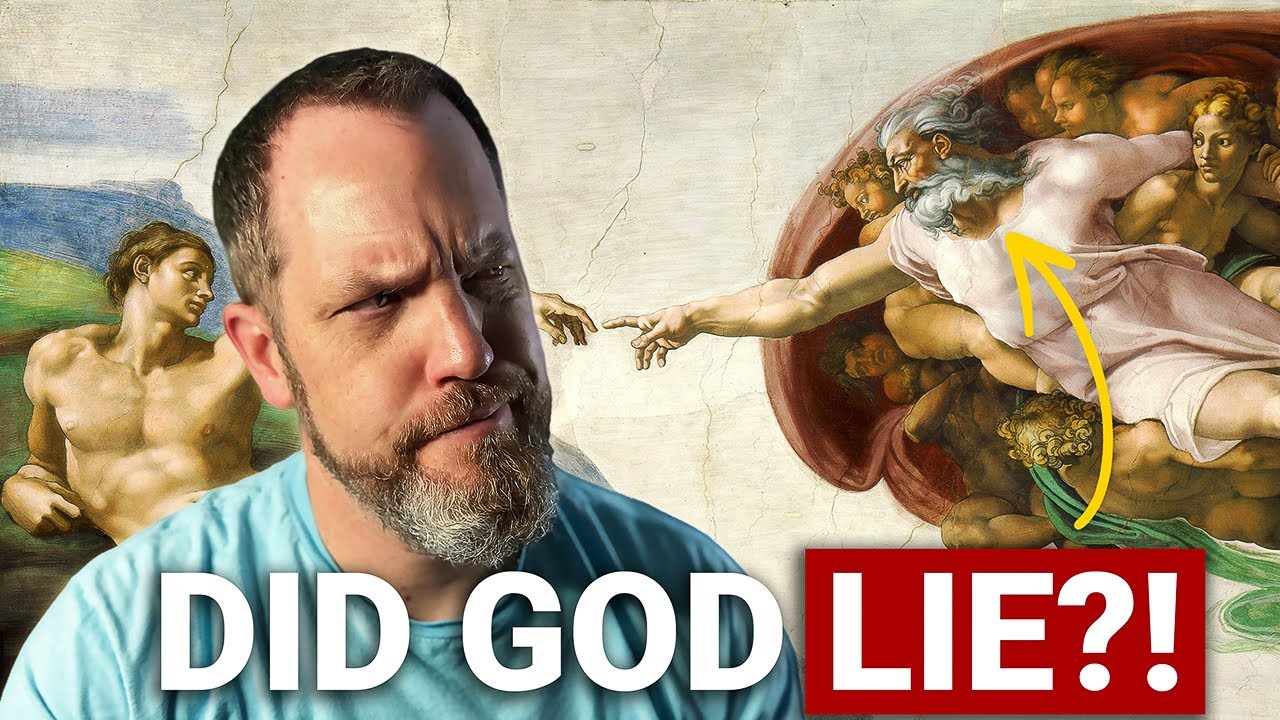
So, here's where I'm going to say something that is is going to annoy an awful lot of people. You can define sin about as well as you can define what, six, seven. It's 100% vibes. Hey everybody, I'm Dan Mlelen. >> And I'm Dan Beecher. You're listening to the data over dogma podcast where we increase public access to the academic study of the Bible and religion and we
combat the spread of misinformation about the same. How are things today Dan? >> Oh man, I'm feeling sinful. Just absolutely sinful. >> That's kind of your baseline, isn't it? >> That's just norm. That's like standard. But like also feels like it was just born there. You know what I mean? >> Oh. Oh, okay. Uh yeah, that's me tipping off what we're going to be talking about. I guess I'm very subtle. Uh I don't know if you guys know that about me, but >> that's uh that's also your baseline. Subtlety.
>> Subtlety is uh I it's it's one of the the great markers of my character. It's true. So today we're going to be talking first uh first we're going to do a uh chapter and verse >> and we're going to talk about the Garden of Eden and we're going to talk about Adam and Eve specifically. We've talked a lot about Genesis 1, two, little three, little four. >> Mhm. >> We're mostly doing two into three now. We're going to get that creation, not the creation story, the fall.
>> Yes, >> the fall. >> We're going to talk about some of the peculiarities of this story as well. things that the the unanswered things where we do an awful lot to fill in the gap. There's a lot of frog DNA that we're just chucking in there >> to fill in the gaps. >> And that results in a weird Adam and Eve story where uh you know the they can turn invisible and all. Yeah, sure. Why not? >> A asexual reproduction. It's or not as what do you call it? Um yeah, I don't
know. Abiogenesis, let's call it that. >> Absolutely. >> As a result of that. Yeah. Rare species of frog DNA. Get >> if anybody should have something to do with a biogenesis, it's Adam and Eve. I would. So, I think that's great. >> My uh my my high school daughter is reading Jurassic Park right now in uh in in her class. And so, we got her some couple of her own copies and uh and and it's fun to revisit what it was like to read that book back in the '9s. >> They made a book of that. That's
interesting. >> They did. They did make a book out of they decided the movies were so successful they might as well write a book and uh and a book that was so good I ended up reading pretty much everything else that Michael Kiteon wrote and uh and then watched some of the movies they made of those things which were not as not nearly as good. So >> yeah. Well, Spielberg tends to make a fine movie. Anyway, >> yeah, he does. Moving on. >> Uh in the second half of our show, we are going to sort of jump off from that and we'll do a a what is that about original sin.
>> Yeah. So that'll be exciting and fun and weird. >> So hot right now. Yeah. >> Everything about the Bible is weird to me. >> So let's dive in with chapter and verse. >> All right. Uh you said you wanted to start in chapter 2. Now most of chapter 2 is is Adam sitting around in a garden all by himself and God trying to make him less bored. >> Yeah. Twiddling his ribs. Um and
the the the garden of or uh garden of Eden story really starts in the second half of Genesis 24 and then runs through the end of Genesis chapter 3. So 3:24 is the end of the garden of Eden story. Chapter 4 is a different story altogether. But we get this this creation account. All this is happening on one day. We've discussed in the past about how Genesis 1:1 through the first half of Genesis 2:4 is a separate creation account. It's an entirely different creation account that is trying to correct a lot of the stuff
that's going on in our creation account. But we have in verse 7, then the Lord God formed man from the dust of the ground and breathed into his nostrils the breath of life and the man became a living being. And you know, reams and reams of of uh books have been written on this passage alone. But I I really like the theory that what we have is basically a divine image being made where cuz in in this time and place
divine images would have been made primarily of clay >> uh but also of stone and things like that but we can represent it as clay and then there would there would usually be some kind of enlivening ritual or activation ritual where the the agency of the deity would enter the statue and or the standing stone probably. Uh and and here we have a very similar thing where the dust of the ground is this is where clay comes from and the the word
formed there is if I'm not mistaken uh it's yatsar. Yeah. Yatsar which is the word that is used to refer to using making pottery using making clay >> and uh and then breathe the breath of life into the human's nostrils. And this is one of the illustrations of the fact that breath was considered fundamentally constitutive or constitutive for all the people who feel like correcting my pronunciation uh of life. Uh and so
breath is what uh causes life to be in this story. And then God plants a garden in Eden and chucks the the man in there whom he had formed according to verse 8. >> Yeah. Uh, and we we've talked in the past about how there are some there's some squirrely translation going on in these passages where the translators try to turn past tense verbs into pl perfect verbs. And and basically what that means is they change God caused this to happen to God had caused this to happen because
the order of events in Genesis 2 is different from the order of events in Genesis one. Yes. >> Sure. Uh and and and he so you've you've got God planting this uh this garden. Yes. >> And he throws in a couple trees. >> Yes. >> Very curiously, >> I think. I think it is so weird to throw in trees that he knows it's it's like it's like putting a a a
power socket into a room into the baby's room. >> Uh without you know without any covers or anything and just being like don't touch that now. >> Yeah. It's like mcguffin central. We like God has no use for these trees. God is is uh just created this garden. It's like bam trees. Oh, by the way, don't touch that one. Like, could you could you get any more mcguffin? Uh obviously
this is >> obviously this is a lesson in search of a narrative. >> Um and so in verse 9, out of the ground the Lord God made to grow every tree that is pleasant to the sight and good for food. The tree of life also in the midst of the garden and the tree of the knowledge of good and evil. So, we've got these two trees, and this is one of the one of the unanswered questions of the story of Adam and Eve, cuz later on at the end of the story, and spoiler alert, if you haven't read the story yet, um
>> if you've never heard the Adam and Eve story, >> yes, >> podcast listener who's listening to a show about the Bible, >> yes, uh God is going to kick them out of the Garden of Eden and then put cherubim guarding the entry uh so that They cannot partake of the tree of life because if they do that they would live forever. Again, McGuffin alert. Um why why this the like cuz in uh Genesis
in verse 15 16 in verse 17 you may or 16 and 17 you may freely eat of every tree of the garden but of the tree of the knowledge of good and evil you shall not eat for in the day that you eat of it you shall die. So, this does not say don't partake of the tree of life. So, the question is, were Adam and Eve partaking of the tree of life the entire time? >> And okay, that's one I've never thought about before. I like that. >> And then is God kicking them out to stop them from continuing to eat from the
tree or are they not even eating from the tree to begin with? And then God is like because of these new circumstances, oh we don't want them to suddenly eat from the tree because because it ra and and this is something that a lot of Christians will will say um this uh God or Adam's transgression and Eve's transgression brings death into the world. Prior to that there's no death. >> In order to conclude that you have to conclude that they were eating from that
tree the whole time. Well, you don't have to conclude it. But that's certainly one of the that it seems like the way that you would do it. >> Yeah. But >> although if you if you conclude that then it makes one wonder >> is the way that God is immortal just that he keeps eating that like you know what I mean? Like >> it raises more questions than it answers because >> cuz let's see if they are eating him from it already then they should already be immortal, >> right? So stopping them from eating from
the tree would not suddenly end their immortality unless eating from the tree just keeps you alive temporarily. >> It's it's not permanent immortality. It's just current immortality. >> Yeah. Yeah. Like that. And that's that's not really what we think of when we think of this. And and God's warning in in chapter three, if they take and eat from it, they will live forever. That's a one-time thing. >> Yeah.
>> So, what's going on here? >> It's all very confusing. >> Yeah. And then that brings us to verse 17. In the day you eat of it, you shall die. We've talked about this before as well. >> Yeah. >> The consensus view is that this means if you eat from that tree, you will be put to death relatively immediately >> on that on that day. within that 24-hour period, you are executed. That is what the Hebrew demands we understand it to
be saying. Um, and that doesn't happen. So, God's God's threat doesn't happen. And then when we get to the curses and and we'll get to him in a moment, there's no indication that they were anything other than mortal the entire time. >> Right? >> So, this but this is one of the unanswered questions. This is something that people if this is how the story how we have it if that's how the story was originally read and originally whether
it was performed read out loud whatever how it was originally consumed either the audience is not paying attention to these questions because the story is serving some other function or they already have a background in this they they're bringing the correct uh knowledge to this story that we don't have access to. >> Right? or there's something going on that's that's missing. They have additional text, additional stories that that we don't have. But um I digress. Uh
immediately God is like, hm, something's missing. It is not good that the man should be alone. And and this is one of the big distinctions between this creation account and the creation account in chapter 1 because here God creates something and then goes, "Oh, my creation is not good." >> Chapter one, God creates everything. When God creates, God goes, "Damn, that's good. >> Nailed it." Yeah. Again, man, I am six for six on this.
>> So, he says, "I will make him uh uh the NRSVUE says, "A helper as his partner." This is this is a phrase that has taken on increased significance these days, Ezar Kdo, particularly as the uh University of Oklahoma has decided that it is not in the business of educating people anymore. Um, if you don't know what I'm talking about, don't look it up. You will just get depressed. >> Or if you do look it up, you have to read the essay and then read the essay that the essay was supposed to be about.
>> You have to read it. You can't just get mad >> because of the headline. >> And then uh so God's like, I'm going to make a help. Literally, it's helper equal to equivalent to sufficient for something like that. A suitable helper. Okay. >> So, God's like, "Let's make some animals." Starts making animals out of the out of the ground just like the human was made and brings them to Adam. And Adam's like, "Not for me. Not for me. E, what are you thinking here?" Um,
>> this thing doesn't even I mean, presumably, actually, they do talk because we're going to learn later at least one of them has a full grasp of speech. >> Yeah. >> So, I'm going to presume that they all do. >> They could. Yeah. Again, it's something that's not in the narrative. Like the fact that the snake is just like, "What's up, dude?" and he's like chilling. >> I think it is in the narrative because these are the things that God is creating to keep Adam company. So I feel like it makes sense to assume that if
that is the point of these animals and then later on in the narrative one of the animals talks I think it is reasonable to say these animals talk cattle birds all the things that they're he's having conversations they're just not that interesting. >> Well and he's giving them names. He's he's naming everything again. So we're ve it's very asopy. Yeah, >> at this point in the story, >> um, all the cattle, all the birds of the
air, every animal of the field, but for the man, there was not found a a helper as his partner. Whether he just wanted, you know, I need something with a little more cake on it. I need whatever he was looking for, the animals were not providing it. So God caused a deep sleep to fall upon the man and he slept. Then he took one of his ribs is how we've translated it. The word there it is literally means sides. Yeah. One of his sides. And this word is never used to
refer to human anatomy anywhere else in the Hebrew Bible. It's used to refer to like architectural sides or sometimes the the sides of a ship. And people think, well, you know, you've got you've got these pieces of wood that that kind of go up the sides of a ship. You've got beams on the side of a a building. So maybe the this is supposed to be metaphorical reference to ribs, but it could also mean just a hunk of his side. >> Yeah. I mean, the first time you and I
talked about this on the show, I became and and remain relatively convinced that it's supposed to just mean he just split the dude in half and made half him and half her. Like it's it's one side is him, one side is her. This rib thing is just astounding. So I mean and and probably just comes from like a need for the patriarchy to have the man be the progenitor of the thing and be and the
woman be less than the man in some way. >> Yeah. And and the story says he uh uh took one of his whatever and closed up its place with flesh. Uh and the rib or whatever that the Lord God had taken from the man, he made into a woman and brought her to the man. And yeah, it does sound kind of like Aristophanes. Oh gosh. Uh it's been a rough morning.
Aristophanes's myth from Plato's symposium- which is where all all humans were originally part of a a a dual entity, >> right? >> Which had either two male sets of male genitalia, two sets of female genitalia, or one male, one female. They were split in half and then we spend our lives trying to reunite with the other half. >> Um, so it it sounds an awful lot like that. It could be something like that.
But um it's not exactly clear. But the man then says, "This is this at last is bone of my bones and flesh of my flesh. This one shall be called woman. For out of man this one was taken." So this is this is a folk etmology for the Hebrew word isha. >> Right? >> Because ish means man. Isha means woman. That must mean from man or something like that. Uh but bone of my bone, flesh of my flesh suggests that this hunk of whatever that was taken out of Adam included bone and flesh, right?
>> So So you know, when we talk about going out for ribs, we're not chomping on the bone most of the time. Uh there's there's meat on the bone that we're that we're actually interested in. So maybe this has reference to just a big chunk of uh bone and flesh. >> Yeah. But the idea seems to be that all the other animals were created from the dust of the earth. But for a helper that is suitable uh we actually need to it needs to be created from the man. So so
that seems to be what the idea is which which is >> which is um subordinating woman to man. Uh man is uh has a primacy of place is the original human. This is the uh you know the co I don't know if you saw multiplicity um but >> we're not quite to Steve yet. But >> I was gonna say we you're uh wow you went that is a '9s deep cut. Uh and and
and not particularly relevant. Don't go watch the movie to uh to try and figure anything out. >> It's not going to have anything to do with Adam and Eve. Yeah. Uh but but then we get the famous ideology for pair bonding and independent kinship units. Therefore, a man leaves his father and his mother and clings to his wife and they become one flesh. The idea is look, you were torn apart from one entity. And so, you become one flesh. You kind of return to the primordial state of being one entity. And and it's just a folk
ideology for pair bonding and for independent kinship units because your dad kicks you out of the house and says, "Get out of my garage. I need this. My midlife crisis is starting. I need to have a band." in here. Um, and so >> you have to go off and start your own household. This is not a prescription for monogamy or um, heterosexuality or anything like that. It's just a folk ideology. And the man and his wife were
both naked and were not ashamed. And so they're they're in a state of innocence. And the idea here seems to be that they are juvenile. They have not matured yet. uh just like uh you know when you have uh kids running around, they want naked time to run around nude. They're not ashamed. So that's that's basically what's going on here. And >> I know I I I'm going to push back on that just a little bit because I think that I think that or or the way I read it, uh at least now, and you can tell me
if I'm wrong on this, is just that what it's setting up is the fact that they don't have a sense of the knowledge of good and evil. They don't have that yet. that hasn't been they haven't eaten that fruit. And so and first of all I think it's weird that nakedness is already is is already being considered basically a function of evil. Like it is like their their shame over their nakedness is uh when it when that shame rolls around
it's because they know what good and evil are. I think that that's weird that uh but I mean it's a norm now too. So there and so that's fine. But my I guess my point is just that it seems to me like what it's saying is they just don't have that in them. They don't have a sense of good or evil or what what they should be should or shouldn't be ashamed of. And and I think that that is a function of
the lack of maturity that that part of the maturation process is learning the difference between good and evil. Learning that you ought to be ashamed of being naked. >> Yeah. >> In front of other people. Uh learning all these things that you should be wearing clothes, you know, um stuff like that. I cuz the nudity in the Hebrew Bible is not associated with it's not like an erotic state >> right >> in the Hebrew Bible it is always about shame >> okay
>> um and and whether it's Noah whether it's people who want to pretend that the Bible says women have to cover up parts of their body so men don't lust after them like nothing ever says nudity is associated with lust or or anything like that. It is always about shame. Um and and I think the the story is suggesting that uh as you get older, as you mature, part of uh right and wrong is is feeling shame about your body. Yeah. um in in a
nude state. Yeah. >> Uh because there's and and what's the we have in >> the prophecy in Isaiah uh Isaiah 7. Okay. So the um it is the uh a young woman has conceived and will will u bear a child. And what does it say in the next verse? um he shall eat kurds and honey by the
time he knows how to refuse the evil and choose the good. So that saying before he grows up, before he matures. So one of the things you learn as you mature is >> the difference between good and evil, how to refuse the evil and choose the good. Uh so so I I I think that's what's going on here. They're they're created like full size adult-sized humans, but they're in a in a mental and emotional state of immaturity.
>> So now we've moved from multiplicity to big. I got it. Uh yeah. Um so >> wonderful wonderful uh uh analogy there. So >> So as long as So now we're moving on to chapter three. >> Chapter three is the big one. >> Yeah. >> Now we we Go ahead. >> Well, no. I I we're it starts out with the serpent is what I was going to say. >> Now the it says the the serpent is is more um arum is the Hebrew word which can mean crafty but also means nude.
So, um, which which is funny because we just got done talking about, uh, how they were, uh, the the man and his wife were arum. >> Yeah. >> And so now we're talking about how the serpent is a uh, more arum than any of the other, right? uh animals that by the way like if it were I it must mean
crafty because if it meant naked you can't be more naked than the other wild animals in the garden like nakedness seems to be unless we're talking about fur. >> Uh >> yeah which snakes don't have no fur and what and here's another unanswered question. Does this snake have legs? >> Yeah. Uh >> because that >> put a pin in that. >> Okay. pin >> because because yeah, it does seem like that's uh this this snake is is walking
around. >> So, and the snake comes up to the woman and says, because snakes talk uh in this asapian um primordial world, did God say, "You shall not eat from any tree in the garden?" The woman said to the serpent, "We may eat of the fruit of the trees in the garden, but God said, "You shall not eat of the fruit of the tree that is in the middle of the garden, nor shall you touch it, or you shall die." So, another un two unanswered questions here. How did the woman hear about this?
>> Right? >> Because she had not yet been created when God wagged the divine finger at Adam. And then additionally, what she says is not what God told Adam in verse 17 because she adds to it. Nor shall you touch it or you shall die. God's warning was don't eat it. Now suddenly you you're not even allowed to touch it or you shall die. >> So what is the audience to think here? Is are we just so unconcerned with narrative congruity and integrity that
we don't care? Did are we supposed to imagine that Adam was the one who passed on the instructions to Eve and Adam elaborated on the instructions in an effort to try to make it even extra threatening to Eve? Did God come and talk to Eve about this as well and change the commandment or did Eve hear it directly from God and then just decide to she was going to riff on it herself? We have no idea. Um, and and those and I and I think that question is
kind of critical to how we interpret the story in a way that allows us to answer the questions that we bring to the text. >> Sure. Because if you want to ask questions about um, you know, how did Eve hear about it? Did what was the precise threat? Uh, is why is Eve being punished the way she's being punished? All these things. You we don't have the data to to answer those questions. Um, but the serpent said to the woman, "You will not die, for God knows that when you eat of it, your eyes will be open,
and you will be like God, knowing good and evil." So, here's something interesting. The serpent was right. >> Right. >> What God said would happen didn't happen. What the serpent said would happen, that's what happened. >> Yeah. Uh, and as as much as people don't like that, as much as people get angry with me for pointing that out, like the text itself acknowledges that that the serpent was right because in verse 22, then the Lord God said, "See the humans have become like one of us."
>> Yeah. >> Which is precisely what the serpent said would happen. According to the text, what the serpent said would happen is what happened. >> Right. So the first liar in the book is God, not the serpent. >> Yeah. Whether you want to take the fact that what God said would happen didn't happen to be to be a lie, to be kind of that parental, oh, I don't want to do this to my kid. My boy, look what they did to my boy. Um, I, you know, I'm going to ease up a little bit. I'm I'm just going to make him, you know, sweat
a lot. >> Yeah. >> Um, whether you want to interpret it like that or you want to interpret it as a lie, what we can say is that the serpent was not the first liar. >> The because the serpent tell the truth. Now, there's another thing. The serpent just says, "You will not die." Does that mean ever? >> Does it mean you're not what God said about dying on the day you eat of it? You won't die that day, but you know, you might get hit by a bus the next day. You might die. Um, does is he saying this will make you immortal? More
questions we can't answer with the available data. >> Yeah. So, yeah. And there's there's a lot. I mean the qu we didn't even get to questions like why did God put that tree there? Just don't put the tree. >> Yeah. Well, >> that's that's the McGuffin part of it because I I you know the I as much as people would like this to be like a verbatim transcript of the dialogue that actually historically happened.
>> It's a story that people told in the middle of the first millennium BCE. So, >> and I think you're right to call it a fable, too. It has all of the trappings of a fable. It's not It's not me. I don't >> I you know, you and I have talked about this before, but I don't think that it I mean, and you said this, too, it's it's unreasonable to think that they thought of this as telling a true story as opposed to telling a a a legend of how things started or or Yeah. Because you
you can just look at the the middle four or five verses of of chapter 3 and you can imagine that this story is a result of somebody coming to their parent and saying, "Hey, why do women uh give why are they in pain giving birth to children? Why do men have to to work so hard to make food? And why do snakes not have legs?" >> Right? >> Well, sit on my on my knee, uh uh young whippers snapper, and let me tell you a
tale. It starts off >> in the day that God made the earth and the heavens. Like, it's just a it's just a an ideology. It's a folk story that tells you how the world got to be the way it was when the story was told. And when the story was told, the men went out and and worked hard to uh to get food. The women had pain in childbirth. And the snakes had no legs. >> Yeah. and and even even the the part that is uh known as the um proto evangelium the proto gosposspel in verse
uh 15 six no 15 I will put enmity between you and the woman and between your offspring and hers he will strike your head and you will strike his heel that's been held up as this this prophecy about Jesus no it's not it's an ideology for why people don't like snakes >> it's very basic don't make this into more than it what it was >> yeah and and also Yeah, I got it's funny because I got into a thing uh on threads just yesterday. I got into a little a little spat, a little argument,
>> a row >> because uh a guy was a guy posted just a thing that was just like he what he said was, "Why didn't God ever tell Adam and Eve that Satan was in the garden with them?" So, I wrote cuz Satan wasn't in the garden with them. There was a snake. Yeah. >> And and then another guy got into this whole thing with me and was just so mad and was like, "No, no, the snake is Satan." And I was like, "Okay, well, show me the verse then." >> And he's like,
>> he goes into all of these things. And I'm like, "Yeah, but none of that >> is related to the verse that we're talk to what we're talking about in Genesis." So >> yeah, >> probably went to Ezekiel 28 and Revelation 12 and 20. Like that's the best they got. >> Yeah. >> And and none of that works. >> Yeah. Yeah. >> So, yeah, they didn't even have a concept of Satan as as the name of a figure, >> right, >> yet. But, um, >> anyway, we got to get through the story. We got to get through the story. >> Yeah, we got to get through the story. So, um, yada yada yada. Uh, and the I
mentioned the bisque. Um, so the woman uh saw that the tree was good for food. It was a delight to the eyes, and that the tree was to be desired to make one wise. She took of its fruit and ate and she also gave some to her husband who was with her and he ate. Now I I emphasize who was with her because historically translations have sometimes left that out for for no actual reason. There is no manuscript that lacks it. Why would they leave it out? Unless they
don't want to acknowledge that when Eve ate the fruit, Adam was standing right beside her. Yeah. >> Going, how's it taste? Does it taste all right? What's it like? >> You didn't die. I'm going to try some of that. >> Yeah. Like he was there. And And if if you decide that that you know, Adam, and we're later going to see that Paul blames everything on the woman. >> Um even though it is the sin of Adam that that is responsible for bringing death into the world. Uh Paul blames it
on the woman. The woman was deceived, not the man. And it's like, well, the man was sitting there with his finger up his nose right next to her the entire time. I think that makes some people uncomfortable. And some translators in the past have been like, just put out just leave. >> He was he was off tending to the garden. He was talking to the orangutan and uh and she just showed up with some fruit and said, "Try this." >> He was like, "Have you seen these lemurs? They're like mini ones of us with big tails."
Orangutan means uh means jungle man >> forest. Yeah. >> Yeah. In um in Malay. Um so anyway, sorry that was that was irrelevant. So I one of the things that I did want to mention just a brief little sort of issue that I had when I was thinking about this earlier today was just how can God be mad at them for this when he knows they did not yet have a knowledge of good and evil. How can anyone be mad
at them? How can it be considered wrong for people who can't who can't have had knowledge of good and evil to have done a thing? >> Yeah. And and interestingly within the LDS tradition that what they there there's a part where um Adam is told to do something. He doesn't know why he's supposed to do it, but he says, "Uh, I don't know. I was just told to do it." And that's supposed to be held up as like the the
paragon of of virtue. You don't ask questions. You just do what you're told. So So there will be people who will be like, "Well, she can follow orders. They can follow orders. They don't have to know whether it's right or wrong." Well, >> deciding to follow orders requires some kind of cognizance of good and bad, uh, right and wrong. So >> you're making a choice there. >> Yeah. Yeah. and and so yeah, it is that's part of the story that is just
inconvenient >> for the questions that we're bringing to the story. Now, if this is just a folk ideology, it doesn't matter. >> Why why does why did uh you know, why did God get them in trouble for doing something that they didn't know they weren't really supposed to do? That that would be bad. Doesn't matter. This is why snakes don't have legs, >> Junior. That's the point of the story. That's what you asked me. Why don't those snakes have legs? It's because of this story. Um, >> why was why was mommy screaming when she
had my little sister? Well, >> I don't know. The the she ate a fruit one time. It was there's a whole thing. >> Yeah, mommy's got her own issues to deal with. Um, but it's if you look at the rhetorical goals of the story, if you try to figure what's the genre here, what are the authors trying to accomplish? If it h if it's a folk ideology, then these questions are irrelevant. We are bringing questions to the text that it was never intended to answer. And so, we probably shouldn't be
asking these questions uh that were never intended to be a part of the story. Like, if we could if we could resurrect the author of this text and uh and ask him, hey, what's going on with this? I imagine the answer would be uh I wasn't thinking about that because that has nothing to do with why I told this story. >> Sir, this is a Wendy's. >> Yes, exactly. >> It would be it would be I Why are you asking the moral implications of Hop on Pop? >> Yeah, it it doesn't matter what Pop's
job was. Uh the story is just about getting you to to learn to rhyme words. Um, >> so yeah, I I I think all those questions as as critical as they are for so many of the ways that we try to understand the implications of these stories and and and maybe there is part of that going on in the background. I'm sure that these a authors were a lot more creative than we give them credit for. That doesn't necessarily mean that they were anticipating all the questions that
we're bringing to the text. So, um, you know, some of these things I think were just not intended to, uh, to ask those questions, much less get answers to them. But that that brings up the grand question. >> Yeah. I But I'm going to I'm going to say cut you off because the grand question is our second segment. >> Second, >> is it not? >> It is our second segment. >> All right. So, uh, we're going to leave that there with now the snake is crawling on the ground. You can read it for yourself. You can go and find
Genesis 3 if you want to learn how >> it's free online. Yeah, you can find how it all came to be. Um, but now we're going to move on to the biggest, you know, if if if asking our questions about how this uh story is playing out is a mistake. Well, wait until we get to Augustine because things are about to get nutty. Yeah. >> Uh so, let's move on to what is that?
And this week's what is that is the grand what is that? The thing that plagues and haunts us all. The original sin. Now I'm going to start. I'm going to throw this out. >> Uh the original sin is neither original nor sin. Discuss. Now >> talk amongst yourselves. >> Talk amongst yourselves. >> Uh all right. So let's uh let's get into this because yes original I think we all understand that original sin
like is attributed to the characters of Adam and Eve specifically Adam usually uh you mentioned the the uh the Mormon tradition the LDS tradition which I think it's the second article of their faith which says we believe that men shall be punished for their own sin and not for Adam's transgression. It was a big bold stand against the concept of original sin. >> Mhm.
>> So let's I guess start with the question of like is original sin in the Bible? Well, the concept of original sin uh obviously isn't. It is something that was is triangulated after the Bible is is completed by theologians who are and and my argument has long been that the the apologists of the second century and on through the early church fathers their primary goal was to
systematize create a systematic and philosophically satisfying and defensible articulation of the gospel. And so part of that means finding a way to make all these various pieces fit. I've talked a lot about the analogy of the Bible as a toy chest or a box full of Lego bricks. >> Yeah. >> From a variety of different sets and we just dump that box over and then we go to work. And so in my opinion, the grand
project of the apologists and the church fathers was try to use all as many of the Legos as we can and build who can build the best whatever, >> right? >> And so part of that includes recognizing that we've got this story about uh Adam and Eve being expelled from the Garden of Eden. And that is that is the pivot from we don't know the difference between good and evil. We know the difference between good and evil. Humanity is kicked out of paradise. And
you know one of the one of the main themes of so many of the the moral and ethical and and wisdom stories from this ancient time period was why do we suffer? Why are we mortal? Why do bad things happen? And there are a lot of different answers to this question. But you know, you can look at in Gilgamesh, you can look in Adapa, you can look in all kinds of different myths and and that's just a central lament of
humanity, the human condition in this time period. So, the Garden of Eden seems like it is the Bible's way of accounting for that and where bad things come from. However, it's not the uh it's not the only player. It's not the only option. It's not the only kid on the block, >> right? Uh we also have first Enoch and the Enochic tradition which tries to use the story from Genesis 6 where the angels uh in in the Henistic reading
these are angels uh in Genesis 6 they're gods >> they they come down and they have human uh they have children with human women and in the Anoic tradition they also teach humanity how to do all the bad stuff like eye shadow [Laughter] which is literally on the list if you read the book of First Enoch. >> Just so shameful, >> but weapons of war and all of this kind of stuff, >> okay? >> Um are all taught by the angels to
humanity. And this is kind of an alternative theory of the origin of sin. uh and it is phenomenally popular, phenomenally influential and an awful lot of the New Testament is based on the traditions from the Enochic uh narratives whether it's found in first Enoch or places like Jubilees, the book of giants, all this kind of stuff. So you have a a competition kind of between the story of Adam and Eve and the story of the fallen angels as the
introduction of evil into the world. And for folks like Paul, uh, Adam and Eve seems to win out. But one of the interesting things about the entire rest of the Hebrew Bible is the story of Adam and Eve never comes up ever again. Nobody ever talks about it, >> which is crazy. >> No way. >> It does. Yeah, it seems uh it like they they told the the origin story, the two
people, and then they're like, "Okay, done. We >> Yeah, >> cuz it reference back to like >> uh uh Abraham and there are references back to lots of different characters." >> Yeah. >> But just not those guys. >> Yeah. Like it's the kind of story where the the kids like, "Well, that's that's a dumb story for why snakes don't have legs." eh and the parents like what are you going to do and they go on and and that then that story does not become an
incredibly popular story. Uh the you have a mention of Eden in Ezekiel 28 and the story is entirely different. >> Yeah. >> Because there's some guardian cherub that is in Eden that's supposed to be the Adam the human. There are precious stones everywhere. It's a mountain. >> Okay. None of that is in Genesis 2 and 3, >> right? >> Um it's and then you have a genealogy in uh
Genesis 5 and then in 1 Chronicles where it mentions Adam, right? >> That's it. There's no other telling of the story of uh the Garden of Eden. And then we get to uh Paul and uh Romans 5. uh Romans 5:12-21 has this kind of meditation on on the significance of uh of sin. Um and Paul says, "As by one man sin entered into
the world and death by sin and so death passed upon all men for that all have sinned. For until the law sin was in the world, but sin is not imputed when there is no law." And and this seems to be say suggesting that there was no death in the world until Adam and Eve's transgression. And he he blames it on the man because of one man sin entered the world. He ignores Eve. Uh and and I I think
probably because he's trying to draw this parallel. What be by one man sin entered the world. By one man sin is you know resolved. Right? Jesus is the the the second man. And so you want it to be nice and symmetrical, >> I guess. So >> So you say, "Yeah, this is one dude." Uh and and or you can you can do what the uh the person who was pretending to be Paul in 1 Timothy 2:14
uh did where you can say, "Adam was not deceived, but the woman was deceived and became a transgressor." So, >> yeah, it does seem like it does seem like that is a a uh a retrojection of of an ideology back in like like trying to trying to make Paul a little bit uh a little bit more misogynistic than even Paul was willing to be. >> Yeah. >> Or or than than it occurred to Paul to be. >> Yeah. And as as misogynistic as Paul
could get. Yeah. the the authors of like Ephesians and 1 and 2 Timothy and Titus, uh whether they were one author or different authors, uh they are incredibly more misogynistic. But um >> well, although I will say this, uh Paul in Romans 5, it's a form of misogyny to be like the woman couldn't have done a thing. >> Yeah, we're we're just going to ignore the woman. There's no way what she did
could have affected all of humanity. But uh but homeboy over there, he definitely >> rocked the world. >> Yeah. And for that reason, um women shouldn't have credit cards and shouldn't be able to take out a mortgage until like the 1970s through 90s. Um so yeah, it's uh >> yeah, it's it's problematic. Uh and and so we have this idea here the presented by Paul that the story of of Adam and Eve is what brings sin into the world.
And then we've got this other passage in Psalms in the Psalms. Psalm uh 51 I believe it's verse five. I'm just going to pull it up in uh in Yan Hebrew here. So the NRSVU says, "Indeed, I was born guilty, a sinner when my mother conceived me." Uh the KJV says, "Behold, I was shapen in iniquity, and in sin did my mother conceive me."
Uh in and and the Hebrew is uh yeah, behold, in iniquity, uh I was I travailed or or I writhed. That probably just means I uh was born. uh and in uh which comes from uh my mother conceived me. And so if we look at these three passages, if we look at the story of the garden of Eden, if we look at this notion that I was
conceived in sin um and was born uh in iniquity and we look at Paul's idea that uh because of the transgression of Adam, sin entered the world, we get this idea that that humanity is sinful, not just from birth, but from conception. >> Just straight out the shoot. It's uh >> yeah, even before you come out the chute, when you're when you're still on the other side of the chute when you're cooking, >> that's sinful, sinful sperm. That's the
problem, I think. >> Yes, they're they're Yeah, they didn't know what they looked like back then, so I'll save that joke for another day. Um >> the homunculus that the man is depositing into the into the woman >> is already sinful. And uh and so it's really a result of putting together the Lego bricks in a way that that is philosophically um defensible and satisfying and sophisticated. And we get this idea that
that this sin is passed on from from parents to children and it is something that we all inherit. And it's a way to account for the the sinful nature of all humans without having to say that at some point along the way every single human being is corrupted by something, >> right? >> Um it's a way to say that's the seed and then the you know it sprouts in in all humans. So everybody gets uh this
original sin passed on. When did this idea sort of coalesce into like you know you mentioned these multiple different sort of concepts that were being that were then triangulated to come up with this original sin idea. Do we know when that happened? >> Um so we we have this idea in the middle of the second century CE with like Justin Martyr. We have this idea that that Adam and Eve's sin brought death into the world. And so that is and and
we get from Paul the notion that the wages of sin is death. In other words, everybody who is mortal is sinful. And and so there's this idea that we all have some kind of sin that that we inherit as as a result of being human. Uh I think Tertullian is toward the end of the second century is one of the first ones to to suggest that we inherit sin from parents. But it's not until Augustine around the uh end of the
fourth beginning of the fifth century uh CE that we get the phrase original sin. >> Okay. >> Not in English obviously uh but but I think uh Augustine is the first one to to actually name this idea and then the doctrine has to be developed from there because you have these ideas of uh you know how is it passed along? Is it passed along uh from the mother, from the father? Do they both contribute? Is
it is it uh physical? Is it spiritual? Is it how is it um getting from the the parent to the child? And what exactly is the nature of this sin? And and something that we get to in the reformation uh is does baptism absolve us of original sin? Does it make it go away? Or is this something that we always have with us? Because if if the wages of sin is death, then baptism, if
it uh got rid of original sin, would make us all immortal. And right, >> to my knowledge, it does not. So, um, >> not that I've ever seen. >> Yeah. So, and and in all of this, we're basically just we're just chasing down the implications of the result of previous chasing down of implications from the result of previous like it's it's a neverending cascade of uh we answered questions that don't really
have answers in in the scriptures that we we think have all the answers and so now we have to deal with the fallout of the answers that we came up with. Maybe I need to I I need to ask a question that that has always like it just occurred to me that we need to talk about what the heck sin actually is. >> Oh gosh. I mean, if we're going to talk about the original sin and if we're going to talk about how, you know, human nature being somehow sinful or whatever,
like >> what is sin? >> What are we even talking about? Because I mean I think we all feel like we have a a floating sort of nebulous concept of it. It's when you do something bad, but you know a baby can't have done something bad yet. So it's got to be bigger than that. But also like just what is it? >> So here's where I'm going to say something that is is going to annoy an awful lot of people. >> You can define sin about as well as you
can define what 67 means. It's >> it's 100% vibes. Sin is whatever somebody says it is because you can and and this goes back to my concern with with just attempts to define conceptual categories. Sin is a is an abstraction and as an abstraction that is not reducible to anything observable to anything testable. It can be whatever
people want it to be. >> Yeah. And and so, you know, we can look at it etmologically. Uh and and we've I I even got on Rain Rain Wilson, is that his name? Yeah. I got on Rain Wilson's case because on his podcast, he was like, it it it's an archery term. It means to miss the mark. >> It's like, okay, the word is an archery term, but it was not used, you know, you didn't say that because you were talking about missing the mark all the time. That's the etmological fallacy. Um, so
that's not helpful. Uh, but we can look at like in Hebrew, katah is the word. And this has to do with some kind of in a in a a religious sense and I don't like using the word religious for the ancient world but it is certain behaviors that are religiously disqualified because of uh and and ultimately I think it's got to be rooted in ritual because
a lot of the language that we see for sin particularly in the Hebrew Bible but even when we get into the New Testament has to do with unclean cleanness >> with contamination with with things that make you impure. Uh and and that usually has reference to a a kind of binary notion of you are qualified or uh authorized to engage in certain cultic activity or you are prohibited from doing it. So that usually has to do with
some kind of concept of purity. And so, um, in the Hebrew Bible, you see an awful lot, uh, of discussion where sin generates kind of a metaphysical contamination that gets on the temple. And so, the a lot of the purification rights that are described in Leviticus and elsewhere are not about have nothing to do with cleansing the people. It has to do with cleansing conceptually the sacred space
because we've dimmed this thing and suddenly splirt there's a bunch of metaphysical contaminant on the wall of the temple and we've got to do the stuff to scrub it off. So um it seems to originate in the notion that there is there are behaviors that make us unclean or impure when it comes to religious activity. And then that then kind of expands to include behaviors that are considered wrong. Uh whether it's it's
about offending other people or offending God or hurting other people or doing things that are that are considered um social nos. So uh it is it is very ambiguous. But we've got these words. It's interesting that it it that that word sin isn't always because in my mind I associate it almost exclusively with sort of morality like with like a a a commission of an act that is that could be considered immoral or is
somehow against morality. >> But it's interesting that that word doesn't have to have anything to do with morality. >> No. And and I think when it comes to because there's a deity that is dictating what is and is not sinful uh in the Bible, I I it like divine command ethics would suggest that it's entirely arbitrary. Sin is whatever God says sin is and God can change their mind whenever they want. because
>> it doesn't have to it doesn't have to be anchored in anything that we would consider morality like they eat shellfish and that's that the >> yeah but but that's not philosophically satisfying. So when we look in like the legend of Aristas which is supposed to be about how the septuagent came to be uh at night the 72 scholars would dine and they would have these symposia with the leaders of Egypt and they would wax philosophic on how
it's all systematic and the shellfish have all these things in common and those things are are metaphorically like this uh immoral thing and so we abstain from eating th those things in order to to you know perform this refusal to engage in that immoral behavior. So um you you've always got people trying to explain why which brings us back to the Garden of Eden story. We always have to we we got questions that we're bringing to the text and we need answers even if
the author would have been like that's a dumb question that has nothing to do with my story. Um, but yeah, I I think you get a a slow kind of generalizing where initially it has to do with your ability to participate in ritual, but then it spreads out to become about morality and about right and wrong as you get more systematic development of of what it means for things to be right and wrong. And so the New Testament, I think, is heavily influenced by Greek thinking on what is good, what is bad,
what is right, what is wrong. Um, and you know, by the time you get to the folks who are writing the pastoral epistles, you're you're waxing philosophic on Aristotle's notion of the household where you've got the potter familious, you've got the wife, you've got the children, you've got the enslaved folks. Those are the four things. And to be a good household is to have all those things in order and all the members of each of those different classes fulfilling their duties in their specific classes. Um, and you know,
anything outside of that becomes sin. So, I I don't think you can you can define it. It's kind of like the idea of the atonement. Like, everybody's got different models for the atonement. And and you can't there's no paper that you can rub on your atonement theory that'll turn pink and you can be like, "Ah, I got it. This is the right one." You know, there's no acid you can dip it into and and be like, "If it turns purple, that means we got the right one." like it doesn't work like that because these are conceptual categories
that literally are whatever people agree they are. So, um yeah, that that's not a satisfying answer. What is sin? Whatever you want, man. It's >> whatever you want. >> I mean, I'm pretty sure it's bad. >> Yeah, but when we look in the Bible, you know what is not sin? >> Slavery, >> right? Yeah. plenty of things that plenty of things are never labeled sin that we would find horrific. >> Polygamy. >> Um we tal we had a whole episode on on
uh polygamy recently. Um and then you know every now and then you'll get a group come come along be like well we we kind of like that. >> We want we want that. Yeah. >> And then the rest of the country or the rest of the world goes uh no >> denied. Um incorrect stairway denied. Um, so yeah, it's really about consensus and if if you want to, you know, and now we've got folks, we've got our Joel
Webbins and uh and other adult, you know, uh, juvenile minds trapped in adult bodies that are like, well, we need to women shouldn't be voting. That's that's sinful. Um, by who's reckoning, right? Yeah. the this it's it's really just about who you can get to agree with you. So when it comes to original sin and what sin is when we get to the New Testament, Hamaria is uh
it's based on the idea of uh unclean or impure uh unrighteous uh it's missing of virtue or missing the desired goal because of weakness, accident or or whatever. So uh it's going to be different depending on the author. Uh it's not reducible to a short list of necessary and sufficient features. So uh and the discussion that would need to be had to review all the different things that sin can be I think
would uh would infuriate both of us and take too many episodes. >> Um >> well there you go. Uh if you the Yeah. Well, I think what's nice about this conversation is that we've we have uh gotten rid of the need to have a full episode about sin, but what we haven't done, I think, is gotten all the way through the discussion of original sin because I don't I I guess one of the things that I wanted to know is what
problem are we solving when we decide that original sin is necessary? like what like what theological I get that like we're trying to solve we're trying to you know solve for why when it comes to uh you know Romans 5 and >> yeah yeah >> and stuff but it just seems like why can't humans in the in the pelagius uh style why can't humans be born morally neutral uh
and and just sin being a a choice case rather than it being human nature >> and and there are going to be uh folks in the audience who have a lot more training in uh in moral philosophy. >> Well, and yeah, this is like theology and that's not either of our wheelhouse really. >> Um and and I and I know of some folks we could probably get on the show to to get a better answer than than what I would give. But what I would say is that in
this time period the nature of sin was was considered no different from like the nature of blood for you know people in the enlightenment who are cutting open cadaavvers that they stole from the cemetery. like it's this is just something we we have to search this out and and we have to figure out what this is because it's very real and we don't we don't even know all the implications of of the the answers that we that we develop for these questions. So, so I
think that folks like Augustine and others were just trying to find the truth of of what this was and how to think about it because they considered this something as real as um you know your humors that are inside your body and um and uh yeah and uh and you walk around >> essential oils and and >> suddenly you have sexual desire and you're just like why do I have this and and you know it has the it has a lot of
implications for how we decide what's right and wrong. You know, these were debates that were going on uh among the most important philosophers of of the ancient world who who remain some of the most important uh thinkers about about >> this is this discussion is still happening, right? Like it is a perpetual discussion to some extent. >> I mean is it okay to like the raiders? Of course not. But you know there are people who for whatever reason are born with this inclination concupisence uh
you can call it if you want uh a hurtful desire but yeah for whatever reason there are Raiders fans out there but you know it's it's uh it's the perennial question. Why do people like the Raiders? >> There you go. >> Yeah, there's no answer. >> There is no answer. All right. Well, uh I once again >> I get I'm going to get a bunch of comments on that as soon as I post this on on Twitter. I'm going to >> They're not They're not even in Oakland anymore, man. Come on. Surely they're okay now. >> They're in Vegas enjoying the uh zero Michelin star restaurants for who knows
how much longer. >> Yeah. Uh that was that's a reference to a conversation Dan and I had before we started recording. So there you go. Um well, I think that we have managed to not get to anything. Uh we've talked for an hour. >> We circled the question a lot. We >> Yeah. Boy, did we talk around about some stuff. Uh, but I don't know if we got to anything, but it's I I still liked it. Um, if you if you would like to have an original sin, uh, go out and have one. I
think I think I think sinning original in an original way. >> I had two yesterday. >> That's a It's a fun challenge is what I think. Uh, so go and enjoy some original sin. If you would like to commit the sin of of helping this, encouraging us, then I encourage you to go to patreon.com/data overdogma, sign up, get the uh get access to an early and adfree version of
the show, get access to the uh the the afterparty, the additional content that we make every week and also uh be one of our favorite people. So, that's always a great thing to do. Thanks so much to Roger Gouty for editing the show and we'll talk to you again next week. Bye everybody. [Music], Not Original, Not Sin, YouTube, 01kd3nr73ya71wydgxe3cvpn5q.