On Contribution

## Metadata
- Author: [[rmccue.io]]
- Full Title: On Contribution
- Category: #articles
- Document Note: ---
tags:
- #OpenSource
- #Contribution
- #CommunityEngagement
- #WordPress
- #DevAdvocacy
Author: Ryan McCue
Source: RMccue.io
Reference: [https://journal.rmccue.io/468/on-contribution/]
date created: 2024-12-20 12:30
---
# Title: On Contribution
## Table of Contents:
- [📝 Summary](#📝-Summary)
- [📖 Main Content](#📖-Main-Content)
- [🗒️ Notes](#🗒️-Notes)
- [🗣️ Paraphrase](#🗣️-Paraphrase)
- [📰 Newsletter](#📰-Newsletter)
- [✅ Action Items](#✅-Action-Items)
- [🔮 Future Research](#🔮-Future-Research)
- [💡 Implications](#💡-Implications)
- [🧠 Learning Styles Assessment](#🧠-Learning-Styles-Assessment)
- [📊 Accessibility Assessment](#📊-Accessibility-Assessment)
- [🌍 DEIB Assessment](#🌍-DEIB-Assessment)
- [✅ Logical Validity](#✅-Logical-Validity)
- [🔍 DARVO Analysis](#🔍-DARVO-Analysis)
- [🔍 SEO Evaluation](#🔍-SEO-Evaluation)
- [🎯 Conclusion](#🎯-Conclusion)
### References:
- Ryan McCue, [On Contribution](https://journal.rmccue.io/468/on-contribution/)
## 📝 Summary:
In this article, Ryan McCue discusses the concept of "contribution" in the context of open-source communities, with a focus on the WordPress ecosystem. He explores the complexities of what it means to contribute, the challenges contributors face, and how communities can create a more inclusive, supportive environment for all types of contributors, both new and experienced.
## 📖 Main Content:
McCue dives into the different dimensions of contribution in open-source, noting that contribution goes beyond just code. It includes areas like documentation, mentorship, community building, and even offering feedback. He argues that the definition of contribution should be expanded to recognize these diverse forms of engagement. The article also addresses the barriers faced by many potential contributors, including a lack of experience or confidence, and suggests ways to make contribution more accessible.
### 🗒️ Notes:
- **Redefining Contribution**:
- Contribution is not limited to code but includes areas like documentation, issue tracking, and community support.
- Expanding the definition helps engage more diverse contributors who may not feel they fit into the traditional "developer" role.
- **Barriers to Contribution**:
- Many potential contributors feel discouraged by their lack of experience.
- Open-source communities need to create environments where new contributors feel welcomed and supported.
- **Mentorship and Community Building**:
- Mentorship plays a critical role in helping new contributors get involved.
- Open-source projects should focus on building supportive, inclusive communities where collaboration and knowledge-sharing are prioritized.
- **Strategies for Engagement**:
- Encourage contributions of all types, not just code, to recognize and appreciate different skills and contributions.
- Provide clear paths for beginners to get involved, such as good documentation, structured onboarding, and accessible community spaces.
## 📖 References:
- Ryan McCue, [On Contribution](https://journal.rmccue.io/468/on-contribution/)
## 🗣️ Paraphrase:
1. **Original**: "Contribution in open-source extends beyond coding; it includes documentation, testing, and community engagement."
**Paraphrase**: Open-source contribution is about more than just coding—other areas such as writing documentation, conducting tests, and participating in community interactions are equally valuable.
2. **Original**: "Barriers to entry for new contributors are often psychological, as they may feel they don't have enough experience to make a meaningful impact."
**Paraphrase**: One major obstacle for newcomers is the psychological barrier—they may feel that their lack of experience prevents them from making valuable contributions.
## 📰 Newsletter:
**"Embracing All Types of Contribution"**
In the world of open-source, contribution isn't just about writing code—it's about creating communities, documenting knowledge, mentoring newcomers, and providing valuable feedback. Ryan McCue’s latest post challenges us to rethink what it means to contribute. By expanding our definition of contribution, we can ensure that everyone feels welcome and has the opportunity to participate. From testing and documentation to community support, there’s room for everyone to make a difference. Let's create spaces where all forms of contribution are celebrated. [Read more here](https://journal.rmccue.io/468/on-contribution/).
## ✅ Action Items:
- **For Open-Source Project Maintainers**: Expand the definition of contribution to include documentation, mentorship, and community activities.
- **For Contributors**: Share your expertise in ways that aren't limited to coding—help others by offering mentorship or contributing to discussions.
- **For Educators**: Focus on fostering an inclusive environment in open-source communities that encourages a wide range of contributions.
## 🧪 Hypotheses:
1. **Hypothesis 1**: Expanding the definition of contribution in open-source projects will lead to greater community engagement and more diverse contributors.
2. **Hypothesis 2**: Mentorship programs for new contributors will increase the retention and success rates of those joining open-source projects.
### 📊 Methodology:
- **Data Source**: Survey results from open-source contributors regarding their experiences and motivations.
- **Research Design**: A mixed-methods approach including both quantitative data (surveys) and qualitative data (interviews) from contributors and project maintainers.
- **Analysis Techniques**: Statistical analysis of survey data combined with thematic coding of interview responses to identify trends in contribution types and barriers.
### ❓ Questions:
- How can open-source communities better recognize and support non-code contributions?
- What are the most effective ways to engage newcomers and reduce the psychological barriers to contribution?
### 🔮 Future Research:
- Examining the impact of expanding the definition of contribution on long-term community sustainability.
- Exploring the relationship between mentorship and contributor retention in open-source ecosystems.
### 💡 Implications:
- **For Open Source Projects**: Embracing a broader view of contribution could lead to more diverse, inclusive, and sustainable communities.
- **For Organizational Strategy**: Shifting focus towards inclusive contribution practices can help attract a more diverse set of skills and individuals to open-source projects.
### 🧠 Learning Styles Assessment:
1. **Visual Learners (Spatial)**:
- **Present**: The article does not include visual aids, but the structure and clarity of writing may support visual learners.
- **Improve**: Adding diagrams, infographics, or flowcharts to illustrate different types of contributions could enhance understanding.
2. **Aural Learners (Auditory-Musical)**:
- **Present**: There is no auditory content, but the article can be converted into podcast or audio format for a wider reach.
- **Improve**: Include audio summaries or interviews with contributors discussing their experiences to better engage auditory learners.
3. **Verbal Learners (Linguistic)**:
- **Present**: The article uses clear, descriptive language with examples to explain its points.
- **Improve**: More storytelling techniques, such as quotes from contributors or real-life examples, would enrich the narrative.
4. **Physical Learners (Kinesthetic)**:
- **Present**: The article is mostly theoretical with no interactive components.
- **Improve**: Suggest incorporating hands-on activities or interactive workshops for readers to practice contributing to open-source projects.
5. **Logical Learners (Mathematical)**:
- **Present**: The article outlines the logical connection between diverse contributions and community health.
- **Improve**: Data or case studies showing the impact of various contributions could appeal more to logical learners.
6. **Social Learners (Interpersonal)**:
- **Present**: The article discusses the importance of community, which is highly relevant to social learners.
- **Improve**: Provide links to community forums or collaborative platforms where readers can inter
- Document Tags: [[Matt Mullenweg]] [[WordPress]] [[wpdrama]]
- Summary: Although I can no longer access Slack, I am still contributing as best as I can.
- URL: https://journal.rmccue.io/468/on-contribution/
Every day, I open my computer in to Slack. The first thing I see, every day, is the WordPress Slack icon reporting a problem.
[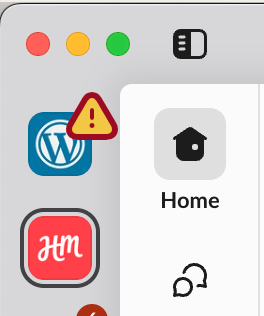](https://journal.rmccue.io/uploads/2024/12/
[email protected])
Every day, I click the icon and log in through WordPress.org, to be told that my Slack account is still disabled.
[](https://journal.rmccue.io/uploads/2024/12/
[email protected])
Although I can no longer access Slack, I am still contributing as best as I can. I’m still working on GitHub issues, Trac tickets, comments on the Make P2s, and through chatting directly with other contributors.
I am trying as best as I can not to let it affect my work. Contributing without using Slack is difficult – back-and-forth over an issue that could be a fluid dialogue becomes long paragraphs over days instead. Attending meetings is impossible – I am reduced to reading the notes – and helping others is much more difficult than it should be.
[1](https://journal.rmccue.io/468/on-contribution/#footnote_0_468)
But no matter what I do, it’s intensely demotivating to be reminded, every day, that I have been declared persona non grata.
[](https://journal.rmccue.io/tachyon/2024/12/Screenshot-2024-12-19-at-22.26.35%402x.png)
I’ve still received no communication from anyone in the project as to why I can no longer access Slack or why I am blocked on Twitter.
I’ve spent more than 20 years – more than two-thirds of my life – contributing to WordPress. I have poured much of my life into this project, spent sleepless nights worrying about it, and dealt with the stress and burnout caused by the politics, personalities, and personal attacks.
Although I’ve been exiled by the project *officially*, I don’t feel like I’m “on the outside” because of the community. Many, many people have reached out, and I thank them for that.
[Automattic’s response to the injunction](https://x.com/automattic/status/1866644684057248090) this week says that they’re “continuing to protect the open source ecosystem”, but one thing is clear: WP Engine did not block me.
I like to think I can shrug all of this off, that I don’t really care that much, but I can’t. Because I do care. Because I believe – I still believe – that this thing matters.
I am trying the best that I can.
But, it’s hard to imagine wanting to continue to work on WordPress after this.
1. I am lucky. My job does not *depend* on contributing. [[↩](https://journal.rmccue.io/468/on-contribution/#identifier_0_468)], On Contribution, rmccue.io, 01jfgns9rxq987wpdjc5ckj47n.