Part 1: Antisoftware Action
## Metadata
- Author: [[anti software software club]]
- Full Title: Part 1: Antisoftware Action
- Category: #articles
- Document Note: ---
tags:
- #OpenSourceAdvocacy
- #WebDevelopment
- #ContributorEngagement
Author: [Unknown]
Source: [Anti-Software Manifesto Part 1]
Reference: [https://antisoftware.club/manifesto/2020/03/16/part-1.html]
date created: 2024-09-13 11:00
---
# Title: Anti-Software Manifesto - Part 1
## Table of Contents:
1. 📝 [Summary](#summary)
2. 📖 [Main Content](#main-content)
- 🗒️ [Notes](#notes)
- 🧐 [Theological Framework Analysis](#theological-framework-analysis)
- 🏛️ [Historical and Cultural Context](#historical-and-cultural-context)
- 📜 [Scriptural References and Interpretation](#scriptural-references-and-interpretation)
- ⚖️ [Logical and Rhetorical Analysis](#logical-and-rhetorical-analysis)
- 💡 [Practical Theology and Ethics](#practical-theology-and-ethics)
- 📝 [Comparative Analysis](#comparative-analysis)
- 🌍 [Global and Ecumenical Perspectives](#global-and-ecumenical-perspectives)
- 🔄 [Change Over Time](#change-over-time)
- 🎯 [Author’s Goals and Audience](#authors-goals-and-audience)
3. 📖 [References](#references)
4. 🗣️ [Paraphrase](#paraphrase)
5. 📰 [Newsletter](#newsletter)
6. ✅ [Action Items](#action-items)
7. 🧪 [Hypotheses](#hypotheses)
- 📊 [Methodology](#methodology)
- ❓ [Questions](#questions)
8. 🔮 [Future Research](#future-research)
9. 💡 [Implications](#implications)
10. 🧠 [Learning Styles Assessment](#learning-styles-assessment)
11. 📊 [Accessibility Assessment](#accessibility-assessment)
12. 🌍 [DEIB (Diversity, Equity, Inclusion, and Belonging) Assessment](#deib-assessment)
13. ✅ [Logical Validity](#logical-validity)
14. 🔍 [SEO Evaluation](#seo-evaluation)
15. 🎯 [Conclusion](#conclusion)
### References:
- Anti-Software Club Manifesto, 2020. https://antisoftware.club/manifesto/2020/03/16/part-1.html
## 📝 Summary:
The Anti-Software Manifesto critiques the dominant role of software in modern life, arguing that software often distances us from creativity and direct interaction with technology. It advocates for a minimalist approach to tech, emphasizing that fewer, more meaningful software solutions should replace the current overload of unnecessary applications.
## 📖 Main Content:
The manifesto takes a critical look at the tech industry and its over-reliance on complex, bloated software. It highlights how software monopolies shape user experiences, limit control, and reduce creativity. The piece encourages a shift toward simplicity and control, offering a fresh perspective on tech sustainability.
### 🗒️ Notes:
- Software has increasingly become bloated and inefficient.
- The manifesto argues for a return to minimalism, where fewer software solutions create more meaningful impact.
- Tech monopolies control too much of the user experience, stifling creativity.
- The article promotes open-source solutions as a way to regain user control over technology.
- There is a focus on sustainability, encouraging fewer, smarter software solutions rather than more software.
## 📖 References:
- Anti-Software Club. “Anti-Software Manifesto.” 2020. https://antisoftware.club/manifesto/2020/03/16/part-1.html
## 🗣️ Paraphrase:
1. The manifesto critiques modern software practices, arguing that software today is often bloated and unnecessarily complex. Instead, it calls for a return to simplicity in technology, focusing on meaningful, minimal solutions.
2. The dominance of large software companies stifles user freedom and creativity. The manifesto advocates for an open-source movement where users regain control over their tools, fostering a more sustainable and innovative approach to technology.
## 📰 Newsletter:
In our latest newsletter, we dive into the Anti-Software Manifesto, which argues that software has become bloated, limiting creativity and control. The piece challenges the tech industry to rethink its approach, advocating for minimalist solutions that prioritize user freedom and sustainability. With open-source at the heart of this shift, there’s never been a better time to consider how fewer, smarter tools can transform the way we interact with technology. Read the full manifesto [here](https://antisoftware.club/manifesto/2020/03/16/part-1.html).
## ✅ Action Items:
As a Developer Advocate at GoDaddy with a focus on open source, contributor engagement, and educational initiatives, this article strongly resonates with my advocacy for sustainable, minimalist technology solutions. The emphasis on user freedom and creativity aligns with my goal of fostering inclusivity and control within the WordPress and open-source ecosystems. This article speaks to my vision of transparency and open contribution, encouraging a shift away from complex monopolistic structures to more accessible and empowering tech solutions. It also aligns with my aspirations to become an OSPO (Open Source Program Office) director, where sustainability and inclusivity are key.
## 🧪 Hypotheses:
- Implementing minimalist software solutions will increase user engagement and satisfaction by simplifying technology.
- The adoption of open-source, user-controlled software solutions could foster greater creativity and innovation in tech spaces.
- Reducing software complexity will lead to greater tech sustainability and lower resource consumption.
### 📊 Methodology:
- Surveys to measure user satisfaction before and after transitioning from complex to minimalist software.
- Analysis of the environmental impact of reducing software bloat in large systems.
- Case studies of companies and communities that have successfully implemented minimalist software solutions.
### ❓ Questions:
- How does software bloat impact user creativity and innovation?
- Can minimalism in software lead to greater sustainability in the tech industry?
- What role can open-source software play in promoting user control and reducing monopolistic influence in tech?
### 🔮 Future Research:
- Explore the long-term environmental impacts of adopting minimalist software solutions.
- Investigate the role of open-source in promoting sustainability and user control in different tech ecosystems.
- Study the effects of reducing software complexity on innovation and creativity in the tech industry.
### 💡 Implications:
A shift toward minimalist software solutions could revolutionize how we interact with technology, fostering greater user control, innovation, and sustainability. Open-source advocacy could be central to this shift, reducing tech monopolies and empowering individual contributors.
### 🧠 Learning Styles Assessment:
1. **Visual Learners (Spatial)**:
- **Present**: There are no visual aids in the article.
- **Improve**: Incorporate infographics or flowcharts explaining the concept of software bloat and minimalist solutions.
2. **Aural Learners (Auditory-Musical)**:
- **Present**: No auditory elements.
- **Improve**: Offer an audio version of the manifesto or a related podcast discussing software minimalism.
3. **Verbal Learners (Linguistic)**:
- **Present**: The language is clear, with strong conceptual explanations.
- **Improve**: Provide additional reading materials or in-depth case studies to deepen understanding.
4. **Physical Learners (Kinesthetic)**:
- **Present**: There are no interactive components.
- **Improve**: Suggest hands-on activities, such as simplifying a software system as a practical task.
5. **Logical Learners (Mathematical)**:
- **Present**: The logical progression of ideas is well-organized.
- **Improve**: Include step-by-step breakdowns of software sustainability calculations.
6. **Social Learners (Interpersonal)**:
- **Present**: No social elements.
- **Improve**: Encourage group discussions on the impact of software monopolies and the potential of open-source solutions.
7. **Solitary Learners (Intrapersonal)**:
- **Present**: The article encourages deep reflection on personal interaction with technology.
- **Improve**: Include journaling prompts or reflective questions about software use.
8. **Naturalistic Learners**:
- **Present**: The article connects to sustainability but not directly to nature.
- **Improve**: Use analogies between software bloat and environmental resource depletion.
### 📊 A
- Document Tags: [[antisoftware]]
- Summary: software is eating the world. we want to bite back.
- URL: https://antisoftware.club/manifesto/2020/03/16/part-1.html
| |
| --- |
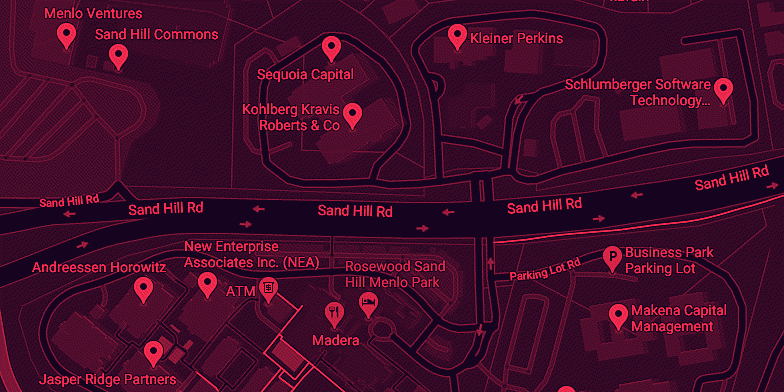
| we are anti software software club. we are a software company that hates the software industry. over the past decade, both of us have watched the world buy into the lies of people who “believe in the disruptive potential of technology”, and who think the best way to realize that potential is to build for-profit businesses that enable a creative-class petit bourgeois to make it through their day without acknowledging another human being. to some extent, we’ve both been part of the problem, in order to keep a roof over our heads. and we’re both sick and tired of it. we think we can do better, by building tools that focus on fair dealing and sustainable growth rather than market dominance. we’re publishing this manifesto to talk about the moral and ethical problems that we think are endemic to this industry and how we intend to overcome them. and yes, we are building something, but we’re not ready to talk about it yet. on platforms motherfuckers are out here writing [“Uber, the world’s largest taxi company, owns no vehicles. Facebook, the world’s most popular media owner, creates no content […] Airbnb, the world’s largest accommodation provider, owns no real estate”](https://techcrunch.com/2015/03/03/in-the-age-of-disintermediation-the-battle-is-all-for-the-customer-interface/) like it’s a good thing. in exchange for making it slightly cheaper to get home at the end of a night out than traditional cabs, Uber and its competitors [fire people via push notification with no notice](https://www.npr.org/2017/06/08/532120218/uber-drivers-criticize-company-for-shady-firing-practices). they [drive their employees to suicide](https://www.nytimes.com/2018/10/07/nyregion/uber-driver-suicide-for-hire-taxis-new-york.html). they [cover up sexual assault en masse](https://www.nytimes.com/2019/12/05/business/lyft-sexual-assault-lawsuit.html), or, occasionally, [on a case-by-case basis with extensive involvement from the executive team](https://www.vox.com/2017/6/7/15754316/uber-executive-india-assault-rape-medical-records). in exchange for making it cheaper to take vacations to a city you don’t live in, Airbnb [rents unsafe accommodations to people](https://medium.com/matter/living-and-dying-on-airbnb-6bff8d600c04#.bwea8l3qo) with no accountability beyond a refund. it enshrines [the systemic, up-front racism of its hosts](https://www.thedailybeast.com/can-airbnb-train-hosts-not-to-be-racists), in addition to the more insidious evil of [indirectly costing every renter hundreds of dollars a year](https://www.bbc.com/news/business-45083954) *not* to rent out their living space, while giving homeowners a way to leverage their home equity that makes even more money than being a Good Old-Fashioned Landlord. in exchange for whatever good it is that Facebook is supposed to be doing for the world, we have to show for it [the death of print media](https://slate.com/technology/2018/10/facebook-online-video-pivot-metrics-false.html), the inescapable public health cost of [the anti-vaccine movement](https://www.buzzfeednews.com/article/carolinehaskins1/facebook-running-anti-vax-ads-despite-ban-anti), and the [continued spread of alt-right and white nationalist propaganda](https://www.theguardian.com/technology/2019/nov/21/facebook-white-nationalists-ban-vdare-red-ice). these companies seek to avoid for themselves as much responsibility for their actions as they can manage: “[you acknowledge that your ability to obtain transportation […] does not establish Uber as […] a transportation carrier](https://www.uber.com/legal/en/document/?name=general-terms-of-use&country=united-states&lang=en)”; “[Airbnb is not […] a party to […] any contractual relationship between Members, nor is Airbnb a real estate broker or insurer.](https://www.airbnb.com/terms)” meanwhile, they leverage the power of information technology to do petty bookkeeping far more rapidly, and with far less care, than anyone in a bygone era could have done with rooms full of human clerks. taken together, all of this paints a picture of not just a few companies, but *an entire industry* which has given up even the pretense of caring about anything beyond whether the money keeps coming in. on funding Screenshot from Google Maps showing several venture capital firms on Sand Hill Road in Menlo Park, California Google Maps in exchange for the money a startup needs to survive, before the product has shipped — often *before the company even has a product they’re pretty sure they can sell —* [they’ve already sold 20% or more of it](https://moguldom.com/9347/vc-funding-what-is-the-usual-percentage-of-shares-that-go-to-seed-series-a-and-series-b-rounds/) to some hectomillionaire venture capitalist. from here, many startups build out their growth strategy on a copy-and-pasted model:1. cut your prices to an unsustainable minimum
2. sell yourself to consumers by claiming you’ve gotten rid of “market inefficiencies” and are passing the savings on to them
3. round up more venture capitalists to throw money into the fire until you push everyone else out of the market
4. once you run out of gullible rich people, raise money through an IPO and jack the price back up until you become “sustainable” so that everyone can make a tidy return
the last step of this plan takes many forms. delivery companies increase delivery fees and [steal tips](https://www.nbcnews.com/business/business-news/why-instacart-doordash-workers-don-t-always-receive-tips-you-n965926). transportation network companies invent [new fees for no particular reason](https://www.theverge.com/2019/8/23/20829798/uber-safe-ride-fee-margin-mike-isaac-super-pumped) and try to foist unsafe self-driving cars on everyone so they don’t have to pay drivers anymore ([they’ve already killed an unhoused person with one.](https://www.forbes.com/sites/bradtempleton/2019/11/06/new-ntsb-reports-on-uber-fatality-reveal-major-errors-by-uber/)) crowdfunding platforms sell campaigners new add-on services (or make services they’ve provided all along into “add-ons”) and [fiddle with fee schedules](https://www.theverge.com/2017/12/7/16746652/patreon-pledge-processing-fee-controversy). everyone — from [Uber](https://www.businessinsider.com/uber-subprime-auto-loans-running-it-off-the-road-2017-8), to [Patreon](https://www.theverge.com/2020/2/18/21142306/patreon-capital-loans-jack-conte-cash-advances), to [coding bootcamps](https://nymag.com/intelligencer/2020/02/lambda-schools-job-placement-rate-is-lower-than-claimed.html) — is trying to figure out a way to have their customers originate debt from which the company can earn debt service fees or sell on the debt market. our first assertion as leftists, we feel that every cent that stays with the platform — particularly every cent that gets turned into profit and paid out to shareholders in dividends, for their invaluable contribution of Having Had Money Once — is a theft from the people doing the work, people who are [earning less than minimum wage](https://www.independent.co.uk/life-style/gadgets-and-tech/news/uber-lyft-earnings-minimum-wage-ridesharing-ride-hailing-independent-contractors-a8237541.html) while [peeing in bottles](https://nypost.com/2018/07/18/uber-driver-caught-peeing-in-bottle-with-passenger-in-car/) and [falling asleep at the wheel](https://www.thesun.co.uk/news/7431999/moment-australia-uber-sleep-driver-wheel/). we know that not everyone shares our approach to this issue, but we believe even left-liberals can agree that the status quo, where platform companies lure vulnerable people into working for them just to piece together a living, then juice these people for every cent they’re worth, is unacceptable and frankly disgusting. our second assertion it’s absolutely possible to fund a company while still maintaining control over it. [Mark Zuckerberg did it](https://www.quora.com/How-did-Mark-Zuckerberg-manage-to-own-25-of-Facebook), by raising funding judiciously (and later by only issuing non-voting stock), and there’s nothing that says you can’t take it even farther and fund a software company in the same way that people used to fund a brick-and-mortar store back in the days when those existed: by taking out a loan, paying it off, and then owning the company free and clear. venture capitalists don’t tend to do this because 90% of startups fail within a year, so they need to make 10 times their money back from the 10% of survivors just to get back to square one — if you’re doing this for a living, you’ve gotta be pretty diligent about getting your money where you can. founders don’t tend to do it because it means you have to do things on a tiny budget — so you can’t staff up and you can’t burn money for two years before pivoting into the business model that eventually, maybe, succeeds. where we’re going from here while we were griping about the tech industry and considering starting this project back in September, a friend of ours stepped forward and let us know that they had hit the lottery as an early technical employee at a startup that had succeeded and gone public. the first public announcement we’re ready to make is: we have secured a deal with them for at least a year of operating funding on a non-equity basis, and **we are publicly committing that we will never, under any circumstances, sell equity to non-employees.** obviously, the problems with firms under capitalism don’t just stop at the involvement of venture capital — for more information, [read here](https://www.marxists.org/archive/marx/works/download/pdf/Capital-Volume-I.pdf) — so we’re just using the flexibility afforded to us by controlling 100% of the company as a jumping-off point. once we’ve ensured that we can pay our bills and keep the lights on, we plan to build products which incorporate mechanisms for public accountability and user power. we’ve chosen our first product, and we’ve been building it for a few months (in between a *staggering* amount of paperwork), but we don’t have anything concrete to announce just yet — beyond the fact that nearly every person we’ve told about our product has answered “about damn time,” so we hope we’re only being moderately foolish. we’ll make another post soon with more specifics about how we’re doing business and why — again with no product announcements — and we’ll be back in touch after that to talk about the thing we’re making. until then, [we’ve got merch](https://store.antisoftware.club), if you wanna help us keep our burn rate down. thanks for reading all of this, and we’ll be back in touch soon! — jae & colin *if you want to hear about what we’re doing, you can [follow us on twitter](https://twitter.com/no_software) or [sign up for our newsletter](https://gumroad.com/no_software/follow).* |, Part 1: Antisoftware Action, anti software software club, 01j7p42xw8agep3at6v3xs9s0r.