Phase 3: Collaboration
## Metadata
- Author: [[Matias Ventura]]
- Full Title: Phase 3: Collaboration
- Category: #articles
- Document Note: ## Summarize:
The WordPress Gutenberg project has introduced blocks and a new editing experience that provides users with greater flexibility and options. The project has gone through different phases, starting with the block editor and expanding to the rest of the site. New features like patterns and block themes have been added to enhance the user experience. The third phase of the project will focus on collaboration, improving the admin experience, and streamlining content management workflows. This includes real-time collaboration, asynchronous collaboration, publishing flows, improved post revisions interface, admin design update, a library for managing blocks, and a global search and command component. Feedback and contributions from users are important in shaping these developments.
## Bullet Points:
- The WordPress Gutenberg project has transformed content creation and management on websites.
- The project has gone through different phases, starting with the block editor and extending to the rest of the site.
- New features like patterns and block themes have been introduced to enhance the user experience.
- The third phase of the project will focus on collaboration, improving the admin experience, and streamlining content management workflows.
- Key areas of focus include real-time collaboration, asynchronous collaboration, publishing flows, improved post revisions interface, admin design update, and the introduction of a library for managing blocks.
- A global search and command component will also be developed to enhance navigation and functionality.
- User feedback and contributions are crucial in shaping the direction of the project.
## Paraphrase:
1. The WordPress Gutenberg project has brought significant changes to content creation and management on websites, offering users increased flexibility and options. Various phases of the project have been introduced, starting with the block editor and expanding its features to different areas of the site. Additional functionalities such as patterns and block themes have also been incorporated to improve the overall user experience. The project's third phase will be centered around fostering collaboration, optimizing the admin experience, and streamlining content management workflows. The aim is to enable seamless real-time collaboration among multiple users, enhancing the efficiency of content creation, editing, and customization as a team. Asynchronous collaboration will also be emphasized, incorporating key features like draft sharing, inline block commenting, and task management to support collaboration at different paces and according to individual workflows. The third phase will also address publishing flows, post revision interfaces, admin design, and the development of a library to manage blocks, patterns, styles, and fonts. A global search and command component will also be created, allowing users to navigate content, admin sections, and run contextual commands. Feedback and contributions from users are highly valued in shaping these initiatives.
2. The WordPress Gutenberg project aims to revolutionize content creation and management on websites by introducing a block editor and enhancing the user experience with various features. The project has evolved in different phases, beginning with the block editor and subsequently expanding its capabilities to cover other areas of the site. New functionalities like patterns and block themes have been introduced to improve the design process and enable users to create visually appealing and highly functional websites. The project's third phase will focus on seamless collaboration, streamlining content management flows, and enhancing the admin experience. Real-time collaboration is a significant aspect of this phase, enabling multiple users to work together simultaneously on content and designs without restrictions. Asynchronous collaboration will also receive attention, facilitating collaboration at different paces and based on individual workflows. Key features include draft sharing, inline block commenting, review assignments, improved version control, and task management. Publishing flows will be optimized, incorporating features like editorial requirements and support for multiple preview contexts. The post revisions interface will be made more visual and allow for scheduling revisions across multiple parts of a site. The admin design will be updated with user flows and plugins in mind, and the library will be introduced for managing blocks, patterns, styles, and fonts. A global search and command component will also be developed, facilitating navigation and the execution of commands. User feedback is crucial in shaping these developments, and other active projects related to prior phases will continue alongside the third phase.
### Conclusion:
The WordPress Gutenberg project has transformed content creation and management on websites by introducing a block editor and expanding its features. The project is entering its third phase, which will focus on collaboration, streamlining content management flows, and improving the admin experience. Real-time and asynchronous collaboration will be key aspects of this phase, along with optimized publishing flows, improved post revisions interface, updated admin design, a library for managing blocks, patterns, styles, and fonts, and a global search and command component. User feedback and contributions are highly valued in shaping these developments.
### Questions:
1. How has the WordPress Gutenberg project transformed content creation and management on websites?
2. What are the main features introduced in the different phases of the Gutenberg project?
3. What are the key areas of focus in the third phase of the Gutenberg project?
4. How will real-time collaboration be incorporated into the Gutenberg project?
5. What are some of the features that will be introduced in the post revisions interface?
6. What improvements will be made to the admin design and navigation?
7. How will the Gutenberg project enhance the library for managing blocks, patterns, styles, and fonts?
8. What functionalities will the global search and command component offer?
9. What is the importance of user feedback in shaping the Gutenberg project?
10. What other projects will continue alongside the third phase of the Gutenberg project?
### Auto-tagging:
WordPress, Gutenberg, content creation, content management, block editor, user experience, collaboration, streamlining, admin experience, patterns, block themes, real-time collaboration, asynchronous collaboration, publishing flows, post revisions interface, admin design, library, global search, command component.
### Index Creation:
- Gutenberg project: 1
- block editor: 1
- user experience: 1
- collaboration: 1
- patterns: 2
- block themes: 2
- real-time collaboration: 2
- asynchronous collaboration: 2
- publishing flows: 2
- post revisions interface: 2
- admin design: 2
- library: 2
- global search: 2
- command component: 2
### Table of Contents:
1. Introduction
2. Phases of the Gutenberg Project
- Block Editor
- Expansion to the Rest of the Site
3. Enhancing User Experience
- Patterns
- Block Themes
4. Third Phase of the Gutenberg Project
- Collaboration
- Streamlining Content Management Flows
- Admin Experience Improvement
- Real-time Collaboration
- Asynchronous Collaboration
- Publishing Flows
- Improved Post Revisions Interface
- Admin Design Update
- Library for Managing Blocks
- Global Search and Command Component
5. Importance of User Feedback
6. Other Active Projects
7. Conclusion
### References:
No references provided.
### Future Research:
- The impact of the Gutenberg project on website performance and loading times
- Users' experiences and feedback on the block editor and other Gutenberg features
- The effectiveness of real-time collaboration in enhancing productivity and creativity in content creation
- The influence of the Gutenberg project on website accessibility and inclusive design practices
- Comparative studies between the Gutenberg project and other content management systems
### Hypothe
- Document Tags: [[gutenberg]] [[phase 3]] [[wordpress]]
- Summary: Over the last few years, the WordPress project has been transforming the way users create and manage content on their websites. The introduction of blocks and the editing experience surrounding the…
- URL: https://make.wordpress.org/core/2023/03/24/phase-3-collaboration/
Over the last few years, the WordPress project has been transforming the way users create and manage content on their websites. The introduction of blocks and the editing experience surrounding them has provided people with increased flexibility and expressive options.
The Gutenberg project has undergone several phases since its inception. It began with the introduction of the block editor in WordPress 5.0, which allowed users to create and edit content using modular blocks. It then followed with a second phase, bringing the block editing experience to the rest of the site.
As the project evolved, new features were introduced to enhance the user experience further. Patterns, for instance, allowed users to reuse predefined block combinations and layouts, helping streamline the design process. Block themes enabled creators to fully embrace the blocks for an entire website, from header to footer. The community’s collaborative spirit has fostered an ever-growing library of resources that empower users to create stunning and highly functional websites.
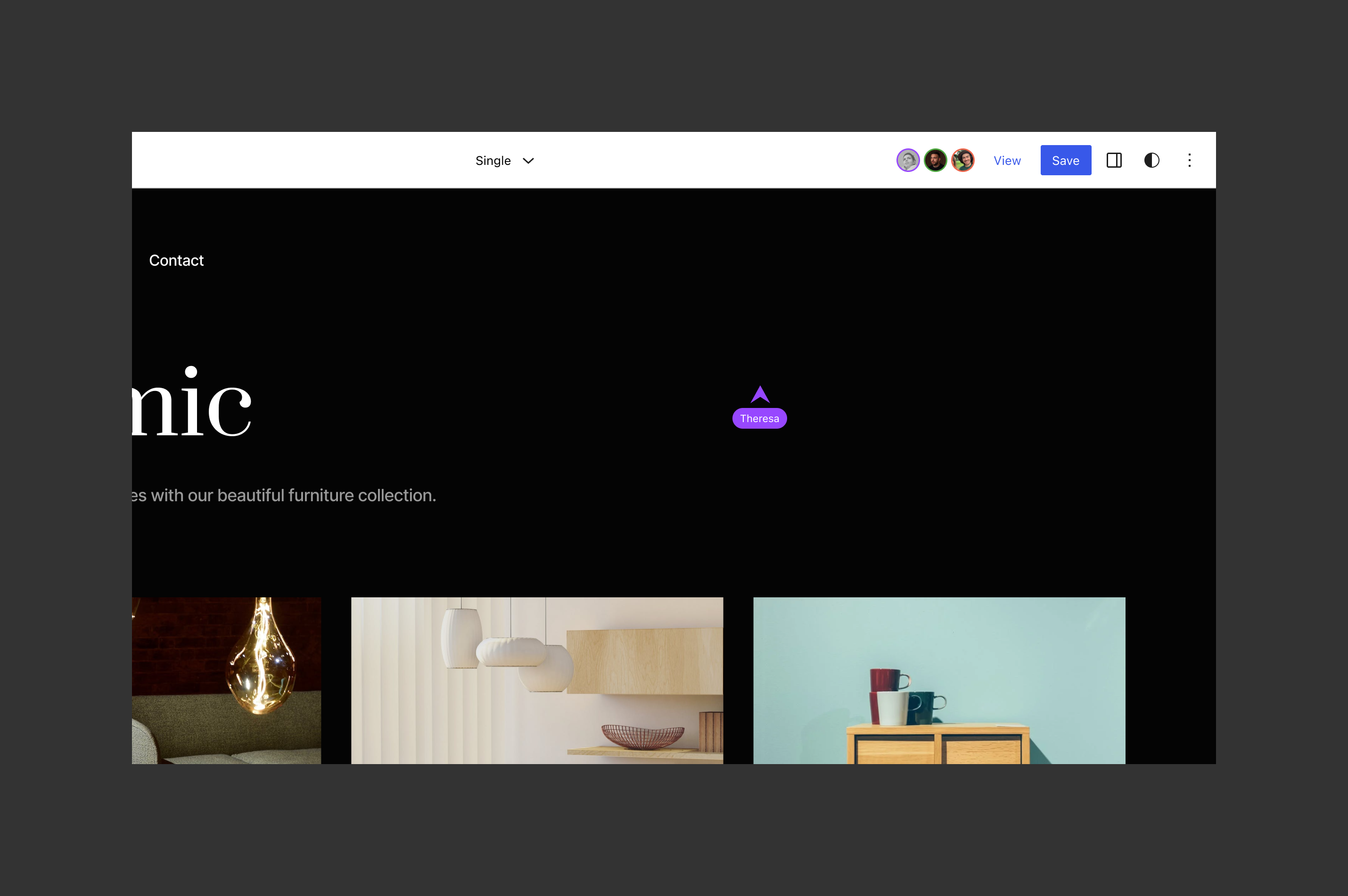
We are now planning its **third phase**, which is going to be centered around fostering seamless collaboration, tying together the user experience, and streamlining the content management flows to improve the way creators and teams work together within WordPress.
[](https://make.wordpress.org/core/files/2023/03/gutenberg-phase-3.png)
To accomplish this, we’ll be looking beyond the editors at the rest of the admin experience. This post provides a preliminary outline of the focus areas. These items are not set in stone, and your feedback and contributions are crucial to help shape the direction.
* **Real-time collaboration.** Imagine being able to work together in real-time across all block editors, crafting content and designs seamlessly without being locked out of editing. The goal is to provide all the necessary infrastructure and UI to handle multiple users working together on the same content simultaneously, making it easier to create, edit, and customize web pages and posts as a team.
* **Asynchronous collaboration.** While simultaneous collaboration is a crucial part to unlock, there are multiple workflows that rely on asynchronous collaboration that will also receive attention. Key features include draft sharing for content and design changes, inline block commenting, review assignments, improved version control, and task management. The goal is to enable users and larger teams to collaborate on projects and its different parts at their own pace and based on their workflows.
* **Publishing flows.** This includes the various processes, requirements, and steps involved in creating, editing, reviewing, and publishing content within WordPress. These flows could include features such as editorial requirements, customized goals (*accomplish certain number of words or images*), task completion prerequisites (*set featured image*; *complete info on block x*; etc; before publishing is unlocked), and support for multiple preview contexts (members vs no members, different context for stories, etc). Core wouldn’t necessary add all the features but provide the necessary infrastructure to define flows that can integrate seamlessly with the editor.
* **Post revisions interface.** Make them more visual, aware of individual blocks, and explore adding the ability to schedule revisions across multiple parts of a site. For example, being able to target updates for an event or campaign that might require coordinating the scheduling of multiple content types and resources. This also overlaps with addressing **theme switching flows** and scheduling that leverage the flexibility of block templates and styles.
* **Admin design.** Begin the process for an [admin design update and navigation work](https://make.wordpress.org/design/2022/06/13/thinking-through-the-wordpress-admin-experience/), with plugins and customized user flows in mind. Admin notices and the UI library of design components will be a major part of this effort to ensure use cases are supported while respecting the user experience. This work also includes improving the **admin list views** (those used in posts, pages, categories, templates, comments, and by hundreds of plugins) with a more modern design and refined extensibility support for interactivity.
* **Library.** Introduce an admin section or “library” for **managing blocks, patterns, styles, and fonts**. As part of this work, also look at what improvements can be done to enhance the media library design, interactions, and extensibility.
* Develop a **global search & command component** that’s extensible and can accommodate navigating to content (example: *edit About page*); navigating to admin sections (example: *go to WooCommerce orders*); and running contextual commands (example: *create new post*; *toggle top toolbar*; *insert pattern*; etc). As AI tools are taking the world by storm, this could also play an important role in letting plugin authors integrate novel solutions that are prompt based in nature.
If there’s anything you were hoping to see addressed that’s not yet captured, please share your thoughts in the replies. Keep in mind that there are other active projects related to the prior phases that will continue alongside these newer efforts (i.e.: more blocks, footnotes, better tables, grid layout system, the block API roadmap, block development experience, performance, infrastructure like sqlite, playground, etc). For clarity, the phase 3 items shared above are not planned for 6.3., Phase 3: Collaboration, Matias Ventura, 01gwd9w6sge3rmv51de4ewcjfd.