Sharing some cool stuff with y’all
🔗 **Source:** [Sharing some cool stuff with y’all](https://www.youtube.com/watch?v=hHBfOUtAV6w)
> [!note]+ Document Notes
> # 🏷️ Title: Sharing some cool stuff with y’all
> > **Current-agent capture.** The transcript is saved, but the full deep-read analysis is still pending (current-agent mode). The active Codex task must add the notes, topic tags, master highlights, and Reader-native inline highlights before this document is complete.
> ---
> ## Full Transcript
> [00:00] Wanted to share some cool stuff with<br>[00:01] y'all. Hey everybody, I'm Dan Mlelen.<br>[00:04] I'm a scholar of the Bible and religion.<br>[00:06] And yesterday I received a gift from a<br>[00:09] friend of mine, a friend named Robert<br>[00:10] who has an Etsy shop at relics3d.com<br>[00:16] who makes replicas of ancient artifacts.<br>[00:18] And a while ago, he sent me this replica<br>[00:22] of the artifact known as the Tanakh cult<br>[00:25] stand. And this probably would have kept<br>[00:29] incense on the top for burning but also<br>[00:31] may have functioned as a shrine model<br>[00:34] where some kind of divine image would<br>[00:37] have been placed within it which would<br>[00:39] have been visible through the opening in<br>[00:41] the front. So, it's kind of a hybrid<br>[00:44] incense altar/shrine<br>[00:47] model. And my book, Adonai's Divine<br>[00:49] Images, discusses it in a bit more<br>[00:51] detail and suggests that it was probably<br>[00:54] dedicated to the ancient Israelite<br>[00:57] goddess Asher. And there are a few<br>[00:59] different reasons for that. But you can<br>[01:01] see not only a nude woman depicted<br>[01:04] between two lines in the bottom<br>[01:06] register, but on the third register, you<br>[01:09] can see ibix's feeding on either side of<br>[01:11] a stylized tree, which is a very common<br>[01:16] iconographic motif that we see<br>[01:18] associated with the goddess Asher. Uh<br>[01:21] and then the ecquin figure at the top is<br>[01:24] also something that is a little less<br>[01:27] directly but still plausibly connected<br>[01:30] with worship of Asher. Now, the other<br>[01:34] artifact that uh Robert sent me is one<br>[01:38] of my favorites, and that is the Pithos<br>[01:41] A fragment that depicts Adoni and his<br>[01:45] Asher and has an inscription overlaying<br>[01:50] the drawings that refers to blessings by<br>[01:53] Adoni and by his Asher. And there's long<br>[01:57] been debate about whether the his asher<br>[02:00] phrase there is a reference to a cultic<br>[02:03] object or to the goddess. The reality is<br>[02:05] that it's probably a little of both. You<br>[02:07] don't really get the significance of the<br>[02:09] cultic object without awareness of the<br>[02:12] goddess and also the drawing that is<br>[02:15] underneath the inscription pretty<br>[02:17] clearly depicts a male and a female<br>[02:20] deity. And for the best discussion of<br>[02:21] how we should identify those figures, I<br>[02:24] would direct you to my friend's article<br>[02:27] that was published a few years ago on<br>[02:29] this very lengthy and technical<br>[02:31] discussion, but I think the best<br>[02:33] discussion of how we should identify<br>[02:35] those two figures. But the thing I got<br>[02:37] yesterday<br>[02:39] was alongside another uh item that I had<br>[02:42] requested from Robert. But he also sent<br>[02:45] me what is known as the Kierbed Elcom<br>[02:49] inscription which was discovered in a<br>[02:52] burial setting and has some writing on<br>[02:56] it that includes overwriting. So people<br>[02:58] came in and and scratched over the<br>[03:00] letters the same letters which suggest a<br>[03:03] kind of ritual perhaps magical function<br>[03:07] but there are references to blessings by<br>[03:10] Asher uh in the middle of the<br>[03:12] inscription and also in the very bottom<br>[03:14] left. It's a little hard to see but uh<br>[03:17] if you look again you can see some<br>[03:18] letters in the very bottom left and then<br>[03:19] there's a downward-facing hand which has<br>[03:22] been the subject of quite a bit of<br>[03:24] debate. But interestingly, the type of<br>[03:29] standing stone or image that was<br>[03:33] probably placed in burials and was<br>[03:36] probably functioning as a kind of house<br>[03:39] for the soul of the deceased to the<br>[03:41] degree that you can talk about a soul is<br>[03:44] referred to in the Hebrew Bible as a<br>[03:46] yad, which means a hand. And so perhaps<br>[03:50] this is supposed to represent the yad of<br>[03:53] the person who has been buried here<br>[03:55] whose name is probably Udyahu. Uh so<br>[03:59] when Robert sent me this, he sent me a<br>[04:01] note saying now you have the trifecta of<br>[04:04] Asher artifacts uh the replicas of these<br>[04:08] three artifacts. Three of I think the<br>[04:10] most fascinating artifacts in the<br>[04:12] history of ancient Israelite religion.<br>[04:14] And I appreciate Robert's generosity<br>[04:17] very much. And I look forward to talking<br>[04:20] a little bit more about these artifacts<br>[04:22] in the future. But I find these<br>[04:24] artifacts fascinating. I hope that some<br>[04:26] of y'all do too. And I hope you will go<br>[04:29] research more about them. And a good<br>[04:30] place to do that is in my book, Adonai's<br>[04:33] divine images, a cognitive approach,<br>[04:34] which is open access. You can find it<br>[04:36] for free on the internet or through my<br>[04:38] link tree. And I have brief discussions<br>[04:41] about all of these artifacts and others<br>[04:43] related to how divine images functioned<br>[04:46] in the ancient world and how the<br>[04:47] inscription of divine names could have<br>[04:50] functioned to enliven uh these divine<br>[04:53] images or cause the divine agency to<br>[04:57] inhabit the images. And the book<br>[04:59] describes what all that means in great<br>[05:01] detail. But thank you so much to Robert.<br>[05:03] Thank you all for watching. I appreciate<br>[05:05] it very much. And as it turns out, the<br>[05:07] fit for this video is also Adonai and<br>[05:10] his Asher.
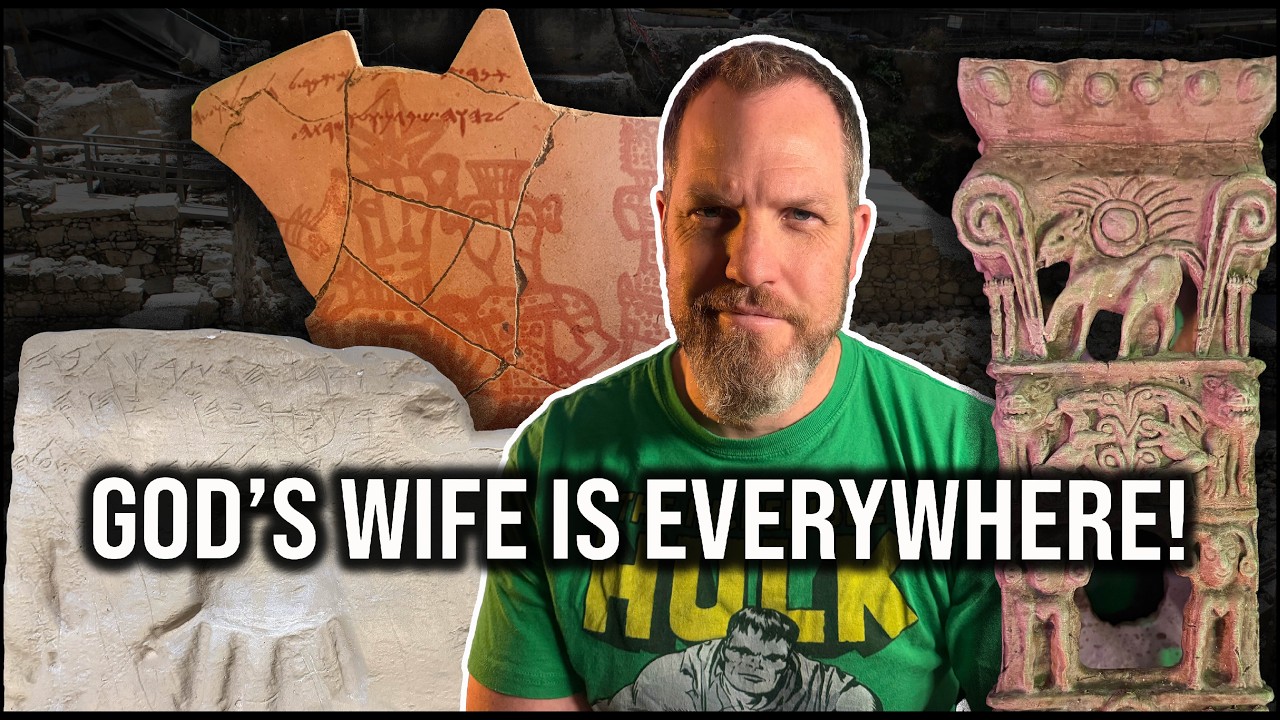
Wanted to share some cool stuff with y'all. Hey everybody, I'm Dan Mlelen. I'm a scholar of the Bible and religion. And yesterday I received a gift from a friend of mine, a friend named Robert who has an Etsy shop at relics3d.com who makes replicas of ancient artifacts. And a while ago, he sent me this replica of the artifact known as the Tanakh cult stand. And this probably would have kept incense on the top for burning but also
may have functioned as a shrine model where some kind of divine image would have been placed within it which would have been visible through the opening in the front. So, it's kind of a hybrid incense altar/shrine model. And my book, Adonai's Divine Images, discusses it in a bit more detail and suggests that it was probably dedicated to the ancient Israelite goddess Asher. And there are a few different reasons for that. But you can
see not only a nude woman depicted between two lines in the bottom register, but on the third register, you can see ibix's feeding on either side of a stylized tree, which is a very common iconographic motif that we see associated with the goddess Asher. Uh and then the ecquin figure at the top is also something that is a little less directly but still plausibly connected
with worship of Asher. Now, the other artifact that uh Robert sent me is one of my favorites, and that is the Pithos A fragment that depicts Adoni and his Asher and has an inscription overlaying the drawings that refers to blessings by Adoni and by his Asher. And there's long been debate about whether the his asher
phrase there is a reference to a cultic object or to the goddess. The reality is that it's probably a little of both. You don't really get the significance of the cultic object without awareness of the goddess and also the drawing that is underneath the inscription pretty clearly depicts a male and a female deity. And for the best discussion of how we should identify those figures, I would direct you to my friend's article that was published a few years ago on this very lengthy and technical
discussion, but I think the best discussion of how we should identify those two figures. But the thing I got yesterday was alongside another uh item that I had requested from Robert. But he also sent me what is known as the Kierbed Elcom inscription which was discovered in a burial setting and has some writing on it that includes overwriting. So people came in and and scratched over the
letters the same letters which suggest a kind of ritual perhaps magical function but there are references to blessings by Asher uh in the middle of the inscription and also in the very bottom left. It's a little hard to see but uh if you look again you can see some letters in the very bottom left and then there's a downward-facing hand which has been the subject of quite a bit of debate. But interestingly, the type of standing stone or image that was
probably placed in burials and was probably functioning as a kind of house for the soul of the deceased to the degree that you can talk about a soul is referred to in the Hebrew Bible as a yad, which means a hand. And so perhaps this is supposed to represent the yad of the person who has been buried here whose name is probably Udyahu. Uh so when Robert sent me this, he sent me a
note saying now you have the trifecta of Asher artifacts uh the replicas of these three artifacts. Three of I think the most fascinating artifacts in the history of ancient Israelite religion. And I appreciate Robert's generosity very much. And I look forward to talking a little bit more about these artifacts in the future. But I find these artifacts fascinating. I hope that some of y'all do too. And I hope you will go research more about them. And a good
place to do that is in my book, Adonai's divine images, a cognitive approach, which is open access. You can find it for free on the internet or through my link tree. And I have brief discussions about all of these artifacts and others related to how divine images functioned in the ancient world and how the inscription of divine names could have functioned to enliven uh these divine images or cause the divine agency to inhabit the images. And the book describes what all that means in great
detail. But thank you so much to Robert. Thank you all for watching. I appreciate it very much. And as it turns out, the fit for this video is also Adonai and his Asher., Sharing some cool stuff with y’all, YouTube, 01m2xnzjdes7kky5aameehn2jz.