Should We Make It Open Source?
🔗 **Source:** [Should We Make It Open Source?](https://www.youtube.com/watch?v=laEzOCgtK6c)
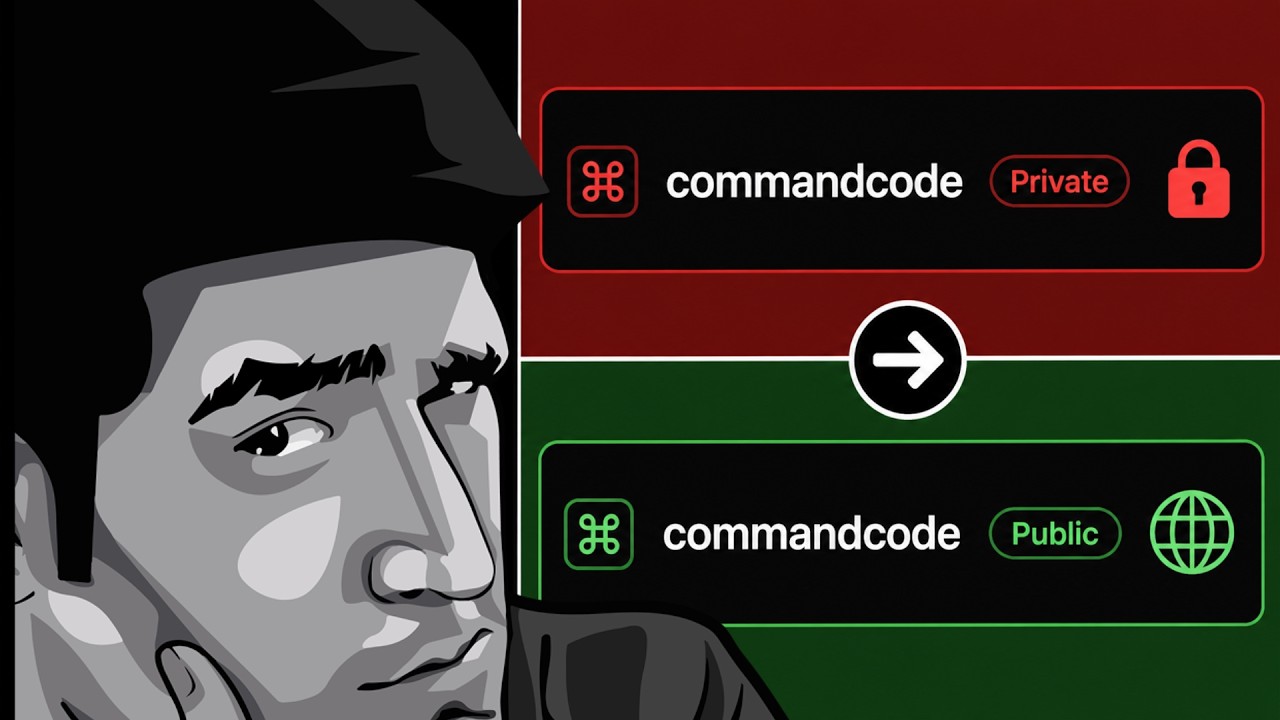
Should we open source command code or not? This is what we are discussing today. Hello, I am Ahmed, founder of command code. It's a coding agent that can build anything, but it can also observe how you write code and learn your coding taste. Your coding taste is recorded as an autogenerated skill that command code can keep updated. So now that you know what command code is, today we are discussing should we open source command code or not. And this is a product decision that I have yet to make. And as a founder, I have my employees to take care of, my investors to report to, and the general community.
And as a company that has just recently raised $5 million from amazing investors, I want to make sure that we are building a monetized and profitable company for the long run. So our mission is to build the best AI engineering developer experience. And we have recently raised $5 million in seed from all of these amazing investors and founders. And if you know a little bit about me, I am Ahmed. I have spent most of my career 25 plus years building open source software one way or the other. If you actually go to my uh GitHub profile and like go really deep in there, you
will see that I have like probably 250 PRs merged on all of the all of these software like core contributions to MCP protocol contribution to NASA Mars Ingenity helicopter mission from Omisesh Bootstrap WordPress React to something like NodeJS core to W3C Google Chrome VS Core I've done pretty broad strokes as you can imagine different languages frameworks and I have built a lot of open source software. At the time of recording this video, I have over 1,000 GitHub repositories and maybe around 300
plus of them are actually useful and I've written most of code that I've built are CLIs. I love building automation. So by looking at just this information, you should be able to understand that I'm an open source developer and I was born and raised in Pakistan but I ended up moving to the US later on. But even now I was just talking to my brother about it who happens to work at my company as well and he was sharing that if you search something like who's the most prominent open source developer from Pakistan with any AI out there uh it's a high probability that my name comes up and I
take a lot of pride in that I love building software so this is really good like you know this is who I am so I'm going to factor all of this in and this is you know I'll kind of look at above my shoulder uh you're basically looking into my brain how a founder is taking decisions nowadays in the age of AI where Kurser is probably going to get acquired by SpaceX because even though they are a $50 billion company now they are running out of money and running out of ways to buy more compute. So it's a crazy world out there. Let's go one by
one and figure out the pros and cons that I can think of and I would love to see what your feedback is. So one of the biggest goals I have in open sourcing command code is I want to make it hackable. I really really want that every developer should be able to use what we have built and build on top of it. So your coding agent is more closer to what you want it to be like. So our first attempt in doing this was obviously the taste model. If you go to our docs you will see that it's a frontier coding agent. It can it can
write code. It can fix bugs, write tests, you know do your pull request reviews and whatnot. It comes with all the cloud models, GPD models and uh top-notch open source models. And it also has a taste one model. I'm not going to go in the details of this. You can, you know, take time and study this. But what this taste model does is it's not an LLM. It is not there to write code. It works with whatever LM you are using. Maybe you're using cloud or maybe you're using Kimmy. It sees it observes how you write code or how you prompt AI to get that code to production. It sees
your accepts. It sees your rejects and how you're editing the code and it builds it autogenerates a skill that is a project level skill inside of your project in the form of markdown files and it also tries to continuously learn more and more as you build with command code and it continuously you know updates that skill as well on our blog you can also find a blog post that I wrote about in fact I can actually go back here in skills versus taste because this is the most common question that I keep answering again and again that what is the difference between skills taste and rules I'll give you a quick gist
that uh taste is the highest order bit on these two things right taste is continuously learn auto manage and compounds and it is personal to you taste is able to manage your skills and rules skills are your reusable workflows that you sit down and write and I kind of call them tutorial for agents right and rules are very static and very high level constraints that when you are doing X always make sure you're doing Y and Z right so this is the top level difference between this why I am sharing this with you folks is also I probably should mention one last thing before
moving forward is if you take a look at our launch blog post, I actually wrote a lot about my intentions and our intentions and our research into why we are trying to build something like this. The reason why AI assisted uh coding has a paradox. It's writing code that is a statistical average of the entire internet and it is not always right. Even if that code is running, it doesn't feel like it's your code. Your understanding, your preferences, your you know micro decisions that have you you have built up in your head for you know years, they are not there when you are using AI. So I want to build a
coding agent that is more and more closer to you. So you're not endlessly correcting it and it is not ignoring some you know things that you really care about. It's actually uh your preferences are not getting ignored. It's mostly like you what you describe is what you get right and it's not an average code that is being shipped you know it's not the average of entire stack overflow or github that they trained on top of right and again I go uh in quite a lot of details on how we actually stumbled on this all of the taste files actually uh you know do look like uh that they are transparent they are very similar to scales this is generally how you work with or without
taste without taste you're constantly interrupting and staring your coding agent that oh no do not use ts uh to build this I want you to set up t-up or do not use mocha I love vitest and with taste built it just makes the right decisions on one go or the second go when you it has learned something from you and we've gone into depth of discussing you know how we think this becomes really really better it's again it's just what we are doing is it's your prompt your taste and we are conditioning every prompt that you send on top of that right so there's more of
you and your thoughts and your intentions in the code that is being generated by command code so now naturally you can think of my intentions here I want to make command code so hackable that it feels like an extension of you. So we can continuously build the core of command code but you on the other hand can go ahead and build on top of things that you care about that might not fit our business model. Right? So you don't have to start from scratch. You get the best tools, the best system prompt possible which is constantly evolving and improving and then you are able to create plugins, extensions or you're
completely able to hack what command code is for you. So to be able to do this I have to open source, right? That's a pro, right? I want this and I think that would work really really well. The second thing that I'm coming up with is I want to build a community around this. And community is bigger than code, right? Code is cheap. Everybody can code. AI can code really really well if we are not building this together. I am not having a lot of fun as uh as we speak. Maybe it's just you know me being me, right? I'm an open sourcer and I want to open source this
right. One of the other things that I can come up with is distribution. We want command code to be used beyond use cases that we can think of, right? Uh you shouldn't have to come and buy from us. you shouldn't have to wait for us to do things. We want millions of developers to be using this code. Like for example, I built this thing called shades of purple code theme. Uh it is available for 30 different uh software. It has like more than 2 million active installs. And the thing that I wanted to do here was I wanted to make sure that the syntax the colors of different
things are semantic. So if you're using 35 different programming languages, you're using Rust, JavaScript, TypeScript, Python, no matter what, even if a simple meaningless thing like you know declaring a variable would have the same color code across these different languages and then a bunch of other things. And then turns out this is an idea that not only I cared about but a huge community cared about and now more than 5 million developers use uh shares of purple code theme which is open source and have amazing reviews. Most of those reviews are five by five, right? So coming back the pros of open sourcing
command code are making it hackable building a community creating distribution beyond what I think is possible and what else I think one thing that is coming to my mind is recruitment hiring has become very very hard right uh running an AI company building so many agents I am struggling a lot in figuring out who are the best candidates to be at this company so this is a big struggle and this is a struggle on both ends right a lot of slop is going around I am anybody who writes more than like a paragraph I am not reading that. I'm
finding that very hard. It feels like I have, you know, a high limit of reviews left in me after, you know, doing like 10 to 50 PRs a day. And it's just not in me to be reviewing so much text anymore. So, I think we open source, I can just redirect people to, you know, go ahead uh our source is open code uh contribute something awesome there. And if you have like 10 20 PRs already merged, you are an excellent candidate. It's a winwin on both sides. So I think recruitment could be a really really good win on the other side and then there are cons of you know
open sourcing all of this on top of my head that the things that I can think of are probably monetization. I think if we open source command code how are we going to monetize it? My gut feeling right now on this is that we are not actually selling code. We are selling a product and an API platform. If you actually go take a look at our pricing page, you will see that we are selling command code as a provider, right? The command code provider is subsidized, right? So, you're not paying the API
cost because we are able to do a bunch of amazing things. That is our R&D. We are able to figure out how to serve the same open source models that you are going to pay I don't know 20 bucks for in 10 bucks, right? So all the optimizations we are able to pass through to you which is why next week we are launching our go plan which is just starting with $1 a month in which you are getting $10 worth of credits in which you can do anywhere from 8,000 Kim K2 requests to 12,000 miniax requests or
whatnot right these are a lot of credits so we you this is like a 10 times discounted plan this is twice as much and as you know uh further if you're a very heavy user you can get $300 worth of credits for now for all the premium ium and uh open source models and we are discovering that if you are able to use top models like cloud or GPT I will just call them premium models we are discovering that if you are able to use premium models to build with command code the outcome of this is after building maybe for a week you will have
built your coding test that taste is a skill that is autogenerated and auto updated by command code and it kind of knows what you want to do how you want to do in a particular project now with command and taste you can actually swap out the premium model from with an open model and it will start matching the quality of premium models. This is the space we are after. I think this is an excellent idea and it has started to work for us for almost a month now where open models are stacking up that if we are able to build our engineering codex or our taste
internally and that taste is able to steer it to do the right things we are able to reduce our API costs on these LLMs by 25 times right this is what we offer so this is how we are monetizing it right so this is what the product is potentially and not the code and the code part might not suffer the monetization issues if we open source this is again a gut feeling I The next thing I can think of are copycats. Even when I was building uh Langbase, the OG AI cloud started late 2023, what we saw was everybody just
copy pasted everything that we did. We ended up inventing a pipe architecture for hosting agents which would connect any LLM to any data and give you an API on an isolate which was absolutely dirt cheap, 80% cheaper than AWS. We saw this become the foundation of sandboxes and then we built uh one of the cheapest possible lowc cost possible and fastest memory engine that allowed us to give you like millions of databases vector store databases in one hour um and scale
your rag engine very very quickly and now everybody has a version of this based on object storage or whatnot. All I'm saying is I've gone through this uh struggle of uh seeing everybody copy what we do first and then you know seeing in the community that they are just rebranding what they think are the nice ideas. I started with my company by calling we are building a composable AI. Then everybody was composable AI. We switched to the idea of primitives instead of giving you the complete AI cloud. And then everybody in the market openai and anthropic started calling you know uh it primitives or what not and
everybody uh started ending on the idea of like oh primitives work really well. I'm not saying that they are absolutely out to copy me or our company. It is just weird things are happening. It's much much easier to copy somebody nowadays than it was before. And I think a lot of smart people sometimes by looking at each other or sometimes completely independently are arriving at the same solutions uh which to me or uh to many might look like copycats right so they're both sides to this if we open source are copycats who are absolutely
copying everything that we push out like last year October 15th or maybe October 10th I gave a talk at uh Cloudflare introducing what taste look like it's a markdown file and it learns how you are building software And maybe a week later, Entropy came up with oh we can skip the autogeneration of this part and the continuous learning part because because that is actually a hard part and we can call this file skills.mmd right and I couldn't help but think that oh my god this is exactly what we are building
and within a month there were like 100,000 skills and everybody jumped on the idea of skills and that's fine but it does hurt in the short term right so if we open source command code I think we will be giving copycats you know an easier road to come copy us uh and do it you know in days instead of weeks but on the other side I can see the angle of maybe they are going to do that anyway our source code is actually on npm it's not a binary and even if they are not looking at our source code anybody serious enough with enough funding and
time with the right models can explain any engineering idea and get your models to rebuild it so nobody's really safe from copycats everybody's going to build something similar there's nothing new under the sun nowadays. This is more true than ever. So, should I be worried about copycats at all? Probably not, right? Uh China might have already copycated command code and we never know. That's that's a comment I got from stream worlds are saying this. Um so yeah, that is happening, right? Another thing that I can think of is security.
Security is a mess. I did a video on cloud mythos and it is scary how security is becoming a nightmare. Quite recently, Versel got hacked through an ooth token from somebody on their team and lovable found out that their chats were already public through somebody in the community. All of these people do not even have access to uh claude mythos level model at the moment. So when mythos arrives uh software is going to be a nightmare. I feel like that every single day, right? So one of the two
things are going to happen if you do not open source doesn't mean you are secure. It means somebody has not just found a way to find that bug. If you do open source all those security bugs will probably people will just find them very very quickly. So for a very short amount of time you will struggle and when you are a new startup a young startup I think at that time that is fine right? It's not fine but it's fine relatively fine. So I think by open sourcing we will be improving our security and it will get hardened like I've seen that even in the WordPress space because
WordPress was open source we were able to fix so many security bugs that otherwise would have never been caught. I think in short term this is a con but in long term this will probably will become a pro. So here I rest my case I think and I'm constantly thinking about pros and cons of open sourcing command code and I I'd love to hear your thoughts on this. I am hellbent and I'm leaning towards open sourcing it. I think it will bring us more joy. It will make command code hackable. Even though command is not hackable right now in its
current form, it is definitely something we care about and it is on our road map. And I think we will be able to build a much better community. We will be able to even for our copycats, we will be able to put our new features in a tray and serve them like here you go ahead please sir copy this. Right? You know every week on a Monday we feel like okay this this just happened okay they copied that feature as well. Right? If that is going to happen anyway, why don't we build it together, right? I think so far in my head, pros are going to outweigh cons. And if we are able to build a community and a distribution engine while doing this, we will be able to
monetize it. We will be able to build a really good business on top of it. I've done it before. I've done I've made a bunch of different open source uh you know, profitable before. So, I kind of I'm going to take a leap of faith here. Still, these are very raw thoughts. I have no idea what is the right thing to do as a founder of a young company raised $5 million uh with employees to take care of with uh investors to report to and with almost 5 years of runway ahead of us. I am both very very excited
and a little bit scared of what will happen. So I'm going to lean one way or the other and this is going to happen very very quickly. I would love to know what your comments are on this. With that, use your code for good. Peace., Should We Make It Open Source?, YouTube, 01kqqfk3m7agq94c18ny5hjq7a.