Strategies for Classroom Dialogue

## Metadata
- Author: [[Strategies for Classroom Dialogue]]
- Full Title: Strategies for Classroom Dialogue
- Category: #articles
- Document Note: # Title: The Harkness Pedagogy: Empowering Students to Drive Learning
---
tags: #HarknessPedagogy #StudentEngagement #TeachingMethods
Author: Katherine Cadwell
Source: Harwood Union High School
Reference: N/A
---
## Table of Contents:
- Summary
- Main Content
- What is Harkness?
- The Importance of Student-Centered Learning
- Implementing Harkness in the Classroom
- Notes
- References
- Paraphrase
- Hypotheses
- Methodology
- Questions
- Future Research
- Implications
- Logical Validity
- Conclusion
## Index Creation:
- Harkness Pedagogy
- Student Engagement
- Civil Discourse
- Classroom Dynamics
- Teacher-Student Relationship
## 📝 Summary:
The Harkness Pedagogy empowers students by placing them at the center of the learning process. It emphasizes student-driven discussions, critical questioning, and civil discourse skills necessary for active participation in a democracy.
## 📖 Main Content:
### What is Harkness?
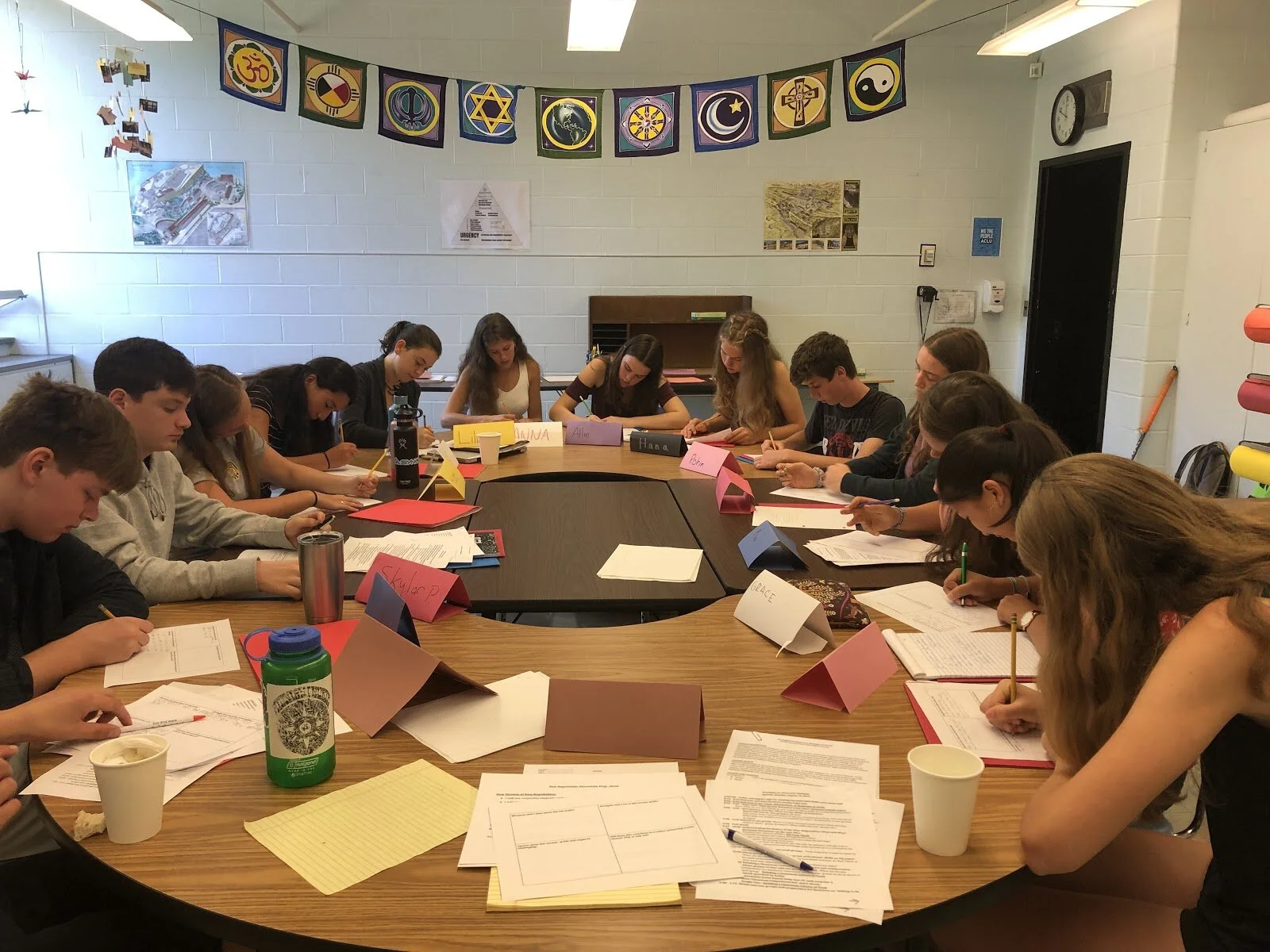
The Harkness Pedagogy involves conducting classroom discussions around an oval Harkness Table, where students lead the conversation by asking questions, exploring complex ideas, and valuing diverse perspectives. This method shifts the ownership and initiative for learning onto the student, promoting autonomy, empowerment, and appreciation for different voices.
### The Importance of Student-Centered Learning
Encouraging students to be inventors of their own theories, critics of others' ideas, and makers of their mark on the world is central to the Harkness philosophy. By engaging students in deep inquiry and providing an authentic voice in the classroom, educators can stimulate curiosity and creative thinking.
### Implementing Harkness in the Classroom
To successfully implement the Harkness Pedagogy, teachers must create a classroom climate based on trust, mutual respect, and collaboration. By teaching the soft skills of civil discourse, students can practice communication, collaboration, and teamwork before participating in Harkness discussions.
### 🗒️ Notes:
- Students are catalysts for their learning process.
- The focus on student-driven discussions empowers learners.
- Harkness emphasizes civil discourse and critical thinking skills.
- The method promotes diversity, equity, and inclusion in the classroom.
## 📖 References:
- Aida Conroy
- Meg Foley
- Becky Moore
## 🗣️ Paraphrase:
1. Students, according to Katherine Cadwell, must be actively engaged in their learning process to be successful creators of knowledge. She emphasizes the importance of student-driven dialogue to nurture curiosity and creativity among learners.
2. The Harkness Pedagogy places students at the forefront of the educational experience, encouraging them to ask significant questions, appreciate differing viewpoints, and collaborate effectively for meaningful learning outcomes.
## 🧪 Hypotheses:
1. Future studies could explore the long-term impact of student-directed learning on academic performance and critical thinking skills.
2. Investigating the correlation between civil discourse practices in classrooms and students' civic engagement outside of school could yield valuable insights.
### ❓ Questions:
- How does the Harkness Pedagogy influence student engagement and motivation in the classroom?
- What are the key challenges teachers face when transitioning to a student-centered learning environment?
### 🔮 Future Research:
Exploring the efficacy of the Harkness Pedagogy in online learning environments presents an area for future research. Investigating how the method impacts students' digital literacy skills and collaborative abilities in virtual settings could enhance educational practices.
### 💡 Implications:
Implementing the Harkness Pedagogy across diverse educational settings could contribute to fostering students' critical thinking, collaboration, and communication skills essential for active citizenship. By emphasizing student voice and participation, this approach holds promise for transforming traditional teaching methods.
### ✅ Logical validity:
The argument for student-driven learning presented in the article aligns with established educational theories emphasizing active student involvement in the learning process. The emphasis on civil discourse and questioning skills seems logically coherent and valuable for promoting student engagement and intellectual growth.
## 🎯 Conclusion:
The Harkness Pedagogy offers a revolutionary approach to learning, empowering students to take ownership of their education. By fostering critical thinking, civil discourse, and collaboration, this method prepares students to become active contributors to a democratic society.
- Document Tags: [[classroom management]] [[pedagogy]]
- Summary: The Harkness Pedagogy focuses on student-directed learning, encouraging students to ask deep questions and engage in meaningful discussions. This approach shifts the teacher-student dynamic, giving students ownership of their learning and promoting skills like civil discourse and collaboration. The website offers resources and teaching materials to help implement Harkness in classrooms, fostering a more inclusive and empowering learning environment.
- URL: https://www.katherinecadwell.com/home?
 ### The Harkness Pedagogy
#### Students Drive the Conversation!
 #### **KatherineCadwell**
##### **Rowland Fellow 2016**
###### ***“There’s a radical – and wonderful – new idea here…that students can and should be inventors of their own theories, critics of other people’s ideas, analyzers of evidence, and makers of their own personal marks on the world. It’s an idea with revolutionary implications. If we take it seriously.”***
— Deborah Meier (1955)
The most important thing I have realized in my 39 years of working with young people is that ***“the one that does the work does the learning.”*** Students must be engaged in asking deep and meaningful questions about what they are learning, and they must have an authentic voice in our classrooms and communities. I firmly believe that we must undo what previous schooling has done to inhibit curiosity and the creative thinking of students. “If we want to engage students in thinking through our content we must stimulate their thinking with questions that lead them to further questions. We must resuscitate minds that are largely dead when we receive them. We must give our students what might be called “artificial cogitation” (the intellectual equivalent of artificial respiration)” (Paul, Martin, Adamson, 1989).
In 2016, I was granted a [Rowland Foundation Fellowship](http://www.therowlandfoundation.org/fellows_2016.shtml) to investigate the ways that the Harkness Pedagogy can be used at the classroom level to create the fundamental shift to student-directed learning that must be at the heart of school transformation*.* Since then I have been working with students and teachers to instruct them how to infuse Harkness into teaching and learning in their schools. I teach a Harkness Leadership class for high school students, run a Harkness PLC for teachers and offer graduate courses “Strategies in Classroom Dialogue” for middle and high school educators..
###### ***What is Harkness?***
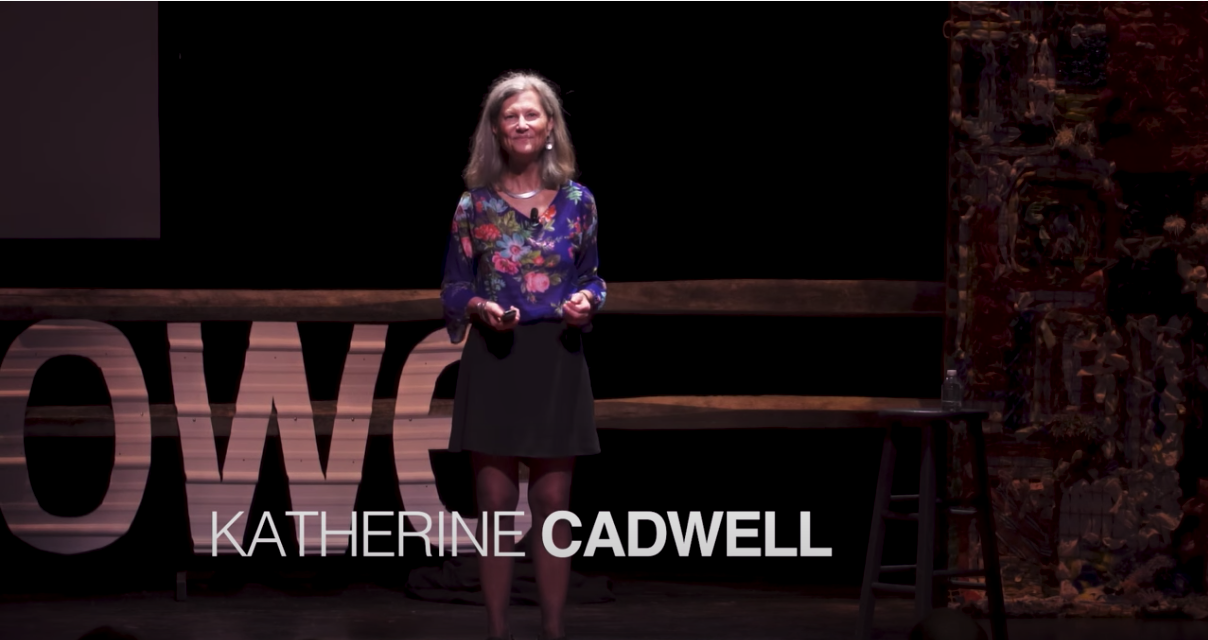
A classroom revolution is overdue, not only for improving learning but for the health of our democracy. In this inspirational TEDx talk Katherine Cadwell shares how after 30 years in education she completely flipped her classroom and teaching style. The Harkness method puts the focus of learning back onto the students: teaching them how to ask critical questions and the skills of civil discourse. Katherine has been a teacher at Harwood Union High School since 1981- she is a 2016 recipient of a Rowland Fellowship, the 2016 Foundation for Excellence in Education Award and the 2016 Gilder Lehrman Vermont Teacher of the Year.
The Harkness Pedagogy places students at the center of the educational process; it fundamentally shifts the dynamics of the teacher-student relationship and places ownership and initiative for learning on the learner. Students drive the discussion by asking probing questions and working together to delve deeply into complex texts/ideas and make meaning of their investigation. The skills of questioning, valuing different perspectives and learning how to disagree respectively and work collaboratively are the essential skills our students need to acquire if our democracy is to remain healthy, vital and strong. Now, more than ever, we need to teach students how to use their voice in the classroom and in our greater world.
In a Harkness class learning takes place through discussions held around an oval "Harkness Table.” All members of the class must question, contribute, and contemplate in order to learn and succeed. This pedagogy places students at the center of the educational process; it fundamentally shifts the dynamics of the teacher-student relationship and places ownership and initiative for learning on the student. Harkness promotes authentic student inquiry, equity, inclusion and the importance of diverse perspectives. Students develop a sense of autonomy, empowerment, and appreciation for all voices around the table.
###### ***What you will find on this website:***
This site contains teaching materials and resources to help infuse the Harkness pedagogy into the public school classroom. To have effective Harkness discussions, students must learn and practice the skills of civil discourse. Teachers at our school work to scaffold Harkness instruction in steps:
1. Creating non-negotiables for each classroom to help establish an “urgency for learning;”
2. Working intentionally to create a classroom climate based on trust, mutual respect and collaboration;
3. Teaching the soft skills of civil discourse to students, and
4. Practicing these soft skills and collaborating in “Teamwork.” Only when the students are proficient in the skills of Harkness in small groups do we invite them to “Come to the Harkness Table”.
Most of what I have learned is due to the mentorship of Aida Conroy, former Harkness coach at Noble Academy, Chicago Il, Meg Foley, Harkness Outreach Coordinator, Phillips Exeter Academy and Becky Moore, English teacher at PEA. These individuals have inspired my work and the work of Harkness at our school. My colleagues at Harwood Union HS in Duxbury, VT have inspired me as well and have contributed to this site. Feel free to download and make a copy of any materials and resources for use in your classroom. For additional information or questions about Harkness and/or to receive a copy of my hard copy binder on Harkness instruction (which contains additional and different materials) please [contact me](mailto:
[email protected]).
###### ***Other things about me:***
I have a BA from Middlebury College in Sociology/Anthropology and a MA in Curriculum and Instruction/ International Studies from the University of Denver. I have been teaching at Harwood Union High School since 1981, and am enrolled in a Master’s program in Classical Studies at St. John’s College, Santé Fe, New Mexico. In 2016, in addition to the Rowland Fellowship, I was awarded the Foundation for Excellence in Education award for Vermont and the Gilder-Lehrman History Teacher of the Year for Vermont.
I am one of the co-founders of PH International, which was started in 1985. PH International’s mission is to build a strong global community by fostering civic engagement, cross-cultural learning, and increased opportunities in the digital age. As part of my work with [PH International](https://www.ph-int.org/), I have done extensive travel and teaching abroad and taught English in the Republic of Georgia for an academic year. I continue to offer professional training opportunities for teachers and students in the countries of the former Soviet Union., Strategies for Classroom Dialogue, Strategies for Classroom Dialogue, 01ha730h06cyd7efkeb098w42z.