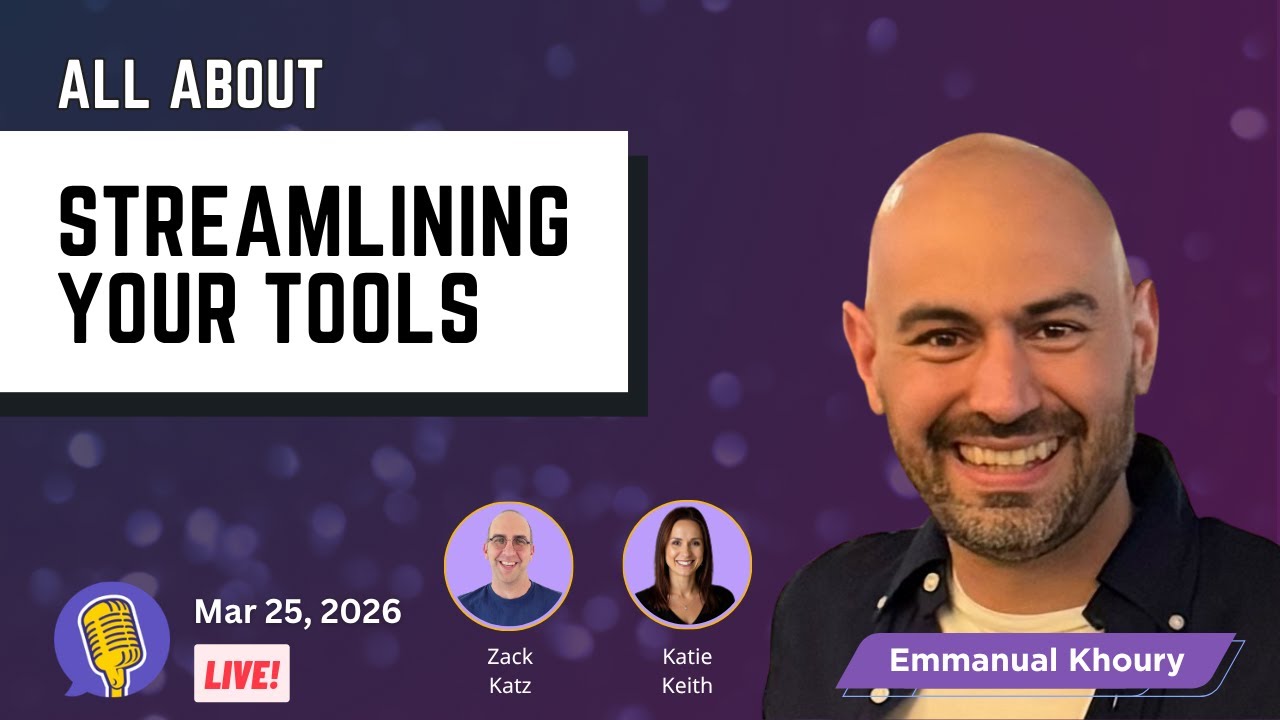
Streamlining Agencies From Fragmented and Disconnected Tools
Joke for you, but it's not funny. Uh, you might have heard it before. How many tools does it
take to run a website? So what's hiding behind every simple
WordPress site, uh, an agency manages, uh, is a ton of tools, a ton of functionality. The website itself, the hosting,
hosting, security backups, reporting. It is so many tools. Every one of those tools is a
seam where things can break. So in this episode, we're going to be
pulling back the curtain on the real
operational chaos Inside WordPress
agencies sh with hidden costs, slower delivery, stressed teams, clients who
can never really know what's going on. We're talking about what happens
when agencies stop duct taping their tech stacks together. And start consolidating. And that is an opportunity for
WordPress product builders. So this shows for you.
This is WP Product Talk, a place where
every week we bring you insights, product marketing, business management,
and growth, customer experience, product development, and more. It's your go-to podcast for
WordPress product owners. Buy WordPress product owners
and now enjoy the show. Hello everybody and
welcome to WP Product Talk.
Uh, before we get started, if you
benefit from WP Product Talk, if you like the show, we would love your support. The easiest way to show your support is to
hit that like and subscribe button down. Uh, just hit it right now. It only takes one second. It makes a huge difference. Thank you so much. And if you're listening in on
a podcast player, check out our YouTube channel and please subscribe. Yep, absolutely, and huge
thanks to Freemius for being our exclusive growth partner. Freemius helps software makers
grow, monetize, and succeed.
It's a merchant of record platform,
so they handle everything to do with selling software, including the checkout
payments, subscriptions, licensing updates, the dreaded global tax
compliance, so that leaves you more free to focus on building amazing products. Yeah. Thank you Freemius. Uh, and uh, for this topic, this
this really important topic on tools. We've invited the guy for tools. Uh, we've invited Emmanuel
Khoury to the show.
Welcome Emmanuel. Uh, thanks for coming on. Please introduce yourself, uh, and tell
everybody a little bit about yourself. Hi Zack. Hi Katie. Thank you so much for having me. So my name's Emmanuel. Um, as you can tell from my
silly accent, I'm from Australia. Um, I can see the sun is slightly rising
up here where I'm based in Adelaide. And, um, and like you said, I'm from
WPStaq and yeah, we're all about, uh, reducing fragmented tools for digital
agencies so that there's one source
of truth that they can manage, manage,
and run their digital agency at scale. So tell like, thanks,
thanks again for coming on. Um, for anybody watching live
on YouTube, please feel free to leave a comment, ask questions. We're, we're gonna be addressing
the comments as they happen. Um, tooling. Emmanuel, what do, what
are we talking about here? What does this even mean? So the best way to put it is
WordPress started as a blog, and so
infrastructure was the afterthought. So when WordPress was having
issues, then they introduced caching plugins, and then security, and then
management and all these other tools that have just been the afterthought
of, um, WordPress essentially. And so what we have done is we look at,
uh, from an infrastructure level, how
can we deliver better caching experience? How can we allow agencies
to manage more efficiently? Not on the WordPress level, but
on the infrastructure level. And yeah, it, it is just turned
into security eventually. Uh, eventually, sorry,
turned into security. How we look at billing systems, how
we looked at processes internally, how can we take advantage of the
infrastructure and automate things. So yeah, we've just looked at it from. From that aspect, from an infrastructure
and automation level, and just put the
two together and, and, and created. You know what our product is today, right? And I, when I, when I think about tooling,
uh, I think about every single thing. So if you were to, uh, quit today
and leave your company, each one of you listening, uh, think of all the
things that people wouldn't know. How they work. And if you don't have that documented,
please get that documented. We have another episode of WP
Product Talk and on transition
plans and things like that. Um, but CloudFlare, that's a whole lot of
functionality, uh, every single plugin. What does it do? Um, uh, where is, where
is something hosted? What domains are registered? Where, uh, what's your mailing provider? Amazon. SESI just gave my lead developer today. My lead developer, Amazon, SES, access. 'cause I realized I was the only
one that had, that had it in the company and that terrified me. Like, oh geez, I was the
only one with access.
Each one of these things could go terribly
wrong and people need to know about. Um, and each one of them is an opportunity
for businesses in the WordPress space to, to really help with this, um, chaos. What do you think, Katie? Yeah, I think this is a really great
example of scratching your own itch because a lot of WordPress product people. Have previously done either freelance
work as an individual or an agency
so you know what the pain points are. This could be a really
good market for you. And I think it's also a good market
in terms of marketing because we've seen a lot of changes in the WordPress
space with, um, marketing channels like Google Organic going down massively. Targeting agencies with a product can
be really smart because that's more of a one-to-one kind of partnership
type play, rather than expecting people to find you on Google, which
doesn't work as well as it used to.
Yeah, and I think a lot of our
listeners, I know, me personally, I have never worked at an agency. I have only worked with agencies. Uh, I was. An agency, but it was just myself working. You know, I, I don't know. Uh, I, I don't really
know how things work. So when, when, when we're talking
tooling, Emanuel, what does that look like for an agency? Yeah, no, that's a good question. So I used to operate a digital agency. And what, uh, so for example.
As you start to scale, you
would need a management plug in. And, and you know, there are respective
brands in the industry from like, manage WP Main, WP, and, and there's many others. And so as you start to scale, you're like,
okay, yes, I need this, this service. And then you're like, okay,
I need to do reporting. And then you're like, okay, I've
got a separate backup system. So using a separate. Backup system, and then you're like, okay,
I need to offload this backup somewhere. And then it's usually like, then you get
to a point where someone has a DDoS attack
or some form of attack, and they're like,
oh, okay, security's the afterthought. So they start to add in something
like Wordfence or any other security plugin, and then two FA became a thing. And so it's either you. To a FA plugin or, um, you're
using Wordfence, for example. And then it came down to, then after that
it's like, okay, um, this server doesn't accept, um, I need to install an SMTP
plugin and then have an SMTP service. And then before you know it, I don't
know, you need to introduce cloud flow.
So you want to try use their proxy and,
and the caching rules and it's just little processes that are so manual. And so imagine when you
try to do that at scale. Imagine if you've got a hundred
websites under management, 500 websites under management. Like the whole thing just comes
down like a, a deck of cards. And I haven't scratched the surface yet. There's, there's all these processes, like
you speak to agencies, it's like they've got a brand new client, they've gotta
spin up an environment and it varies.
Some, some will say it can
take them 10 minutes to do, sometimes it takes one hour to do. And it just the whole. Process is just not streamlined. It's not consistent across
all the agencies I speak to. And so yeah, that's, it's like
I haven't scratched the surface. There's a lot more than that. Hmm. Yeah, definitely. And I think one key thing for agencies is
even if they are, they're selling their
time on a project they're quoting for
a project is always more profitable to. Do some element of productizing your
service, even if that just means creating a template website, which you clone
as a starter for each project, or a custom theme that you're always gonna
use and modify or anything like that. It's all about that, um, efficiency
that you can get in order to get more profit or less time on each project while
still providing the same quality of.
Work to your clients. So I think that anything
that can help agencies with that, uh, can only be useful. Oh, a hundred percent. And even we see, um, for example,
um, different server environments, op operate and do different things. So like you could be, you've
gotta brief for a, um, from a client say, Hey, please go up, uh,
improve my core web vital scores. And then usually again,
it's a whole tech of. Plugins to just optimize the site,
and then you might apply the same
settings to the same website on
different server environments and you're getting different results. And so yeah, it, it's just, yeah. So sometimes even just using too many
services can just be a distraction to the business and the agency. And again, if it's coming down
to charging a fixed price, um, they're gonna be losing money. And if they're doing it on an hourly
basis, they're not competitive. In the market where another agency
that has, you know, a great set
of tech, tech, uh, techs, like a
great tech stack, can actually do it much more efficiently and cheaper. So it's definitely not a
win-win situation for an agency. Yeah. So how, one of the things that
is a question that product owners have a lot is how do you break
into agency flows, processes? We all know that it's
tough to change routines. Um, is. Do you have any advice on that? Because like, uh, one of the, I I
do think that now is a good moment
for this revolution of AI to, to,
to come in and say like, okay, now is the time to leave your old stack
behind, and now is the time to move to a different thing that works better. Like, and if you sprinkle a little
AI sauce on there and just say like, AI, ai, they, that might, that
might lubricate the, the process. But like, how, how do you
recommend, uh, doing that? I've got the benefit because I
work with many cultures around
the world with different agencies. If you asked me how to do that
with an Australian agency, I would say take it one step at a time. Uhhuh, I find American agencies are a lot more. Where they would say, just rip the
bandaid off and let's just do it. And if we need to rip the whole
process, we'll just do it now and deal with whatever comes next. And so Emmanuel, I love that. I've never heard this before
and it makes total sense. It does. And the British, they wanna like
have tea or something, I don't know.
Yeah, exactly. So yeah, that's, I, I mean if you wanna do
it slow, if you wanna do it the Australian way, I would say one step at a time. Hmm, interesting. Do you think that that, uh, would
that suggest that different marketing site copy would be, uh, an extension
of that for different regions potentially? Yeah. Um, or in the case, what we do is we just,
we start off with the, the pain point.
So the thing is that we've
recently discovered, um, is that. Selling the problem of fragmented tools isn't a good thing when the, when the
market knows that there isn't a problem. So if you think about it, the way
a digital agency would operate is that if they've got a problem, they
use a plugin to solve that problem. Right?
But we're coming back and saying, no,
no, no, don't do a plugin solution. Where we're the infrastructure? Um, can fix that. And so if they're not educated
to know that, then they will not know what we're talking about. So we've gotta go from
the very first step. Why did they reach out
to a different host? It's usually because of speed and
security reasons, and it's, and then they can start to see the benefits after. Hmm. Yeah, it's really getting my
gears turning in terms of, um.
I am Gravity Kit. We are always talking to like. The generic customer. We've talked a lot on WP product. Talk about how talking to the customer
is the same as talking to the agency. Uh, in, in, in a lot of ways because if
your agency, the person at the agency investigating your product is often
somebody who's looking at it through the eyes of their customer or their client. But what I'm hearing you say is
like, that's not really the case.
You have to address the
agency's needs separately. Yeah, correct. Well, we've been talking largely
about internal tools for agencies so far, but, so that makes sense. The other side of that is agencies buying
products on behalf of their customers, so that typically would be themes or plugins. Or hosting services or something,
but something that's gonna enhance their customer's websites. So I think that's when that dual
lens comes in, where they're thinking
through their customer's eyes. But as Zack says, it is not just
thinking about what's best for the customer, because for the agency,
it needs to be profitable so they can add a significant markup. It needs to be easy to use. It needs to be. Really good quality and something that
they can put their name behind, not necessarily white label or they, that
sometimes a factor, but there's a lot of priorities about what will benefit
the agency in choosing what products they use for their client sites.
Yeah. Emmanuel, what do you, what do you
think makes a product good for agencies where it's just a walk in the park? It's gotta be frictionless. So from a client's expectation,
they want the outcome. So say for example, let's talk where
a client comes to an agency says, I need a great page speed insight
score for core word vitals purposes, they just expect the outcome.
How they get to the outcome
is not their problem. It's the agency's problem. So they need the solution that's
gonna deliver, deliver that score to that client efficiently. Frictionless as possible. And that's where a great tool will come
in, or a great product will come in. And in terms of like, uh, WordPress
product owners, when they're thinking about trying to make these tools that,
that simplify and, uh, and hide the
complexity for the client and make it easy
for the, for the agency to, to deliver. Um, w what, what, what would you say to
somebody who has, uh, a suite of plugins? Katie and I both have plugin suites,
uh, that each plugin has a lot of different settings, a lot of
different configuration options. Like a lot of our listeners, I think,
are plugin developers are, are, are also small, small site builders
as well, but like theme builders.
What, what, what takeaways are
there from thinking about the simplifying thing and uh, are there Yeah. Got it. That's a good question. So the way we see it is
what infrastructure can do. That's what we have built. And so in other words, whatever
works above the WordPress layer, that's what we do mm-hmm. In our process and features function.
And then. When it comes to building a website,
could be a theme builder come, could come, you know, could be another plugin
that works with that theme, then that's obviously where that's WordPress level. That's where we don't get involved
from an infrastructure level. So what we do is, um, to, so to give you
specific examples is that a caching plugin on WordPress works on the PHP level. There are much more efficient lays
above that in the server that can
handle caching or, or caching. And so actually we had that joke into
before, but, um, so when it comes to caching, we can allow the engine
X level and the server level to do, to handle that, and that's more
efficient on the WordPress level. Or if you look at a firewall
system, um, there are many points that a firewall can, uh. A a, um, a hacker can try to attack, and
it can also be above the WordPress level.
It could be that P-H-P-F-P-M, it
could be try to, to, uh, attack the Apache or engine X level, or it could
be something else in the server. And if Wordfence, for example,
is on the WordPress application level, it can't see beyond that. It can't see above that. It can only see below that. And so you're really leaving. Um, plugins to do critical things
can also cause issues because
it can't capture the whole, the
whole issue, if that makes sense. And it's just, yeah. Beyond that, there's, and then you've
got workflow issues that just take time. So, yeah. So again, when you look from an
infrastructure level, um, you, you let the infrastructure do what's more
efficient, and then when it comes to what. Building inside WordPress, then you've got
the plugins that can actually do what's supposed to do on the WordPress level. Right.
And how do you, uh, Katie, how do you
talk to agency owners who, like, do you talk to agency owners at Barn too? Like, uh, how do you, uh, how do you
talk to them about their experience? Um, I aspire to talk,
to talk to them more. Um. But, uh, yeah, there a lot of, we
had a really good episode of this show last year with a guy, um, who
has a Shopify app company, and he
shared a lot about what he does. He, he has entered a really crowded market
for Shopify apps, but he gets loads of sales because he partners with agencies. And I learned a lot in that episode
that I think most WordPress companies haven't quite mastered yet because
you can really make those connections. Um, you'd need a product that an
agency is going to use regularly. I think that's a bit difficult for me
and Zack particularly because our plugins
do quite specific tasks that may not
be relevant on every project, but if you have a more wide appeal product,
then that could work really well. So I thought that was very interesting. Thing, but I know it's something that
we should do more largely to protect ourselves against the drop that
we're having because of the decline in things like Google Organic and
website traffic and all of the things that are the result of the way AI has
turned everything, uh, upside down. Um, so that was interesting.
But another thing I always. Think of is that, um, at Press Con
last year, um, Zack and I and some other people had dinner with some age
owners of a major WordPress agency who told us that they practically never
used plugins on their client sites. They just build everything bespoke. And they were a particularly large agency. But it made me realize you really need
to know who you're targeting because. Some agencies, particularly the small and
medium ones, do source products that will
meet the requirements of each project. Others just build everything themselves
and there's literally no point. So that was a bit of an eyeopener for me, and that was before AI
really had taken off. So if that was a problem before
then, that I can only imagine now. So they must be building for the
enterprise market then, I assume. Yeah, they're, yeah. They were a, A major agency, yeah. Mm-hmm. Yeah, the, you know, one of the
problems with and opportunities
of WordPress is the, the boundary
gap between who your customer is. Um, you know, Emmanuel. Do you, does WPStaq only
target agencies or is it, yeah, correct. Yeah, so we only work with digital
agencies and we do have like publicly listed companies and government. That use our platform, but it
all comes via the digital agency. And so there are times where we'll go
directly to that enterprise or directly
to that, uh, government department. And then, uh, but we will say, we
would like to work with your developer. And so that's how we. Um, we, we don't un, we
don't wanna undercut anyone. We just go, yeah, straight to the dev
development because they're usually the gatekeeper of the website if they're, and what is that like to, to only
work, to be so removed from the, like, the cu the person who's actually
interfacing with your product.
I mean, not that you are removed
from your customer, but it, it's just a different relationship. Well, for us, we build a,
we build a digital agency. And, uh, and so technically and
contractually, they're our client, not their client, if that makes sense, Uhhuh. And so the market that we operate
is typically the digital agency that manages and pays for the hosting. And they could be providing
care plan services essentially. And so how it is to deal with
'em, it's amazing because it's,
we get to see their issues. We can solve that issue in our products. Mm-hmm. And so that means that we, we've got
a true lens that we only focus on their needs, and so then our product
becomes relevant to their needs only. One of the things that I've experienced
with, with dealing with agencies in our customer support is that they rarely reach
out to customer support, which makes them, you know, a great customer, uh, because
the costs are low, but it also means that
we don't have visibility into their needs. Uh, how do you go about that, Katie? Like, uh, finding out what agencies need. Yeah, it is much harder because
as you say, they're not providing, um, support requests to you. They're not giving you that feedback
in the same way we've, we've tried this a couple of times where we've
started a project to reach out to agencies that are using our products. Generally, they don't receive. Yeah. Uh, we've recently discovered that one
of our plugins is particularly popular
with a very specific industry sector. So we've now started a new
project to target agencies who specialize in that sector. And we started, we've had a higher
response rate, which still early days in terms of what we can learn from them. Um, we are also hoping
to feature them as case. And you know, studies, there could be
multiple benefits as well as learning from them, but it is not easy because
they just want tools that they can get on
with and they don't necessarily want to
be your partner directly in that sense. They just want the tool to do the job. And you are right. It's, I find that once you are in
the door with an agency, it is that they are much easier to deal with. And we're typically not
working with the solo agency. They, they've got teams behind
them and, um, and yeah, it, once you rent it, it's fine.
I've, I've, I've found the opposite
once I'm in, but, but that's not saying that if I reach out to everyone,
they're gonna all respond to me. It just depends. Yeah. If it's important to them or not really. I think so. And how do you find new
agency clients, customers? Uh, uh, we, we, we do paid ads, so
they find us via that and referrals and, and, and chat, CPT and, and, uh,
AI models now, so, and Reddit as well. Um, so yeah, so they, they
typically find us, um.
When they come to us, it's because
of specific issues relating to speed and security and AI bots. AI bots has become a massive thing. And uh, and I guess because we've built
our own firewall system, um, that has, um, helped us to pitch that and to win that. And so yeah, we, we typically see that
they come for very specific reasons.
And issues and, and that it's typically
urgent and, uh, and that's it. Whereas, as you probably know with
an agency, if it's not urgent, they won't deal with, it's, I think human nature for me, like the client's gotta be on their back. They must be like they're
trying to put out a fire. And that's what typically agencies do. They, they put out fires and
that's, and so that's, yeah. So you've gotta understand. The psychology and what the agency
has to deal with in order to then attract them with the right message.
And how do you decide, like how do you
find the decision maker in agencies? Like how do you know who
the person is to talk to? Uh, sometimes what I found in the past
was if I really wanted to work with an agency, you'll send them an email. They don't respond. I just pick up my phone
and just call 'em and. Um, I use a polo, I, uh, I use LinkedIn
and I can essentially find a decision maker and typically the digi, the a,
the decision maker In an agency, it's
either, they're gonna say that they're the
director, a CEO, but if I do see that the ti that the team is minimum 15 employees,
I will not go directly to the CEO. I will then try to find a, a, like a.
Um, a delivery manager of some kind, or a project manager or a, um, or head of
digital or head of someone, and that's where I typically start from there.
Hmm. Yeah, I think that's sensible. That shows an understanding of the
structure of different agencies because we are talking about them
like they're one category, but actually it's incredibly varied. It could be one person that calls
themselves an agency, like as Zack was saying, or it could be a huge
agency with even certainly dozens, maybe even hundreds of people. For the larger ones, they're actually
completely different things to deal with, and so we need to adapt. But for me, we've referred to AI a
few times in this conversation, but
really the elephant in the room is
whether any of this conversation is relevant given the agencies can just
build their own stuff so easily. With AI these days, agencies clearly
have developers, um, well, you don't necessarily need to be a developer. They can get on with these
things, and they're probably very. Uh, advanced power users of ai. So do we even have any hope of attracting
them into the future, do you think?
I think certain things, yes. I think we have been, when we started Stack, we said to
ourselves, between my co-founder and I, what if AI does become that thing and. We've pinpointed that for AI to work,
whether it's in the WordPress ecosystem or not, you need infrastructure. Yeah, you're fine. Everybody needs hosting
infrastructure point of view. Um, but then yet again, uh, you see a
lot, you hear a lot of horror cases with custom plugins that AI has developed
and security leaks and security flaws. So it's. AI just accelerates things, but
I don't think it's gonna kill everything, if that makes sense. It's just gonna change the dynamics of the
market and no one really knows how it's
going to change, but we just definitely
know that it is going to change. Right. You know, as agencies are shifting,
um, and not just agencies, but like large plugin shops, like Stellar WPS
had another round of layoffs like. These, these businesses that Amazon,
you know, 30% of its workforce, uh, block 30% or 40% of its workforce,
which is, uh, the owner of Square and other platforms, like, there's,
there's so much disruption in terms
of the work, uh, the workforce itself. The people working and the people
working are likely more likely to use ai. So I do think that the, the way that
agencies work right now is shifting. Um, how do we connect to
these agencies like Emmanuel? You, you said you were, you used Chachi
Peti to find the agencies themselves and you pick up the phone and call. Um, I'm also wondering, you know,
uh, we're going to press comp. Katie and I, uh. Emmanuel.
I, I hope you're there. But, uh, it's also half the world away. Um, I mean, you never know, but are there, uh, are there places
where people congregate that, that agencies like, share their
deepest, darkest, uh, workflows, I guess Word camp, but mm-hmm. We haven't, but there's no
word camp here in Australia, so maybe I'm, I might need to. That's weird. The us Yeah. That is weird. There was one. You must feel so left out all the time. You're on that long time zone.
No big events. Oh no, there's no word camp this year. There was one last year in the
year before, but, uh, not this year, but, uh, but yeah, it's ums. You did say something and I was, I I
I was, I forgot what I was gonna say, but actually now, now I remember. I think there's always
gonna be a digital agency. I think the teams will be just get
smaller, so it should be easier to get in reach with the, with the
decision maker then, um, because yeah, AI is just gonna empower them to do
a lot more with a lot less people.
And typically what people
do when they get laid off. They will have an idea in
the WordPress ecosystem. They'll start up a new idea and
yeah, ideas will always flourish and whether there's AI or not. So one of the things that AI is allowing
right now is, uh, consolidating tools and, uh, people who have smaller plugins are
finding those smaller plugins are not.
They don't have a moat around
the AI development space. Katie wrote a great write up on
this, that the, she's found that smaller plugins don't fare as well
when compared to bigger plugins. Um, those is there What do, what,
what do, what do we think about how AI are, are looking at, sorry. How agencies are looking at the tools
they're using and, and determining whether or not something's worth keeping around. It is gonna come down to the biggest
value that the the service provides.
Really. If it's gonna be such a simple
thing, then yeah, it, it could potentially be disrupted by ai, but
if it's such an integral part of their business and workflows, then
you would assume that it wouldn't be touched first or not touched at all. Yeah. One of the things we're, we're
trying to do at Gravity Kit, we
have got a product in the works. Uh, that's, that we're trying to
really have good product market fit. So one of the things that, and that
we have great episodes on product market fit and WP product talk,
uh, check our backup back episodes. Um, but I'm normally the guy
who builds something and then tries to fit the product. Uh, tr tries to find
product market fit after. Um. One of the bigger questions I've
had is how do I propose to an agency how this would work for them? Like if I'm building a tool
that builds dashboards.
'cause that's what it is,
you know, spoiler alert. Um, there's like reselling the dashboard
to your, their clients is, is like a second level of functionality beyond like. Building a dashboard easily. Cool. Having a whole nother level
of functionality where you re, you're able to build a dashboard
for your client that you sell. Um, I don't, I don't have a question,
but I'm just trying to describe the
different thought process that I
have in terms of selling to agencies. It, the way the agency mindset is,
is that they're juggling many things. So they're always putting out fires. And so the best way to look at it
is what can you show them that's gonna solve an issue for them today? And if they magnitude that to a factor of
whatever, over weeks, days, months, years
to, to the time that they're gonna save,
that's probably the best way to do it. They're very time poor. Right. Just like lawyers, if you're
selling to lawyers or accountants. Uh, again, if you know how
to sell to, to that group, yeah. You, you'll find, how do you sell the lawyers and accountants? Well, you probably send them a
bottle of whiskey, to be honest, but.
Well, I happen to know Emmanuel, that
you might have a background that that touches on, uh, lawyers and accountants. Yes, yes. I, I did study law and I did work at
a law firm as well, so, um, while I was having my di while I was operating
my digital agency as well, so. It's, uh, yeah. Is there a difference between having
like a a between marketing to an agency and marketing to like an
internal house, uh, web team that
like a, a large law firm might have? Um, I, we've traditionally
never gone down that path. Mm-hmm. We've always just gone
directly to the, to the agency. Um, but typically those teams
do engage a third party. Service provider, which is
typically a digital agency, and they're the ones that are typically
managing the hosting anyways, so, yeah. So to answer that question, yeah, I, I
think they're just an extension of what
they can do on a daily basis and then
leave the digital agency to do typically more of the, the big picture stuff. Right. I've, uh, recently been consolidating
the tools that we use at Gravity Kit, uh, and bringing things more into
WordPress, and I think that that kind of reflects an opportunity that we all have. Um, where I've been using drip.com
and now we're migrating to, we have migrated to, um, uh.
Come on. Uh, fluent, the CRM fusion. CRM, what's it called? Fluent. Fluent. Thank you. My brain freeze fluent, CRM. Uh, and then we also have, we're about
to release a new product at Gravity that allows you to have a essentially, uh,
front end Kanban voting for features. So we are going to be moving
away from user voice and moving our feature request board. Onto our own dogfooding
product of, of Gravity Board.
So we are about to save between the two
of those, you know, 500, $400 a month. Uh, and that's, that's why bringing
everything into WordPress, so I think that if Gravity Kit, we have
a, we're a team of like seven people. If we're saving that much money,
that means that there's that much money to have for each one
of the Gravity kits out there. So I think there's a lot of
money on the table if, if the migration's easy with ai, right?
Um, if there are the, the APIs available
for developers to make the migration easy. Um, and the functionality obviously. But like, uh, I think that there's,
there's a huge shift away from costs and, and I think WordPress,
Matt Berg talks about WordPress as like the home of AI in the future. Uh, that's how he envisions it. And I do think that having a
single place where all your information lives is a huge benefit. A hundred percent. Like the way we're seeing things, um,
from an AI perspective is that, this is
my prediction on the WordPress side of
things, is that there's gonna be a lot of. Usage in AI and going to static websites. And so you might, you are already
starting to see that slight decline of WordPress, but then it's just gonna take
that realization that again, everything is scattered all over the place. Today And you need a database for
like, databases are good.
Exactly. Then for everything to be brought
back into WordPress again. And that's where I think what, you
know, WordPress being the hub of ai. Hmm. I think it's, yeah. Something I actually Yeah. Agree with. Yeah, I'm finding, uh, building
AI stuff on WordPress a lot easier than doing it out of WordPress
because WordPress has so much functionality already built into core. For example, scheduling through Theron
side of things and sending emails,
which is not that great at, but it for
internal purposes, it can send emails. As it comes. And if try and do that in
Claude, then it gets stuck. It doesn't wanna send an email in Gmail. It doesn't. The scheduling is rubbish 'cause
you've gotta have your computer on. Uh, so actually building stuff on
WordPress with AI is working well. Hmm. But don't forget, because the
WordPress ecosystem is so huge, the AI language models can learn
from WordPress quite easily.
So when it can deliver a solution
for you in WordPress, it's gonna be. Pretty much on point because
it's got so much data behind it. How are you, uh, adjusting your
marketing, if at all, to, uh, to market to agencies on AI channels? Like how, how are you approaching
agencies using AI at all? Yeah, so that's a good question. So you probably heard last year, and
there's many facets of AI that we're,
we're we're touching, but one particular
pressing one that we're seeing as of late is that last year you probably remember,
there was a segment in the news about CloudFlare complaining about AI bots. Yeah. And how they're just, yeah. Essentially, um, uh,
abusing hosting services. And they're, and then, and they're getting for nothing. Like for example, the hosting companies
are footing the bill and the end users also fitting footing the bill. So.
Because we've built our own
firewall system, we can stop a lot of the AI traffic. Not a hundred percent, but
we're stopping a lot of it. And so we are getting a lot of agencies
that are coming to us and saying, Hey, we're being affected by these
AI bots, so we're, we've been able to help them with that, and we can
e eventually mitigate it with the. Advice. And then from an another AI point of
view is that we're looking at the AI side of things, of how workflow's gonna
change when it comes to a client briefing
an agency, and how to build a website. So one thing that we're building
internally is a AI website builder for WordPress, where we are building websites
into the page builder of their selection. And for example. It's also built in the
workflow of an agency. So you get briefed from a client, you
then create the mockup or the website, show the client, they get approved, and
then you start building that website. We're, we're maintaining that entire flow.
And then you click deploy, it
deploys that website inside WPStaq. And then we're also taking all the
design elements into the correct module of say, elemental or Divvy
or, or, or that page builder. So it's not just A-H-T-M-L block. In the HTML module. So we're doing that. Um, we've also introduced a lot of AI that
helps debugging a lot more effectively. So for example, we've built our own
debug solution inside our panel.
And if you see an error, it looks
ugly, but you, there's a button that says debug with ai, and then it. Allows you to debug it
within our interface. So it's not a generic answer, like
what you would get from chat GPT, but I also see a future where, um, like
we do automated plugin updates and we do with regression testing, which
checks the code base to see if there's no critical errors and et et cetera. But I also see a future where,
um, and this is on our roadmap, where we will build out.
Um, AI agents that you can upload
how this particular plugin works, and that plugin could be installed
on a hundred websites, 500 websites. And then you have that AI agent checking
every 500 websites that has that particular plugin to make sure that
the user flow or the user experience or the user interface has a broken as,
as an AI agent navigates that website. So I see a lot of stuff
that, um, what agencies do. Can be automated with AI and it will
solve a lot of their issues and the pain
points that they have with WordPress. Hmm. While hearing you talk, I realize
that you, you're talking about your pa, your website builder, that
agencies want to be left in the loop. So much of the conversation
is like, do it yourself. Uh, just, you know, uh, all of a sudden I
have, uh, a website with ai, but agencies want to be needed and need to be needed. So, like, I love your handoff thing
where the agencies get the brief,
make the website and show the client. And that made me think of, uh, you
know, one of the things we haven't done, uh, I don't know why it's pretty
darn easy, is like white labeling. Making, making it easy for the
agencies to say, this is ours. We did this and here you go. As opposed to us trying to,
uh, maintain ownership over it. Uh, yeah, it's kind of a shift of mindset. I agree. You have any demand for white labeling? 'cause we get almost none ever in 10
years, so that's why we haven't done it.
No, but I think that
it's a shift in mindset. Right. Um, so if an agency creates a, a view
or like a, a product table, like don't they wanna say that that was something
they did or something that only they could do as well as they did it with
the tools that you provide them? It depends on the agency. They're also different, but
some, I'm sure that's the case. It depends on the service
that they're offering and how they're selling to their client.
For example, we offer white label tools
in our system where you will never see the word stack or WPStaq in in
anything in in a hosted website unless. It is by default. It does show that, but it depends
if the agency's selling care plan services, and so that might tell their
client that they're offering hosting and management and all these services. Then we've got a white label feature
that it, it hides stack hosting to then the digital agency's name right inside WordPress.
So it really depends on the agency and
and, and how they've sold it really. It's worth sending out a survey. Um, uh, we have a, a viewer from
Twitter or x I'm, I'm old apparently saying I've seen this before. People rush into cheap
solutions, then they realize later they've lost flexibility. Control plug in, freedom room to
grow a fast AI build site is not the same as a real business assay. WordPress will not die. Weak providers will. Uh, that's an interesting, uh, angle.
Um. So we, we are, unfortunately,
we're running outta time. Uh, but before we go, we always wrap
with our best advice, uh, that we have. If, if you had one thing to say
to somebody who asked you, okay, Emmanuel, what are we gonna say? Uh, what's the be single best
thing that you could do to think about tooling as a product owner? Um, when it comes to agencies,
what is your best advice? If it's a frictionless experience, that's
the only way to scale your business.
If it's costing you too much time
and it's repetitive, you can never grow a business or an agency. That should be like,
tattooed on my forehead. That's good. Uh, Katie, what, what about you? Um, for product people. My advice on building products that would
attract agencies is to really think about the agency's pain points and also think
about the threat of ai, which means.
Build big comprehensive solutions that
will be an integral part of their workflow so that once they start using it, it would
be very difficult for them to stop and they have no motivation to, um, building
small tools that just take you a small amount of time, uh, is not gonna work
in the future in the way it used to. So think big and. Satisfy real pain points.
A lot of tattoo as well. Everybody gets a tattoo. Um, mine is, uh, manel. You have inspired me on this call,
uh, to really again, return to the idea of agency outreach and like
talking to agencies one-on-one. If you are watching or
listening in advance of press comp, buy a press comp ticket. Emmanuel buy a press con
fly across the world. Come on. Um. It's, it's, it's worth developing these
relationships because like Katie's saying,
uh, agencies are, uh, if you have an
agency relationship, that's different than having to, uh, rank well for Google. So that, that type of
relationship is, is very valuable. Even more so now. So that's, that's my best advice. Uh, Emmanuel, that's a wrap. Thank you so much for joining us. Where can people find you online? Appreciate you having me. Um, LinkedIn, so you
can find me on LinkedIn.
Um, if you wanna have a, a chat with
me, um, there's a book call, uh, button on our website, WPStaq.com and um, and it's wps TA q.com. WPS TA q.com. Correct. Sorry. Please continue. And yeah, more than happy
to have a chat with anyone. Nice. Well, if you are enjoying these
shows, do us a favor and hit that subscribe button on YouTube. It's literally free, easy, and
it helps to support our work.
And special thanks to free us again and, uh, join us next week where we
have special guests, Matt Schwartz, to discuss how market fit matters more than
product when moving from services to SaaS. That's gonna be a good one. I'm excited to talk, uh, to
match Schwarz, uh, as well. So thank you so much again, Emmanuel. This was awesome. I, I'm fired up to talk to agencies
and, uh, uh, thanks for joining us, everybody, and see y'all next week., Streamlining Agencies From Fragmented and Disconnected Tools, YouTube, 01kmn7w4ce8230bbtbdte8q087.