Super-Chicken Model
## Metadata
- Author: [[wikipedia.org]]
- Full Title: Super-Chicken Model
- Category: #articles
- Document Note: # Title: The Super-Chicken Model: Effects on Team Productivity
---
tags: #SuperChicken #Teamwork #Productivity
Author: AI Research Team
Source: OpenAi Corp.
Reference: N/A
---
## Table of Contents:
* History of Super-Chicken Model
* Research by William Muir
* Business and Sports Applications
* Margaret Heffernan's Insights
* Negative Effects on Teams
* References
## Index Creation:
Super-Chicken Model, Team Dynamics, William Muir, Business Collaboration, Margaret Heffernan, Social Capital, Stack Ranking, Team Performance
## 📝 Summary:
The Super-chicken model emphasizes the negative consequences of recruiting hyper-competitive individuals, which can be detrimental to team collaboration and overall productivity. Research by William Muir using chickens highlighted the impact of this model. Business applications stressing teamwork over individual excellence and Margret Heffernan's insights on social capital reinforce the importance of collaboration.
## 📖 Main Content:
The Super-Chicken model involves recruiting highly competitive individuals who may hinder team dynamics due to excessive rivalry. Research by William Muir involving chickens showcased how hyper-competitive environments can lead to destructive outcomes. In business settings, Carol Dweck advocates for promoting collaboration over individual talent to enhance team performance. Margaret Heffernan's TED Talk emphasized the benefits of teamwork and social capital in boosting employee satisfaction and company profits.
### 🗒️ Notes
- Super-chicken model focuses on competitive recruitment practices
- William Muir's chicken experiment demonstrated negative effects of hyper-competitiveness
- Carol Dweck encourages valuing collaboration over individual talent in organizations
- Margaret Heffernan promotes the benefits of social capital and teamwork in enhancing business outcomes
## 📖 References:
- Purude University research on chicken behavior
- Carol Dweck's research on talent and effort in the workplace
- Margaret Heffernan's TED Talk on the value of teamwork
## 🗣️ Paraphrase:
1. William Muir discovered through his chicken experiment that hyper-competitive environments can lead to adverse outcomes for groups rather than individual excellence.
2. Margaret Heffernan's TED Talk highlighted the importance of fostering social capital through collaboration in businesses to drive profitability and enhance job satisfaction.
## 🧪 Hypotheses:
1. Increasing emphasis on collaboration over competition in team recruitment can enhance overall productivity in organizations.
2. Implementing social capital programs can mitigate the negative effects of hyper-competitiveness in teams.
### 📊 Methodology:
- Conduct surveys to evaluate employee perceptions of competitiveness versus collaboration
- Analyze team performance data in organizations with varying recruitment models
### ❓ Questions:
- How can companies shift from a hyper-competitive to a collaborative recruitment strategy?
- What are the long-term effects of implementing social capital initiatives in the workplace?
### 🔮 Future Research:
- Investigate the impact of social capital on team cohesion and employee retention
- Compare performance outcomes in organizations using the super-chicken model versus collaborative recruitment
### 💡 Implications:
Promoting collaboration over competition can lead to improved team dynamics, higher productivity, and enhanced employee satisfaction in organizations.
### ✅ Logical validity:
The arguments presented against the super-chicken model highlight the logical coherence and validity of prioritizing teamwork and collaboration over individual excellence.
## 🎯 Conclusion:
The concept of the Super-chicken model underscores the significance of fostering collaborative team environments for enhanced productivity and overall organizational success. Efforts to shift from hyper-competitive recruitment practices to those emphasizing collaboration can yield significant benefits for businesses and sports teams alike.
- Document Tags: [[recruitment]]
- Summary: The Super-chicken model suggests that hiring only top achievers can harm team dynamics and productivity due to unhealthy competition. Research by William Muir shows that in a group of competitive "super chickens," most ended up harming each other, while average chickens thrived together. Collaboration and valuing all team members lead to better outcomes in both business and sports.
- URL: https://en.m.wikipedia.org/wiki/Super-chicken_model
[](https://en.wikipedia.org/wiki/File:A_Very_Fancy_Chicken_(206902057).jpeg)
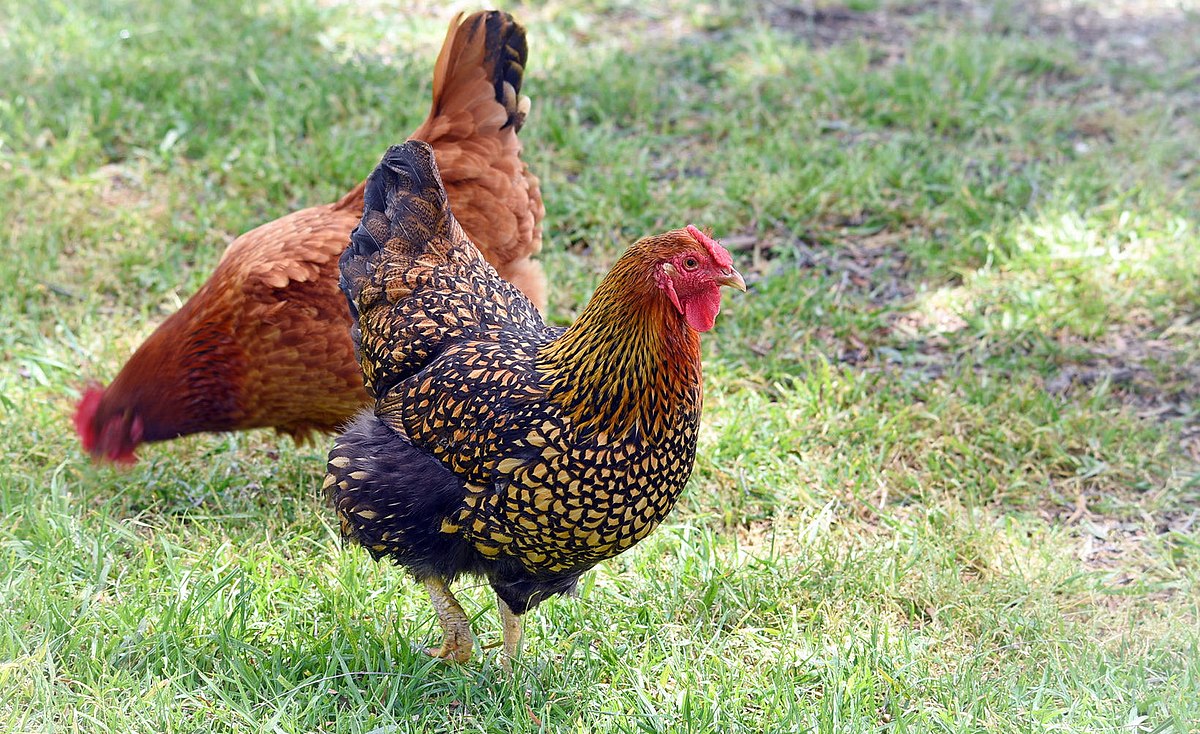
The **Super-chicken model** refers to a manner of team recruitment that favors bringing together highly driven overachievers. It is argued that this can be counterproductive because of the negative effects of hyper-competitiveness on a group's dynamic, and that recruitment that emphasizes collaboration over individual excellence can result in greater productivity.[[1]](https://en.wikipedia.org/wiki/Super-chicken_model#cite_note-1) The name makes analogy to the interactions among chickens observed in a study by [Purdue University](https://en.wikipedia.org/wiki/Purdue_University) evolutionary biologist William Muir.[[2]](https://en.wikipedia.org/wiki/Super-chicken_model#cite_note-2)
#### William Muir's research
Purdue University biologist William Muir conducted an experiment using chickens. Muir segregated chickens based upon their egg production. He grouped average egg laying chickens together. And he grouped together a prolific egg laying flock: he called these "super chickens". Muir kept these chickens in their groups for two generations and he found that the average chickens were doing fine and they consistently produced eggs. In the super chickens group, Muir found that only three survived as the group had pecked each other to death.[[3]](https://en.wikipedia.org/wiki/Super-chicken_model#cite_note-PAA-3)[[4]](https://en.wikipedia.org/wiki/Super-chicken_model#cite_note-BG-4)
#### The super chicken in business and sports
In business applications, employees work to become a "Super-chicken", and at times they keep their colleagues down so that they stay on top. According to [Stanford University](https://en.wikipedia.org/wiki/Stanford_University) researcher [Carol Dweck](https://en.wikipedia.org/wiki/Carol_Dweck), people do not all have the same views on success. Some people try to prove they are smart, and others believe that they just need to work harder. Dweck claims talent should not be praised. She claims organizations which are thriving do not label employees: Dweck's research has shown that this method fosters collaboration and cooperation among employees. The concept is that in business everybody has value on the team. Employees need social support, and they need to go to each other for help. The model suggests that choosing the "supermen or superwomen" can create harmful competition which does not benefit the organization.[[5]](https://en.wikipedia.org/wiki/Super-chicken_model#cite_note-LL-5)[[6]](https://en.wikipedia.org/wiki/Super-chicken_model#cite_note-Atlantic-6)[[7]](https://en.wikipedia.org/wiki/Super-chicken_model#cite_note-Dweck-7)
[Margaret Heffernan](https://en.wikipedia.org/wiki/Margaret_Heffernan) gave a Ted Talk in 2015: she tied the Muir super-chicken research to employee behavior in a business setting. Heffernan said when employees collaborate rather than compete they create "[Social capital](https://en.wikipedia.org/wiki/Social_capital)" the term came from sociologists who studied how communities deal with stress. Teams working together for the good of the business develop trust in each other. She claimed that one company that synchronized coffee breaks to allow employees to talk to one another and the companies profits increased, while employee satisfaction went up 10 percent.[[8]](https://en.wikipedia.org/wiki/Super-chicken_model#cite_note-Ted-8)[[9]](https://en.wikipedia.org/wiki/Super-chicken_model#cite_note-PM-9)
The Super-chicken mode of operation has produced adverse results in both sports franchises (comparing [Real Madrid](https://en.wikipedia.org/wiki/Real_Madrid) and [Barcelona](https://en.wikipedia.org/wiki/FC_Barcelona) soccer teams)[[A]](https://en.wikipedia.org/wiki/Super-chicken_model#cite_note-11) and other businesses. [Survival of the fittest](https://en.wikipedia.org/wiki/Survival_of_the_fittest) employee hiring models create adverse performance issues. This is a consequential [synergy](https://en.wikipedia.org/wiki/Synergy) between individuals and [group dynamics](https://en.wikipedia.org/wiki/Group_dynamics). [Stack ranking](https://en.wikipedia.org/wiki/Stack_ranking) can encourage [antisocial behavior](https://en.wikipedia.org/wiki/Antisocial_behavior), and have deleterious effects upon group outcomes, citing [Microsoft](https://en.wikipedia.org/wiki/Microsoft), [Enron](https://en.wikipedia.org/wiki/Enron), and [Amazon](https://en.wikipedia.org/wiki/Amazon_(company))'s experience.[[10]](https://en.wikipedia.org/wiki/Super-chicken_model#cite_note-economics-10)
#### See also
* [Crab mentality](https://en.wikipedia.org/wiki/Crab_mentality)
* [Dominance hierarchy](https://en.wikipedia.org/wiki/Dominance_hierarchy)
* [Pecking order](https://en.wikipedia.org/wiki/Pecking_order)
* [Vitality curve](https://en.wikipedia.org/wiki/Vitality_curve)
#### References
##### Notes
1. **[^](https://en.wikipedia.org/wiki/Super-chicken_model#cite_ref-11)** "Research on salary allocation shows one mechanism why this can occur, finding that pay inequality is linked to detrimental issues within teams, such that teams with highly unequal salary structures tend to also elicit more negative affect for their members, which can then lead to greater within-group problems.10 Furthermore, the Nobel Prize-winning economist James Buchanan – concerned with the aforementioned ‘mismatch of incentives’ within hockey teams – concluded that as the number of selfish players increases, so too does the likelihood for the other players to adopt the selfish behaviors.1" [Footnote citations omitted][[10]](https://en.wikipedia.org/wiki/Super-chicken_model#cite_note-economics-10)
##### Citations
1. **[^](https://en.wikipedia.org/wiki/Super-chicken_model#cite_ref-1)** Editor, [Is the Professional Pecking Order Doing More Harm Than Good?](http://news.wsiu.org/post/professional-pecking-order-doing-more-harm-good#stream/0) by [NPR](https://en.wikipedia.org/wiki/NPR) on October 2, 2015
2. **[^](https://en.wikipedia.org/wiki/Super-chicken_model#cite_ref-2)** Muir, W. M. (2013). *Genetics and the Behaviour of Chickens: Welfare and Productivity. In Genetics and the Behaviour of Domestic Animals*. Vol. 2 (2nd ed.). pp. 1–30.
3. **[^](https://en.wikipedia.org/wiki/Super-chicken_model#cite_ref-PAA_3-0)** Jones, Ryan. ["Down with the Pecking Order"](https://purdue.imodules.com/s/1461/alumni/feature.aspx?sid=1461&gid=1001&pgid=6449). *purdue.imodules.com*. Purdue Alumni Association. Retrieved 26 November 2019.
4. **[^](https://en.wikipedia.org/wiki/Super-chicken_model#cite_ref-BG_4-0)** Palmer, Mark C. ["Super Chickens: A Lesson in Competition"](https://www.2civility.org/super-chickens-lesson-competition/). *2civility.org*. Illinois Supreme Court Commission on Professionalism. Retrieved 26 November 2019.
5. **[^](https://en.wikipedia.org/wiki/Super-chicken_model#cite_ref-LL_5-0)** Marina R. ["WHAT WE CAN LEARN FROM CHICKENS"](http://www.corporatementalhealth.ca/blog/superchicken). *corporatementalhealth.ca*. L&L CONSULTING. Retrieved 26 November 2019.
6. **[^](https://en.wikipedia.org/wiki/Super-chicken_model#cite_ref-Atlantic_6-0)** GROSS-LOH, CHRISTINE. ["How Praise Became a Consolation Prize"](https://www.theatlantic.com/education/archive/2016/12/how-praise-became-a-consolation-prize/510845/). *[The Atlantic](https://en.wikipedia.org/wiki/The_Atlantic)*. theatlantic.com. Retrieved 26 November 2019.
7. **[^](https://en.wikipedia.org/wiki/Super-chicken_model#cite_ref-Dweck_7-0)** Dweck, Carol S. (2007). *Mindset: The New Psychology of Success* (Reprint ed.). New York: [Ballantine Books](https://en.wikipedia.org/wiki/Ballantine_Books). [ISBN](https://en.wikipedia.org/wiki/ISBN_(identifier)) [9780345472328](https://en.wikipedia.org/wiki/Special:BookSources/9780345472328).
8. **[^](https://en.wikipedia.org/wiki/Super-chicken_model#cite_ref-Ted_8-0)** Heffernan, Margaret. ["Forget the pecking order at work"](https://www.ted.com/talks/margaret_heffernan_why_it_s_time_to_forget_the_pecking_order_at_work/transcript?language=en). *Ted.com*. [Ted Talks](https://en.wikipedia.org/wiki/Ted_Talks). Retrieved 26 November 2019.
9. **[^](https://en.wikipedia.org/wiki/Super-chicken_model#cite_ref-PM_9-0)** Schutte, Shané. ["Margaret Heffernan suggests firms stop using super-chicken model and value all staff equally"](https://realbusiness.co.uk/margaret-heffernan-suggests-firms-stop-using-super-chicken-model-and-value-all-staff-equally/). *Realbusiness.co.uk*. [Prosper Media](https://en.wikipedia.org/w/index.php?title=Prosper_Media&action=edit&redlink=1). Retrieved 26 November 2019.
10. ^ [Jump up to: ***a***](https://en.wikipedia.org/wiki/Super-chicken_model#cite_ref-economics_10-0) [***b***](https://en.wikipedia.org/wiki/Super-chicken_model#cite_ref-economics_10-1) Thorpe, Alistair; O’Gorman, Rick. ["Stack-Ranking is a Destructive Employee Practice: A survival of the fittest approach to hiring is a recipe for disaster"](https://evonomics.com/why-stacked-ranking-is-the-destructive-employer-practice/). *[evonomics](https://en.wikipedia.org/w/index.php?title=Evonomics&action=edit&redlink=1)*. Retrieved November 26, 2018.
#### External links
* [Purdue University research page](https://ag.purdue.edu/ansc/Pages/bmuir_res.aspx)
* [Margret Heffernan Ted Talk](https://www.ted.com/talks/margaret_heffernan_why_it_s_time_to_forget_the_pecking_order_at_work/transcript?language=en), Super-Chicken Model, wikipedia.org, 01h3t0w7qp8y6a7qs1ez3nrmm6.