The Disappearance of an Internet Domain
## Metadata
- Author: [[Gareth Edwards]]
- Full Title: The Disappearance of an Internet Domain
- Category: #articles
- Document Note: ---
tags:
- #geopolitics
- #internet-governance
- #tlds
Author: Gareth Edwards
Source: Every (newsletter/article)
Reference: https://every.to/p/the-disappearance-of-an-internet-domain
date created: 2025-08-21 00:00
---
# Title: The Disappearance of an Internet Domain
## Table of Contents:
- [🌐 Overview](#-overview)
- [🏝️ The .io Backstory](#-the-io-backstory)
- [🏛️ Who Decides Domains? IANA & ICANN](#-who-decides-domains-iana--icann)
- [🧨 When Domains Outlive Countries: .su & .yu](#-when-domains-outlive-countries-su--yu)
- [⏳ The New Rules: Retirement Windows](#-the-new-rules-retirement-windows)
- [💸 Startups, Crypto, and Real-World History](#-startups-crypto-and-real-world-history)
- [🔗 References](#-references)
- [🗒️ Notes](#-notes)
- [🗣️ Paraphrase](#-paraphrase)
- [📰 Newsletter Blurb](#-newsletter-blurb)
- [✅ Action Items (Aligned to your GoDaddy/WordPress/OSPO focus)](#-action-items-aligned-to-your-godaddywordpressospo-focus)
- [🧪 Hypotheses](#-hypotheses)
- [📊 Methodology](#-methodology)
- [❓ Questions](#-questions)
- [🔮 Future Research](#-future-research)
- [💡 Implications](#-implications)
- [🧠 Learning Styles Assessment](#-learning-styles-assessment)
- [📊 Accessibility Assessment](#-accessibility-assessment)
- [🌍 DEIB Assessment](#-deib-assessment)
- [✅ Logical validity](#-logical-validity)
- [🔍 DARVO Analysis](#-darvo-analysis)
- [🔍 SEO Evaluation](#-seo-evaluation)
- [🎯 Conclusion](#-conclusion)
### References:
- Every: “The Disappearance of an Internet Domain”
- Background entities: IANA, ICANN, ISO country codes, .su (Soviet Union), .yu (Yugoslavia), .rs (Serbia), .me (Montenegro)
## 📝 Summary:
This article explains how the British government’s decision to transfer sovereignty of the Chagos Islands to Mauritius could trigger the retirement of the .io country code top-level domain (ccTLD). Because .io maps to the British Indian Ocean Territory, once that territory ceases to exist, ISO would remove “IO” and IANA/ICANN would move to halt new registrations and retire existing .io domains—likely within 3–5 years. Historical precedents (.su and .yu) show how geopolitical shifts can cause domain chaos if rules are unclear. Modern rules now enforce stricter, time-bound sunsetting to avoid repetition of past mistakes. The piece closes with caution for founders: physical history can upend digital assumptions.
## 📖 Main Content:
- 🌐 Overview
- The sovereignty transfer of the Chagos Islands from the UK to Mauritius may end .io as a ccTLD, reminding us that domains are bound to nation-states, not just tech culture.
- 🏝️ The .io Backstory
- .io is popular among developers and startups (e.g., github.io, itch.io), partly because “I/O” evokes “input/output.”
- It is tied to the British Indian Ocean Territory; political changes in territorial control affect the domain’s eligibility.
- 🏛️ Who Decides Domains? IANA & ICANN
- IANA decides and delegates TLDs; since 1998, it operates under ICANN, which oversees internet stability and international representation.
- ISO country codes inform IANA’s ccTLDs; remove the code, and the ccTLD is slated for retirement.
- 🧨 When Domains Outlive Countries: .su & .yu
- .su (Soviet Union): Kept alive after USSR collapse; poor governance turned it into a “digital wild west.”
- .yu (Yugoslavia): Disputes over national succession led to an “academic heist” of registry data; Jon Postel intervened to restore order.
- ⏳ The New Rules: Retirement Windows
- Post-2000s, stricter rules enforce ccTLD retirement when the corresponding country code vanishes, usually within 3–5 years.
- Example: After Montenegro’s independence in 2006, .rs and .me launched while .yu was retired by 2010.
- 💸 Startups, Crypto, and Real-World History
- Many crypto/startup brands built on .io may face replatforming. IANA could technically give leeway, but precedent suggests consistent enforcement to prevent future governance issues.
### 🗒️ Notes
- Geopolitical trigger:
- UK to transfer Chagos Islands to Mauritius; BIOT ceases to exist.
- ISO removes “IO”; IANA/ICANN act to retire .io.
- Technical governance:
- IANA relies on ISO codes for ccTLDs.
- ICANN ensures operational stability and international stakeholder input.
- Historical precedents:
- .su left active created abuse risks; shows costs of ambiguity.
- .yu conflict demonstrated governance vacuum; led to ad hoc interventions.
- Policy evolution:
- Clearer, time-bound deprecation rules now exist to avoid chaos.
- Typical retirement window: 3–5 years after code removal.
- Practical implications:
- Companies using .io should prepare migration plans, redirects, contract updates, trademark checks, and user comms.
- Consider alternatives: .com, .org, .dev, .app, .tech, country ccTLDs, or .me/.rs as historical analog parallels.
- Strategic insight:
- Digital infrastructure is downstream of geopolitics.
- Founders should evaluate sovereign risk in domain strategy.
## 📖 References:
- Every article by Gareth Edwards (primary source)
- IANA and ICANN policy documentation (contextual background)
- ISO 3166 country code processes (contextual background)
## 🗣️ Paraphrase:
- Original idea: “Once IO is removed, the IANA will refuse to allow any new registrations with a .io domain. It will also automatically begin the process of retiring existing ones.”
- Paraphrase: After ISO eliminates the IO country code, IANA will block new .io registrations and initiate a sunset for current .io domains.
- Original idea: “Burned by the experience, the organization laid down the new, stricter set of rules and timescales for top-level domain expiration that exist today.”
- Paraphrase: In response to earlier turmoil, IANA/ICANN introduced firm policies and timelines that govern when and how top-level domains are phased out.
## 📰 Newsletter:
Learning web development
- This week we’re talking about the unglamorous but essential: domains, governance, and why your favorite .io might be on borrowed time. If your side project lives at a slick .io URL, now’s a great moment to learn about DNS health checks, 301/308 redirects, HSTS, and automated link updates across codebases.
Recent updates
- Geopolitics meets infrastructure: Sovereignty changes could retire the .io ccTLD within a few years. If you’re building on WordPress or headless stacks, start a migration playbook now: acquire a fallback domain, set up canonical tags, configure server-side redirects, and test sitemap + robots updates.
Community highlights
- WordPress folks are sharing domain migration checklists and redirect testing tips—great threads on handling WooCommerce URL changes, image CDN rewrites, and Search Console re-verification.
New plugins and tools
- Redirect Manager plugins have matured, with bulk import, regex support, and hit tracking.
- CI-friendly link checkers can catch broken internal links before deploy.
- DNS providers with API support make blue/green domain cutovers less scary.
Helpful links
- IANA’s role in ccTLDs and why ISO codes matter
- Google Search Central: site move and change of address documentation
- Web.dev on redirects, canonicalization, and SEO-safe migrations
Tone: friendly, professional, a little cheeky—because nothing says “Friday fun” like a flawless 301.
## ✅ Action Items:
Prompt for alignment with your role and OSPO goals:
- Create a standing rubric that maps each article to:
- Open-source risk awareness: Identify infrastructure dependencies (domains, DNS, PKI) and their sovereign risk. Extract guidance for OSS projects to document and mitigate these risks.
- Contributor enablement: Translate lessons into onboarding modules (e.g., “Domain strategy for maintainers,” “Safe URL migrations for docs and sites,” “How to use redirects in GitHub Pages/Cloudflare Pages”).
- Sustainable funding: Assess potential costs of forced migrations (domains, engineering hours, SEO loss) and propose budget lines or sponsored credits via hosting partners.
- Policy advocacy: Draft talking points for WordPress Foundation/Make teams on neutral, resilient naming (.org/.net or brand TLDs), and recommend community advisories for .io projects.
- OSPO readiness: Build a playbook
- Summary: How geopolitics can alter digital infrastructure
- URL: https://every.to/p/the-disappearance-of-an-internet-domain
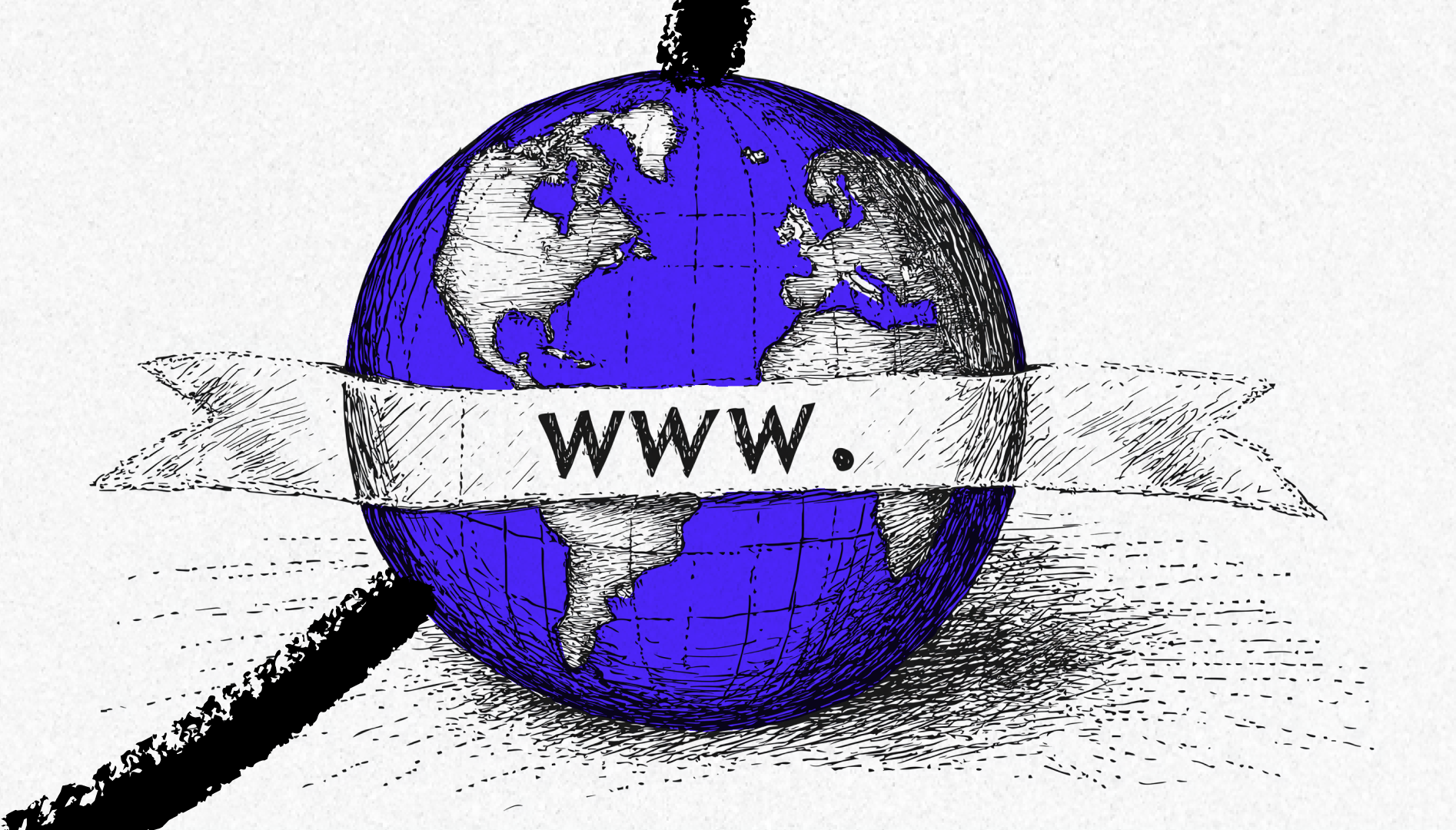DALL-E/Every illustration.
How geopolitics can alter digital infrastructure
*Today we have something a little different from* ***Gareth Edwards****, who typically chronicles the forgotten history of Silicon Valley in his column,* [*The Crazy Ones*](https://every.to/the-crazy-ones)*. When the British government announced last week that it was transferring sovereignty of an island in the Indian Ocean to the country of Mauritius, Gareth immediately realized its online implications: the end of the .io domain suffix. In this piece, he explores how geopolitical changes can unexpectedly disrupt the digital world. His exploration of historical precedents—such as the fall of the Soviet Union and the breakup of Yugoslavia—offers valuable context for tech founders, users, and observers. Read this for a look at the unexpected intersection of international relations and internet infrastructure.—*[*Kate Lee*](https://every.to/news/kate-lee-joins-every-as-editor-in-chief)
*Was this newsletter forwarded to you?* [*Sign up*](https://every.to/account) *to get it in your inbox.*
On October 3, the British government announced that it was [giving up sovereignty](https://www.bbc.co.uk/news/articles/c98ynejg4l5o) over a small tropical atoll in the Indian Ocean known as the Chagos Islands. The islands would be handed over to the neighboring island country of Mauritius, about 1,100 miles off the southeastern coast of Africa.
The story did not make the tech press, but perhaps it should have. The decision to transfer the islands to their new owner will result in the loss of one of the tech and gaming industry’s preferred top-level domains: .io.
Whether it’s Github.io, gaming site itch.io, or even [Google I/O](https://io.google/2024/) (which arguably kicked off the trend in 2008), .io has been a constant presence in the tech lexicon. Its popularity is sometimes explained by how it [represents](https://blog.hubspot.com/website/io-domains) the abbreviation for “input/output,” or the data received and processed by any system. What’s not often acknowledged is that it’s more than a quippy domain. It’s a *country code* top-level domain (ccTLD) related to a nation—meaning it involves politics far beyond the digital world.
Since 1968, the UK and U.S have operated a major military base on the Chagos Islands (officially known as the British Indian Ocean Territory) , but the neighboring nation of Mauritius has always disputed British sovereignty over them. The Mauritian government has long argued that the British illegally retained control when Mauritius gained independence. It has taken over 50 years, but that dispute has finally been resolved. In return for a 99-year lease for the military base, the islands will become part of Mauritius.
Once this treaty is signed, the British Indian Ocean Territory will cease to exist. Various international bodies will update their records. In particular, the International Standard for Organization (ISO) will remove country code “IO” from [its specification](https://en.wikipedia.org/wiki/ISO_3166-1_alpha-2). The Internet Assigned Numbers Authority (IANA), which creates and delegates top-level domains, uses this specification to determine which top-level country domains should exist. Once IO is removed, the IANA [will refuse to allow](https://www.iana.org/help/cctld-retirement) any new registrations with a .io domain. It will also automatically begin the process of retiring existing ones. (There is no official count of the number of extant .io domains.)
Officially, .io—and countless websites—will disappear. At a time when domains can go for [millions of dollars](https://techcrunch.com/2024/08/10/maybe-friend-wasnt-crazy-for-spending-1-8m-on-a-domain-after-all/), it’s a shocking reminder that there are forces outside of the internet that still affect our digital lives.
#### When domains outlive countries
The removal of an entire country or territory from the world map is incredibly rare, so one might ask why the process for deleting a domain is so clearly documented. So automatic. So…*final*.
The answer is simple: history.
There are two organizations responsible for domains and internet addresses. The IANA decides what should and shouldn’t be a top-level domain, such as .com, .org, .uk, or .nz. The organization originated at the University of Southern California, although it was only formalized in 1994, when it won a contract put out by the U.S. It operated for several years as a small research and management committee. As the internet grew, it became clear that a more formal setup was required. By 1998, the IANA became part of a new organization: the Internet Corporation for Assigned Names and Numbers (ICANN). ICANN, based in the U.S., was given the broader responsibility of overseeing the operational stability of the internet and ensuring international interests were represented.
These two organizations might seem like they have mundane roles. But they have found themselves making some of the hardest decisions on the global internet.
On September 19, 1990, the IANA created and delegated the top-level domain .su to the USSR. Less than a year later, the USSR collapsed. At the time, nobody thought about what should happen with the .su domain—the internet as we know it was still years away. So the .su domain was handed to Russia to operate alongside its own (.ru). The Russian government agreed that it would eventually be shut down, but no clear rules around its governance or when that should happen were defined.
But ambiguity is the worst thing for a top-level domain. Unknowingly, this decision created an environment in which .su became a digital wild west. Today, it is a barely policed top-level domain, a plausibly deniable home for Russian dark ops and a place where supremacist content and cyber-crime have found cover.
A few years later, in 1992, the IANA learned a similarly harsh lesson at the end of the Balkans War, which saw the breakup of Yugoslavia into several smaller states. In its aftermath, the joint nation of Serbia and Montenegro attempted to adopt the name “Federal Republic of Yugoslavia.” Slovenia and Croatia objected, claiming that it implied Serbia and Montenegro were Yugoslavia’s legitimate successors. The two countries protested to the UN.
As the international issue over Serbia and Montenegro’s name rumbled on throughout the early nineties, the IANA remained unsure about who should control .yu, Yugoslavia’s top-level domain. Email access and the internet were now integral to research and international discussions, and the IANA’s ambiguity led to an extraordinary act of academic espionage.
[According to the journalist Kaloyan Kolev](https://www.thedial.world/articles/news/issue-9/yugolsav-wars-yu-domain-history-icann), Slovenian academics traveled to Serbia at the end of 1992. Their destination was the University of Belgrade in the country’s capital. On arrival, they broke into the university and stole all the hosting software and domain records for the .yu top-level domain—everything they needed to seize control. For the next two years, the .yu domain was unofficially operated by ARNES (Academic and Research Network of Slovenia), which repeatedly denied its involvement in the original heist. ARNES rejected all requests by Serbian institutions for new domains, severely limiting the country’s ability to participate in the growing internet community. The situation became so messy that, in 1994, IANA founding manager Jon Postel personally stepped in and overrode IANA regulations, forcibly transferring ownership of the .yu domain back to the University of Belgrade.
In 2006, Montenegro declared independence from Serbia. With the digital revolution now firmly underway, the IANA was determined not to let chaos reign once again. It created two new top-level domains: .rs for Serbia and .me for Montenegro. Both were issued on the requirement that .yu would officially be terminated. It would take until 2010 for this to happen, but the IANA eventually got its way. Burned by the experience, the organization laid down the new, stricter set of rules and timescales for top-level domain expiration that exist today.
It’s these rules that will soon apply to the .io domain. They are firm, and they are clear. Once the country code no longer exists, the domain must cease to exist, too, ideally within three to five years. Like a tenant being told that their landlord is selling up and they must move, every individual and company who uses a .io domain will be told the same.
#### The endurance of physical history
.io has become popular with startups, particularly [those involved in crypto](https://kinsta.com/knowledgebase/what-is-io/). These are businesses that often identify with one of the original principles of the internet—that cyberspace grants [a form of independence](https://www.eff.org/cyberspace-independence) to those who use it. Yet it is the long tail of real-world history that might force on them a major change.
The IANA may fudge its own rules and allow .io to continue to exist. Money talks, and there is a lot of it tied up in .io domains. However, the history of the USSR and Yugoslavia still looms large, and the IANA may feel that playing fast and loose with top-level domains will only come back to haunt it.
Whatever happens, the warning for future tech founders is clear: Be careful when picking your top-level domain. Physical history is never as separate from our digital future as we like to think.
*Gareth Edwards is a digital strategist, writer, and historian who has worked for startups and corporations in both the UK and U.S. He is an avid collector of old computers, rare books and interviews, and abandoned cats. Follow him on* [*X*](https://twitter.com/garius)*,* [*Mastodon*](https://mastodon.me.uk/@garius)*, and* [*BlueSky*](https://bsky.app/profile/garius.bsky.social)*.*
*To read more essays like this, subscribe to* [*Every*](https://every.to/subscribe?ref=subscribe-popup)*, and follow us on X at* [*@every*](http://twitter.com/every) *and on* [*LinkedIn*](https://www.linkedin.com/company/everyinc/)*.*
*An earlier version of this article incorrectly stated that the Berlin Wall fell in 1990, not 1989. We regret the error.*, The Disappearance of an Internet Domain, Gareth Edwards, 01j9st8466mmef8z4wevfwmfzd.