The Future of PHP Education // PHPverse 2025
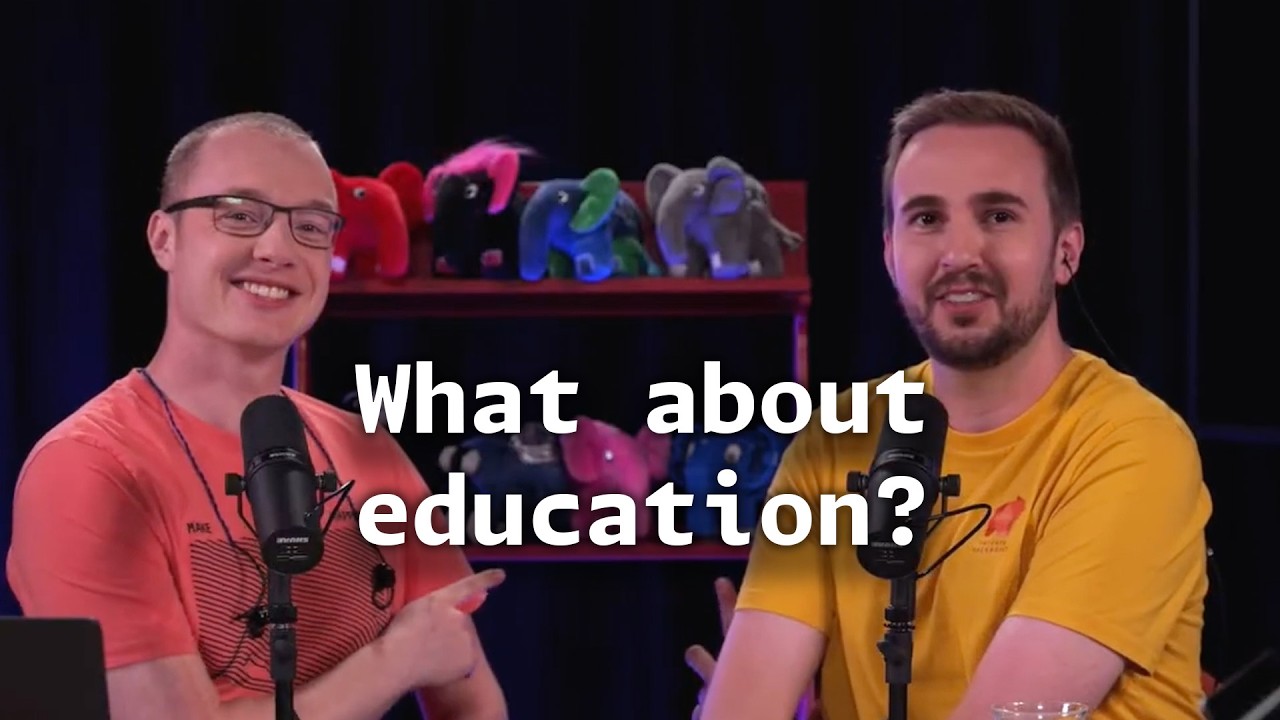
## Metadata
- Author: [[PHP Annotated]]
- Full Title: The Future of PHP Education // PHPverse 2025
- Category: #articles
- Document Note: ---
tags:
- #PHP
- #Education
- #Community
Author: [Author's Name]
Source: YouTube
Reference: https://www.youtube.com/watch?v=Jraf2E2QPBI
date created: {{date:2025-07-07}} {{time:12:45}}
---
# Title: The Future of PHP Education
## Table of Contents:
- [📝 Summary](#📝-Summary)
- [📖 Main Content](#📖-Main-Content)
- [🗒️ Notes](#🗒️-Notes)
- [📖 References](#📖-References)
- [🗣️ Paraphrase](#🗣️-Paraphrase)
- [📰 Newsletter](#📰-Newsletter)
- [✅ Action Items](#✅-Action-Items)
- [🧪 Hypotheses](#🧪-Hypotheses)
- [📊 Methodology](#📊-Methodology)
- [❓ Questions](#❓-Questions)
- [🔮 Future Research](#🔮-Future-Research)
- [💡 Implications](#💡-Implications)
- [🧠 Learning Styles Assessment](#🧠-Learning-Styles-Assessment)
- [📊 Accessibility Assessment](#📊-Accessibility-Assessment)
- [🌍 DEIB Assessment](#🌍-DEIB-Assessment)
- [✅ Logical validity](#✅-Logical-validity)
- [🔍 DARVO Analysis](#🔍-DARVO-Analysis)
- [🔍 SEO Evaluation](#🔍-SEO-Evaluation)
- [🎯 Conclusion](#🎯-Conclusion)
### References:
- PHP 5 release notes
- Symfony and Laravel documentation
- Laracasts, Laravel Daily, SymfonyCasts resources
## 📝 Summary:
Leaders from Laracasts, Laravel Daily, and SymfonyCasts reflect on PHP education’s past, present, and future. They recall learning via `include` in PHP4, early books, blogs, and forums, then discuss modern shifts: AI-powered Q&A replacing beginner posts, the rise of short‐form content, and the need for updated official resources. They highlight frameworks (Laravel, Symfony) as entry points, emerging language features (attributes, lazy objects), and emphasize positive messaging over “PHP is not dead.”
## 📖 Main Content:
The panel opens by introducing veteran educators ([@00:03](https://youtu.be/Jraf2E2QPBI?t=3)). They share first PHP memories: `include`-based projects in PHP4 ([@02:03](https://youtu.be/Jraf2E2QPBI?t=123)), absence of Composer, class‐named constructors, and MySQL_connect ([@06:29](https://youtu.be/Jraf2E2QPBI?t=389)). Learning once relied on books, blogs, forums; now AI and YouTube offer instant help ([@08:44](https://youtu.be/Jraf2E2QPBI?t=524)). Beginner questions have migrated to ChatGPT, prompting creators to rethink course formats—favoring micro-learning, interactive labs, and “process” storytelling over long tutorials ([@13:14](https://youtu.be/Jraf2E2QPBI?t=794)). Short‐form videos drive views but lack engagement; completion rates for multi‐hour courses remain low ([@15:27](https://youtu.be/Jraf2E2QPBI?t=927)). Panelists express enthusiasm for rapid development with Laravel’s new tools (Herb, starter kits) ([@21:32](https://youtu.be/Jraf2E2QPBI?t=1292)) and note upcoming PHP 8.4 features—native lazy objects and generics ([@27:02](https://youtu.be/Jraf2E2QPBI?t=1622)). They caution against negative framing (“PHP is not dead”), advocating positive, framework‐led outreach to attract newcomers ([@25:15](https://youtu.be/Jraf2E2QPBI?t=1515), [30:55](https://youtu.be/Jraf2E2QPBI?t=1855)).
### 🗒️ Notes
- **Introductions**: Laracasts (Jeffrey), Laravel Daily (Povas), SymfonyCasts (Kevin) ([@00:03](https://youtu.be/Jraf2E2QPBI?t=3)).
- **Early PHP features**: `include`, class constructors named after class, `mysql_connect` → PDO/MySQLi ([@02:03](https://youtu.be/Jraf2E2QPBI?t=123)).
- **Learning sources then vs. now**: Books & libraries → blogs & forums → YouTube & AI ([@06:29](https://youtu.be/Jraf2E2QPBI?t=389), [08:44](https://youtu.be/Jraf2E2QPBI?t=524)).
- **Forum Advice**: “Internet has no memory”—beware asking naïve questions ([@10:34](https://youtu.be/Jraf2E2QPBI?t=634)).
- **AI shift**: Beginner Q&A migrated to ChatGPT; creators focus on advanced topics and workflows ([@13:14](https://youtu.be/Jraf2E2QPBI?t=794)).
- **Content format**: Rise of shorts; low course completion; need for on-demand micro-learning ([@15:27](https://youtu.be/Jraf2E2QPBI?t=927), [19:33](https://youtu.be/Jraf2E2QPBI?t=1173)).
- **Frameworks as gateways**: Laravel’s tooling—Herd, starter kits; Symfony’s tutorials drive PHP exposure ([@21:32](https://youtu.be/Jraf2E2QPBI?t=1292)).
- **Language evolution**: Attributes (from annotations), upcoming lazy objects/generics ([@27:02](https://youtu.be/Jraf2E2QPBI?t=1622)).
- **Messaging matters**: Avoid negations (“not dead”); use positive framing (“PHP is thriving”) ([@25:15](https://youtu.be/Jraf2E2QPBI?t=1515)).
- **Attracting newcomers**: Modernize php.net; highlight frameworks to draw in JS/Ruby devs ([@29:00](https://youtu.be/Jraf2E2QPBI?t=1740), [30:55](https://youtu.be/Jraf2E2QPBI?t=1855)).
## 📖 References:
1. PHP 5 release (2004)
2. Laracasts “PHP for Laravel Developers” course
3. GitHub Copilot AI coding survey
## 🗣️ Paraphrase:
1. **Original:** “Forums were once vital for learning—beginners asked questions and veterans answered, building community knowledge.”
**Paraphrase:** “In PHP’s early days, community forums served as the backbone of learning: novice questions met seasoned replies, collectively forging our shared expertise.”
2. **Original:** “Short‐form videos drive views but don’t convert to course engagement; completion rates for lengthy tutorials have historically been low.”
**Paraphrase:** “While bite-sized clips attract high view counts, they seldom lead to deeper course participation—extended tutorials consistently see low finish rates.”
## 📰 Newsletter:
👩💻 **This Month in PHP Education**: From flipping through PHP4 books to AI‐powered Q&A, our learning journey has evolved! Leaders from Laracasts, Laravel Daily & SymfonyCasts share how frameworks like Laravel and Symfony serve as PHP gateways, while YouTube shorts and ChatGPT reshape our teaching tactics. Discover why “PHP is thriving” beats “not dead,” explore micro-learning vs. marathon courses, and get excited for PHP 8.4’s lazy objects and generics. Dive in for on-demand tips, community highlights, and top new tutorials! 🚀 #PHP #EdTech #Laravel #Symfony
## ✅ Action Items:
**Prompt:**
“Outline how each PHP education article supports GoDaddy’s open-source advocacy, contributor engagement, and inclusivity goals—mapping content to my OSPO leadership aspirations.”
## 🧪 Hypotheses:
1. **H1:** Micro-learning modules increase course completion by 50%.
2. **H2:** Framework-first onboarding boosts new contributor retention by 30%.
3. **H3:** Positive messaging campaigns improve PHP job postings by 20%.
### 📊 Methodology:
- **A/B testing** of course formats (short vs. long).
- **Surveys** of new contributors on framework entry paths.
- **Traffic analysis** on php.net after UX refresh.
### ❓ Questions:
- Does AI-led Q&A reduce beginner forum traffic by X%?
- How does framework familiarity correlate with contributor longevity?
- What role do official docs play versus third-party tutorials?
### 🔮 Future Research:
- Impact of AI tutors on real-time code learning.
- Longitudinal study of php.net redesign on newcomer signups.
- Efficacy of interactive labs vs. video lectures.
### 💡 Implications:
- **Knowledge:** Define best practices for AI-augmented learning.
- **Practice:** Integrate micro-learning into WordPress contributor training.
- **Policy:** Advocate updated official docs with modern UX.
### 🧠 Learning Styles Assessment:
- **Visual**: Slides & code demos present; add flowcharts of learning paths.
- **Aural**: Live talks; provide podcasts/audio transcripts.
- **Verbal**: Rich analogies; link to in-depth articles.
- **Kinesthetic**: Introduce hands-on coding labs and sandboxes.
- **Logical**: Stepwise tutorials; include decision trees for learning choices.
- **Social**: Discord Q&As; peer code-review sessions.
- **Solitary**: Personal journaling prompts on learning progress.
- **Naturalistic**: Use eco-system metaphors for community growth.
### 📊 Accessibility Assessment:
- **Screen Reader**: Ensure semantic tags & alt text on all images.
- **Keyboard**: Test navigation on docs & video players.
- **Contrast**: Use high-contrast themes for slides.
- **Resizing**: Confirm responsive design on php.net.
### 🌍 DEIB Assessment:
- **Cultural**: Add non-Western developer
- Summary: How do we teach and learn PHP in 2025 and beyond? Top educators and content creators will discuss the best ways to share knowledge, the role of AI in learning, and how PHP education is evolving.
PHPverse is an online event to celebrate and bring together the PHP community, organized by JetBrains: https://lp.jetbrains.com/phpverse-2025/
Watch all the PHPverse 2025 talks here: https://www.youtube.com/playlist?list=PL0bgkxUS9EaI6rjDdRvihJn90OztDsxTO
#php #code #oss
- URL: https://www.youtube.com/watch?v=Jraf2E2QPBI&list=PL0bgkxUS9EaI6rjDdRvihJn90OztDsxTO&index=7
Good to see you folks. Let let me introduce you real quickly for like because we have people from from uh different places and communities here. Uh I go from what's Yeah, I guess it's the same for everyone, right? Yeah. I start uh at the top there with Jeffrey. Jeffrey, you can uh wave for a second or say hi. You're with uh you're with Larcasts. Well, you're the Larcast person, right? Uh so it's so good to have you here, Jeffrey. Thanks for joining. Thank you. I'm happy to be here.
Awesome. Then there's Povas with It Depends. That's awesome.
Oh, I guess he doesn't have to answer any questions today. She has the answer.
That's That's great. Povas, you're you're of course very well known for uh Laravel Daily, the YouTube channel. You've been doing that for years, have gathered like a very large audience. Then you have some PHP courses as well. Uh you're also in the the education scene. Say hi, Ballas. Yeah. Yeah. Hello, guys. And yeah, this is the ultimate answer to pretty much
everything we will talk about today. But yeah, let's go on.
Awesome. And then we have Kevin.
Yeah, and I was gonna just briefly So I think I met Kevin for the first time at a Symphony Live conference. Um that was also the beginning of Composer. So I think he's been kind of there from the the first moments of the first characters type. Um and uh yeah, it's really cool to see you work on Symphony Cast today, which is uh or recently uh which is what brings you here today.
Yeah, I still remember that talk. It was way over my head, but it
was about um dependency resolution with composer, I think.
Yeah, I tried I tried explaining in a lightning talk in five minutes uh how dependency composer works. It was kind of funny.
And you were doing a talk.
Oh, well, this is a spontaneous lightning talk on like a site thing.
Mhm. Well, interesting.
Yeah. Um, folks, um, you're all in the PHP education scene, right? And that's what we want to talk about today. We have a couple of questions prepared. Uh, maybe we can ask
some questions from chat as well. There are already quite a lot, but to be honest, we we promised to give people who like choose the uh the best questions to give them an elephant. And actually uh you're with three here. So we will pick three questions, three winners from uh from this session. So like three chances and like people are uh spamming chat. No, that's it's still kind of okay. But um I wanted to start with a question just to you know get to know you a little bit. I asked this question to Niels as well, but what's
like the um like the the oldest PHP feature you remember being added when you started with PHP? What was like the first thing that Yeah. that came across your path that that you were like, "Huh, this is good. This is like a yeah, a new thing to PHP." And that way we can date you a little bit uh as well. So, uh both your your uh thinking there maybe you want to answer. Uh well, I'm trying to remember now. I remember starting with a book PHP4 uh
learning learning PHP. It was a paper book in those days and I don't remember specific function but I remember creating first PHP websites with index php and include. So first first thing in my memory is include everywhere. So index php and then a lot of includes inside. So this was the like typical project structure and then I also remember uh there was no composer back there. So I remember website PHP classes
and pair
for for those packages or classes or whatever you call them back then. So these were like my probably first memories of PHP like what 20 years ago probably at this point
the good old days PHP classes. I remember that still even. And that was that was before composer right?
Yeah for sure.
Yeah way before.
Jeffrey what is what's your your like uh core memory? Yeah. So, I looked this up. So, I got into PHP right around 2004.
And I remember that because it was right after I graduated high school. So, I entered college and that was like the beginning of me getting into um web development. And so, it turns out that PHP 5 came out in 2004. And uh if anyone can't remember, PHP 5 is sort of what introduced the modern um object syntax that we're familiar with. Uh before that, you didn't have visibility on your classes. So
everything was just public by default. So you could create a class in PHP 4, but of course um you were using the var keyword for all of your properties and all of your methods were public. So yeah, back then um you know, we had little conventions like uh use an underscore to indicate that the method should be treated as private. And to be honest, I kind of still like that a little bit. Uh but nonetheless, like it introduced all of the modern stuff that we're used to uh these days. But my
point is when I was learning, I didn't know any of that.
Uh I didn't know know that I was learning PHP 5. I was just learning PHP. I had no like concept that a big release had just come out uh because I was so young. Now, here's the thing I do remember though. Um, MySQL\_connect, like that was how we connected to the database. And I remember that because every tutorial was full of SQL injection problems. And the release of PHP 5
introduced like the PDIO API and uh my SQL improved and all of those were or both of those were intended to solve that problem, right? But again, when I was learning, all of the tutorials were of course still based on PHP 4. So everything used all of this old stuff. So like I I started with the release of PHP5, but I learned PHP4 and then I had to, you know, uh update my knowledge as I as I got better.
This this is starting
to sound like Laros's origin story almost. Pretty much. Pretty much.
Yeah. Well, we'll we'll talk about that in a second. First, Kevin, what's your like uh core memory?
I feel like I'm probably in the same vein as Jeffrey cuz I was thinking um and this feature doesn't even exist in PHP anymore. It was deprecated and removed, but the class named constructors,
right?
Before the underscore um constructor um you would
name it by the class name. And I remember when the underscore constructor came into play, I was I didn't like it. And I just I don't know. I didn't like that um that extra or that weird underscore syntax and that name. But of course um it definitely made renaming classes a lot easier,
right? Did Did you want to pitch in on that because you were writing some things down?
Taking a note. I'm going to have to get back to this later. I think you
just I really enjoyed this point about the terrible tutorials, but uh let's question. No, but yeah, this is actually what I wanted to circle back to because how how did you folks learn PHP then because you weren't around back then when you started out? Balas, share it with us.
Library uh high school library actually was my first place to learn with books again,
right? Uh I had limited internet access even back then. So yeah, I just uh the book
example I type it in and it works or it doesn't and then I panic or I don't. This is like totally uh alien to me actually like having to do it like that. Wow. Okay. How about uh like Jeffrey Kevin? Do you uh remember?
So when I was first getting started um I was learning from blog like blogs were a bigger thing back then and you know what I I sort of missed them. M uh even like um when I was younger I
managed a site called NetTouch and I learned from NetTouch before I even joined it. Um and yeah, that was kind of nice. They would post like daily tutorials and they they would spotlight PHP because of course WordPress was I mean it still is gigantic today, but back then if you were working with PHP there was a really good chance that you were building WordPress themes. So that's kind of how I was learning is just figuring it out and it was frustrating. Um I don't know it's like
today any problem you have you can instantly solve.
Uh somebody on YouTube has solved your problem right or AI can instantly tell you the solution to your problem. But back then you just didn't know the answer. So if you're like I don't know how to do this then you just didn't know how. I I talk about this with my wife all the time by the way. It's like in the 90s if you disagreed on what anything anything you want. If I think it's this and you think it's that, there was no way to know who was right
back in the 80s or the '90s. You just had to be like, well, we'll call my mom and she will be the tiebreaker. But there was no way to actually figure out what the answer was back then. Uh, and that's sort of how it felt learning programming. It's just you you aggregated as many tutorials and books as you can and then you just sort of pieced it all together. Uh and that's my memory. Yeah. Kevin, how how did you
I definitely remember um a big PHP 4 and MySQL book that I had
and I was referencing all the time when I first started. Um, and then it was absolutely the uh like the Symphony like 0.9 documentation. Um, reading through that and they had a lot of these um like full app tutorials that you would do. They used to do like this uh advent calendar around Christmas for I think two or three they did for sure of like full apps and you could kind of follow through each day. You get a new um a new
chapter. Um, and that's I definitely that was my main uh source for understanding how to build apps in a non or that weren't like the ones that were built in that book basically. Okay.
Also, I want to mention forums. We don't talk enough about forums including like Larcastum much later but before that it was tech overflow and local forums and Facebook groups even for me. So, like human interaction was on forums
back in the day. I have a funny note about forums. So, when I was first getting started, of course, I would ask every dumb question I had on the forums. And my brother, who's also a programmer, he gave me this advice, and this again, this would have been like 2004. And he was like, "Just be careful about the questions you ask on the forum because the internet has no memory." You know, it's cliche now, but he said that back then. And I was like, "Oh, it's fine. I love that I can ask a question and get an answer." And what I
didn't realize was like, "Oh, 5 years later, you're going to be wildly embarrassed about some of the questions you asked." So, I bet if I went back to some of these old forums, it it would just be excruciating to see um how ignorant some of my questions were. Uh I think I went back and deleted a bunch of them for this very reason.
Oh, really? No, but you're all now in uh like on the other side of the of the education uh uh balance, right? You're you're in the
teaching position position now and you're you're all with Larcasts and and Laravel Daily and Symphony Cast. Um and you're um like getting in touch with new uh like junior people who don't who've never written a line of PHP code maybe. um like I I reckon you you uh come across some of these questions uh like today again and and uh what do you do then?
Uh well I can start I got a lot of questions uh on YouTube actually a lot on Twitter, YouTube, email uh social we have a discord and this becomes actually my main source of topics for future videos. So
people are feeding me questions and I'm trying to pick the topics. So this is still happening. But what I'm noticing now is people are asking questions less probably because they're asking something else like not
even someone else but Chad GPT these days. Uh so I would say that forums maybe become less popular and less active. Probably Jeffrey can say about Larus. Are there any numbers lower or something? Uh and yeah I do get a lot of questions but they are now different because a lot of questions are prefiltered by Chad GPT I think.
Is that an an experience that two of you share? I have yeah basically the same
experience. Um I would find that we still get questions but the beginner questions are almost non-existent um or very rare now. We always get um most of our questions are for more advanced topics that probably an AI didn't answer or didn't answer correctly. Yeah, I would say it's roughly the same. Um I don't know. Things are getting a little bit tricky with AI. Um, I think
especially for education, we need to sort of mold or adapt to where people are because again, those sorts of questions, it's just not useful to ask uh on Laraveville Daily or Larcast or Symphony Cast a question and then wait a day potentially for somebody to reply. It's like I wouldn't do that, right? Uh I would go to Chat GBT and have an answer in 12 seconds. Uh and that's what's interesting. 12 seconds is a long time to wait. We've already reached that
point. We've gotten beyond, "Oh my gosh, look what chat GPT can do. We are now at the point where we say, "Oh my gosh, 12 seconds. I just sat there for 12 seconds for a response." Uh um but yeah, I I've been talking with uh my team at Larcast about like how we should change our content considering the fact that it's so easy to get the answer to your question these days and should we be focusing on different styles of content workflow? Um the u the the process of
being a developer and what that looks like dayto-day. Um, we we're been we're tinkering with different ways to provide content. I would say uh it's something we're thinking about quite a bit. Um I think based on that I'm kind of curious um have you apart from realizing that people clearly are asking questions to AI uh clients um did you notice that there's a change in how people consume
educational materials are like if you look at how you've been trying to educate people for let's say the last 10 years or something like is there a fundamental change to how the media is like perceived and like how it's worked with and have you made any of those changes already or like what's worked, what's worked worse. Uh any any experience with that? I don't really start the other way around for once. Kevin, if you want to say something. Yeah. Um
I think, you know, one of the the things that um I have to remind myself is uh beginners still exist. um despite not getting beginner questions as often, you know, the videos for our, you know, beginner beginning with PHP or beginning with Symphony are still fairly popular. So, um it's sometimes hard to uh re like it's hard to remember that. Um
and you know, of course, from my perspective, I want to cover super advanced stuff all the time because that's kind of my uh wheelhouse and what I enjoy. Uh but you know having to step back and you know think about how someone today is starting with PHP is very different than how I was starting 20 years ago and having to come to terms with that or just think about that. Um I don't necessarily have an answer for what the best way is. Um but
uh it it it absolutely involves AI for the most part I would say. Jeffrey, you have anything to add to that?
Well, what I've noticed is um Sorry. Okay. Yeah, shame on you. How dare you interrupt me. No, I'm just kidding. Um I've noticed a very distinct uh difference in how people are learning. Uh when I was first getting started um in the early 2000s
uh the thing that really again that really helped me and motivated me to create Larcast by the way was um were these videos on ASP.NET and you could go to the ASP.NET website and there was this guy named Joe Stagner and he would show you precisely how to do everything. And even more than written tutorials, this was like gold for me to actually see a person interact with your editor or with their editor. Um, it was it was like all of the missing pieces that are
not uh included in a tutorial were present in these videos and I appreciated it so much. Even down to like how does he get from file to file? I know we take that for granted now, but it's like back then do I get the mouse and do I go here? Um, whoops. I accidentally signed out. Excuse me. Uh, anyways, I would get to see workflow that just wasn't available back then. There we go. Um, and that was really an amazing thing. But here's what I'm noticing now
is that there is a tick-to-ification of educational content, I think, where people want everything faster and faster and faster. They watch shorts on Tik Tok or Instagram or YouTube and they expect programming content to be that way as well. Sometimes I'll release a video that's like 15 minutes, which is nothing, right? It's 15 minutes and somebody will be like, "Whoa, do you really expect me to sit there for 15 minutes and watch it?" I was like, "Yes,
15 minutes was actually the edited version of the hourong video I recorded." But and you'll notice a clear divide with younger people. It's like they just want it in 3 minutes or less. And it's difficult, I think, as a teacher to determine, do I expand on this and and take some time or do I try to get it out the door as quickly as possible? Um, and that's something I'm struggling with a little bit cuz my instinct is to take my time. Uh, but people, younger folks
especially, don't want that. They just want the answer uh as quickly as possible. And that's tough. Um, I'm trying to figure out how to deal with that right now.
Okay, you puss. You get your chance now. Yeah. Sorry, Jeffrey, for interrupting you. I'm not sure who was second. Uh, anyway, uh, so yeah, I noticed the same thing. I've been experimenting with YouTube shorts quite a lot and they are really popular in terms of views and likes and engagement. Uh, it's challenging to put all that code in
vertical mode of course, but uh, yeah, they are consumed a lot. And I did notice that people expect the answers in a short format. Uh that said that short engagement usually don't convert convert into something meaningful. So they don't like click for more or go to any course. It's just that short 60-second span. And also what I've noticed in general like the format of courses uh Jeffree saying like 15 minutes like
imagine you have to watch a course for 2 hours. Like can you believe it? Even back then actually the the engagement rate and finalizing rate of the courses completion rate is pretty low historically online uh like 5% or something. I've seen the numbers even uh earlier but I think it's even less now. I see the my percentage numbers on Laravel Daily getting lower of people just going to course and actually watching the course like lesson by lesson. Even if in a few days time more
people go to find the exact missing pieces in their knowledge or for a quick tip or for definite answer or something on demand. So probably the whole education thing uh the whole market I don't know the whole industry should shift not should but maybe might shift into more on demand. everything is on demand uh whatever people need in a short form because that's the I guess part of the new reality which we should
somehow adapt to. I still same like Jeffrey. I don't know how it will look. Uh but definitely people are not watching courses as such that much.
So let's maybe talk about the the content of what you're actually trying to teach people a bit. Um like what you know we've spoken about how long you've been doing PHP, what's like the oldest memories you have, but what actually excites you about PHP today? What are the things that you look forward to kind of explaining to people to like what what's the thing that you're looking
forward to? Uh let's start with uh proles to let's turn it around. Uh okay. Uh well I'm I'm excited about PHP as much as I was 20 years ago. It was always the language to deliver something faster. And since I'm focused on Laravel, Laravel excites me like with every release, every new tool, every shiny thing like we have nightw watch and cloud now and new starter kits and uh for rapid development, for quick
start, for delivering real results, real projects, PHP has historically been a great language and with Laravel it speeds up even more. Uh so I keep being excited about not that much new new language features as PHP but more about the results that we can get uh with PHP and with Laravel in my case uh because I'm a big fan of like reverse engineering engineering the result. So
we create projects and then we reverse engineer what we need to learn for that. So for delivering results, I think PHP is as excited to me as it was 20 years ago.
Cool. Uh Jeffrey,
you know, I almost wonder I I almost wonder and this may be super ignorant and I'm going to be embarrassed in 5 years, but like I kind of feel like PHP is a little bit feature. I don't know. Like if if you were to ask me like what are the things missing? There's not that much really. Like I
like that pipes are coming. Uh, obviously long closures need need to happen that but like beyond that and again maybe I'm just too ignorant. I I think it's kind of feature complete. Like there's not that many things missing. U Brent, I would love to hear what you're missing because you're you're a little more on top of it than I am. But yeah, it's not I'm not looking to the language like I can't wait until this happens or until this happens. I'm kind of happy with where it is. And on
this subject, um, it was referenced the idea of like, um, some people say PHP is dead or the PHP community is often vocalizing PHP is not dead. And I, I kind of agree with many people. It's like, stop saying that cuz nobody else is doing it anymore. So, it's like a self-perpetuating thing where the PHP community keeps saying we are not dead. And it's like the more you say it, the more people think the opposite, right? Like I I was thinking about this the other day. Imagine you're in high school
and you keep telling everyone in the school like I am not a loser every day. And it's like, well, eventually they're going to think, well, maybe you are because you keep telling us that you're not one. You know what I mean?
Uh, I think this is something we've had on our list. We've had on our list here, too. Um, and I think there's uh Liam Hammet who's actually in the chat right now watching this and did ask a question in this direction, wrote a blog post on this recently after a PHP UK panel discussion in which I made this very point that you're making as well right now. Um, and I think he he made a good
he explained this very well and it's actually a um a concept called the pink elephant paradox. Um, that's also something about how you think about statements. So like in order to process a negated statement, you need to first materialize the positive statement. So if I tell you
don't think about the pink elephant,
don't think about the pink elephant. Like obviously you're thinking about the because in order to process the not doing something, you have to first think about the thing. And so anybody who's trying to do a favor to
PHP, like do not use a statement like PHP is not dead as the title of anything you're writing because all you're communicating is that PHP may be dead. Yeah. Who knows?
Like that's what's PHP is alive and kicking.
Yeah. I mean, look at this event today, right? Go ahead, Jeffrey.
Sorry. Sorry, there's a little delay. Uh I would imagine even for like my business if our headline on the homepage was like our tutorials are
not horrible. You know what I mean? It's like okay I am saying they're good but now all you hear is like oh well I guess somebody thought they were bad right? And especially for newcomers if they hear that line PHP is not dead. Yeah. All they're taking from that is, "Oh, well, some people think it's dead, clearly, and it's just a horrible marketing technique, and I don't know why people keep repeating it at this point." Yeah, it's it's super uh self-perpetuating at this point.
I think
trying to follow up with that, let's let's go in that that positive direction of like, you know, like what we just started on, right? Like what are positive things that you were excited about with PHP? But also I think a good question here is like what are things that might you know not like you said you consider PHP mostly featuring complete but what are things that could change in PHP or the PHP ecosystem from your perception to invite more new people from outside of PHP to join and try it out.
That is a good question. Maybe let's try with Kevin if you have an idea how to answer this.
Yeah I had an answer for the last question.
Sorry. I just wanted to quickly say about um the feature complete. I do kind of agree, but I really like how the direction of core is now taking um sort of userland um concepts like a good example is like annotations um that existed for years and years and we were using them a lot in symphony and doctrine but at other libraries as well and now we have attributes. Um the next thing of course is the um like lazy objects in in PHP
8.4 before that ex something that existed in symphony for a long time and and there was you know huge amounts of code around that um and now we're um we have that natively within the language which I think um you know feature complete but we're still adding um features that exist in userland um that will be faster when added to native PHP itself
generics I'm calling it it exists in userland just
knew that was coming
we have the the foundation sitting there
you cannot see them but Yeah, take notes please. You had another question, right?
Yeah, I think uh the question was uh a bit more in the like what what can we change about PHP to attract more people from outside of PHP to be interested in the language? Like is there is there something that you have in mind on you know how to how to accomplish that or maybe something from the experiences you've had trying to teach PH people PHP something that you think might need improvement?
I'll say one. Um, the PHP website needs to be updated. Um, I' I'd be curious to know the reality of why I'm taking a look at it right now. I'd be curious to know why it hasn't seemingly been updated too much over the years, but I feel like especially younger people maybe aren't gravitating to it quite as much. Um, I don't know. I feel like when I was learning, there was so many young people. I was surrounded by people in
their early 20s getting into it. And maybe this is just a sign that I'm getting old, but I'm not seeing that quite as much. And I don't know if they're all just in JavaScript and React land, but that's maybe something to be concerned about. Are young people gravitating towards um this language? And it doesn't matter what they do. They can do whatever they want. But I would worry about that a little bit. I'm not seeing the 18year-olds and the 19year-olds uh in this community quite as much. But I would love to be
corrected uh if I'm wrong. But I think that's maybe a big problem. And I know it's it's it's crazy, but it's like the the website itself, it it it needs an update. It it
I don't know. These things make one concrete thing.
Wild difference.
Yeah.
Bas the general direction of Taylor and Laravel team in last like year or two. they are really focusing on the start of
the project with Laravel which actually doesn't really emphasize PHP but PHP is under the hood. So that PHP new thing and Laravel installer and Laravel herd and all of that it's kind of about Laravel but under the hood uh it's introducing new people to PHP. So even on Twitter I see kind of uh like Primagan example a lot of JavaScript guys uh trying out Laravel and then sharing their opinions and there was even kind of a movement I'm not sure if
it's called a movement like JavaScript guys trying out PHP and Laravel and they were pretty surprised by what we have in Laravel just out of the box because um I'm not sure like the direct comparison I may be wrong or something but uh in JavaScript land it seemed like there tying different pieces together just to complete the O which is in Laravel out of the box. I'm not sure how it's in Symphfony uh that much but in general I don't think we should advertise PHP we
should advertise uh the tools Laravel or Symfony or others which would help people to deliver projects and then later they may fall in love with that and then learn PHP under the hood uh with the things that they need. But isn't that going to accomplish the exact opposite? Like if you advertise only Laravel and Symphony and you try to be as quiet as possible the fact that they're built with PHP, isn't that what in the eyes of people outside of that ecosystem makes PHP seem less relevant because
they don't hear about PHP? Because you're only talking about Laravel, you're only talking about Symfony. You're not talking about PHP. And so like to somebody who's not the direct person that you're talking about that's maybe learning this, it seems like PHP is less relevant because the only thing that's relevant now is I mean let's sure let's stick with Laravel and Symphony or Drupal or let's you know like there's lots of others of these things but I I feel like maybe the opposite is happening where like the lack of talking about the fact that it's built with PHP is contributing to a a lack of awareness
of how relevant and widespread this language is. I wonder if that's true though. Like the exact same thing could be said about this. Yeah. And I think it's a good point, but I wonder um the same could be true in the React community, right? It's like, well, everyone says React, but nobody's talking about JavaScript. But it's like, don't we all kind of get it? Don't we know what's going on there? So, I wonder if that's actually true. And of also
like does it actually matter um if people are using the lang like okay so if we're talking about Laravel and Symphony mostly but we're not bringing up PHP then uh outsiders won't realize how popular Yeah. I think I think people will figure it out. I'm not sure that's as much of an issue but maybe it is.
I don't know. That's interesting.
I think it can be kind of a um I'm thinking of like jQuery, you know. Mhm.
Um I I when I started with JavaScript, I didn't even know what
JavaScript was. I just knew what jQuery was. Um but you know, I eventually learned that it was JavaScript. Um same with like Ruby on Rails, right? Like I didn't know that Ruby was the underlying language, you know. Um so I I think there's definitely avenue like it's an avenue to get people in for sure. Really interesting.
It's sort of like medicine in the dog food, right? It's like they don't need to know when they're using jQuery that it's like okay this is just plain JavaScript it's just wrapped up. Uh but everyone who learns
jQuery eventually went further and uh many of those people ended up developing React and Angular and they they became JavaScript masters. So it's just it's just an entry point uh like anything else maybe a friendlier entry point than if they had to do everything manually. Right. Yeah. Great insights, folks. So, sorry, Povas, did you wanted to add one final thought because I noticed we're running out of time here and I need to wrap it up.
Random fact, two years ago, I
released a course called PHP for Laravel developers trying to fill in the gaps of object-oriented programming for people who started from Laravel and it actually went really good and popular. So, yeah. Yeah, that is that is a nice example actually.
Cool. I know there is a lot more to talk about, but we are on a schedule and I also don't want to like take more of your time than uh what you've reserved here. That being said, if you want to go into the Discord server, there are lots of questions. Um
feel free to do that if you have the time. I think people would appreciate that. Um
I also really want to thank you at this point for the work that you're doing because I think uh educating developers is such an important point part of keeping this community vibrant and alive. So thanks very much for that. That is true. Yeah. Thanks folks for yeah how you are contributing to the PHP community. And with that being said I want to say goodbye until next time and then we will continue with uh our next
and final session actually of the day. So, uh, folks, thank you. Bye-bye. All right., The Future of PHP Education // PHPverse 2025, PHP Annotated, 01jzk1awhwz8h8qbe6z1f6ds6r.