The Hidden Ladder Behind Modern Apostasy
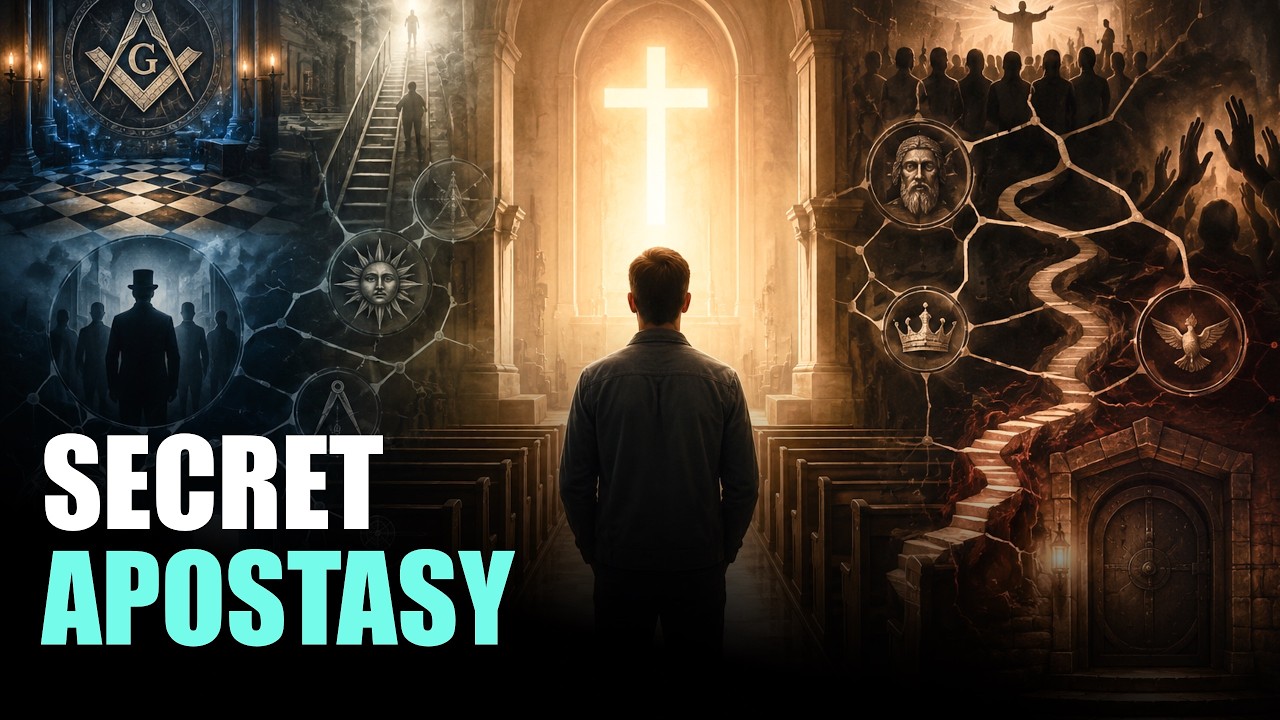
🔗 **Source:** [The Hidden Ladder Behind Modern Apostasy](https://www.youtube.com/watch?v=IvXxXOb675A)
> [!note]+ Document Notes
> ---
> tags: [gnosticism, new-apostolic-reformation, religious-syncretism, mystery-cults, apostasy, false-prophecy]
> author: [MISSING]
> source: [MISSING]
> reference: [https://www.youtube.com/watch?v=IvXxXOb675A]
> date created: {{date:YYYY-MM-DD}} {{time:HH:mm}}
> ---
> # 🏷️ Title: The Hidden Ladder Behind Modern Apostasy
> ## 🧭 Table of Contents
> - [📝 Summary](#-summary)
> - [📖 Main Content](#-main-content)
> - [🗒️ Notes](#️-notes)
> - [📚 References](#-references)
> - [🗣️ Paraphrase](#️-paraphrase)
> - [📰 Newsletter](#-newsletter)
> - [✅ Action Items](#-action-items)
> - [🧪 Hypotheses](#-hypotheses)
> - [📊 Methodology](#-methodology)
> - [❓ Questions](#-questions)
> - [🔮 Future Research](#-future-research)
> - [💡 Implications](#-implications)
> - [🧠 Learning Styles Assessment](#-learning-styles-assessment)
> - [📊 Accessibility Assessment](#-accessibility-assessment)
> - [🌍 DEIB Assessment](#-deib-assessment)
> - [✅ Logical Validity](#-logical-validity)
> - [🛡️ DARVO Analysis](#-darvo-analysis)
> - [🎯 Conclusion](#-conclusion)
> ## 📝 Summary
> - Modern church apostasy stems from multiple converging streams of Gnostic influence, not a single source like Freemasonry.
> - Various movements (Freemasonry, Christian Identity, Latter Rain, NAR) contributed different elements: mystery doctrines, elitism, militancy, and activation theology.
> - This creates an ecosystem similar to ancient Gnosticism where groups splinter and develop new "revelations" when members become bored with existing mysteries.
> - The NAR is particularly dangerous because it brands Gnostic ideas as Christianity, making escape more difficult than from overtly non-Christian mystery cults.
> - The solution follows Irenaeus' approach: return to the simple gospel rather than pursuing conspiracy theories about specific groups.
> ## 📖 Main Content
> The speaker argues that modern apostasy in Christianity results from a "converging apostasy" - multiple streams of influence rather than a single culprit like Freemasonry.
> ### Mystery Cult Architecture
> Gnostic systems operate on a ladder structure where adherents climb through levels seeking ultimate revelation, but the mystery is never fully satisfied. Ancient Gnostic groups splintered when members grew bored with their current "secret," leading to new groups with additional mysteries.
> ### Convergent Streams
> Several movements contributed distinct elements:
> - **Freemasonry**: Divine mysteries and secret knowledge
> - **Christian Identity**: Elite seed doctrine and racial supremacy
> - **Latter Rain/William Branham**: Militant religion and Joel's Army concepts
> - **Pentecostal/Charismatic movements**: Experience-driven revelation prioritized over Scripture
> ### The NAR Ecosystem
> These streams converged to create an ecosystem where "activation" replaces repentance, spiritual status is ranked by manifestations, and believers are divided into elite versus ordinary Christians. Groups splinter and multiply when members seek fresh revelation beyond their current mysteries.
> ### Why NAR is More Dangerous
> Unlike Freemasonry, which doesn't claim to be Christian, NAR presents Gnostic ideas branded as Christianity, making recognition and escape more difficult for believers.
> ## 🗒️ Notes
> #### ⏱️ [00:00:00](https://www.youtube.com/watch?v=IvXxXOb675A?t=0) Converging Apostasy Framework
> - Multiple streams, not single source
> - Gnostic architecture: always another mystery level
> - Groups splinter when current mystery becomes boring
> #### ⏱️ [00:05:30](https://www.youtube.com/watch?v=IvXxXOb675A?t=330) Historical Convergence Points
> - Gordon Lindsay connected to both Christ for Nations and Christian Identity groups
> - William Branham's mentor Roy Davis from KKK leadership
> - Cross-pollination of doctrines creating manifested sons of God teaching
> #### ⏱️ [00:12:00](https://www.youtube.com/watch?v=IvXxXOb675A?t=720) Activation vs Gospel
> - Pentecostal drift when experience outweighs Scripture
> - "Activation" replaces repentance and faith
> - Creates elite vs ordinary Christian hierarchy
> #### ⏱️ [00:18:00](https://www.youtube.com/watch?v=IvXxXOb675A?t=1080) NAR Danger Assessment
> - Gnosticism branded as Christianity
> - More difficult to escape than obvious cults
> - Creates conspiracy mindset that damages mental health
> ## 📚 References
> - [Irenaeus' Against Heresies](reference-needed)
> - [Steve Montgomery's work on converging apostasy](reference-needed)
> - [Christ for the Nations](https://cfni.org/)
> ## 🗣️ Paraphrase
> The speaker presents a sophisticated analysis of how ancient Gnostic patterns have infiltrated modern Christianity through multiple historical streams rather than a single conspiracy. He argues that focusing on Freemasonry as the primary culprit misses the larger ecosystem of Gnostic influence that has created self-perpetuating mystery-seeking behaviors in contemporary Christian movements. The New Apostolic Reformation represents a particularly insidious form because it packages these Gnostic elements within Christian branding, making them harder to recognize and escape than overtly secular mystery cults.
> ## 📰 Newsletter
> *Not applicable — theology/religious-research content*
> ## ✅ Action Items
> *Not applicable — theology/religious-research content*
> ## 🧪 Hypotheses
> - Churches with emphasis on progressive revelation will show higher rates of doctrinal drift
> - Members exiting NAR groups experience similar patterns to those leaving other high-control religious movements
> - Communities prioritizing "activation" experiences over biblical literacy will demonstrate increased susceptibility to authoritarian leadership
> - Historical analysis will reveal consistent Gnostic themes across seemingly unrelated Christian movements
> ## 📊 Methodology
> Historical document analysis, pattern recognition across religious movements, comparative cult studies
> ## ❓ Questions
> - How can churches maintain openness to spiritual gifts while avoiding Gnostic drift?
> - What early warning signs indicate a movement's shift toward mystery cult dynamics?
> ## 🔮 Future Research
> Investigation of modern shepherding movement connections, analysis of prosperity gospel's relationship to elite seed doctrine
> ## 💡 Implications
> Suggests need for renewed emphasis on biblical literacy and historical theology education in churches vulnerable to NAR influence
> ## 🧠 Learning Styles Assessment
> Reading level: college-level theological discourse requiring background knowledge
> #### 👀 Visual learners
> Present: Historical timeline diagrams showing convergent streams
> Improve: Flowcharts of Gnostic group splintering patterns
> #### 🔊 Aural learners
> Present: Lecture format with clear verbal explanations
> Improve: Audio commentary with defined terms
> #### 🗣️ Verbal learners
> Present: Rich historical analogies and terminology
> Improve: Glossary of theological terms and movement names
> #### 🧩 Kinesthetic learners
> Improve: Interactive timeline exercises, case study analysis worksheets
> #### 🧠 Logical learners
> Present: Systematic analysis of cause-and-effect relationships
> Improve: Decision trees for identifying Gnostic characteristics
> #### 🧑🤝🧑 Social learners
> Improve: Discussion guides for study groups, moderated Q&A sessions
> #### 🧘♀️ Solitary learners
> Present: Self-contained analysis suitable for independent study
> Improve: Reflection questions on personal discernment practices
> #### 🌿 Naturalistic learners
> Improve: Ecosystem metaphors for understanding interconnected movements
> ## 📊 Accessibility Assessment
> Content requires significant background knowledge in Christian history and theology, potentially limiting accessibility for general audiences.
> ## 🌍 DEIB Assessment
> Focuses primarily on Western Christian movements; could benefit from global perspective on similar religious phenomena.
> ## ✅ Logical Validity
> #### Strong reasoning
> - Historical pattern recognition connecting ancient and modern Gnostic structures
> - Systematic analysis of multiple contributing factors rather than single-cause explanation
> - Evidence-based approach citing specific historical figures and connections
> #### Fallacies
> - Potential guilt by association when connecting movements through shared participants
> - Some claims would benefit from additional documentation
> #### Tone of voice
> Analytical and caut
So, how did we end up where we are today? How did these themes of narcissism enter into the church? I think the best way to state it is, like Steve Montgomery does, it is a converging apostasy. One of the reasons why I am so strongly against Freemasonry is because there is no transparency. And so, you don't know what the mystery is unless you climb through all of these levels and become 33rd degree. You don't
know what the mystery is, but here's the funny part. If you understand [clears throat] the architecture of how all of this works, those who rise up the ladder to become a 33rd degree Mason, I can assure you that they don't know the full extent of the mystery because there's always another mystery. If you're in this Gnostic mindset, there's always the next revelation. There's always the next thing. And just look at the Gnostic groups that Irenaeus exposed. There was not one
single group. There were multiple groups. And you have to believe that through time as these groups are developing, there had to be splinters of an original group. In other words, one guy says, "I have the mystery. I have found out that yes, we're worshipping Jesus, but we need to also worship, I don't know, the Hercules God. >> [laughter] >> And all of you can become strong, and that's our secret mystery." Well, people learned this mystery and
got bored with it. And what happened? Some other guy comes out of this and says, "Yes, we've learned how to become strong, but none of us really became like Hercules. I think we also need to have, and I don't know who he brings in, Diana or some other god or demigod, etc." Then that splinters off into a different mystery cult. So, >> [clears throat] >> whenever you think of how this is merging into the church, it's not just
one single stream. And there are themes of it that come from many various different ways, many of which are mystery cults. So, one of the streams, yes, is Freemasonry. So, if you are taking the idea that maybe all of the all of the history that I I explained in the last episode, maybe it is incorrect. I'm not going to say that I'm 100% right. I just know the studies that I have looked at, maybe it is correct,
maybe they're worshipping Lucifer. Well, that's one stream. That's not the only stream. That's just one stream into the church. And in Freemasonry, it is I'm not I'm not arguing that it is a a satanic cult, but it is a cult of sorts. It is a cult structure, and they have a secret divine order. So, in my opinion, what you can have with this is you can have somebody who has mistakenly joined this cult, and they believe that this divine architect
is making them a better person. Well, say they rise through the ranks of the church, and they become a minister, and they're actually teaching Christian doctrine. But while teaching the Christian doctrine, they're teaching things that they learned in their secret Masonic order. And so, they're introducing mysteries into the church. That is one [clears throat] way in which you could say, yes, it is Luciferian, but I strongly and sincerely doubt that this is
that this is where Satan chose to put his bed, because we see it in other streams. I've mentioned Christian identity. I think I mentioned it in the last episode. This is where the elite seed instinct comes. So, [clears throat] from Freemasonry, maybe you're bringing in the mystery ideas. Christian identity, now you have the elitism. We're elite because we identify with the race that has developed from the lost ten tribes of Israel. That was one of the themes of
apostasy that entered into the church. Gordon Lindsay, who was a the founder of Christ for the Nations, Branham's campaign manager, he was the keynote speaker in multiple Christian identity groups. So, >> [clears throat] >> think of like Irenaeus, you've got all of these different groups. Free Freemasonry is one group. You have the divine mystery coming in, Christian identity, you have the elite seed. Well, now take it a step further. William Branham brings in from the Klan
side. William Branham's mentor, as I mentioned, was Roy Davis, the second in command of the 1915 Klan, who rose up to become the Imperial Wizard. Well, now he's bringing in this militant type of religion, and Latter Rain introduced the Joel's Army notion. The idea that there was this elite army coming. So, [clears throat] Freemasonry gives you the um you know, the divine mysteries, Christian identity brings you the
elitism. Well, now we're bringing in the end-time company of the higher class of believer, manifested sons of God. That's something that came in strongly through Branham, but it was this it was actually a converging of ideas from cross-pollinated doctrines from multiple people. It eventually developed into the manifested sons of God. Well, now you've got [clears throat] the Gnostic idea of this higher class of believers compared to the other Christians, which are the
lower class. And the Pentecostal charismatic groups. So, Pentecostalism as a whole is not Gnostic, but there is this Gnostic drift that can happen when the experiences outrun outweigh the scriptures. And there are Pentecostal groups, charismatic groups that this is the case. Your experiences outweigh the scriptures, and so therefore revelation becomes the priority, much like the Gnostic groups. I have this revelation,
let's listen about this revelation. It's more important than the gospel, than the Bible. So, spiritual [clears throat] status is ranked by these manifestations or these revelations. And what happens is there's this belief within Pentecostal charismatic groups that if you have that experience, if you have that revelation, if you have that spoken word, you can become activated. And so activation
becomes the new replacement for repentance and belief in Jesus Christ. You must be activated. In fact, this is one of the reasons why the early the very first iteration of Pentecostalism, it splintered because you had people who believed that they had to be activated by speaking in tongues or they weren't Christian, much like the Gnostic groups. You had to be activated, and if you were, you were the elite Christians compared to the other Christians who were not yet activated. So, the final thing, after you
understand that these different themes of apostasy have came in, some through Freemasonry, some through Christian Identity, some through the Holiness movements, etc., it has all converged and has created an ecosystem. And that ecosystem breeds different various groups with different levels of Gnostic ideas. Some of them are benign, some of them are actually quite destructive.
But there's this ecosystem that exists where you have different groups, and you can't really pick out an individual group and say that this group is evil. Well, if you [clears throat] read Against Heresies and understand what Irenaeus is saying, it is that ecosystem that is the problem. You had these groups that were bringing in ideas, some of them were quite destructive, like the ones who can't have sex and their group died out. That was a very destructive group. You had others that were somewhat benign and
they were just bringing in pagan ideas and calling it a mystery and creating that spiritual hierarchy where it's an us versus them religion. They [clears throat] were just one element of the Gnostic system. So, what Branham and Lindsay and what the Full Gospel Business Men, all of these different groups that were collaborating to create this network, what they were creating was basically an ecosystem, much like Irenaeus was condemning in
Against Heresies, where each individual group contributed to the network. And so, as a group develops, it has these new ideas, these new rhemas, these new spoken words, these new fresh manna, fresh revelation. There's different ways that they explain it. A person comes into that group, they learn it, and then they get bored with that secret. So, then they move on and they create their splinter group and then that one develops into another group into the network, much like the Gnostics who developed into other groups
of their networks. It grows, it splinters, it divides, it grows, it splinters and it divides. The reason for this is because the gospel itself to these people are boring. It's the itching ears passage of scripture. They have itching ears and they want more, they want the mystery. Well, the mystery is never satisfying. And that was really the problem with Gnosticism. Once you climbed up the ladder and you learned the secret mystery, well, that's it. Really? That's a
mystery? Oh, I found out. >> [laughter] >> Let's go create another group. That one is boring. Well, that's how it worked in Gnosticism, much like Freemasonry. You climb up the ladder, and what does it gain you? You know, there are people who I've read some of the books where people have came out of Freemasonry and said, "This is a cult. It's destructive. I rose up. I became, I think one of them I read was a 33rd degree, and here's what they believe, and I don't like it. I don't like it at all." So, I've read some of those books. Well,
what they've done is they've climbed the ladder, and they realized that that mystery is not satisfying. And in Freemasonry, it's very easy to come out because you can see, "Well, they don't even call themselves Christian. They worship the divine architect." But think of the same thing that happens in a NAR group. You climb up through the ladder of IHOP KC. You learn how you can create Joel's army. You learn how you can learn the mysteries of the harp and bowl, or
whatever whatever is the doctrine. You learn how through these mysteries you can become a spiritual warrior, and how your status and rank as a spiritual warrior is up here, while the church down the street that believes just the boring gospel is down at the bottom. You [clears throat] have essentially created the essence of of uh you know, Gnosticism. But it's more difficult to come out because it is Gnosticism that is branded
as Christianity. Whereas Freemasonry, it is not branded as It's not even branded as religious. It is just a system that has a mystery. In the New Apostolic Reformation, you actually have this ecosystem that's calling itself Christian that is presenting the Gnostic ideas. So, that is why it is so dangerous, in my opinion. So, hopefully I've done this justice. There's so many more things that you could go into. Honestly, it becomes a history class. It becomes like
a modern version of what Irenaeus was doing to try to even untangle all of this mess. But, the point [clears throat] I wanted to make in this particular episode is that while it sounds good to make Freemasonry the scapegoat, the red herring that is out there that, you know, yes, you could call it Luciferian worship, but is that the real problem? For me, I don't believe so. It [clears throat] sounds good because
it's a good way to ignore the bigger problem that exists. And people who are everywhere from, you know, there are Catholic groups that denounce Freemasonry, there are Christian groups, there are New Apostolic Reformation groups, there's many different groups that do. Because if you can distract the people from the bigger problem and give them an enemy, the people will take that enemy. And I think, honestly, as I began studying it, that's really where I ended
up. Yes, there are bad things. Yes, I'm against Freemasonry. But, the bigger problem has actually become the church itself. There are so many threads of Gnosticism that have entered into the church. And it's [clears throat] entered in disguised as a Christian faith, as a Christian religion. Worse, if you have escaped one of these groups and somebody has trained your eye and trained your attention to this conspiracy theory type mindset where
you're looking to see Luciferian things in a specific group, well, it's very, very unhealthy. From a From a mental standpoint, your mental health will suffer if you take that too far. So, I'm strongly against that idea. I don't I don't believe if you've been affected by a cult, I don't believe you should get into that conspiracy theory mindset. Instead, get a good therapist because >> [laughter] >> they will tell you exactly what I just told you. Don't do that. That's unhealthy. And [clears throat] instead, look at the
bigger picture because if you understand the architecture of what has been injected into modern Christian religion, you'll see that it's actually quite a bigger enemy that you're facing. And how do you beat it? Much like Irenaeus did. What did Irenaeus do? >> [laughter] >> He pointed people to the boring, simple gospel. And he said, "This is the way of salvation, not these mystery cults, because those are evil." So, if there's
any anything that I could do to sum up this episode, I would just say read Irenaeus' book, take his philosophy, don't go out there looking for conspiracy theories, instead just look at the simple thing that's right in front of your face. >> [music] [music], The Hidden Ladder Behind Modern Apostasy, YouTube, 01ksnkvse5fb8e2gn2yvhr1teh.