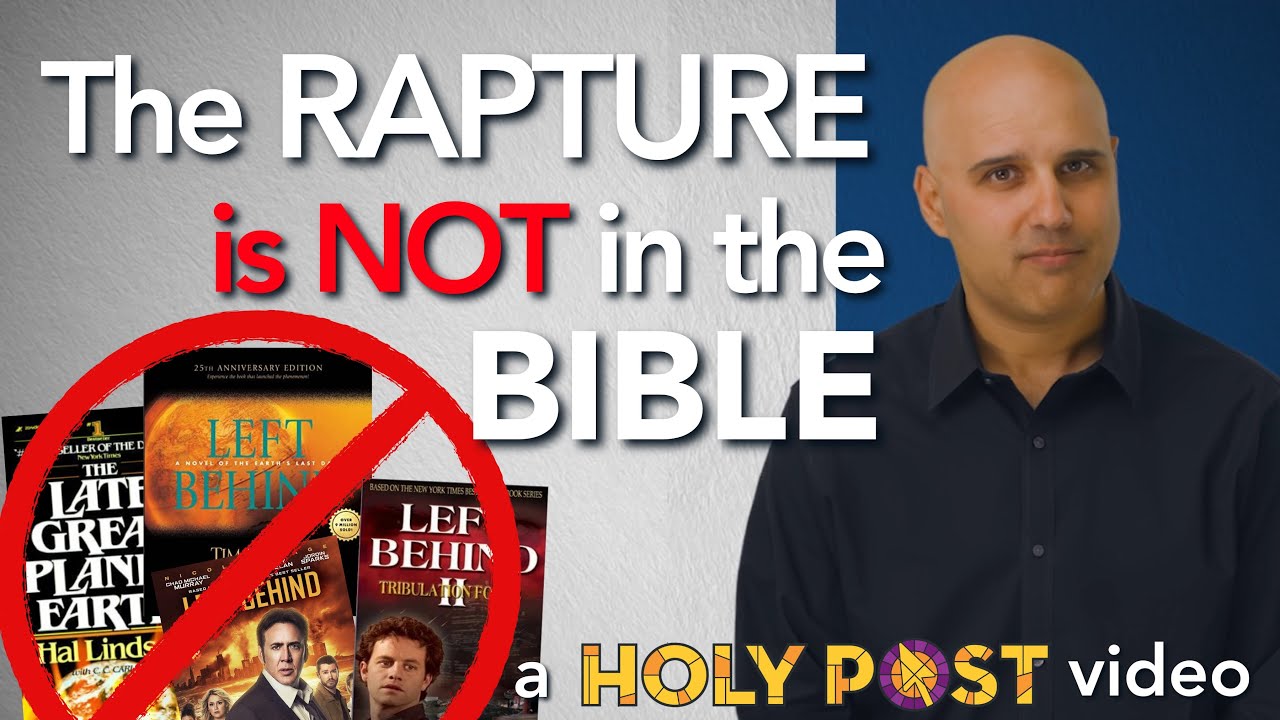
The Rapture Is NOT in the Bible
## Metadata
- Author: [[Holy Post]]
- Full Title: The Rapture Is NOT in the Bible
- Category: #articles
- Document Note: ---
tags:
- #eschatology
- #biblicalstudies
- #rapturedebate
Author: [Unknown Presenter]
Source: [YouTube | "The Rapture is NOT in the Bible"](https://www.youtube.com/watch?v=IjJwFZipGpE)
Reference: [Transcript and video timestamps]
date created: 2025-08-22 19:30
---
# Title: The Rapture is NOT in the Bible
## Table of Contents:
- [📝 Summary](#-summary)
- [📖 Main Content](#-main-content)
- [🗒️ Notes](#️-notes)
- [📖 References](#-references)
- [🗣️ Paraphrase](#-paraphrase)
- [📰 Newsletter](#-newsletter)
- [✅ Action Items](#-action-items)
- [🧪 Hypotheses](#-hypotheses)
- [📊 Methodology](#-methodology)
- [❓ Questions](#-questions)
- [🔮 Future Research](#-future-research)
- [💡 Implications](#-implications)
- [🧠 Learning Styles Assessment](#-learning-styles-assessment)
- [📊 Accessibility Assessment](#-accessibility-assessment)
- [🌍 DEIB Assessment](#-deib-diversity-equity-inclusion-and-belonging-assessment)
- [✅ Logical Validity](#-logical-validity)
- [🔍 DARVO Analysis](#-darvo-analysis)
- [🔍 SEO Evaluation](#-seo-evaluation)
- [🎯 Conclusion](#-conclusion)
---
## 📝 Summary:
The video argues that the concept of the Rapture—Christians suddenly disappearing into heaven before tribulation—is **not actually in the Bible**. The Book of Revelation does not mention it, and commonly cited passages (Matthew 24, Luke 17, 1 Thessalonians 4) are misinterpreted. Instead, these texts describe judgment, resurrection, and the public return of Christ, not a secret evacuation. The Rapture is framed as a 19th–20th century theological invention popularized by books and media, not by scripture.
---
## 📖 Main Content:
The presenter examines biblical texts often used to support the Rapture doctrine and shows that contextually, they describe something different:
- **Matthew 24** and **Luke 17**: Being “taken” means judgment (like those taken by the flood in Noah’s time), while being “left behind” represents survival and safety.
- **1 Thessalonians 4**: Paul comforts Christians by describing resurrection and greeting Christ in the air as part of his royal return (*parousia*), not a secret disappearance.
- **Revelation**: No reference to a Rapture at all.
- **Theological takeaway**: The Rapture is a later tradition, not a biblical teaching.
---
### 🗒️ Notes
- [00:02](https://www.youtube.com/watch?v=IjJwFZipGpE&t=2) Common misconceptions in biblical interpretation (apple in Eden, Jonah’s whale, three wise men).
- [01:25](https://www.youtube.com/watch?v=IjJwFZipGpE&t=85) Revelation contains strange imagery but no Rapture.
- [02:53](https://www.youtube.com/watch?v=IjJwFZipGpE&t=173) Jesus compares his coming to Noah’s flood; the “taken” are judged.
- [04:20](https://www.youtube.com/watch?v=IjJwFZipGpE&t=260) Luke 17 reinforces this with imagery of vultures and death.
- [05:45](https://www.youtube.com/watch?v=IjJwFZipGpE&t=345) Paul addresses Thessalonians’ concern about the dead in Christ.
- [07:11](https://www.youtube.com/watch?v=IjJwFZipGpE&t=431) *Parousia*: Roman custom of meeting a ruler and escorting him, not escaping with him.
- [08:37](https://www.youtube.com/watch?v=IjJwFZipGpE&t=517) Paul describes a loud, public event—opposite of a secret Rapture.
- [10:11](https://www.youtube.com/watch?v=IjJwFZipGpE&t=611) Conclusion: Rapture is a tradition, not scripture.
---
## 📖 References:
- Matthew 24:36–44
- Luke 17:34–37
- 1 Thessalonians 4:13–18
- Revelation (entire book, absence noted)
- 1 Corinthians 15:51–52
---
## 🗣️ Paraphrase:
1. Original: *"When Jesus says one will be taken and the other left behind, the one taken isn’t raptured—it’s judgment. The safe ones are those left, like Noah."*
Paraphrase: Jesus’ teaching in Matthew 24 shows that those “taken” are judged, not rewarded. Survival, like Noah’s family, belongs to those left behind.
2. Original: *"Paul’s words in 1 Thessalonians 4 describe Jesus’ royal arrival, not a secret escape."*
Paraphrase: Paul depicts Christ’s return as a king’s public procession, where believers—living and resurrected—join in escorting him to Earth, not vanishing into heaven.
---
## 📰 Newsletter:
✝️ **The Rapture? Not in Your Bible**
This week’s deep dive: A viral sermon dismantles the Rapture tradition. While Hollywood (and the *Left Behind* series) turned it into a blockbuster narrative, scripture itself paints a different picture. Revelation doesn’t mention it. Matthew 24 describes judgment, not disappearance. And Paul’s teaching in 1 Thessalonians points to resurrection and Christ’s royal return—not a cosmic evacuation.
For developers of faith, this is a reminder: just like we question *legacy code* in WordPress, we must audit *legacy theology* too. Both need clean documentation, context, and interpretation.
Catch the full breakdown here → [YouTube link](https://www.youtube.com/watch?v=IjJwFZipGpE).
---
## ✅ Action Items:
- Connect this sermon’s method—**challenging assumptions with context**—to open-source advocacy: encourage contributors to question “we’ve always done it this way.”
- Frame this as a teaching model: show how to **trace traditions vs. source texts** in open source (WordPress governance vs. actual project rules).
- Apply insights in **OSPO leadership training**: stress the importance of verifying “what’s written” (policy/code) versus “what’s assumed.”
---
## 🧪 Hypotheses:
1. Belief in the Rapture grew more from cultural dissemination (books, sermons, films) than scripture.
2. Misinterpretation thrives where people lack historical-cultural context.
### 📊 Methodology:
- Comparative hermeneutics: analyze reception of Matthew 24 in different denominations.
- Media study: measure influence of *Left Behind* vs. scripture on beliefs.
### ❓ Questions:
- How did Rapture theology shape American evangelical identity?
- Could similar misreadings exist in other doctrines?
### 🔮 Future Research:
- Study the role of publishing industries in shaping doctrine.
- Explore parallels in how software myths spread (e.g., “WordPress isn’t secure”).
### 💡 Implications:
Correcting misinterpretations could realign faith practices with scripture, just as documentation corrections realign dev practice with open source principles.
---
## 🧠 Learning Styles Assessment:
- **Visual**: Absent → diagrams of timelines could help.
- **Aural**: Present → sermon format supports auditory learners.
- **Verbal**: Strong → detailed exposition and analogies.
- **Physical**: Missing → could add exercises (e.g., “map scripture citations”).
- **Logical**: Present → step-by-step exegesis.
- **Social**: Present → encourages discussion.
- **Solitary**: Present → invites reflection.
- **Naturalistic**: Absent → could add creation-based metaphors.
---
## 📊 Accessibility Assessment:
- **Screen Reader**: Adequate, but no mention of captions (video dependent).
- **Keyboard Nav**: Standard YouTube, but improvements possible.
- **Contrast/Resizing**: Dependent on YouTube’s UI.
---
## 🌍 DEIB (Diversity, Equity, Inclusion, and Belonging) Assessment:
- **Cultural Relevance**: Focuses on U.S. evangelical context, lacks global Christian voices.
- **Inclusive Language**: Neutral, though heavily Western-centric.
- **Neurodiversity Support**: Good pacing, but could use visual summaries.
- **Representation**: Lacks voices from Catholic, Orthodox, Global South traditions.
---
## ✅ Logical Validity:
- **Strengths**:
- Uses **causal reasoning**: Noah → “taken” = judgment.
- **Appeal to evidence**: direct scripture citation.
- **Balanced view**: acknowledges why Rapture became popular.
- **Weaknesses**:
- Slight **strawman risk**: paints all evangelicals as believing one version.
- **Appeal to ridicule** (comparing Revelation to Portland, Oregon) may undermine seriousness.
Tone: **engaging, witty, confident, corrective.**
---
## 🔍 DARVO Analysis:
- **Deny**: Not present. The sermon doesn’t deny wrongdoing.
- **Attack**: Light satire of Rapture advocates but not ad hominem.
- **Reverse Victim/Offender**: Not present. No role reversal.
Conclusion: DARVO not employed.
---
## 🔍 SEO Evaluation:
- **
- Summary: The article discusses the concept of the Rapture and its absence in the Bible. Many Christians believe in the Rapture as an important doctrine, but it is not actually mentioned in the Bible. The popular belief is that the Rapture is when true Christians will suddenly disappear and be taken to heaven with Jesus, while those left behind will face the tribulation. However, the passages commonly used to support the Rapture, such as Matthew 24 and Luke 17, are actually about God's judgment and not a secret escape to heaven. The only passage that seems to refer to the Rapture, 1 Thessalonians 4, is actually about Jesus' return to Earth and the resurrection of believers, not their removal to heaven. The article argues that it is important to question traditions and assumptions and rely on the actual words of scripture.
- URL: https://youtube.com/watch?v=IjJwFZipGpE&si=b54I6-9sq4gk_9JA
people believe all kinds of things that aren't actually in the Bible for example the forbidden fruit in the Garden of Eden is never identified as an apple the Bible never says it was a whale that swallowed Jonah the gospels don't say how many wise men visited Jesus after his birth and the Rapture well that's actually not in the Bible at all let me explain for many Christians especially in the United States the Rapture is believed to be an indisputable doctrine
of our faith right up there with the Virgin birth and the resurrection many have been taught that someday in the twinkling of an eye every true Christian will suddenly disappear caught up into heaven with Jesus with only a crumpled heap of clothes remaining the Rapture is how Christ will rescue his people from God's Judgment of the Earth but everyone who's left behind will face the Terrors of the tribulation it makes for a great story that's why it's been made into to
so many books and movies over the years the Left Behind series alone has sold over 65 million copies with many reaching number one on the New York Times bestseller list the Evangelical industrial complex of movies books radio stations mega churches television and conferences has so thoroughly disseminated the Rapture narrative and made so much money doing so that few people stop and ask themselves the most important question of all is the rapture actually in the Bible so let's look at
the evidence first when thinking about the future the return of Christ and the final judgment many Christians turn to the Book of Revelation and you'd expect to find the Rapture there too after all Revelation is like the Portland Oregon of the Bible it's where you find all the weird stuff there's beasts and smoking bows and prostitutes riding dragons and creatures covered with eyeballs but one thing you won't find there is any mention of the Rapture not not a word
instead there are two other New Testament passages that Rapture Advocates go to so let's look at each one and find out what they actually say the first is Matthew 24 in this chapter Jesus is talking to his disciples about being vigilant for his return because he will come suddenly and unexpectedly and verses 40 and 41 are where we get the famous Rapture language of being left behind Jesus said two men will be in the
field one will be taken and the other left two women will be grinding with a hand Mill one will be taken and the other left well there it is just like in the movies one person gets raptured to heaven and the other is Left Behind to face the tribulation well not exactly you have to read these verses in their context because what comes right before is really important as it was in the days of Noah so it will be at the coming of of the son of man for in the days
before the flood people were eating and drinking marrying and giving in marriage up to the day Noah entered the Ark and they knew nothing about what would happen until the flood came and took them all away and that is how it will be at the coming of the son of man two men will be in the field one will be taken and the other left two women will be grinding with a hand Mill one will be taken and the other left Jesus comp Compares his second
coming to Noah's flood in that story Noah and his family were the ones left behind and everyone else was taken by the flood which was God's judgment so when Jesus says when he returns one will be taken and another left behind the one who's taken isn't being raptured into heaven they're being taken by God's Wrath and judgment it's actually the person who's left behind who's safe like Noah there's a parallel text in Luke 17
that makes this even more clear Jesus says I tell you on that night two people will be in one bed one will be taken and the other left two women will be grinding Grain Together one will be taken and the other left where Lord they asked that is where were they taken he replied where there is a dead body there the vultures will gather Jesus is talking about being taken by death and judgment after all dead bodies and
vultures doesn't sound much like heaven so the very verses where we get the Left Behind language isn't about the Rapture at all and the crazy part is that even Rapture Advocates admit this how lind's best-selling book the late great planet Earth which before the Left Behind series probably did more to popularize the Rapture than anything else never uses Matthew 24 or Luke 17 in its argument and Lead meting dispensational
theologians dispensationalism is the theological system that came up with the Rapture in the first place they agree that Matthew 24 is not about the Rapture so if Revelation doesn't mention the Rapture and Jesus doesn't mention it where does it come from in the Bible well let's go there to the one passage that the entire Rapture theology hangs on this is it this is the big one the only place in the entire Bible that seems to talk about the Rapture is 1
Thessalonians 4 according to the Lord's word we tell you that we who are still alive who are left until the coming of the Lord will certainly not precede those who have fallen asleep for the Lord himself will come down from heaven with a loud command with the voice of the Archangel and with the trumpet call of God and the dead in Christ will rise first after that we who are still alive and are left will be caught up together with them in
the clouds to meet the Lord in the air and so we will be with the Lord forever okay let's break this down the Thessalonians wrote to Paul because they were worried about their Christian sisters and brothers who died what would happen to them when Jesus returned they wondered Paul's responding to that emotional pastoral question in verse 15 he talks about the coming of the Lord the Greek word Paul uses here is parusia
and in the ancient world it referred to a formal visit by a king or dignitary here's how it worked when a royal delegation was approaching a city a messenger would blast a trumpet then the citizens of the city would flood outside the gates and line the road often shouting and celebrating the arrival of the king or dignitary then they would accompany him through the gate into the City and by the way the most honored citizens of the city the V IPS would
greet the Royal delegation first all of this was a very common very familiar custom in fact we see this in the Bible itself in the gospels when the people of Jerusalem found out Jesus was approaching they took palm branches lined the street and met him outside the city gate they shouted and celebrated and Then followed him into Jerusalem today we commemorate that event on Palm Sunday that's parusia that's exactly what Paul is referring to in 1
Thessalonians 4 with one big difference Paul says King Jesus isn't coming on a road to take possession of a city he's coming from the Heavens to take possession of the whole earth Paul says that when Jesus returns as the true king a trumpet will blast and all his people will meet him in the air and here's the cool part Paul says the dead in Christ will rise and meet him first why because
they're the VIPs in other words you don't have to worry about your dead sisters and brothers Thessalonians Jesus is taking care of them and they get a place of honor when he returns then the rest of us will meet Christ in the air and together we will escort him to the Earth and we will reign with him here here's the point 1 Thessalonians 4 isn't about the Rapture at all it's about Jesus returning to rule over the Earth and that would have been obvious to
Paul's ancient audience who greeted delegations and dignitaries this way all the time but we've made it into a Rapture text because this custom of parusia is completely foreign to us but there's more a few more important details support this reading of the passage first Paul says this will be a very obvious and public arrival with a loud shout and a trumpet call he says something similar in 1 Corinthians 1551
and 52 when Christ returns a trumpet will sound and the dead will be raised imperishable and we will all be changed it's a big loud obvious event but that's not the Rapture the Rapture is supposed to be a secret leaving the world confused about what happened to everyone second Rapture Advocates say that only believers who are alive will be taken into heaven to avoid the tribulation on the Earth after all the dead don't need
to be raptured from the earth they're already gone but here Paul says both the living and the dead will meet Jesus in the air this is a resurrection event the dead will be raised it's not a Rapture event finally third Paul Ends by saying we will be with the Lord forever but he never says where we will be with the Lord Rapture Advocates say we'll be with him in heaven but but Paul is careful
not to use the word Heaven here instead he uses a different word saying we will meet Jesus in the air a word which means the lower parts of the sky it's not the word for heaven and that makes sense because this is a scene of Jesus returning to the Earth where we will reign with him not one of Believers being taken away from the earth to heaven so let's summarize what we found the Rapture is nowhere in Revelation the famous taken and left behind words of
Jesus in Matthew 24 are actually about judgment not the Rapture and the big one 1 Thessalonians 4 is about Jesus parusia his Royal return to Earth and the resurrection of Believers not our secret escape from the tribulation here's my point like the Apple in Eden or Jonah's whale or the three wise men sometimes we need to rethink what we think we know about the Bible we need to slow down and ask if we're
putting too much Authority into our traditions and assumptions rather than the actual words of scripture the Rapture sells a lot of books and it makes for exciting movies and maybe it was even part of your journey toward Faith but no matter how popular it may be or how sentimental it is in your Christian Community if the Rapture is not in the Bible then it absolutely needs to be left behind
that, The Rapture Is NOT in the Bible, Holy Post, 01hn0v48jcf88hx4ggkzwak9jf.