The Senior Engineer Death Spiral
🔗 **Source:** [The Senior Engineer Death Spiral](https://sunilpai.dev/posts/the-senior-engineer-death-spiral/)
> [!note]+ Document Notes
> ---
> tags: [engineering-careers, burnout, imposter-syndrome, remote-work, team-communication]
> author: Sunil Pai
> source: sunilpai.dev
> reference: https://sunilpai.dev/posts/the-senior-engineer-death-spiral/
> date created: 2026-09-27
> ---
> > [!info] Generated analysis — not the author's words. Sections below are machine-written
> > from the captured source. Only text inside `> [!quote]` blocks is verbatim from the author.
> > Do not quote or attribute any other line to the named author.
> # 🏷️ Title: the senior engineer death spiral
> ## 🧭 Table of Contents
> - [📝 Summary](#-summary)
> - [📖 Main Content](#-main-content)
> - [🗒️ Notes](#️-notes)
> - [📚 References](#-references)
> - [🗣️ Paraphrase](#️-paraphrase)
> - [📰 Newsletter](#-newsletter)
> - [✅ Action Items](#-action-items)
> - [🧪 Hypotheses](#-hypotheses)
> - [📊 Methodology](#-methodology)
> - [❓ Questions](#-questions)
> - [🔮 Future Research](#-future-research)
> - [💡 Implications](#-implications)
> - [🧠 Learning Styles Assessment](#-learning-styles-assessment)
> - [📊 Accessibility Assessment](#-accessibility-assessment)
> - [🌍 DEIB Assessment](#-deib-assessment)
> - [✅ Logical Validity](#-logical-validity)
> - [🛡️ DARVO Analysis](#-darvo-analysis)
> - [🎯 Conclusion](#-conclusion)
> ### 🔗 References
> - The post contains no links (checked against the markup on 2026-09-27: zero anchors). It's a first-person monologue with no cited sources, which fits its form.
> ## 📝 Summary
> - **What happened.** Sunil Pai writes up advice he gave a friend starting a senior, well-paid role who asked how to sustain 60–80 hour weeks and get promoted. Pai names the failure mode he sees: the "senior engineer death spiral."
> - **Why it matters.** The spiral: take on an over-ambitious project to prove seniority, go quiet for weeks, give vague "positive updates," overwork in secret to catch up, lose sleep and relationships, then burn out, get PIP'd, fired, or quit. Pai says remote work, COVID, and coding agents made engineers more autonomous and more isolated, so the spiral is easier to fall into and harder for others to spot.
> - **Key stakeholders.** Newly hired or promoted engineers; their managers and teammates; anyone in high-autonomy remote roles.
> - **Risks and tradeoffs.** The fix, "drop a level" and do support work, trades short-term visibility on big bets for momentum and trust. It assumes a good-faith team; in a hostile environment the same move could read as underperformance.
> - **Bottom line.** Share your work constantly, rebuild momentum with small useful tasks, and treat reputation as the thing software is downstream of.
> ## 📖 Main Content
> - **The trigger.** A new job, promotion, or big project, plus the belief that working harder on a bigger thing earns promotion. Pai calls the result "cosplay" of a more senior engineer.
> - **The symptom.** Disappearing for 2–3 weeks; standup "positive updates" with nothing to show; "reach out if you have questions" that nobody takes up.
> - **The spiral.** Private self-talk ("I'll do a month's work next week and no one will know"), lost sleep, missed meals, strained relationships, then burnout, a PIP, firing, or quitting.
> - **Author's credibility.** Pai says it has happened to him "so many times" that he now catches it early.
> - **Structural cause.** Remote work, COVID, and coding agents removed the co-located, Jira-ticket structure. Engineers own more and are more siloed, so silence gets noticed late. The antidote is being the person who never stops talking about what they're working on, without being obnoxious.
> - **The counterintuitive fix.** Assume good faith: they hired you for who you are now, not who you'll be in six months. Drop a level. Become the best teammate for a while: bugs, neglected chores, grunt work, write-ups.
> - **The mechanism.** Shift from outcome-based to momentum-based work. Routine and relationships produce stamina. Big projects come from slow, steady daily increments, not heroic efforts. After 30 days the volume adds up.
> - **The payoff.** Reliability builds trust, and trust gets you bigger work.
> - **Uncertainty.** All evidence is personal observation; no data on prevalence or outcomes.
> ### 🗒️ Notes
> - Framing: parenthetical intro; friend in a new, very senior, well-paid role asked about 60–80 hour weeks and promotion; Pai reads imposter syndrome.
> - Named pattern: "senior engineer death spiral"; "positive update."
> - Outcomes listed: burnout, a month off, PIP, firing, quitting.
> - Causes named: COVID, coding agents, remote work over "the last five to ten years."
> - Prescriptions: share your work; assume good faith; drop a level; momentum over outcomes; build routine to "muscle memory."
> - Closing aphorism: "you are in the reputation-building business, and software is actually downstream of that."
> - Register: lowercase, conversational, profanity, "bro"/"man" asides.
> ## 📚 References
> - Not applicable to this source — the post cites nothing, and it's personal advice rather than a research claim. Related reading to connect in the vault: writing about "working in public," burnout in engineering, and imposter syndrome.
> ## 🗣️ Paraphrase
> - A friend starting a big new role asked how to grind 60–80 hour weeks; Pai heard imposter syndrome and gave this advice instead.
> - The most common failure he sees: people take on something too ambitious to prove they're senior.
> - They go quiet for weeks and give upbeat updates with nothing behind them.
> - Privately they plan to secretly catch up by overworking, which wrecks sleep, health, and relationships and ends in burnout or job loss.
> - Pai has done this himself, repeatedly, and now recognizes it early.
> - Remote work and coding agents make engineers more independent and more isolated, so you have to make your work visible.
> - Assume your team hired you for who you are today.
> - Step down a level for a while and be the most helpful teammate: fix bugs, clear chores, write things up.
> - The goal is momentum, not outcomes; small daily work adds up and rebuilds relationships.
> - Reliability earns trust, and trust earns bigger work.
> - Your real job is building a reputation; the code follows from that.
> ## 📰 Newsletter
> **Stop cosplaying seniority.** Sunil Pai names a pattern anyone who's joined a new team or picked up a big ticket will recognize: the "senior engineer death spiral." You go dark on an ambitious project, give cheerful standup updates with nothing to demo, and plan to secretly make up the gap with late nights. His fix is counterintuitive: drop a level, grab the bugs and chores nobody's touching, and build momentum and trust before swinging big. For WordPress contributors working async across time zones, "share your work" is the whole game: a Make post, a draft PR, a Slack thread. Silence reads as trouble. [Read the post](https://sunilpai.dev/posts/the-senior-engineer-death-spiral/).
> ## ✅ Action Items
> #### DevRel
> - Education: fold "share your work early" into contributor and new-hire onboarding; model draft PRs and weekly written updates.
> - Community management: normalize small first contributions over ambitious first projects.
> #### OSPO
> - Developer support: guidance for new maintainers to ship small, visible changes before proposing large redesigns.
> #### Community
> - Contributors: "first issue" rotations fit Pai's "drop a level" advice; pitch them as momentum-builders, not beginner work.
> - Maintainers: check in with contributors who go quiet on large tickets instead of waiting for them to surface.
> #### WordPress
> - Core: encourage draft PRs and Trac progress comments on large tickets so silence doesn't hide a stuck contributor.
> - Core Performance: Not applicable to this source.
> - Core AI: Pai names coding agents as a cause of isolation; the Core AI team could look at how agent-assisted work is made visible to reviewers.
> - **Core Program Team:** a lightweight check-in ritual for release leads on long-running features.
> - Mobile: Not applicable to this source.
> - Playground: Not applicable to this source.
> - Community: mentorship programs can teach the spiral pattern to new contributors and team reps.
> - Training: a Learn WordPress lesson on async communication for contributors.
> - Marketing: Not applicable to this source.
> - Support: Not applicable to this source.
> - Des
*(a friend recently got a new job, a very senior role, very well paid, and pretty different from his previous gig. he was asking me how to do a 60 to 80-hour week, how to do well enough to get promoted, etc. and as we talked, I realised he was feeling a bit of imposter syndrome and really wanted to prove himself. I ended up giving him a bit of a monologue. this is more or less what I told him.)*
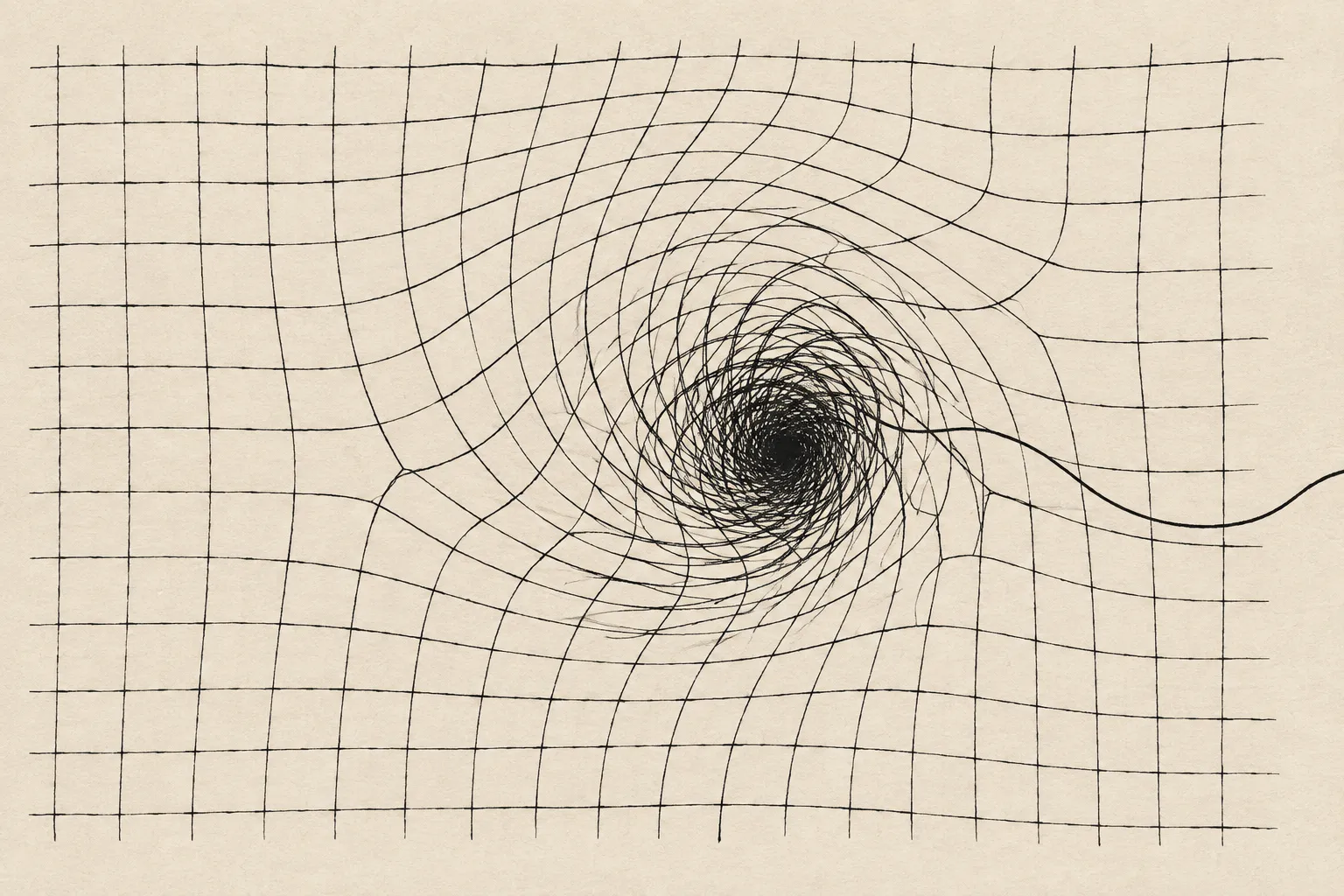A hand-drawn grid spiraling into a dense knot, with one loose line escaping to the edge.
okay, so this is the most common failure mode I’ve seen. I call it the senior engineer death spiral. it usually happens when an engineer goes into a new job, gets a promotion, or even just gets a big project at work. or they ask for a big project because they think to themselves, “oh, if I work harder, do a bigger thing, then I will be rewarded with promotions and what have you,” right? like, that’s the move. and the thing they do is they tell themselves they need to almost cosplay being a more senior engineer than they are. they’re like, “oh, you know what, I’m going to try designing something way more ambitious.”
and what happens is they start disappearing for longer periods of time. like, for two, three weeks, you won’t hear anything from them. occasionally, during the standup, they’ll give what I call the positive update. “yeah, things are going well, you guys. I’ll have something to show you quite soon. if you have any questions, reach out.” and no one usually reaches out, but they won’t really have anything to show.
and in the back of their head, right, they’ve started the spiral already. they’re telling themselves, “oh my god, I haven’t really shipped anything in a while. what I need to do is work harder. I’ll just work hard enough. I’ll save this and no one will know.” like, “in the next week, I’ll do a whole month’s work. and no one will know.” they’ll start losing sleep, all of that. and it sucks, because bro, they start getting depressed, missing meals. their relationships suffer, both work and personal. and they just start spiraling, spiraling, and it ends up in worst-case scenarios. they burn out, they need to take a month off, they get PIP’d, they get fired, they quit their jobs because they think, “you know what, this is not salvageable.” and it really sucks.
and by the way, this isn’t something that I’ve noticed only with other people. this has happened to me. and it’s happened so many times that I now recognize it early enough to take a step back and fix it.
see, man, the bigger point here is that because of COVID and coding agents and remote work, things that have happened in the last five to ten years, right, you don’t really have the same structure of working next to someone and being given Jira tasks, etc. you have a lot more ownership, and you are unfortunately a little more siloed. so you never want to be in a situation where people don’t know what’s up with you. like, they shouldn’t be saying, “yeah, I don’t know what Sunil’s been doing,” and starting to get concerned, because they might only tell you when it’s too late. you want to be in a position where “Sunil doesn’t shut the fuck up about what he’s working on,” right? again, you don’t have to be obnoxious about it. you have to share your work.
I think in moments like this, the thing you need to do is actually a little counterintuitive. but you have to start from a position of assuming that everyone around you is operating in good faith, okay? like, they hired you for you. they didn’t hire you for who you think you’re going to be in six months. they like you for who you are right now, bro.
so the thing to do is actually to drop a level. not to try to be a higher-level engineer, but to almost drop a level and simply become the greatest teammate for a while. you’re still responsible for your work, you’re just trying to get moving again. you know, “I’m just here to help and support my teammates. I’m going to do bugs, the annoying things on somebody else’s plate or that no one has been able to get to. do grunt work, organizational stuff, write-ups. just things to help people out.”
and the reason you want to do this is you want to move away from an outcome-based mindset to momentum-based. like, you want to build a routine, because momentum is everything in this, and relationships are an even bigger thing in this. and by getting momentum going and fixing your relationships with other people, the thing you get is stamina. and that’s when you realize the real lesson, which is that big projects are not done with big efforts. it’s a big marathon, just slow, steady, incremental work. forget about a weekly basis, like a daily basis, an hourly basis, to the point that it’s muscle memory.
you’re in automatic mode. you wake up, you make yourself coffee, you get to work, and you just do the work. and then 30 days later, you look back and you see the immense volume of work that you’ve done just by doing a little bit every day. because the thing you’re going for is reliability, fixing your relationships. you want to take the burden off your teammates and your manager, because then, once you build that trust, they will give you bigger work. that’s the move here.
remember, you are in the reputation-building business, and software is actually downstream of that. godspeed and best of luck., The Senior Engineer Death Spiral, Sunil Pai, 01m3jap2gm51vcsj9c2cgqt88e.