The Solution to Agency Chaos
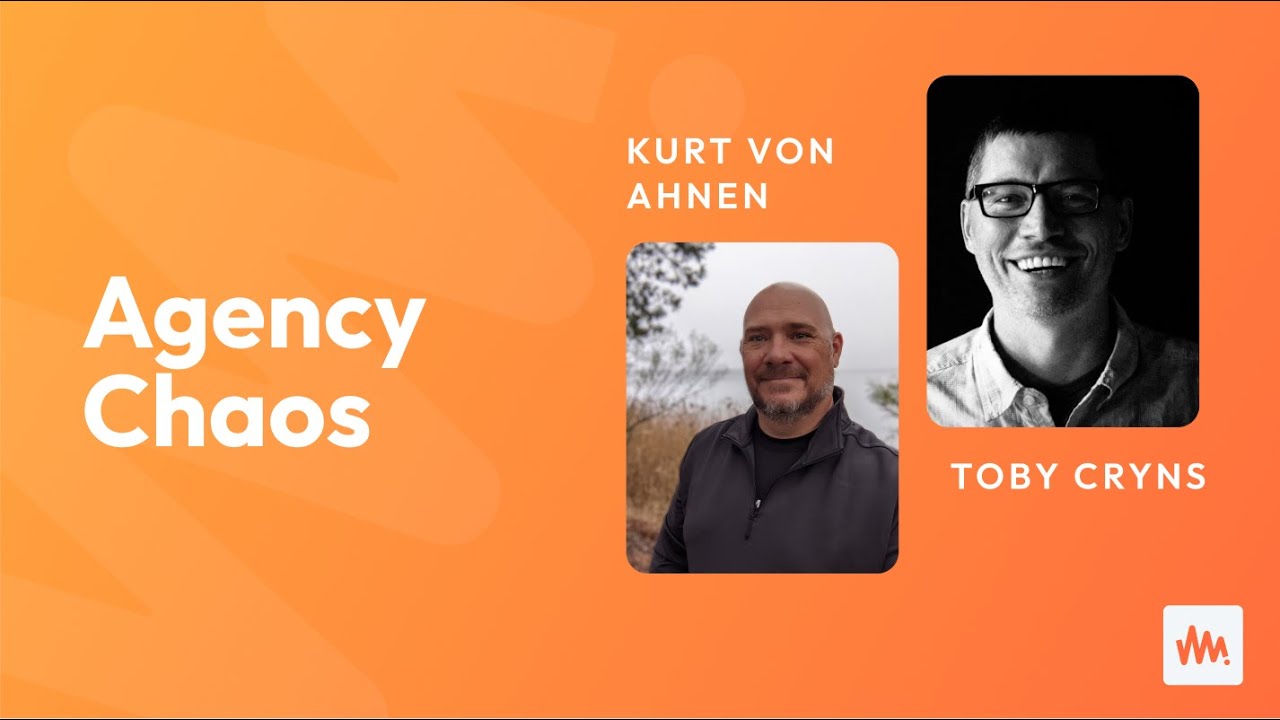
It feels like forever, but we are back. Welcome to the Agency Action Show after a little bit of a hiatus. My name is Kurt. I'm here with my co-host, uh, Toby Crimes. Toby from the Mighty Mo up in Minneapolis. Dude, it's been forever. I missed you. I'm glad we're back making another episode. I missed you, too. I think this might be season two. Not sure. Well, for those who don't know, Kurt and I just show up and with prepared to talk. Matt uh Madios does
all the production work and decides when the seasons start and end. So, yeah. Yeah. So, this might be season two. I maybe it's season 3. Crap. I don't know, dude. Um it's fun making the shows and and and just a little tidbit, I have other shows where I have like a responsibility in the production of it. This is so nice. Turn on the camera, have a conversation, turn off the camera, and go back to life. >> This is the dream job. Now, if only paid like a dream job, that would >> be the the life.
>> This is the dream job. >> Well, Toby, I know that we've got some things to talk about today, but I know that we do want to open with a different topic. >> Yeah. And you know, we might talk about this this whole episode, but the the gist of it is um I live in Minneapolis and right now in Minneapolis, there's a lot going on outside in people's hearts and people's lives lives are being upended. Um there's a lot of hate, a lot of love,
everything going on out outside my window here. And um so I was thinking I still have to show up to work um with all this stuff going on. And part of it's like I'm carrying a lot of anxiety myself as I come to work today and yesterday. And um and it's not the first time that I've had to do that. In fact, I think it's part of your responsibility as an employee, as an
agency owner, but particularly as an agency owner, if you have employees in particular, and if you're talking to customers, you have to put on a show to some regard, you know, in some respect. So, that's what I wanted to talk about. Like, here's an example. Um, how chaos might show up today for me. My kids are at home. One kid today was screaming during one of my calls. It was like a kind of an urgent call with a client and
um my routines are disrupted uh for that and other reasons related to the disruptions outside right now. I personally am carrying a lot of heavy emotions into my day and anxieties, but also my clients are the one most of our clients are local and so they're a lot of them are showing up with the same or you know pressures and anxieties that are related to similar things.
Um and so like I still have to show up. Yeah, you still have to show up. That's that's the hard part about being self-employed. You know, I I have this series that I make called um Fitness Focus Freedom Friday. Every Friday I make a message online, right? And I and I talk about, hey, this is how I'm staying in shape. This is what I'm focusing on. Um here's the freedom that I'm experiencing this week, right? And it's Friday, so you know, kick ass, finish the week strong, and have a great weekend. And um I think it's like a
pretty positive message, but there's the other side of that freedom thing and it's the responsibility that comes with freedom. And so yeah, you're self-employed, you're an entrepreneur, you know, um do you have the freedom to unplug and and take a couple of of wellness hours to yourself or or you know, turn off the feed and and uh have an adult beverage or whatever? Yeah, you can. But there's the the inverse is always true is also true, right? It's the responsibility of that the work
never goes away. The relationships always need maintained. And you know, I know you're really focused on sales as an agency owner. So, it's like the sales side is never turned off. I mean, you got to be ready to go when it's time to go. >> It's hard. It's really hard. >> Yeah. And along those lines, it should say like I think part of the the hard thing about owning a business, and this is probably any business, is this showing up day after day regardless of what's going on
out there. You just got to keep going. And some days you're going to suck at it. So like I always think like, you know, hopefully like one and a half steps forward, one step back. Like that's kind of what I'm aiming for generally. Um, and so if if I have one week that's great, one week not great, but I think the key is to keep showing up there. There's such a value in consistency, Toby. I can't even I can't even express it enough. Not every day or
every week or even every month needs to be a home run, right? Because that's that's that that's uh unreasonable. It just is, right? We have dreams. We have aspirations. That's not unreasonable. But to to realistically expect that every day, week or month is a home run is just not realistic. So the consistency is realistic and you can control that even on I'm in a similar struggle. I mean I don't have I don't
have the stuff you've got in Minneapolis happening right now. But like my wife started this new job where she's off every Monday and Tuesday. every Monday and Tuesday. She wakes up, she says, "What have you got going on today, babe?" I'm like, "The same thing I got going on every day when you go to work, you know, I've got meetings, I've got web projects I'm working on, I've got social media posts, I've got invoicing, I've got, you know, followup on invoicing, I've got, you know, and she's like, "Yeah, but I thought we
would." No, just because you're off doesn't mean I'm off, right? But it's that added pressure. the pressure and the anxiety I think is is what we're really talking about, right? We're not really talking about the the actual thing, >> right? Oh, yeah. Yeah. And I think like it's easy. I shouldn't say it's easy. It sucks to quit like and but that's all I want to do today.
And I think like like >> are you saying we picked a bad day to come back on the air? >> No. No. It's actually like illustrative of this thing. I was going to come I was already at work. It's not It's just that all I wanted to do was quit. And I I think like if you read like mainstream news articles, it's pretty rare to hear that from a CEO of any company, big or small. like that this I bet you the CEO of I don't know some people are crazy like the big levels but like I don't
know maybe even like the big CEOs maybe they have days where they're like gosh I wish I didn't have to go into work today you ever feel like you don't want to go into work Kurt like really don't want to like and you do anyway well the and I do anyway happens a lot there have been times as long as I don't have a scheduled like monetaryoriented meeting on the calendar. If I really don't feel like doing it for the day, man, I'll
take the dog to the park. We'll go for a nice walk. We'll go to the dog park. I'll go for a bicycle ride. I'll run down to Sand Hills Brewing, which is uh owned by our friend Pippen Williamson. I'll go down there and hang out with him and have a beer during the day. He's not usually there at night, right? So, if I see him during the day, I can have a quick conversation with him. Um, that's part of the freedom part of self-employment, right? Is if there's days I really just don't want to do it, I'm not going to force myself to. And and here's my reasoning. On the days
that I really don't want to do it, I could stare at the computer for that 6 hours, that 8 hours, that 10 hours, whatever that is, and get done an hour and a half or or two hours worth of work. And then the days that I do want to do it, the days the days where I'm excited and I go, "Oh, I got a new web project. I'm gonna knock it out real quick." I can literally do a week's worth of work in half a day, right? And so I have to be cognizant of the value
of my time and what I'm in the mind space to create. When I was corporately employed, I didn't have that freedom. Like when I worked at Suzuki, we worked from 8:00 in the morning till 5:00 at night. And it was really cool to have a corporate job where I only had to work from 8:00 to 5:00. I mean, that part of the job was cool. Like, Suzuki was way cool for that. But the problem is is my brain would start working about 5:30 in the morning, but I wasn't getting paid to work at 5:30 in the morning. So, I wasn't working on Suzuki stuff at 5:30 in the morning. And when the distractions happened in the office
between like 9 and 11 or 9 and noon, and I got nothing done, the company paid me a salary to sit there for three or four hours and get nothing done, you know. And that's again that's benefits and freedoms of self-employment. We can be productive when we are productive. >> Yeah. And I think you know part of like the show of owning an agency you know the
part of the the I should should say the the good thing about owning an agency. You can say who you work with when you work how you work. You get to show up however you want. Like nobody's going to fire you. I mean, you might have a client fire you, but like and I think like you can that communication can be consistent. I think part of it is not as close as I've always worked for the last 10 years. We'll say the first five years I was figuring it out but like I always wanted to I tr for the last 10 years and I think I've achieved it in the last 5
years or so but I've tried to what people tried to make it so what people see and what people experience is really close to who I am and I think in times where anxietyy's high that really helps because I can then communicate to them that I'm feeling a lot of anxiety or not but like I'm like I was on a call with a client today and you know we didn't speak directly about issues, but we were both kind of like, "You're in Minneapolis. Me, too." And quite a day. Yep. Quite a day.
And um I think like something that can help in a time when it's when you're feeling overwhelmed, and this is overwhelmed, anxious. I always think like figure out one thing you can do today that moves the needle. Write it down and then do it. That's the sign of leadership, my friend. So you you could bask in the in, you
know, bask in the darkness of of oppression and depression and everything else or, you know, you could find that light at the end of the tunnel and and like you said, you know, pick something and make it happen, right? That's the sign of of leadership. I'm really big on on authenticity for a lot of things. Um, I took some training with a guy named um, Andrew Egleton. He's out of Australia. He's a he's a pretty famous presentation trainer, presentation
coach. And one of his first rules is no change of state. When you step on stage to give a presentation, you know, don't turn into Bob Barker and be like this fake phony dude. Everything's great. Here's my presentation and isn't this wonderful and you guys are wonderful and thanks for having me and have a great day. Good night. He's like, "If you, it's no change of state. You know your content. You're the subject matter expert. You're going to get up and share wisdom with these people. But if you're having a shitty day, you just tell them you're having a shitty day." You know, like, "Hey, I'm having a shitty day, but
let's knock this out anyway." Right? That there is nothing wrong with being authentic, but still rising to the occasion, being the leader, and executing. I also think there's first of all I totally agree with you and there's an opportunity in a chaotic situation like the one I'm currently in to be the rock for the people who are hiring you. And I think even outside of a chaotic situation like this, usually
people hire us because they need someone to be a rock in their whatever web project they're working on. And especially probably at a time like this when there's even more chaos, the more I can communicate calm, we've got this, probably the more highly valued I'll be in that transaction. I think that's 100% correct. And and that I don't think that has anything to do with where you're located right now
or the times, right? I look back on some of our most important projects and those most important the the highlighted projects, the ones where it got knocked out of the park. It was because I had to become the hub of whatever that company was doing. Um, and it sounds like it's overinflating our importance. I don't think it is. We're responsible for the company's communication, the company's interaction with the outside world. um you know we have to work with the different stakeholders with with with
marketing with sales with you know if you're doing an enterprise project you're leveraging a lot of stakeholders and you become the hub of what that is and if you're showing like chinks in the armor that's not lending confidence to the client. So, you got to be strong. You got to take leadership. You got to say, "No, that's not the way we do that. Here's here's the process we're going to use in this instance." And they're going to go, "Oh, crap." And they're just going to follow, right? Um when they don't want to follow, you make them follow, right? And then that puts you
that puts you in a catbird seat of of leadership to an extent. I mean, you still have a client you're answering to, but their department heads, their staff, their stakeholders that are underneath that, they're under your toutelage as the project manager. And when we lose focus of that, we lose control of the project. And that's when things spool out of control. >> Yeah, that's true. And there's also this thing that I believe the process of getting
complex things done is very messy. So when you build a website, it's not only just building, you got to design it. And there's a lot of conversations internal, external. SEO project, same thing. Building a website, same thing. I believe that every web agency is a complete mess and a complete wreck internally. So much so that I I was talking to my sales guy who does not um well so he was telling me I was so I had
him on a call with an existing client who's we're now hiring as a u brand consultant so they're helping us and he was sharing a concern like hey it's a mess getting the work done I'm sorry you know and the and the consultant who had hired us for a project a big project we did it for her she goes I didn't feel any of that. Yeah. >> And I think to be real with people here, like other agency owners, it's probably a mess. Even at the biggest, most put together company and agency, not only agency, but
companies, let's be honest here. Um, organizations, huge or, you know, it's messy. And and part of being a rock is communicating even fakeely how how that you can see the vision. I don't know. So, so you can communicate the vision but also the plan like we have a very clear uh number of steps that we share with our clients but even those steps as clear as it sounds on paper are a complete mess really like
when it comes down to it there's issues there's miscommunications and so part of being that rock is externally you can communicate the plan clearly and just understand I just want to like give people grace and say internally it's probably going to be a mess no matter how big and locked down you get. Although Kurt, you run one of the most finest WordPress agencies and marketing agencies in the world. So, I'm curious to know your experience. Is it a
mess? It used to be a big mess and then we put processes in place and we started making um internal training programs for people that we hire. So, when we hire them, it's not like I train each person separately. I just say, "Hey, here's the course we created for this feature, for this for this task. Take this course. If you have any questions, get back to me." But it trains them on every it trains them on our processes like cuz every agency is
different. Who do you host with? How do you create a hosting package? What, you know, what's your tech stack? What's your how do you set that up? So, we have that all built into courses in the back end of Manoan Nas. So, when I hire a contractor, I give them the training there so it's consistent with each person we hire. and um it seems to work well. Where the chaos comes in is, you know, you you can't control the clients. And so they'll say, "Oh, well, here's the assets we have." And in comes this
folder of nonsense. And you and then they say, and they give you some great looking photo that's, you know, landscape. And then they want you to make the photo fit in a portrait space on the website. And of course, you can't you can't crop it, clip it, cut it. nothing you do is going to make that picture look good. And they're like, "Well, I don't understand. It just doesn't look that good on the website." And you're like, "You gave me junk. We We have to remake this. We have to redo stuff. We have to create assets that work for this project." And and
that's where I think some of the chaos comes in. I'm going to bring up one of our old subjects for chaos because I feel vindicated. Can I can I bring up a vindicated? >> Yeah. Well, yeah. Let's hear it. Do you remember a few episodes back we talked about clients that wanted to divide code their own plugins? >> Yeah. Well, we referred a client out. We said we said, "Nope, that's not us. You're going to have to take that somewhere else." And uh a very large agency got on on X the other day and said, "Hey, a
client that we are a client that we're checking over a plug-in for." And and all my bells and whistles went off in my head because I had referred the client to that agency. um they they they they they said they found over a hundred security flaws in that plug-in and and all of this work. And that's part of the chaos, I think, right now that we're dealing with is this we we've got this influx of AI. You and I have been around long enough to understand what's stable
and what isn't stable. Clients are not professionals. They don't know what's stable, what isn't stable. Um there's there's a real struggle there. um chaos on on the other agency side. You and I are uh I don't know if you're getting the same pressure I'm getting, but I get a lot of people hit me up on X or Facebook and you know what? I'm using this page builder. I'm using that page builder. Anyone who uses this page builder is a Anyone that uses this page builder is a genius. Anyone
that And it's like no because for me it all comes down to use case. certain customers and certain builds belong over here where things are easy and simple and certain clients belong over here where I'm doing enterprise level design and work, you know, and so it's it's interesting to me that we're in this weird space right now where everyone's trying to be binary like good, bad, good, bad, instead of realizing WordPress is this giant ecosphere and
the and we're not limited and the options are immense and we can do whatever we want, but it seems like there's all this stress and anxiety over your tech stack or how you do things. I also think there are ways to kind of control the client facing chaos. Um, an example would be a project manager. like a good
project manager or account manager will solve a lot of business problems for you in terms of client communication. The clients will know when stuff's coming, which is probably the most important thing you can do is >> I think uh and maybe this is our niche, the Mighty Mo. I mean, I'm sure like a lot of agencies have figured this out, but it's if you can if your clients know what to expect and when to expect it, you've already solved a lot of the
problems that you you might have with that client. Um, similar like um uh on the billing end in terms of cleaning up the chaos. Um, I I I had an issue this last week where I didn't send an invoice out in on the date that I thought I had sent it out. It and I didn't send it out at all and here we are like now two weeks in, we're already working and I'm like I didn't send the invoice and I'm trying. So,
right now, that's a chaotic point for the Mighty Mo. And we are I'm in conversations with my bookkeeper to ask I'm asking her, "How can we fix this? I don't know how to fix the problem, but she might." And so, um, we're engaged in that conversation. Well, based on a couple episodes ago, the lady that you hired to help you with money doesn't have personal feelings for clients, so she'll just send the dang invoice >> and she'll say, "You're two weeks late. Pay us now." >> Exactly. In fact, um she sent once a
month she sends those now. That's part of her monthly routine and it's great and it's she just sent it the other day and you know, we always get one or two. Oh, sorry. Sorry. You know, my fault. Here it is. Um here's another one. I had a call from a friend yesterday, a colleague who uh is a WordPress developer and designer, and they have a client that they wanted to fire and I was I had a long conversation. was like and they wanted the question was hey Toby will you take this client from me literally
I'm not joking >> and I'm like tell me more about this scenario and we got into it and she was just done with this client and what I kept wondering was it and I'm not sure the answer but if she had charged enough would this had been fine so like as a way to eliminate some of that like internal chaos that you are feeling a lot of times For me, if I charge more, I feel a lot better about dealing with the chaos like you
described. Client send you the bucket of images. None of them are any good. What do you do? Um, I can deal with more of those problems if they're paying me more. So, you touched on an interesting subject with the money and everyone's complaining about the economy. Everyone's saying everybody's broke. Everyone's saying that business is down. Everyone's saying they got to give away services to get jobs. And in the middle of all that, I have been I don't want to say raising the rates. I
don't think that's a fair way to say it. So, I did raise our hosting rates, but we are including more services with our maintenance package. So, it it makes sense. You're getting services with the raised rates. Um, but I've also in our proposals, I've been I've been tacking on like I expect, you know, after after the discovery meeting, I expect this person's going to struggle with using the client portal. I'm anticipating struggles with proper media. I'm expecting troubles with their marketing
VP. Uh, and because of that, I factor that time in. I just factor it in. It's It's part of the job now. And whereas before, I didn't really factor that in, I think. And it's so bizarre, Toby. We've been doing this for decades. It seems like you and I, right? But I kept like bidding jobs, doing proposals based on, well, how long is it going to take me to do this? And if I break that up, I'm so it's going to be $8,000. And really, what I should have said was it's going to be $18,000 because this client's obviously a and is going to take an extra hundred of
my hours, right? But you you as time has passed, I have gotten much much better at forecasting these issues and getting ahead of it. And in my proposals, I know that I mentioned this before and you don't do it, but I do do it. In my proposal, I say I project this project's going to require 12 meetings or this project's going to require 18 meetings. And so when they soak up 16 meetings and we still got 3 months left, I'm quick to
tell them, hey, you've been asking for a lot of meetings here and you've only you've only been build for 16 or you've only been build for 18. And so if you want to continue to get this kind of hands-on experience, it's going to be another $4,000 or it's going to be another $6,000. and and that's fine because the meetings fall within the scope of work originally dictated which I think a lot of agencies don't forecast and I think what you're describing here is something we've talked about in past episodes and that's setting good
boundaries and your contract should serve that purpose maybe more than anything it it's supposed to set clear boundaries for when you need to when what triggers a new payment and how to like when somebody's just is causing the chaos that you're trying to avoid. A lot of times you can fix that if you had a clause in your contract up front like you're saying like, >> "Hey, the chaos in that case was like they just wanted way more meetings than we expected and that's causing problems." Well, I clearly stated x
number of meetings, therefore, it's fair game to renegotiate the contract at that point. You can buy more. >> Yeah, >> I got I got great news. We're a full service agency. You can always buy more. Um, here's one. Just yesterday, uh, I do some contract work and one of my contractors hit me up at like 5:30,4 to 6 or something like that and said, "Oh, can you check out this ticket and send them a response?" Yeah, sure. I'll check it out for you. 9:00 in the morning,
what was what did they say about the response you sent? Uh, didn't respond yet, dude. I didn't I don't I'm not working the night shift, you know? So, so and sometimes I am generous. That's my problem, right? People get used to me being proactive and generous or you know I I can't for sometime sometimes I have a hard time disconnecting from the work when the day is over and sometimes I do extra. Um but you got to set those boundaries like that's not an all the
time thing. I'm not I'm not a 247 provider. And let's be real, I'm not getting paid like uh some kind of salaried employee at at Beck and Call on Call, right? It's like, dude, you're going to get 12 to 24-hour response the same as everybody else. I find one of the things that's holding my company back right now is that specifically what you described, this desire that comes from deep within me to be a people pleaser or to make sure
everything goes perfectly because the the reality is that sometimes I'll see things happening because I now have 10 people on my team and sometimes I I'll see things I'll go, "Wow, that looks like it's not going well." And then I'll like dig in and I'll be like, "Seems like it's like even though to me it's everybody involved seems like it's going fine." And that's the thing. It doesn't need to go to my standards like the people involved just need to think it's going fine. >> So you you touched on this and I kind of
want to wrap it back to how we open today's show and I don't know, maybe we're getting close to wrapping things up. >> Yeah, let's let's wrap with this. This is great. you you had mentioned anxiety, political atmosphere, things outside the outside the office, outside the home. Um, and I think it's important to note that we never we never truly know what the other person is thinking or feeling. We make a lot of assumptions and we always put the worst of it upon
ourselves. We always think people think we're stupid. People think we're dumb. People probably think my office is too dark now that I painted it. Uh, you know, I mean, it's like we always think the worst and it and the reality is is that it's not the worst. It's never the worst. You know, I mean, we'd have to be in in some other country in some other dire circumstance for this to be the worst, right? Um, and it's the same way in our business.
We we work with customers, we communicate with customers, and the whole time we're thinking to ourselves, "Oh my god, we're going to lose the contract or they're going to hate this or uh they're going to be pissed if we miss the the deadline or we're" But if we just communicate with people proactively and we say, "Hey, this is what's going on. You know, I need your feedback on this." It's always surprising. They're never upset. They're always happy. Everything's great. As long as we're proactive, as long as we don't drop the ball, and even if we drop
the ball, if we just go, you know what, you're right. I did drop the ball. I'm really sorry about that. I'll try not to let that happen again. They just go, "Oh, oh, >> yeah." >> You know, I I think a lot of because we opened up talking about stress and anxiety and and outside influences on our on our, you know, mental well-being, right? And our psyche for running a business. At the end of the day, dude, you just take your talents. You know, I'm a person of faith. So, you take the talent that God gave you and you exercise it and and you do the best you
can with it. And as long as you put forth an effort in good faith, the results are going to come in. >> Thanks, Kurt. How can people get in touch with you? >> Well, personally, you can just reach me on LinkedIn. I'm the only Kurt Von on LinkedIn, so it makes me easy to find. And then for business, Mñana Noms. I'm Mñana Noomas for everything. >> Thanks. And I'm Toby Kines. You can find me on LinkedIn as well. You can DM me there or find me at the mightymo.com.
And we do WordPress and SEO. And if you're still here, like, subscribe, whatever all that stuff is for you youngsters. Do do we even say happy new year now? This is our first show of the new year. It is. Happy New Year. >> Happy New Year., The Solution to Agency Chaos, YouTube, 01kfdrc39qx7zz8905ewhqrvtk.