We Are in the Uncanny Valley
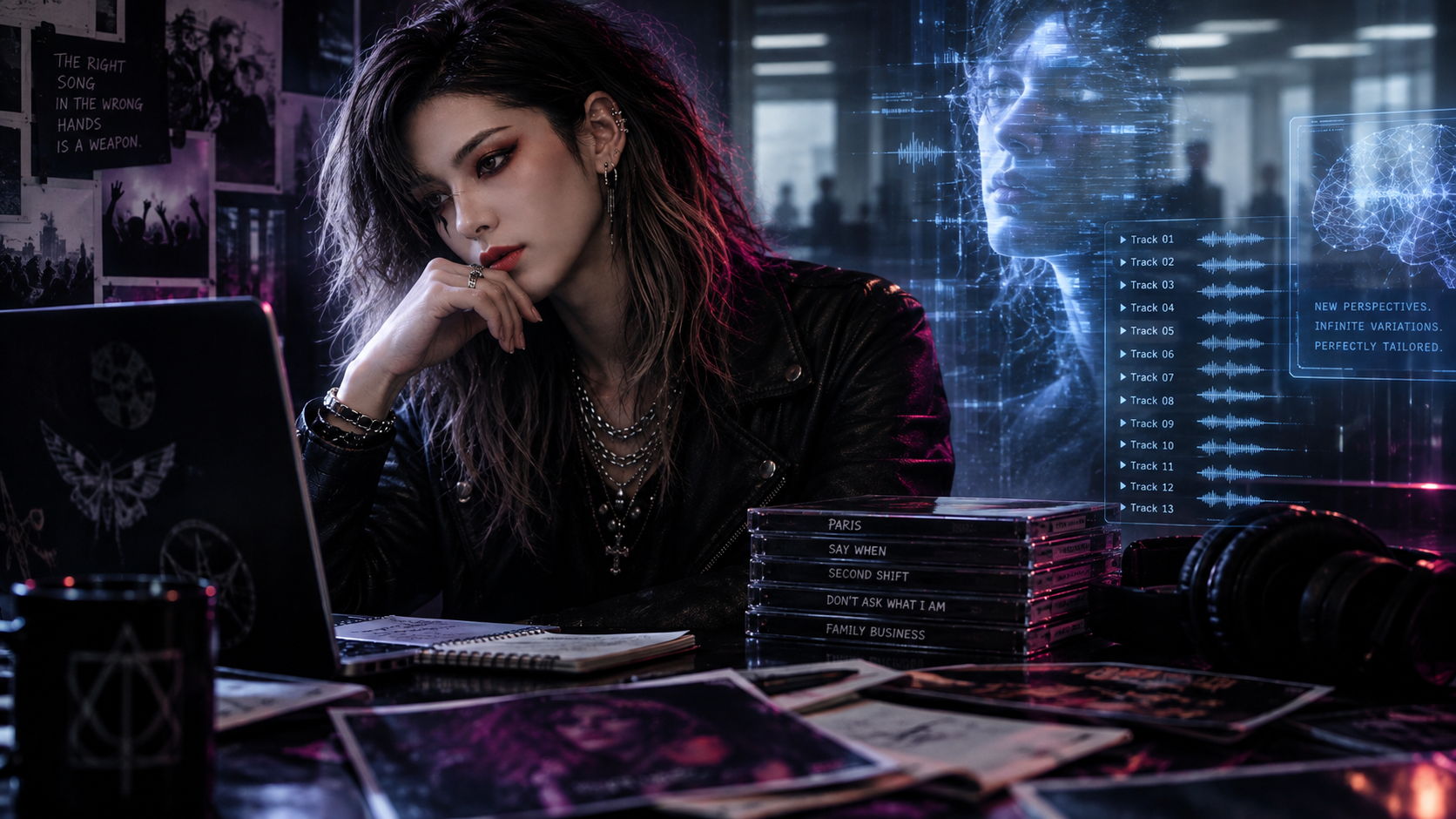
🔗 **Source:** [We Are in the Uncanny Valley](https://next.jazzsequence.com/posts/we-are-in-the-uncanny-valley)
> [!note]+ Document Notes
> ---
> tags: [generative-ai, ai-music, creative-authenticity, tabletop-rpg, ai-ethics, creative-labor]
> author: Chris Reynolds
> source: jazzsequence.com
> reference: https://next.jazzsequence.com/posts/we-are-in-the-uncanny-valley
> date created: 2026-09-22
> ---
> > [!info] Generated analysis — not the author's words. Sections below are machine-written
> > from the captured source. Only text inside `> [!quote]` blocks is verbatim from the author.
> > Do not quote or attribute any other line to the named author.
> > [!warning] Disclosure. This analysis was written by Claude, one of the two AI tools the author
> > describes using to make the album. Weigh its reading of the author's AI-use argument with that in mind.
> # 🏷️ Title: We are in the Uncanny Valley
> ## 🧭 Table of Contents
> - [📝 Summary](#-summary)
> - [📖 Main Content](#-main-content)
> - [🗒️ Notes](#️-notes)
> - [📚 References](#-references)
> - [🗣️ Paraphrase](#️-paraphrase)
> - [📰 Newsletter](#-newsletter)
> - [✅ Action Items](#-action-items)
> - [🧪 Hypotheses](#-hypotheses)
> - [📊 Methodology](#-methodology)
> - [❓ Questions](#-questions)
> - [🔮 Future Research](#-future-research)
> - [💡 Implications](#-implications)
> - [🧠 Learning Styles Assessment](#-learning-styles-assessment)
> - [📊 Accessibility Assessment](#-accessibility-assessment)
> - [🌍 DEIB Assessment](#-deib-assessment)
> - [✅ Logical Validity](#-logical-validity)
> - [🛡️ DARVO Analysis](#-darvo-analysis)
> - [🎯 Conclusion](#-conclusion)
> ### 🔗 References
> - [The PARIS album on Suno](https://suno.com/s/GrPOH6Il9JQ0ROlg) — linked in the post
> - [This Is What It Sounds Like (Goodreads)](https://www.goodreads.com/book/show/60165381-this-is-what-it-sounds-like) — the book the author cites on authenticity
> ## 📝 Summary
> - **What happened.** Reynolds is running a *Mage: the Ascension* campaign set in the 1990s, with *Severance* as the thematic base. Over a weekend they made a full album for an in-game NPC, PARIS, a Lestat-like vampire shock-rock star. Claude wrote the tracklist, lyrics, per-song style notes and track order. Suno (v6) generated the music. Earlier sessions' lyrics came from ChatGPT. They plan to burn it to a physical CD as an in-world prop.
> - **Why it matters.** The unsettling part, in the author's words, is that "the album is really good." The author has listened all weekend and sings along. The post is an honest attempt to explain liking something they have ethical objections to.
> - **Key stakeholders.** Hobbyist creators, working musicians and film composers, AI music companies (Suno, which faces training-data lawsuits per the author), and studios weighing AI for scores.
> - **Risks and tradeoffs.** Personal use with no lost commission versus normalizing tools built on uncompensated training data. The author's own "I wouldn't have paid an artist" defense stops holding at studio scale, and the author says so.
> - **Bottom line.** A candid first-person case study. Generative music now clears the "good enough to love" bar for personal, context-heavy uses. The author argues that decisions about the technology have to happen now, before creative skill atrophies, but doesn't propose what those decisions should be.
> ## 📖 Main Content
> - **The workflow.** An LLM does creative direction (tracklist, lyrics, style prompts, liner-note context, sequencing). A music model renders audio from the lyrics plus a style field. The human curates character, references and taste. This is a three-layer creative stack where the human authors the brief, not the artifact.
> - **The ethics frame the author sets up first.** Suno trained on copyrighted music without artist consent or compensation (lawsuits are ongoing, per the author). The author also objects to the Suno founder's view that no one wants to do the hard part of making music. The author states a belief in paying artists, then argues this use takes no paycheck because no commission would have happened. The counterfactual would have been a mismatched mixtape, or an image found online "whether or not that usage was strictly allowed."
> - **Five explanations for liking it.** (1) The style influences trace back to the author's own curated references. (2) It works because of the campaign story, and outsiders wouldn't care. (3) The lyrics are the weakest part: little cadence, little rhyme, lots of spoken word, which the author attributes to AI not "getting" poetry. (4) Creator bias from having prompted it into being. (5) The music is "risk-averse," tuned to a median of enjoyment and "designed for me to like it."
> - **The authenticity problem.** Citing *This Is What It Sounds Like* (Susan Rogers and Ogi Ogas), the author notes authenticity as one of the things listeners connect to. They find it unsettling to react as strongly to something with "no authenticity" as to human work. The post equates authenticity with human authorship. The book's own definition may be narrower, and the post doesn't quote it.
> - **The scale-up fear.** The personal-use defense doesn't survive the studio case. A studio can generate a score to "exacting standards" and skip John Williams or Danny Elfman, which means skipping the conversations and having to "accept their ideas and creativity." What's lost is friction with another person's judgment, not only a paycheck.
> - **Closing argument.** "We're here." Without decisions now, creativity gets "leeched from us" as people hand the muscle over to machines that deliver exactly what they want.
> - **Contested or uncited.** The lawsuit reference and the founder's views carry no citation in the post. Its two links go to the album and the book. Both claims are widely reported elsewhere but aren't sourced here. The lyrics-don't-rhyme diagnosis ("it doesn't get poetry") is also contestable, since style prompts that ask for spoken-word or shock-rock delivery could produce the same result.
> ## 🗒️ Notes
> - Campaign: *Mage: the Ascension* (the author's first-ever game system), 1990s setting, *Severance* thematic base. Planned for almost a year, started "Friday."
> - NPC PARIS: a Lestat-like vampire rock star who defected from the clans and is "too big to take down," singing about real events. A second NPC decodes the lyrics to reach the player characters.
> - Tools: ChatGPT (earlier lyrics), Claude (tracklist, lyrics, style notes, context, sequencing), Suno v6 (music, using the "style" input for non-lyric notes).
> - Output: a full album, planned as a physical burned CD prop.
> - Stated ethics: Suno's library is "stolen" (no consent or compensation), there are lawsuits, and the author disagrees with the Suno founder's stance on artists.
> - Counterfactual defense: wouldn't have commissioned an album, might have made it personally, probably a mixtape instead.
> - The five self-explanations: curated influences, story dependence, weak lyrics, creator bias, median taste.
> - Book: *This Is What It Sounds Like*, on authenticity in musical connection.
> - Studio scenario: AI scores replacing composers, and losing the human back-and-forth.
> - Close: decide now, or creativity atrophies.
> ## 📚 References
> - [The PARIS album (Suno share link)](https://suno.com/s/GrPOH6Il9JQ0ROlg)
> - [This Is What It Sounds Like — Susan Rogers & Ogi Ogas (Goodreads)](https://www.goodreads.com/book/show/60165381-this-is-what-it-sounds-like)
> - Not linked in the post, worth pairing: the RIAA-backed label suits against Suno and Udio (filed June 2024). Verify their current status before citing.
> ## 🗣️ Paraphrase
> - Something I did this weekend still unsettles me.
> - I'm running a new Mage campaign with a *Severance* theme. I invented a vampire rock star, PARIS, whose songs describe real events, and an NPC who uses the music to reach the players.
> - I'd been drafting PARIS songs with ChatGPT and Suno, and this weekend I decided to make the whole album.
> - Claude planned the tracklist and wrote each song's lyrics, style and backstory. Suno made the music, and Claude sequenced the CD. I'll burn a real disc for the table.
> - About framing: Suno trained on music without paying or asking artists, and I dislike its founder's views on artists, even though I'm using the tool.
> - I believe in paying artists, but I wouldn't have hired one here. I'd have grabbed something off the internet instead.
> - For
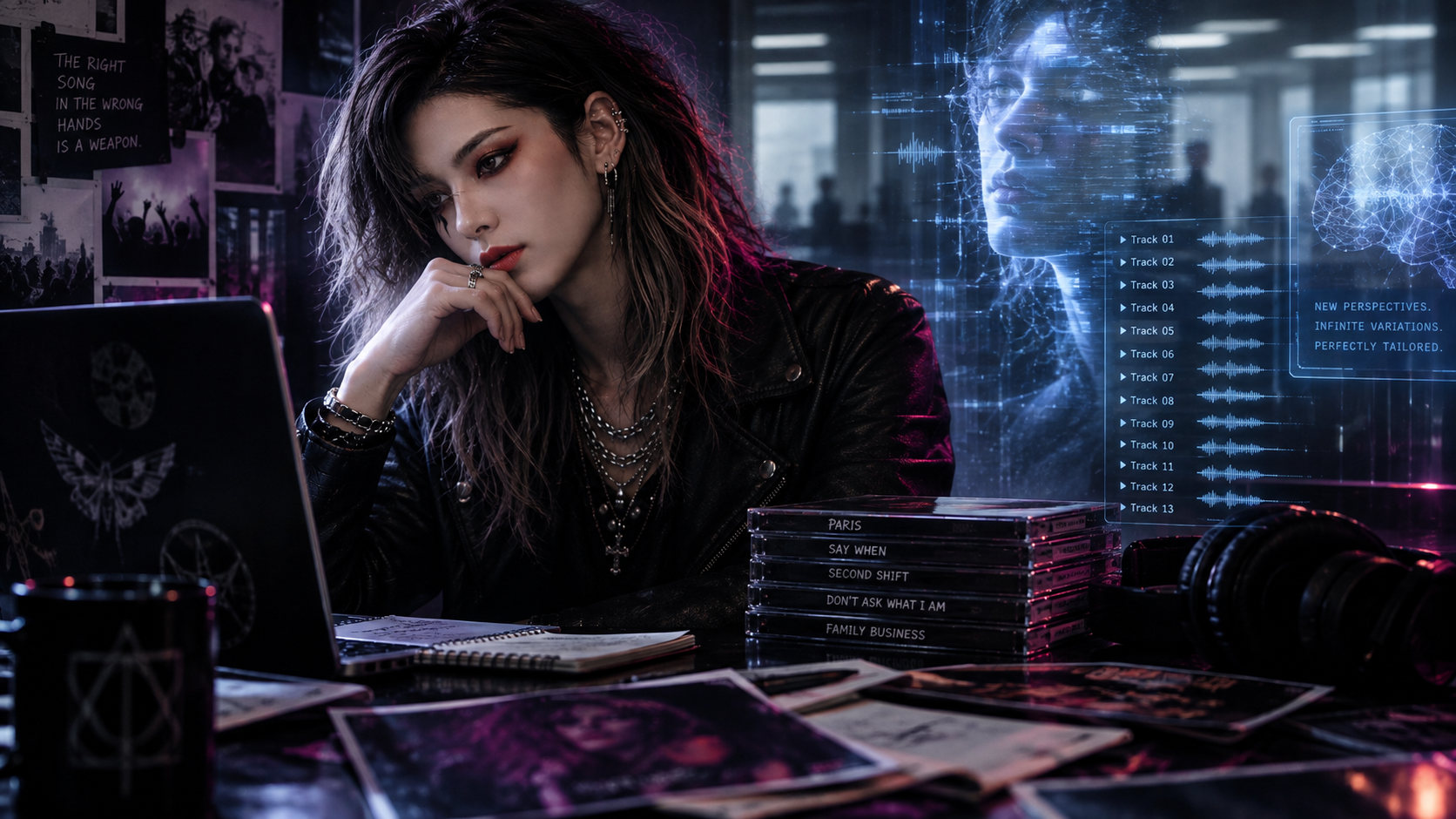
I did something over the weekend that I’m still kinda coming to terms with and I’m not sure how to take.
I am running a new TTRPG campaign. This one is using the very first game system I ever played, *Mage: the Ascension*, set in the 90s and using Severance as the thematic base. I’ve been planning this game for almost a year and in that time, I had the idea to create a Lestat-like vampire rock star who defected from the clans and is a successful working musician who’s too big to take down, who basically figures out what is happening to the player characters. And another NPC who realizes that this rock star, PARIS, is not just speaking in metaphors but is actually singing about real things and tries to use the music to connect with the PCs.
So, I have this shock rock, Marilyn Manson-style persona and I had already started working on what their music would actually be like using ChatGPT to compose lyrics based off this character idea and Suno to do the music. Over the weekend, since the campaign started officially on Friday, I decided that I wanted to have the complete album.
I used Claude to come up with the tracklist based on my notes and I gave it the lyrics from the earlier sessions. Once I had a list of titles, I asked Claude, one at a time, to write the lyrics and specific styles for each song. It did that and also wrote context around the song, why it was included, what it’s saying and how it relates to other songs on the album as well as what other artists it was inspired by and what the performance is like.
I then fed that into Suno, using the “style” input to add all the notes *around* the song besides the lyrics. When everything was done, I asked Claude to put the tracklist into an order that it would appear in on the CD. I plan to actually burn a physical CD and have this as an in-world artifact.
Now, let’s talk for a minute about the framing.
I understand that Suno is basically taking actual, copywritten music and generating new sounds based on its library of stolen music (we know it’s stolen because artists and labels were not consulted or compensated when the library was created, and there are lawsuits about that right now). I’m also aware that the guy who founded Suno has some pretty shitty ideas about how artists work, saying things like no one wants to do the hard part of making music, that’s why Suno exists, which I fundamentally disagree with (even as I’m personally using Suno rather than maybe making that music myself).
I also want to say that I believe in paying artists what they are worth, and I understand using AI for creative endeavors is potentially taking that away. I’ve always said about my own use of AI for art for my TTRPG games that *I wouldn’t have paid an artist either*, I probably would have tried to find some existing image on the internet to use, whether or not *that* usage was strictly allowed. So, for me, AI isn’t stealing someone’s paycheck.
And in this case, this is even more true — I wouldn’t commission a musician to compose an album to exacting specifications for an RPG I was running (unless I was getting paid for that game and broadcasting it somewhere or something). Maybe, if I could create the time, I would do it myself, but probably not. And probably I would try to cobble together a mixtape of stuff that kinda sorta fit but wasn’t really the right thing.
So here’s the part that’s disturbing: **the [album](https://suno.com/s/GrPOH6Il9JQ0ROlg) is really good.** Like, I’ve been listening to it all weekend and singing along with the lyrics and grooving to it. It also is really good from the perspective of an artifact for the campaign — it tells a different story to players who are listening to the lyrics and enhances the world setting.
I’ve been trying to think about how I could like this. I’ve used Suno before, and I’ve always said it was disturbingly good at what it does, but with their new v6 engine update, it seems even better. What I’m telling myself is that it’s a combination of a bunch of things:
* that the style influences for the songs are ultimately tracing back to me. It’s *my* invented character with *my* choice of cultural comparisons, so the music it’s making is going to be based on the specific artists that *I’ve* already curated.
* that it works because of the story *around* it, rather than really on its own. If it was released to the world, would anyone *else* care? Likely not, because the subject matter is specific to this specific campaign. It would just be weird.
* that the lyrics themselves are honestly the weakest point. Most of them are not in any sort of cadence or pattern, they largely don’t rhyme, there’s a lot of spoken word. That could be a stylistic choice for a human but for an AI, I’m pretty sure it’s because it doesn’t *get* poetry.
* that I have some inherent bias because I was the one that…I can’t say *made* it, but *prompted* the music into being. I clicked the buttons, had the conversation with Claude that generated the specifics, so I’m going to feel some natural attachment to it.
* that the music itself is risk-averse. It’s creating songs based on some sort of median for enjoyment. It’s picking the happy path, the middle road, the consensus of what is considered “good”. It’s literally *designed* for me to like it.
Having recently read *[This is What it Sounds Like](https://www.goodreads.com/book/show/60165381-this-is-what-it-sounds-like)* about the specific things that we connect to in music, and one of those things being *authenticity*, it is unsettling that I can have as strong an emotional reaction to something with *no authenticity* (because it was not created by a human) as I do with something fully authentic. And I’ve been trying to figure that out. But the other thing that occurs to me is a lot starker and more disturbing and upsetting.
I said that I wouldn’t commission an artist to write an album for me. That’s true, I wouldn’t. As a consumer-grade product, I can create music for me, that I like, and maybe I will choose to listen to that over real artists sometimes. But I immediately think of the trend in Hollywood to use AI whenever possible — for actors, for scripts, for everything. And for the most part, you can’t replace the humans. But if I am a Hollywood studio and I can use an app to compose a *movie score* based on the very exacting standards that I have for sound and mood and tone and not have to commission John Williams or Danny Elfman and work with them individually as humans (and have *conversations* with them and have to accept their ideas and creativity) and save a *ton* of money…I can see a world where that could happen.
We’re here. This is it. This is where we figure out what we’re doing with this technology. Because if we don’t make decisions about it now, our own creativity is going to be leeched from us individually as we just hand over that muscle to machines that can, apparently, do it faster and better and feed us stuff that’s specifically tailored to be exactly what we want. And that’s a very scary thought., We Are in the Uncanny Valley, Chris Reynolds, 01m34d1b0861ygv86krpdahzm6.