What Is the Free Rider Problem?
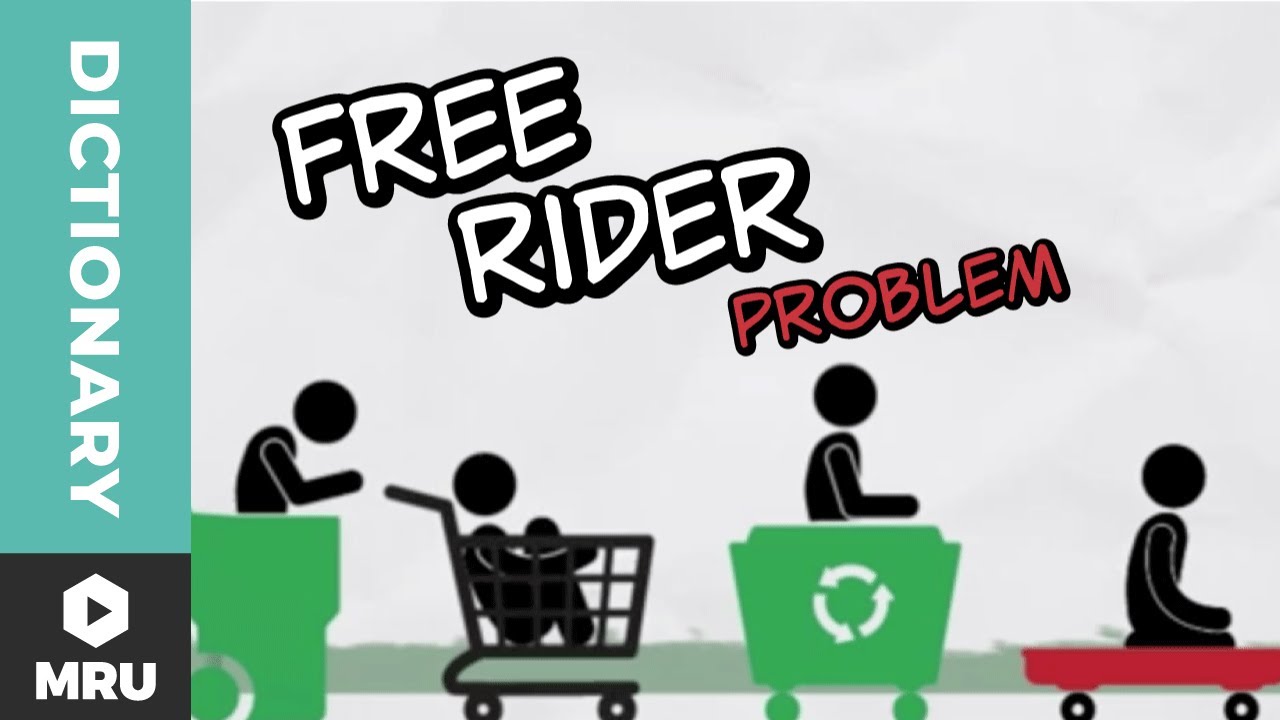
## Metadata
- Author: [[Marginal Revolution University]]
- Full Title: What Is the Free Rider Problem?
- Category: #articles
- Document Note: ## Summarize:
The article discusses the concept of the "free rider problem," where individuals benefit from a good or service without bearing any cost for it. It uses the example of a group assignment in class, where one person doesn't contribute but still receives the same grade. The article then extends this concept to a more significant scenario, such as asteroid protection for Earth. The dilemma arises when people consider whether to pay for asteroid protection since, individually, their payment may not significantly impact the outcome. There are two cases to consider: if enough others pay for protection, they will be protected regardless of individual payment, and if not enough people pay, there won't be adequate funding for protection. Consequently, individuals may be tempted to free ride and benefit without contributing, leading to potential market failure. This issue is particularly relevant to "public goods," which are prone to the free rider problem.
## Bullet Points:
- The "free rider problem" refers to individuals benefiting from a good or service without incurring any cost for it.
- It can be illustrated through the example of a group assignment where one person doesn't contribute but still receives the same grade as others.
- The article expands the concept to asteroid protection for Earth, where individuals may question whether to pay since their payment may not significantly influence the overall outcome.
- There are two cases to consider: enough people pay for protection, ensuring everyone is protected, or not enough people pay, leading to insufficient funding and lack of protection.
- "Public goods" are particularly susceptible to the free rider problem.
## Paraphrase:
1. The "free rider problem" occurs when individuals enjoy the benefits of a service or product without bearing any of the costs associated with it. Think about group assignments at school, where you have that one student who never contributes, but they still get the same grade as the rest of the group. It's a classic example of someone free riding on the efforts of others.
2. To understand the significance of the free rider problem, let's consider the context of asteroid protection for our planet. While the probability of an asteroid hitting Earth is low, the potential consequences are severe. Now, imagine you are faced with the choice of paying for asteroid protection. It becomes a dilemma because your individual payment may not be the deciding factor in whether Earth is protected or not. In fact, even if you don't pay, you could still benefit from the protection if enough other people cover the costs. This creates a situation where you might be tempted to free ride on the contributions of others.
### Conclusion:
The "free rider problem" revolves around individuals benefiting from goods or services without contributing to their cost. It is exemplified by scenarios like group assignments and extends to more significant issues, such as asteroid protection. The dilemma arises when people question whether their individual payment will have a substantial impact on the outcome. In the case of public goods, this problem becomes particularly pronounced. Avoiding widespread free riding is crucial to ensuring adequate funding and avoiding market failure.
### Questions:
1. How can societies address the "free rider problem" to ensure fair distribution of costs and benefits for public goods?
2. What psychological factors influence individuals' decisions regarding free riding on public goods like asteroid protection?
3. How do economic theories like the "Tragedy of the Commons" relate to the concept of the free rider problem?
4. Are there alternative models for funding public goods that could mitigate the free rider problem?
5. How can education and awareness campaigns help in reducing free riding tendencies among the public?
### Auto-tagging:
free rider problem, public goods, group assignments, asteroid protection, market failure, economics, cost-benefit analysis
### Index Creation:
- Free rider problem: 1, 2
- Group assignments: 1
- Asteroid protection: 2
- Public goods: 2
- Market failure: 2
### Table of Contents:
1. Introduction
2. Understanding the Free Rider Problem
- Illustration with Group Assignments
3. Extending the Concept to Asteroid Protection
- Low Probability, High Consequences
- Dilemma of Individual Payment
4. Public Goods and the Free Rider Problem
5. Conclusion
6. Related Resources
### References:
- [Narrator] What is the "free rider problem"? Marginal Revolution University. Retrieved from [source link].
- Marginal Revolution University's other popular videos. Retrieved from [source link].
### Future Research:
1. Investigate the psychological factors influencing individuals' decision-making processes when faced with the free rider problem in public goods scenarios.
2. Conduct surveys and experiments to gauge public awareness and perceptions regarding funding for important public goods like asteroid protection.
3. Examine historical cases of successful and unsuccessful funding models for public goods to identify effective strategies for addressing the free rider problem.
4. Analyze the impact of policy interventions and incentives in mitigating free riding tendencies within various communities.
5. Explore the relationship between individual contributions and collective outcomes in funding public goods to better understand the dynamics of resource allocation.
### Hypotheses:
1. Individuals with a stronger sense of civic responsibility are more likely to voluntarily contribute to public goods, reducing the free rider problem.
2. The level of perceived risk associated with the potential consequences of not funding a public good influences an individual's decision to contribute.
3. Different communication and framing strategies can affect people's willingness to contribute to public goods, reducing the prevalence of free riding behaviors.
### Methodology:
1. Conduct a longitudinal study tracking individuals' contributions to public goods over time to assess changes in free riding behavior.
2. Implement controlled experiments where participants are presented with different scenarios related to public goods funding to measure their propensity to free ride.
3. Use data from previous cases of public goods funding to perform regression analyses and identify factors associated with successful funding outcomes.
### Implications:
Addressing the free rider problem in public goods has significant implications for resource allocation and societal welfare. By encouraging collective responsibility and fair distribution of costs, effective funding models can ensure the provision of essential goods and services. This research can inform policymakers and community leaders on designing better strategies to sustainably fund public goods and prevent market failures.
### Logical validity:
The main argument presented in the article is logical and coherent. It explains the concept of the "free rider problem" through relatable examples and applies it to a critical issue like asteroid protection. The two cases discussed, regarding individual payment and protection outcomes, are thoroughly considered. However, the article doesn't delve into potential counterarguments or explore alternative funding models for public goods. Further research into varying perspectives and economic theories could enhance the validity and depth of the argument. Overall, the article effectively highlights the significance of the free rider problem and its relevance to public goods and market failures.
- The "free rider problem" occurs when someone benefits from a good or service without paying for it.
- An example of the free rider problem is a group assignment in which one person does not contribute but still receives the same grade.
- The free rider problem is also applicable to more significant issues such as asteroid protection.
- Paying for asteroid protection is not individually incentivized because everyone is protected regardless of individual payment.
- There are two scenarios to consider: enough people pay for protection or enough people do not pay.
- Individuals are tempted t
- Document Tags: [[free rider]] [[open source]]
- Summary: The free rider problem refers to the situation where someone receives the benefits of a good or service without paying the cost for it. It can be illustrated by a group assignment in which one person doesn't contribute but still receives the same grade as everyone else. In the case of asteroid protection, individuals may not have an incentive to pay for it because their payment may not make a difference in the outcome. This temptation to free ride can lead to a lack of funding for important services and a market failure. The free rider problem is particularly relevant to public goods.
- URL: https://www.youtube.com/watch?v=Uo51GDk8G1Q&ab_channel=MarginalRevolutionUniversity
♪ [music] ♪- [Narrator] What is
the "free rider problem"?Here's an example
we're all familiar with.You have a group assignment in class,and there's always that one kid
who doesn't do any workbut gets the same grade as you.That's a "free rider problem."It's a term used to describe
when someone gets the benefit
of a good or service
without incurring a cost for it.That may not seem like a big deal,but let's take something
more dramatic: asteroid protection --paying to protect the Earth
from an asteroid.Though an asteroid hitting
the Earth is a low probability event,the results can be devastating.So would you pay
for asteroid protection?Let's think through it.First, asteroid protection
is going to protect the whole Earthso even if you didn't pay
for the protection,you'd still be protected,
and, second, your payment
is probably not going
to make a differencebetween a successful
and an unsuccessful defense.Given those two facts,you don't really have
an incentive to pay for it.So there are really
only two cases to consider --either enough other people pay
so that you are protectedor enough other people don't pay
so that you aren't protected.Either way, whether you pay or not
doesn't determinewhether or not you get protection.Hence, the temptation to free ride --get the protection
without paying for it.
But if lots of people free ride,then asteroid protection
isn't funded,no one is protected,
and we have a market failure.There are specific types
of goods and servicesprone to the free rider problem --goods and services
we call "public goods."♪ [music] ♪To learn more
about public goods, click here.Or, to test your knowledge
on the free rider problem,click here.♪ [music] ♪
Still here?Check out Marginal Revolution
University's other popular videos.♪ [music] ♪, What Is the Free Rider Problem?, Marginal Revolution University, 01h509d7mb2tm019x0x6tnxe9d.