When American Evangelicalism Came to Costa Rica
🔗 **Source:** [When American Evangelicalism Came to Costa Rica](https://www.youtube.com/watch?v=EpvTZCSWjMU)
[00:00:00] So, it's a really interesting story. After that uh new wave with this track and and people like Euclides Padilla, who was the first uh like major pastor here that that was like the before and after with the move of the Holy Spirit and and and things like that. There was a people to moment there. So, once you understand where they came from what happened and you know, you you you can start to see where things started to shift. >> And the agendas really started to shift. That's really the big thing for me. I didn't really think about the differences of Protestant Christianity [00:00:42] until I left Branhamism because we were in this mindset, it's us and everybody else and that's just how it was. But there's different flavors of Protestantism and like Catholicism, you have different flavors of Catholicism. Some of them are extremist and some of them are quite benign in both camps, you know, both sides of the aisle. And I started to I I first came across this thought. I was listening to a minister and he was talking about how he would evangelize when he was on a trip and his method uh which I found quite offensive. He said he he would be sitting on a bus or some, you know, taxi or whatever next to other people and [clears throat] look at them straight in the eye and said, "Did you know you're going to hell?"
[00:01:24] >> Oh, yeah. >> start his introduction like this and I'm sitting here thinking, "That's You know, you catch more flies with honey. That's not how you do this, man." But [laughter] it would and he browed he proudly boasted, "We are an evangel- evangelical church. If you're not in their face, if you're not converting them, that's how his mindset was." And I stopped and thought about it. I At that point in time, I considered myself evangelical, but I didn't know what that meant and I did not know that it meant that you must be like this and um I have I have a word for people like this now which I can't use on the program but >> [laughter] >> it's not it's not a good way to be to people. I'll just say it like that. There's There's There's ways that you [00:02:07] can treat people with respect and >> Yeah. >> And so you've got camps that are like that and there's like I said there's different levels they go off into extremism etc. And then on the other side of the aisle you have people that are peacefully converting. We're going to live our lives in such a good way that you want to live your life like us >> Yeah. >> living our life the the Christian saintly way and [snorts] that goes off into extremes. You've got camps where they you know that's basically a works based religion. So you can go extremes on both sides of the aisle. What I found out was when Evangelical Christianity exploded in the United States with the [clears throat] flavor of the minister which I mentioned >> [laughter]
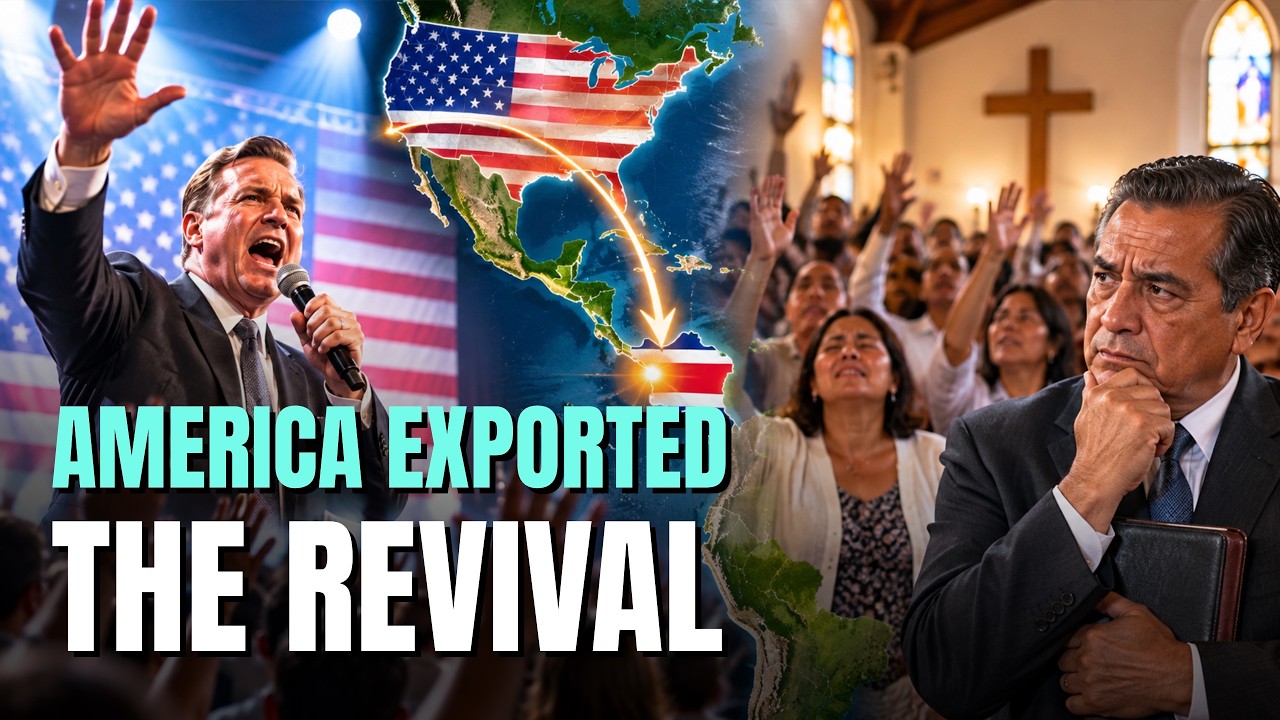
[00:02:48] >> all through the United States and they merged with an agenda with the government. >> Yeah. >> Governmental agenda with the Evangelicals was a targeting South America for whatever reason and you can find some weird stuff especially if you look at you know Operation Condor and different government programs that were going to South America, right? >> Even birth control at some point. >> Absolutely. So you had the you had these agendas and that's whenever it really came in and it was like this I I know you talked about the different waves of um Protestant Christianity coming in. Well this one was an explosive wave and it wasn't from in my opinion it wasn't from the good guys. This would be the [00:03:31] more extreme side of the Pentecostal of the Protestantism. >> [clears throat] >> I believe that's so and that's that's one of the reason that I say always that this was imported directly from the United States. And [clears throat] uh let let me uh let me first of all be very open with this. I have friends within many denominations. And I think that that's a perfectly doable thing. Because you can learn pretty much from everyone. If you're not agreeing with challenging your faith and going and you know, just go do the homework and do it by yourself and and prayer and reading the scripture. If
[00:04:16] you're not willing to do that, it means that you think that pretty much you have the entire thing the understood. Which is not. Yeah. [laughter] And I I don't know about you, but I do not have a big enough brain to understand God entirety his entirety of I I can't. I just can't. And I don't have a big enough head to understand the Bible in in its entirety. So, what it means to me is that it's a journey of faith. I have to be learning constantly. Because it's it's what happened pretty much to Abraham, Isaac, and Jacob, and the patriarchs, and everyone. It was a journey where God was constantly talking and giving directions and hey [00:05:00] >> [snorts] >> pretty much teaching them. That's okay. Uh and with that mindset I will say that we've had it all, man. Costa Rica was really really uh good case of study. I don't know if how how familiar are you with this pastor, which in if if you translate that to English, it it would be like badly given, which kind of give you a hint. >> [laughter] >> pretty big uh church in
[00:05:43] >> [snorts] >> in Miami. So, uh they have like this prophets and stuff and like this things like they have offer covering like prophetic covering for for It's pretty much a disciple thing. A lot of thing came from that from the modern to modern uh evangelicalism. But prior to that, if if you go back a little, if you trace this to this track and and Euclides Padilla and and all of them, pretty much what happened was the the entire you know, Azusa Street Revival thing and the agenda and the New Apostolic Reformation and the Kansas Prophets and [00:06:26] all those things that were happening on United States were being imported to Costa Rica. Now, with that in mind, you have to think like you you you're going to have to connect the dots. This track and came here and open a radio station. Uh later on, they founded uh a Bible Institute. They created a uh hospital as well. And they built a church, which is the Templo Bíblico. They were not the builders of the church, of course, but they had a a big part there. So, the way you start to shape how Christianity looks in Costa Rica,
[00:07:10] it's pretty much based on on them. And then to give to give you an example, Euclides Padilla had a fierce opposition from the conservative pastors and and members of the church when we came when when he came to to Templo Bíblico because of the new new move of the Holy Spirit. And to give you a perspective on that, early Christians in Costa Rica were considered heretics and and they were like this they're weird and they're falling off and they're speaking in tongues, and they're not We don't want to have anything to do with that. Now, that's part Again, as you said, part of the agenda. And it's really hard to condense so much so many years of of [00:07:53] history. >> [music], When American Evangelicalism Came to Costa Rica, John Collins, 01m423p93hwz9zffbzexrjw8n6.