Where Elementor Is Headed in 2026
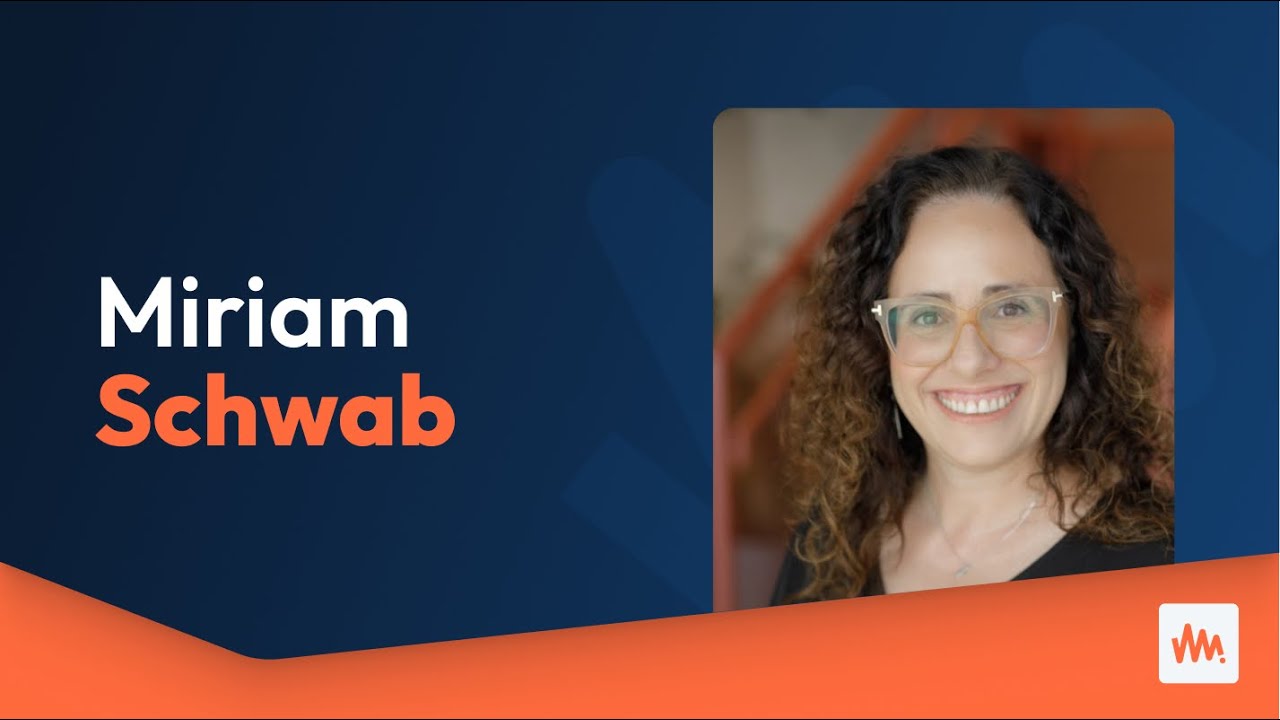
Miriam Schwab, welcome back to the WP Minute. >> Thanks. Nice to be back. >> It's always It's always good to see you. The last time we saw each other in person was at Press Comp uh back in April this year. You travel about 3,000 times more than I do, thankfully. Uh yeah, I just saw you at uh the State of the Word. H how was that? How was the How was the vibe there, as they say? Um it was a like a very
nice event. It was uh you know people who care about WordPress coming out there getting together to talk about what was and what you know we look forward to. As usual the event you know was uh set up really nicely. Also we weren't actually allowed to take photos inside the venue >> the Salesforce tower. Yeah, it was in the Salesforce tower. Um, so we were like on like the 58th floor, like some
really high floor, but the way they set up the space for the event was really actually beautiful. Like there was like these big lettering for Say the word and there was this wall of jazz records that you could listen to and there was this art like kind of um craft thing like you actually could make art there. I I did it. I actually have it in my living room. Um, and it's a shame that we couldn't take photos of that because I would have loved to have shared, you know, what it looked like in there and how they set up. There were mugs with state of the word branding. It
was very, it was a very beautiful event and I came out of it feeling inspired, which I think, you know, we always need a little shot of inspiration to keep going and doing doing what we're doing. Uh, especially around AI. So AI is on the one hand uh a huge opportunity but also potentially a threat for a space like ours where we're you know we've been around for over 20 years. We're like kind of legacy in some ways
doing things what's considered like the old school way. So what does AI mean for us? But what's impressive is that the AI team was set up six months ago, had like a few clear objectives and they achieved all of them by the end of the year for for rolling out in 6.9. super impressive speed um and focus and that that is also inspiring to know that the project leadership and those leading the way for how we implement AI uh are very focused
and um dedicated to making WordPress uh not only like on like have parody with the world of AI but potentially leading the world of AI. So yeah, so I came away feeling good and it was it was really nice event and it was great to, you know, catch up with people and yeah, it was uh I'm glad I went. It was unfortunate that you couldn't take those photos cuz that was actually one of my criticisms of of the event was uh you know I didn't obviously I did not attend
but uh I would have liked to. It just you know logistically it just wasn't going to work out. But one of the things that I noticed is just the way it was shot and presented on the live stream. Even though the live stream kept breaking, it really just looked like we're in this room talking to like 12 people. Whereas like Tokyo last year was on a stage, there was multi- camera angles and I was like, oh man, we're we're going into Apple day with WordPress event like this and I love that. And I was like, this is great. I mean, the temperature in the room was
tough back in Tokyo last year, but I was like, I can't wait to see what's going to happen this year. And I was like, what are we are we just in a side office somewhere? Like, what's happening? Oh my gosh, I didn't think of it from that perspective. >> Yes, >> but that you're right because the only thing we were allowed to take photos of and I guess the camera angle was based on that as well was the view, >> right? >> So that's why on camera you saw like a smattering of us in a room which by the way the room went farther back obviously. Um and all you could see was
whoever was speaking and the window behind them because they weren't allowed to show anything. By the way, I don't know why uh we weren't allowed to take photos in there. It was a space like any other space, meaning like it was very nice. I've been in other very nice spaces. By the way, I don't think that this uh regulation about taking photos was an automatic thing. It was related to the space that we were using. And by the way, just about the live stream this the you know the talks start and there's you would think that we didn't
know that there was issues there were issues with live stream but uh pretty quickly people started messaging me actually to tell me uh the live stream isn't working. So I started messaging people there that I know had something you know had were connected to the logistics or whatever. basically Salesforce's infrastructure went down something like that like in the building like something really crazy and terrible in terms of timing obviously and they were like struggling with it to get it back up and
running. They even had some kind of redundancy and that also didn't manage to kick in. Basically, it wasn't that they didn't care and that they didn't know. They did know and there were a lot of people scrambling around, right, to get things up and running and they just they just couldn't. And it was because it was related to the venue. >> Yeah. >> So that was so unfortunate also um because I don't know if we could have any indication of how many people were interested in trying to view it remotely because they couldn't even get through, >> right? >> And like people just gave up eventually because why should they try to watch
this thing they can't watch? So that was a shame. But um you know it's recorded. At least that worked so people can see it that way. And yeah, I guess it's important to share that we weren't allowed to take photos of the the interior and that's why it looked so bare bones. It wasn't bare bones. >> Yeah, it definitely would have changed my criticism. >> No, it's totally genetic criticism. >> Yeah. >> Yeah. No, and and you know, I know it can sound like a nitpicky thing, but uh I criticize an event like that and I
said this in the podcast because like I want automatic to represent us in the best way. So, if that's like our Apple day, let's say, uh, state of the word, um, you know, and Techrunch and other, you know, bigger media outlets are covering it, I pro I want to see a little bit more so that people are like, are they running out of money? >> I have to I'll show you what I have. But, so, you're totally right and I
agree with you. uh want WordPress to lead us in in a strong way and we should look like we're a thriving ecosystem and in some ways this type of event is that but look this the branding was so beautiful >> I have this weird blur thing going on but >> it says that anyways everything was about this kind of record like a vinyl record um design the coasters the the uh mugs um the swag we got very nice t-shirts and hats and then also the art the art was like um you picked the vinyl
record and then you like painted it >> and it actually turned out really cool. So, so it was on the level of Tokyo from that that perspective. It was a very high quality event. It's just I guess the only people who could enjoy that were the people that were there. >> Yeah. >> Well, it's good to know. I mean, I I know they did like this marketing montage of Tokyo last year like leading into War Camp and I couldn't find that video again. I forgot where it was even posted. U but maybe they'll do something you know maybe there were some videographers there and you know >> maybe but again can they even show
anything >> right >> like what can you show people standing against the windows that's really >> it's crazy >> um well let's let's take it to >> let's take it to AI um AI is a core uh part of like I guess a lot of innovation happening across many companies uh in in our sector you know this this year and of course years before I know AI uh Elementor's AI integration for Elementor the site building product
um when it first came out there was just a lot of criticism like oh my god like because it was early like Elementor was ahead of the you know AI building space and it's just like how do I turn this thing off but AI has gotten arguably much better and I'm sure the experience has gotten much better. Um, is there a core guiding principle at Elementor on integrating AI and how you approach it in an open way so it's not just we're not just getting AI taxed I guess is is
my best phrase for it. So from the start basically basically I think it was something like chat GPT launched and within a very short amount of time Elementor's product development kind of stopped not exactly stopped but there was like a kind of hold on what does this mean for us and an AI team was like very quickly set up in element there was like an understanding that u whatever AI means for us and for the industry we have to be part of it now and we can't wait
another second. So that's why we launched the the first the first like approach or uh version of AI in Elementor/WordPress which was it kind of straightforward um which is like here create an image create some HTML create CSS write a blog post whatever that kind of stuff. Um, there were some interesting pieces of functionality that were part of the AI then which was like this uh if you were like building a page then it would
suggest to you the next section of the page and then like kind of lay it out for you. Didn't do a great job of that but it was like you can the thinking behind that was okay let's also be proactive for our users and uh try to like hold their hand while they're building because it's also new. our team and all of us were just like trying to figure it out as we go along and try to find the best uh and most valuable application. So we started with that and basically because we started early even if the first uh application wasn't amazing and
people were like turn it off. a lot of people want to turn off because of that suggestion thing because they're like stop it why are you building this next section of my page but um since then we've been learning a ton and you know that we can learn we have a lot of data around the usage so we can then uh improve the applications since then we've launched a few more AI products we have this one called site planner which is an external tool which is free to use uh planner. and people can go and chat
their way to a website brief site map and uh what we call the wireframe of a site. But the wireframe is like what the way I see it is like 80% of the way there to website and then like the professionals can come in and tweak it and polish it and and wrap it up in and bring their vision to the to the like the final leg of the project. So there's that and then you can launch directly uh into hosting or downloaded zip or whatever. Um and then we also launched a
product which is still in beta which is called Angie which is an agentic AI assistant for WordPress. So it sits there next to you in the dashboard and it can do all sorts of things in many ways with that the sky is the limit but also because the sky's is the limit it can still do weird things and so that's why it's still in beta. So on the one hand you can do things with it and you're like oh my gosh that's amazing. And then on the other hand you'll try to do things with it and it's still like a bit wonky. Um, but we hope to like
fine-tune that pretty soon and bring it out of beta. But people can test it. It's in the WordPress repo and it's free to use. There's no limitations because AI costs, right? Like not because of us, but because AI just costs. So at some point there's credits involved in this stuff. But at the moment like Angie and Site Planner, although there's obviously cost to us uh for use, we are not charging anyone. So feel free to test it out. curious if like from what you can reveal and I'm not asking you to reveal anything secret but one of the other
criticisms I have of the um AI initiatives at automatic and and of course through WordPress.org and such um like James team and whatnot is I'm not hearing a lot about open-source models. I'm hearing a lot about like, oh, you know, grab a token from ChatgBT, grab a token or OpenAI, grab a token from Anthropic, for Claude, and like you said, these all cost. I mean, there will be a cost for open source models anyway because you have to run it somewhere.
But I'm just curious like is there an initiative to use any of the open- source models that aren't tied to, you know, these companies raising trillions of dollars and only arguably going to raise the price like all streaming services do to us, uh, you know, throughout the year? Um, is there any thought process on like which models to select? Can you talk about which models you select and is open source any part of that discussion internally at Elementor? So I think everyone aspires to using open- source uh LLMs but here's
what I understand and I also see from the experience with our own team even with the paid models the more advanced models bring way better results like significantly better results than the lower models and so with open source LLMs the results that they bring just aren't the quality that we would want for a valuable experience in using AI as part of your web building, web management experience. It's just not there. So theoretically, you could you
could hook hook into them, right? Like um a lot of AI tools and ours I think will have that option as well. You can hook into different LLMs of your choice. other tools and actually actually I think this is how we're going to do it will use a particular LLM depending on what it is that you're trying to do because Claude might be better for one thing and Gemini might be better for another thing and it will like make that decision for you. Um, so we're in this
world where even like very high level LMS can be trickier to use than others and really the results uh can vary w wild wildly almost >> in terms of the quality. So I think even though being part of an open source world and or leading the open source world even with WordPress um and and Elementor being a significant uh player in that world and us all generally aspiring to open source in
currently it's not realistic in order to make AI useful unfortunately but it's it's possible that it will get there things move so fast that uh in six months time a year the open source LMS might be good enough for people to, you know, for it to suffice. But yeah, at the moment it's just not there. >> When you stepped away from the uh state of the word, feeling inspired about the AI stuff, if you take your elementor hat off for a moment, what was the most aspiring part of that AI discussion for
you? Like what gives you renewed energy for WordPress because of AI? >> So, first of all, the speed definitely plays a role. meeting. Just the fact that they like said they were going to do something and they did it, it's very um reassuring and inspiring. Also, the the thinking behind it, I think, is really great. The team that's leading AI, uh James, uh Felix, Jason, Jeff, I think that's who's on the team, and some
others, sorry if I'm forgetting people. They're all bringing really um valuable perspectives to it and um they're I think they're making really good decisions and uh taking things in a really good direction. In particular, the abilities API um so on the one hand the work that they've done on AI is very infrastructure level. You can't see it. Um it's almost like another world of WordPress. Meaning WordPress itself on
its own in core is essentially an infrastructure for extensibility. And that's where a lot of the value comes into play. And that's what they're doing with AI. It's creating infrastructure for extensibility so that uh all AI tools of any kind can eventually hook into WordPress and get it to do stuff which is amazing. Um the abilities API also is great in general for um reducing conflict issues between products and plugins in
WordPress. It's actually got this additional benefit not just for AI. So that's a really smart perspective. It pulls WordPress forward not just for AI but also as a platform. On the on the flip side, the challenge with what they've been doing until now is that you it's invisible. meaning everyone who downloaded 6.9 doesn't see the AI uh implementation. It's just, you know, under the hood. So, I'm hoping that we'll start to see more developers, product creators. By the way, you don't even have to be a developer anymore.
Vibe coders creating like, you know, experiments, PC's, like tooling that utilizes the the abilities API so that people can start to see the power of it. Um, so yeah. So yeah, so that's what I'm inspired about the fact they did it so fast. They did what they set out to do. It's a very smart approach in my opinion. Um they're very passionate and energized about it too, which gives which energizes others. It's it's uh they're a good team. >> Yeah. Yeah. And and I fully agree with
that. That was you know, one of the criticisms I mean look this one of the criticisms I wrote about and I didn't mean to turn I don't mean to turn this into like a review of State of the Word, but you were boots on the ground, didn't we? Here. um was was just that like this year was in a sports term like it's a rebuilding year, right? Like we we're we're getting these features that are just setting the groundwork for, you know, version 7 and beyond in 2026, you
know, and future stuff. It there wasn't anything tactile that people could touch except for like the cool notes feature, which, you know, hey, I appreciate, but it's not like whoa, we're not earthshattering anything with that stuff. Um, but in the same sense at what I wrote in the piece was to give us give WordPress some grace because how 2025 started compared to where we've ended was a lot different because 2025 started with like what is even happening to WordPress anymore and now we're like okay we've
got some direction and people are inspired by it. So, uh, that is a good thing. Uh, you know, in my opinion, >> I was talking to Brian Cords because I I started just like you said, I'm not a developer and cloud code is so darn powerful. It's doing some stuff that is just I mean, it's getting it right and it's doing it right and I'm testing things against the plug-in checker and I'm I'm talking to other WordPress developers like, "No, this thing what you've built is working." And so, two things. Um, I'm actually a little worried about the abilities API as
exciting as it is. It almost sounds like we're opening the door, like the support doors for people to be like, I connected my, you know, MCP up to my WordPress site and Elementor, you're not building the pages the way I'm telling AI and it's like, whoa, whoa, whoa. Like I now I can't support you through your MCP and whatever AI tool you're using. Um I you know no real question here but I just wonder if you have any thoughts of like what the world looks like for supporting WordPress when cuz I see the future that you see like I can just chat with my
chatbot and say build me these 20 pages insert this content put these images on these product pages here hit enter and let it go and then if it doesn't work somebody submits a ticket to Elementor and says hey uh this isn't working. uh any thoughts on like what that vibe code world looks like for the those of us who support customers with with WordPress? >> So when people are creating their MCPs for their own products, they need to put guard rails in place. That's a really
important part of AI in general. >> Just even for the LLN's, you know, they're constantly talking about how they can keep us secure um without exposing, you know, dangerous information or getting access to private information, right? there's like a constant struggle between being a very open form of communication essentially with access to a lot of information while keeping guardrails in place to uh keep us all safe and secure. So it's the same with your own product. For example, Elementor's uh Angie uh plugin uh
solution um allows you to do all sorts of stuff with Elementor, but the team has put guard rails in place to make sure that you don't like delete all your site. I at one point found something that led to guardrail. For example, in the early days of Angie, I managed to uh lead the AI to delete the admin level user of my own site, which is obviously something we don't want to happen. So, if we want people to be able to create MCPs for WordPress or for our own products, we need to have
guards in place that don't allow them to push the product past a point of disaster. Um, and so with regards to support, that's going to be a big part of it. And we'll keep learning and tweaking as we go along because like I said, the sky's is the limit in a way. So we don't because there's infinite like things that people can ask AI to do, we can't uh take them all into account and then while we try to take as much as possible into account, we only often learn things like when I managed to do that to my own site. So um but there's another interesting angle of
support which came up with Angie because Angie allows other products to integrate uh creative recipes and integrate with Angie. So we have integrations from KCO block from WS form and the events calendar and um some other uh stellar WP plugins that can be managed through the Angie in interface. But this question came up. What if there's an issue? Who is responsible for the support there? And how can we identify where the issue is coming from? So that that's another
learning for our team. Our team put in place a UI which tells the user, okay, right now you're actually interacting with the events calendar or with a crocco product or whatever and it indicates whether that will like help reduce uh support issues and streamline things. Who knows? Um, but it's like learning and trying to constantly improve and create uh greater clarity and transparency, guard rails, all of that is something that product developers just need to take into
consideration. >> Yeah. Because I think it's going to be and and again, this is just healthy criticism. I think what what we're talking about right now is an end user who goes and does something and like they're more techsavvy right now because AI is still, you know, for the general population it's cutting edge. Not a lot of people are still using it, but I think what automatic and WordPress is going to strive for is a like openness everywhere. And we're not going to have a say of I mean, we're going to have a
say in in terms of like open source. The point I'm getting at is I think what WordPress is going to strive for is say, "Hey, any chat system talk to WordPress, which means they're going to let everybody in through the doors." And then we as product people are going to have to be like, "Okay, hold on everybody, before you come down this aisle, I need you to understand that uh you can't do this, that, and the other thing if you come down this aisle." >> And that's going to be kind of interesting. I think while WordPress
pushes us to that openness for the web, we're going to have to be the ones, like you said, to get those guard rails correct. Um, >> yeah, there will be guards >> experience. >> It's definitely a new experience. There will be guard rails that are like to protect users and their websites, but there also just be uh functionality that like at certain at certain points along the way won't be manageable by AI. like you have to create uh the tools they're called tools like for your product that makes them accessible to AI and if you
haven't exposed all the functionality of your product all the tools then some things just won't be doable. So um like in Angie for example uh our team recently implemented functionality where Angie will tell you if it can't do something rather than like pretend or lead you on. It will just be like that that's something I can't do. And it's it's again a matter of greater transparency and clarity. Um but also realizing that while AI seems infinite
and like can be all and do all there are there are going to be limits. Um I'm you know AI moves so fast that whatever is limit today might not be in limit in a month but that's just how it's going to be because also especially if you take plugins into consideration that are like almost platforms in in of themselves like element I mean the capabilities behind the scenes of element in the element page builder is just enormous. >> Yeah. >> Um so you know it's uh it's a whole world.
>> Yeah. There's another thing I'd like to get your your thoughts on. Again, no direct question, but um when I was talking to Brian, and I'll try to link up that uh live stream in in the show notes here. We were talking about how I use Claude Code and how I I I talk to it. I again, I'm not a developer, but I I know what needs to be done from like a product perspective. I mean, 90% needs knows what needs to be done from a product perspective, from a WordPress sustain sustainable perspective. and I
talked to it like I'm helping it learn and understand this thing that I'm building, right? And we were chatting and it like it dawned on us like it's not that much different than if we hired, you know, some freelancer and we're like, "Hey, we got a task for you. Go and build it." And even sometimes the human doesn't get that right. And and we're there are people out there criticizing folks for using AI to build simple pieces of software. It's like, well, you know, even if I gave this to a
human, I bet I'd be going back and forth with them and they'd be getting it wrong or trying to cut corners. Should we be upset at the folks? And I guess here's the question where I want your remark is, should we be upset at the folks who are adopting this to build stuff with? I remember and you remember 15 20 years ago when some when page builders first came out, people like, "Oh god, you're using a page builder. You're doing it wrong." Here we are in 2025 where it's like if you're not using a page builder, you're doing it wrong
and like the whole script was flipped. Like I I don't know if you have any thoughts on like the vibe coding thing right now. Is it bad? Like how do you perceive it? Especially at Elementor where there's like now you're responsible for that freelancer agencies, everything, the site, the accessibility, the AI, the email sending. Like there's so much that Elementor does now. thoughts on people leveraging AI. >> So, by the way, that like uh conflict of
how can you do it this new fangled way even goes back to the early days of CMS's. >> Sure. >> We were just uh talking at Elementor. So, one of our um veteran WordPress developers like he's been like working with WordPress for a very long time. Uh they were joking that when they said we should start building with WordPress um pre-ele he was like no I'm gonna handcode it myself right
>> like what I'm not going to use this thing I'm going to do it from scratch and then people were like oh of course you can use a CMS and then page came along they're like ah what is this how can you do that it's so unprofessional we need to handcode it ourselves but in a different way and then they became comfortable with page buildilders more or less and now we have vibe coding And I think vibe coding is amazing. Like in the end, what is a developer writing a language? It's but it's like uh French. Well, to me or I don't know, you know, a
foreign language uh where if I was told to do all my stuff in French, I would be breaking my teeth and it would be hard on my brain because I don't know the language. So people who don't know how to develop and I I'm not like it's it's obviously more uh there's more deficit than what I'm saying but like the difference between a developer and a non-developer is that the developer knows the language and the non-developer doesn't know the language. So just like open AI uh or LLM's now kind of uh make
all languages accessible like I was watching someone at work like a few months ago. I don't know. It had never dawned on me building vibe coding a like a little app in uh Chachi PT in Hebrew. I was like you do that in Hebrew and then obviously OpenAI doesn't care what language you write you're speaking in or writing in because to them to it all languages are whatever it's just flat. So the same with vibe coding like why
should only someone who's managed to learn the language be able to create something. Why? If I have a vision in my head and I can say it in natural language, why shouldn't that also lead to an end result? Um, I think it creates great opportunities for everyone. And just like, by the way, it's just like WordPress, right? With WordPress, you have people who build terrible sites and people who build super polished, super performance, super secure sites. And that's all fine because it's the web. And the web is a crazy thing. And you
can do things however you want. and you have the right to publish your terrible site and you have the right to publish your amazing site. So, same here. People are going to create uh vibecoded apps or whatever and some of them are going to be bad and some of them are going to be great and that's going to be it's going to be the same story. It's like can you communicate your vision? Do you understand product and user experience enough to create amazing things with it? Or are you just like an amateur who's doing your own thing which is also fine and great and legitimate and you do you and it's all good. The one thing that
mostly concerns me about all of this is security. I don't know if you saw this major React um vulnerability that happened last week. >> Yeah. >> So, you know, that's a major vulnerability that's out of that was out of the hands of pretty much everyone, but like who knows what's being put out there with that's connected to private sensitive information. Like, that's something that is going to need serious attention. But that build your crappy app, build your great thing. >> Go for it. You know, >> I'm putting that on a t-shirt. build your crappy app and I'm go and I'm gonna
go to all the AI conferences with it. There you Schwab. Build your crappy app. Uh uh no, I mean, yeah, it's it is I I I I've been swinging back and forth on, you know, the adoption of AI. Of course, when it first came out, I was like, "Oh god, no. I don't think this is going to be it." And then I started using it and I was like, "Okay, this is starting to to go pretty well." and and then like halfway through that I was like, nah, this is
not it again. But now with Claude 45 Opus, I'm like, man, this this is doing, you know, some really killer stuff with with at least WordPress plug-in development. And, you know, I I think it's it's going to get better. I think the cost is going to rise substantially um that we haven't realized yet for like the real good stuff um in the future. But um yeah, like I I think that that lower end is is going to get dried up and uh and um I think we'll all benefit
from it at the end of the day, at least on the coding and development side. >> I agree. And also, by the way, with regards to cost, we we've been doing uh WordPress meetups at our office, so like we just started in 2025. And at the last one, we talked about vibe coding, and one guy talked about this very comprehensive app that he vioded and how it cost him $800. And we're like, "Oh my gosh, $800." But then for if you think about it, if he had hired a team, it would have cost way more than $800. I think we're going to have a long period
of time where even with the higher costs, it's still going to allow us to do incredible things that in the past would have cost us multiples more. So >> yeah, I think >> yeah, I yeah, I think the next shoe to drop, this is again is my crazy, >> you can't leave one of my episodes without getting a crazy uh tin foil hat uh prediction is that the next price jump will be just another zero on the end of of these uh LLMs like Claude Code. Uh so like Claude Code, it I think when everything was like 20 bucks or
$20. Oh, okay. All right. Like where do we spend this money? And then once people started using it and they came out with the $100 and $200 model, you're like, "Oh, okay." Like I see where this is going. Um, but now like if if if it because basically what you're doing, this is a little bit of a side tangent, is you're trying to get this thing to work. And the caveat is it's never getting it right 100% of the time. It's never giving you the the best way to do it unless you keep iterating and spending more tokens. And I think what
they're going to say is once these things get even better, they're going to say, "Okay, it's $2,000 a month, >> but guess what? Your best engineer cost you 10 times that. So, you know, why not spend the $2,000 a month to get this thing?" And that's when we're going to start to see that separation of >> bigger people with more money being able to deploy a lot faster. And even if that faster is literally only 30 days,
they'll get to market 30 days faster than the competition because they're able to to spend. >> So anyway, that's >> could be >> that's what I think. >> elementor.com. Lots of stuff now. We'll wrap it up here, but one last question. Go to elementor.com and you go into the product section. There's a nice new drop down with all the stuff that Elementor does. Website building, Angie, site planner. I used I did a video on site planner. It is really awesome. Of course, the hello theme. There's a hosting column, hosting for WordPress, hosting for Woo Commerce, and now a new
domains uh domains. On the run and grow uh column, we have image optimizer, site mailer, ally, web accessibility, and send. Going into 2026, your final question is which of those many products are you excited for uh when we roll into 2026, a few short weeks away? So that's a lot of products as you know because you just read them all out and
the thinking behind them is that the web creators journey doesn't like just start and end with actually building the website. First of all they want to build the website in a high quality way. So implementing accessibility at that stage making sure sites as accessible as possible is important. Optimizing for performance is important. But then once the site launches that's not the end that's just the beginning. So, how can you maintain that site in like uh an ideal way and what tools can help you along the way? So, that's the thing behind those products. Personally, you
know, and they're all great, but I'm just going to say which personally I'm most excited about. So, I'm I'm really excited about our AI products. Um I think uh when we get them uh to where we want them to be uh because let's say Angie is still in beta um it will be g they'll be game changers um for our industry and I and I'm excited about that also for WordPress. All you know all the tools that are being built in WordPress for AI are important. Elementor powers 30% of WordPress sites.
So the faster we can get our kind of market share to an AI place, I think it's better for everyone in the industry. Um, and hopefully we'll keep WordPress strong and uh, you know, going forward for the future. The other tool that I really love of ours is Ally. Ally does something really great with access with accessibility and this is how I put it. It makes accessibility accessible which is ironic but if you use it you get very clear understandable
um you know uh description of issues and how to fix them also AI powered many of those issues so that instead of just getting a laundry list of these things are all bad good luck to you you can go through them which is like often the situation >> um so you can go through them and fix fix fix and really bring your site to a much more accessible place there. You know, we're not saying it's 100% accessible. I don't know if that's even a thing, but it will definitely take
your site forward in a way and make it um more accessible to an audience that might currently be having trouble uh accessing your site. So, so I think Ally is really great and the you know the team is uh releasing new updates pretty regularly and they're really cool. So, so I'm excited about that one. >> Awesome stuff. Miriam Schwab from Elementor, thanks for hanging out today. Thanks for having me., Where Elementor Is Headed in 2026, YouTube, 01kd3nfs97t95c1emenp5vd2m6.