Why We Choose WordPress: Enterprise Teams
## Metadata
- Author: [[thewpminute.com]]
- Full Title: Why We Choose WordPress: Enterprise Teams
- Category: #articles
- Document Note: ---
tags: [WordPress, Enterprise, CMS]
author: [MISSING]
source: thewpminute.com
reference: [https://thewpminute.com/why-we-choose-wordpress-enterprise-teams/]
date created: 2025-10-12 00:00
---
# 🏷️ Title: Why We Choose WordPress: Enterprise Teams
## 🧭 Table of Contents
- [📝 Summary](#-summary)
- [📖 Main Content](#-main-content)
- [🗒️ Notes](#️-notes)
- [📚 References](#-references)
- [🗣️ Paraphrase](#️-paraphrase)
- [📰 Newsletter](#-newsletter)
- [✅ Action Items](#-action-items)
- [🧪 Hypotheses](#-hypotheses)
- [📊 Methodology](#-methodology)
- [❓ Questions](#-questions)
- [🔮 Future Research](#-future-research)
- [💡 Implications](#-implications)
- [🧠 Learning Styles Assessment](#-learning-styles-assessment)
- [📊 Accessibility Assessment](#-accessibility-assessment)
- [🌍 DEIB Assessment](#-deib-assessment)
- [✅ Logical Validity](#-logical-validity)
- [🛡️ DARVO Analysis](#-darvo-analysis)
- [🎯 Conclusion](#-conclusion)
### 🔗 References
- Include links cited in or relevant to the article.
## 📝 Summary
- What happened: The piece makes the case for WordPress as an enterprise-ready CMS, emphasizing scale, security, governance, and total cost of ownership.
- Why it matters: Enterprises need robust workflows, compliance alignment, performance, and extensibility without vendor lock-in.
- Key stakeholders: Digital/marketing teams, IT/security, content ops, legal/compliance, agencies/SIs, hosting providers.
- Risks and tradeoffs: Governance complexity, plugin sprawl, compliance reliance on hosting partners, need for disciplined engineering standards.
- Bottom line: WordPress can meet enterprise requirements with appropriate architecture, vetted vendors, and mature ops practices.
## 📖 Main Content
- Core arguments:
- Scalability: Horizontal scaling, object caching, CDN, and modern PHP runtimes support high traffic and global delivery.
- Security: Core’s secure-by-default model plus managed hosts, WAFs, and least-privilege roles reduce risk; auditing and updates are essential.
- Governance & workflows: Roles, capabilities, content approvals, and revision history support large teams and compliance needs.
- Extensibility: Rich plugin/theme ecosystem, REST API, and headless patterns accelerate delivery while preserving flexibility.
- Compliance & reliability: Enterprise hosts provide SOC 2/ISO-aligned controls, SLAs, and incident response.
- TCO: Open-source licensing lowers vendor fees; disciplined platform engineering manages complexity and long-term costs.
- Context/definitions:
- Headless WordPress: Using WordPress as content backend, fronted by React/Next.js or similar via REST/GraphQL.
- Multisite/Multilingual: Centrally managing many sites/locales with shared governance.
- Uncertainties:
- Exact compliance claims depend on host and org controls.
- Performance depends on architecture (e.g., headless vs traditional, caching, database tuning).
### 🗒️ Notes
- WordPress supports enterprise needs through scalability, security baseline, and workflow governance.
- Headless and decoupled architectures enable modern DX while retaining editorial UX.
- Managed enterprise hosting fills gaps: compliance attestations, DDoS/WAF, SLAs.
- Success requires platform standards: vetted plugins, CI/CD, observability, update cadence.
## 📚 References
- WordPress security whitepaper (https://wordpress.org/about/security/)
- WordPress REST API overview (https://developer.wordpress.org/rest-api/)
- WordPress Multisite guide (https://wordpress.org/documentation/article/create-a-network/)
- Automattic WPVIP enterprise hosting (https://wpvip.com/)
- Enterprise performance best practices (https://developer.wordpress.org/advanced-administration/performance/)
## 🗣️ Paraphrase
- Paragraph A paraphrase: The article argues WordPress can power complex, global enterprises if paired with proper hosting, governance, and engineering rigor.
- Paragraph B paraphrase: It highlights cost savings from open source and speed-to-market benefits from WordPress’s ecosystem and editorial UX.
## 📰 Newsletter
- This week we dig into enterprise WordPress: scaling content ops, tightening security, and shipping faster with headless patterns. If you’re wrangling multi-brand sites, look at Multisite and role-based workflows. For performance wins, standardize object caching and a CDN, and set SLOs for TTFB and Core Web Vitals. Explore modern stacks with WordPress + Next.js and lock in a managed host with SOC 2, WAF, and 24/7 incident response. Handy reads: WordPress security practices, REST API tips, and enterprise-grade hosting options.
## ✅ Action Items
#### DevRel
- Launch headless WordPress quickstarts (Next.js, Astro); measure time-to-first-deploy.
- Publish “Enterprise plugin vetting” checklist and sample CI.
- Run office hours on roles/capabilities and content workflow design.
- Create DX examples: reusable block patterns, multi-env configs.
#### OSPO
- Define approved plugin/theme allowlist and contribution policy.
- Establish license scanning and quarterly compliance reviews.
- Maintain vuln intake/embargo policy; sign releases and attest build provenance (SLSA/Sigstore).
- Own SBOM generation/version SLOs for core, plugins, custom code.
#### Community
- Maintainership clinics on release hygiene and security backports.
- First-issue rotations for performance profiling and docs.
- Sponsor impact reports tied to security and i18n milestones.
- Cross-project disclosure drills with hosting partners.
#### WordPress
- Core: prioritize editor stability, role granularity, structured data.
- Core Performance: profiling playbooks; perf dashboards; cache strategy docs.
- Core AI: responsible use guidelines; evaluation sets for content assist.
- Core Program Team: quarterly retros; release criteria; dependency tracking.
- Mobile: offline drafts, media handling, telemetry reviews.
- Playground: repro labs for plugin conflicts and perf bugs.
- Community: enterprise meetup kits; speaker mentorship.
- Training: editor workflows, headless curricula, certification pilots.
- Marketing: enterprise case studies; ROI calculators.
- Support: SLAs for high-severity issues; KB gaps triage.
- Design: UX audits; design tokens; accessibility patterns.
- Documentation: examples-first patterns; style guide alignment.
- Photos/TV: submission/caption quality guidance.
- Polyglots: translation sprints; glossary alignment.
- Accessibility: audits cadence; issues heatmap; tooling.
- Meta: API reliability; contributor tools for triage.
- CLI: plugin scaffolds; smoke tests; UX docs.
- Hosting: cross-host reliability telemetry; defaults checklist.
- Tide: scoring transparency; false-positive review loops.
- Openverse: ingestion reliability; moderation policy clarity.
- Themes: review throughput; test matrices; mentoring.
- Plugins: review throughput; security liaisons; provenance checks.
#### The WPCC
- Fund maintainer stipends and microgrants for security/perf work.
- Run governance clinics and documentation sprints.
- Pilot matched grants with milestone-based payouts.
### FAIR
- Mandate signed artifacts and provenance checks.
- Publish funding transparency, sunset clauses, and anti-capture covenants.
- Ship reusable governance artifacts: charters and operator agreements.
## 🧪 Hypotheses
- Standardized plugin allowlists reduce critical incidents by ≥30% over 12 months.
- Headless deployments improve Core Web Vitals LCP by ≥20% vs traditional themes.
- Managed enterprise hosting cuts mean-time-to-mitigate by ≥40% for P1 incidents.
- Editorial adoption of roles/workflows reduces publishing errors by ≥50%.
### 📊 Methodology
- A/B compare sites on allowlist vs ad hoc plugins; track incident counts.
- Perf benchmarking across stacks (headless vs classic) with synthetic and RUM data.
- Incident response analytics pre/post host migration; MTTR and downtime.
- Content QA metrics before/after workflow rollout; error rate and rework.
### ❓ Questions
- Where are the real scaling limits: DB bottlenecks, cache invalidation, or editor UX?
- Which compliance attestations matter most to legal and why?
- How to balance plugin flexibility with platform reliability?
### 🔮 Future Research
- Comparative TCO across
- Summary: This article marks the third installment in our Why We Choose WordPress series. In our first post, we explored it as a platform built for builders. In the second, we looked at how it supports everyday users. Now, we turn to enterprise teams, which are organizations that demand scale, security,…
- URL: https://thewpminute.com/why-we-choose-wordpress-enterprise-teams/
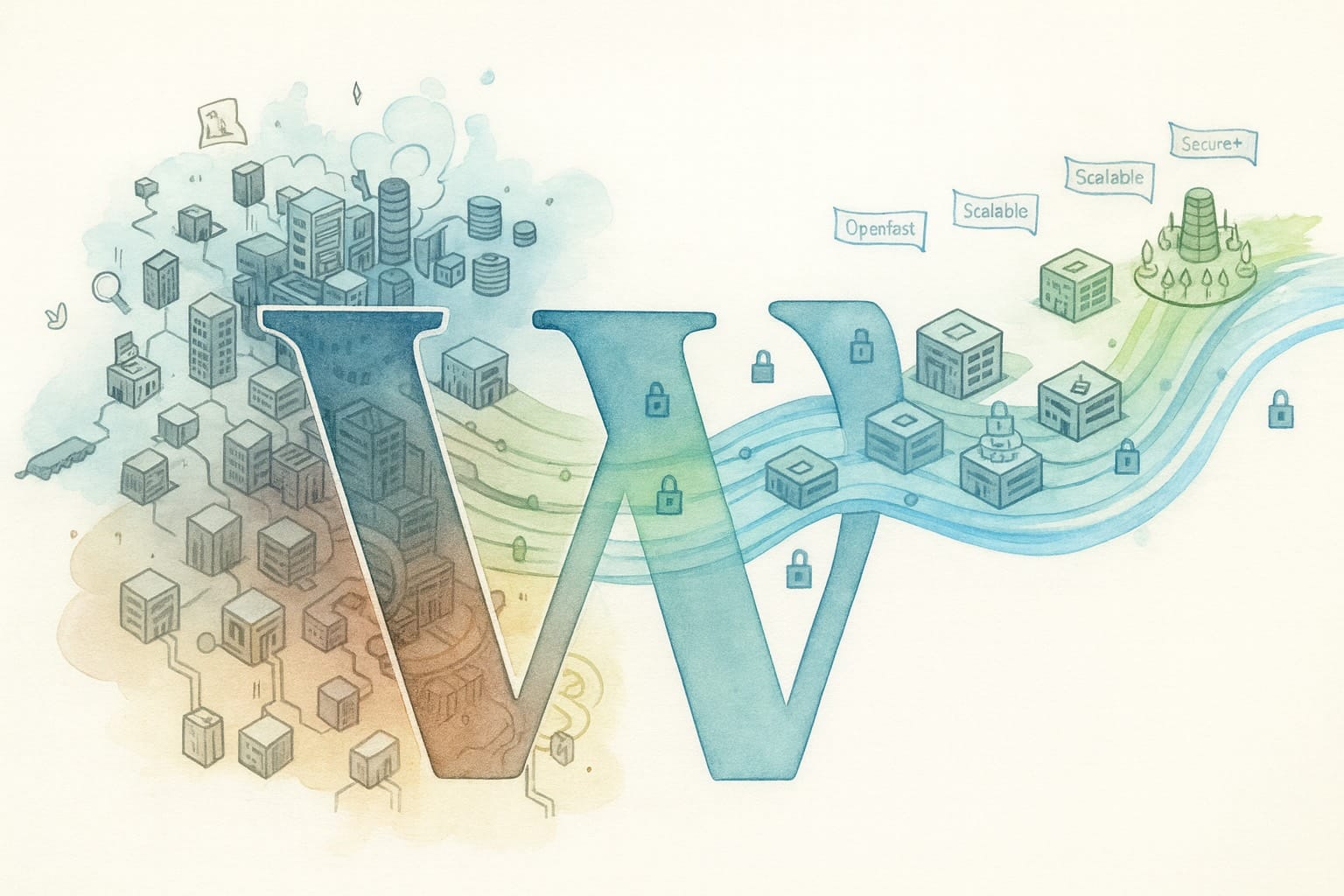
This article marks the third installment in our *Why We Choose WordPress* series. In our first post, we explored it as [a platform built for builders](https://thewpminute.com/the-case-for-wordpress-a-platform-built-for-builders/). In the second, we looked at [how it supports everyday users](https://thewpminute.com/the-case-for-wordpress-a-home-base-for-end-users/). Now, we turn to enterprise teams, which are organizations that demand scale, security, and cost efficiency.
If you’re in this space, you know the enterprise technology landscape is shifting. SaaS costs continue to climb, AI dominates headlines, and proprietary platforms push companies toward expensive, closed ecosystems.
It’s no surprise that enterprises are rethinking the tradeoffs between control, flexibility, and long-term value.
In this environment, WordPress has quietly become a compelling answer. No longer “just a CMS for blogs”, it has evolved into a platform capable of powering global media, Fortune 500s, and governments.
WordPress balances scalability with transparency, supports enterprise-grade workflows, and avoids the trap of vendor lock-in, giving teams freedom without compromise.
#### The Cost and Control Equation
For enterprise teams, the total cost of ownership is often the deciding factor when selecting a digital platform.
The last decade saw the rise of SaaS solutions promising convenience, but at a growing expense: steep licensing fees, rigid pricing tiers, and ongoing vendor lock-in. What once looked like a shortcut has turned into a long-term liability for many organizations.
As open-source software, WordPress carries no licensing fees. Enterprises can choose their hosting partners, manage infrastructure at scale, and negotiate costs based on actual needs rather than a vendor’s tiered plan. That flexibility translates into predictable ownership costs and more transparency for CFOs and IT leaders alike.
WordPress doesn’t dictate how you build or where you deploy meaning enterprises can integrate with existing systems, select their own security and compliance stack, and customize workflows without waiting for approval from a proprietary vendor.
Compare that with platforms like Adobe Experience Manager, Sitecore, or even Webflow, where pricing models and feature roadmaps are tied to the vendor’s priorities, not yours.
So, by combining cost efficiency with freedom of choice, WordPress gives enterprise teams the ability to build digital experiences on their own terms. It provides the stability of a global open-source project, while avoiding the hidden expenses and constraints that have become synonymous with enterprise SaaS.
#### Enterprise-Grade Capabilities
When people hear “WordPress”, they may still picture a blogging tool. In reality, modern WordPress powers some of the world’s most complex, high-traffic digital properties, from global media outlets to Fortune 500 companies and government websites.
These organizations rely on WordPress both for publishing and for delivering scalable, enterprise-grade digital experiences. Scalability is one of WordPress’s strongest assets. With the right architecture, a WordPress site can serve millions of pageviews per month.
Decoupled or headless implementations allow enterprises to pair WordPress with modern front-end frameworks, while enterprise hosting providers and advanced caching and CDN strategies keep performance consistent worldwide.
Core performance improvements such as database query optimizations, better object caching, and ongoing work from the dedicated [WordPress Core Performance Team](https://make.wordpress.org/performance/) mean enterprises benefit from speed and stability out of the box.
Meanwhile, a growing ecosystem of enterprise-focused plugins and tooling makes it easier to extend functionality without sacrificing performance. Customization is another advantage. Whether building an intranet, a multi-site global presence, or a decoupled content hub, WordPress can be tailored to meet the exact scale and complexity of the organization.
For more on why enterprises choose WordPress, see: [Enterprises Choose WordPress for CMS, Citing Better Functionality](https://thewpminute.com/enterprises-choose-wordpress-for-cms-citing-better-functionality/).
The takeaway is clear: WordPress has proven it can scale to meet enterprise demand. For teams evaluating digital platforms in 2025, it stands as a reliable, flexible option that can grow alongside the business.
#### Security and Supply Chain Confidence
For enterprise teams, security is non-negotiable. Beyond protecting customer data and digital assets, organizations must also account for compliance, governance, and the integrity of the software supply chain.
These concerns often lead enterprises toward proprietary platforms under the assumption that “closed” equals “safer”. But in practice, transparency often provides stronger security, and this is where WordPress stands apart.
*Publisher’s note: Open Source WordPress, Automattic, and the community have been challenged with an ongoing lawsuit between [WP Engine and Automattic.](https://thewpminute.com/how-does-automattic-vs-wp-engine-impact-freelancers/) This doesn’t install a great deal of confidence, until we see the outcome of the lawsuit.*
As open-source software, WordPress code can be audited at any time. There’s no black box, which means enterprises can review, vet, and harden their deployments according to internal policies and regulatory requirements. This level of visibility is rarely available in SaaS or proprietary CMS platforms.
The WordPress (community) has also made important strides in [supply chain tooling](https://thewpminute.com/the-fair-package-manager-for-wordpress/). The introduction of a package manager and better dependency management practices improves how teams install, track, and maintain plugins and themes. Automatic update mechanisms, combined with version control workflows, help enterprises reduce risk without sacrificing agility.
The [WordPress Security Team](https://wordpress.org/about/security/), backed by contributors from major hosting providers and agencies, coordinates rapid responses to vulnerabilities. Their track record demonstrates that issues are identified and patched quickly, with updates distributed across the global ecosystem.
The result is a platform that meets enterprise security standards and offers transparency as a built-in advantage. With proper governance, WordPress can be as secure as any enterprise CMS while giving teams more insight and control over their digital supply chain than proprietary vendors allow.
#### Enterprise Workflows and Collaboration
Enterprises thrive on structure. From marketing departments to editorial teams, large organizations need platforms that support collaboration at scale. WordPress has steadily evolved to meet those needs, offering workflows and governance tools that rival and often surpass proprietary enterprise CMS solutions.
Multi-user roles and granular permissions make it possible to manage complex hierarchies across departments. Editors, designers, developers, and compliance officers can all work within the same system, each with the access they need.
Custom permissions and role extensions ensure enterprises can adapt WordPress to their internal governance models rather than forcing teams to adapt to rigid software defaults.
Beyond roles, WordPress integrates seamlessly with enterprise ecosystems such as single sign-on (SSO), analytics platforms, digital asset managers, and CRMs.
The block editor, once seen as a simple page builder, has become a powerful framework for building tailored workflows. Enterprises can create reusable block patterns, enforce brand consistency, and even design custom blocks to fit their processes.
The challenges of scaling WordPress in large organizations are well-documented. In fact, recent discussions with professionals in the field highlight both the opportunities and complexities of working with WordPress at scale, see: [The Challenges WordPress Professionals Face in 2025](https://thewpminute.com/the-challenges-wordpress-professionals-face-in-2025/). These insights reinforce how adaptable the platform can be when paired with the right strategies.
#### Agencies and the WordPress Enterprise Ecosystem
One of WordPress’s greatest strengths in the enterprise space is the ecosystem that surrounds it. While the core platform provides the foundation, agencies and service providers extend its capabilities, helping large organizations deliver enterprise-grade solutions without being tied to a single vendor.
Around the globe, specialized agencies continue to build sophisticated WordPress platforms for governments, universities, Fortune 500s, and major media companies. These projects range from multi-site networks supporting dozens of brands to highly customized digital experiences integrated with complex back-end systems.
The common thread is flexibility, as enterprises aren’t locked into one roadmap or vendor relationship. Instead, they can choose partners based on expertise, industry knowledge, and project scope.
The plugin and hosting ecosystem further strengthen this advantage. Enterprise-ready plugins provide functionality for multilingual content, advanced SEO, security hardening, and governance.
Hosting providers offer managed WordPress solutions with built-in scaling, monitoring, and compliance features. Together, they create a rich environment where enterprises can assemble solutions tailored to their exact needs.
This agency-driven model also encourages innovation. Unlike proprietary platforms, where development is gated by the vendor, WordPress agencies compete to deliver better performance, security, and integrations. The result is a vibrant marketplace of ideas as well as a steady stream of proven enterprise case studies demonstrating what’s possible.
For enterprise leaders, WordPress provides access to a global network of experts capable of delivering secure, scalable, and future-ready digital solutions.
#### Open Source and Innovation
In enterprise technology, longevity and adaptability matter as much as cost and scale.
Platforms tied to a single vendor’s roadmap often fall behind or force expensive migrations. WordPress, as an open-source project, offers a different kind of stability, one rooted in community-driven innovation and long-term ownership.
Enterprises that adopt WordPress gain access to one of the most active developer communities in the world. Thousands of contributors continually improve performance, accessibility, and security. Initiatives like block patterns, full-site editing, and the dedicated Performance Team ensure WordPress evolves alongside modern web standards.
The open-source model also means freedom to integrate. From AI-driven content tools to modern DevOps pipelines and headless front-ends, WordPress can be extended to fit into any enterprise stack. Because the codebase is transparent, teams can customize and future-proof their investments without fear of lock-in.
Importantly, open source guarantees continuity. Even if a plugin vendor exits the market or an agency partnership ends, enterprises still own their code and content. That independence provides a safeguard against the volatility of the broader tech landscape.
For enterprise leaders, WordPress is a future-ready platform backed by a global community, capable of evolving with new technologies while preserving the freedom and transparency that enterprises demand.
#### Conclusion
WordPress has come a long way from its origins as a blogging tool. In today’s enterprise landscape, it stands out as a platform that balances scale, security, cost efficiency, and freedom of choice.
While proprietary vendors often dictate pricing and product roadmaps, WordPress empowers enterprises to own their infrastructure, integrate with existing systems, and adapt workflows to meet their unique needs.
For enterprise teams navigating rising SaaS costs and increasing digital complexity, WordPress offers more than a CMS. It provides a future-ready foundation that combines flexibility and transparency with the stability enterprises need to thrive.
###### Join The Newsletter
Get your favorite 5 minutes of WordPress news for busy professionals every week — 100% Free! Join the WP Minute Newsletter below 👇, Why We Choose WordPress: Enterprise Teams, thewpminute.com, 01k789362rp3mwwbtnssh6kehz.