WordCamp Canada 2025 Recap

## Metadata
- Author: [[Peter Hebert]]
- Full Title: WordCamp Canada 2025 Recap
- Category: #articles
- Document Note: ---
tags: [WordPress, WordCamp Canada, Recap]
author: Peter Hebert
source: peterhebert.com
reference: [https://peterhebert.com/en/article/2025/wordcamp-canada-2025-recap?fbclid=IwZnRzaANvZz1leHRuA2FlbQIxMQABHv13hwtDg5FZO2GzUIO_LpDfT_EMDq3W4T5AJvwJVERQ66z3H3zwKo8zVCvE_aem_VVAs9h9w7M2u8jz5kpqMQw]
date created: 2025-10-29 00:00
---
# 🏷️ Title: WordCamp Canada 2025 recap
## 🧭 Table of Contents
- [📝 Summary](#-summary)
- [📖 Main Content](#-main-content)
- [🗒️ Notes](#️-notes)
- [📚 References](#-references)
- [🗣️ Paraphrase](#️-paraphrase)
- [📰 Newsletter](#-newsletter)
- [✅ Action Items](#-action-items)
- [🧪 Hypotheses](#-hypotheses)
- [📊 Methodology](#-methodology)
- [❓ Questions](#-questions)
- [🔮 Future Research](#-future-research)
- [💡 Implications](#-implications)
- [🧠 Learning Styles Assessment](#-learning-styles-assessment)
- [📊 Accessibility Assessment](#-accessibility-assessment)
- [🌍 DEIB Assessment](#-deib-assessment)
- [✅ Logical Validity](#-logical-validity)
- [🛡️ DARVO Analysis](#-darvo-analysis)
- [🎯 Conclusion](#-conclusion)
### 🔗 References
- Include links cited in or relevant to the article.
## 📝 Summary
- What happened: A three-day recap of WordCamp Canada 2025 in Ottawa, covering Contributor Day, talks on blocks, DevOps, interactivity, AI tools, accessibility, ActivityPub, and a town hall with Matt Mullenweg.
- Why it matters: Highlights practical workflows (local dev, CI/CD), the push toward the open social web, growing AI tooling, and accessibility best practices.
- Key stakeholders: WordPress contributors, developers, content editors, community organizers, Automattic, speakers (Dave Winer, Matt Mullenweg, Ryan Welcher, Jill Binder, Sasha Endoh, Django Doucet).
- Risks and tradeoffs: AI image usage and privacy; dependency on Automattic services for certain tools; first-time contributor ticket difficulty calibration.
- Bottom line: “I came away from the conference inspired and energized by the community.”
## 📖 Main Content
- Core arguments:
- Onboarding to contributing is smoother than ever with a simple Docker-based local dev flow and guided facilitation.
- Modern WordPress dev spans custom blocks, the Interactivity API, and CI/CD with tools like Tugboat and Cypress.
- The open social web via ActivityPub empowers creator-owned distribution; Openverse and WordPress Photos expand accessible media.
- Accessibility is a series of content practices: headings, link text, color contrast, alt text, captions, and no autoplay.
- Context/definitions:
- ActivityPub: a W3C protocol enabling federated social features.
- Interactivity API: client-side enhancements for blocks without heavy frameworks.
- Uncertainties:
- Scope and policy for AI-generated imagery in .org directories.
- Availability of Dave Winer’s WordLand beyond WordPress.com/Jetpack.
### 🗒️ Notes
- Venue: Carleton University’s Richcraft Hall overlooking the Rideau.
- Contributor Day: “Getting a local development environment could not be easier.” Cloned wordpress-develop, Docker + npm in ~20 minutes. Guided by facilitators; worked on Trac #28618 (PHPMailer override), but felt mis-labeled for beginners.
- Blocks deep dive: Ryan Welcher’s sessions on block APIs and JS; later covered Interactivity API with an image slider demo; recommends YouTube channel.
- DevOps: Paul Sheldrake introduced Tugboat (multi-env QA) and Cypress (testing); Kanopi’s CircleCI “orbs” for CI/CD.
- Keynote (Dave Winer): History of RSS/XML-RPC; dislikes the term “open web” as redundant (like “wet water”); demoed WordLand (currently needs WordPress.com/Jetpack).
- Content/editor UX: Joe Simpson Jr on returning to Full Site Editing.
- AI tools: Alycia Leno showcased Veo (video), Suno (music), Flow (filmmaker AI); built a Don Draper-themed prompt live.
- Speaker diversity: Jill Binder’s lessons scaling from local to 50 countries; check assumptions; cultural sensitivity; naming/identity respect.
- ActivityPub: Django Doucet advocated self-hosted social presence with the WordPress plugin.
- Town Hall (Matt Mullenweg): Blogging cadence; Openverse and WordPress Photos integration; exploring privacy-respecting AI imagery in .org.
- Accessibility (Sasha Endoh):
- Headings, clear link text, recognizable styling, avoid “click here,” don’t force new tabs.
- Color contrast and not using color alone.
- Alt text: contextual vs. library defaults.
- Provide transcripts/captions; avoid autoplay.
- Tailoring editor (Jesse Dyck): Streamline block editor for consistency, brand, and accessibility.
- Afterparty: CRAFT Beer Market; community connection.
- Takeaways: AI buzz (Automattic’s Telex for block-building); WordPress Photos integration into the editor; energized by in-person connections.
## 📚 References
- WordPress ActivityPub plugin (https://wordpress.org/plugins/activitypub/)
- Openverse (https://openverse.org/)
- WordPress Photos Directory (https://wordpress.org/photos/)
- WordPress.tv (https://wordpress.tv/)
- Ryan Welcher YouTube channel (https://www.youtube.com/@RyanWelcherCodes)
- Tugboat QA (https://www.tugboatqa.com/)
- Cypress (https://www.cypress.io/)
- Kanopi Studios (https://kanopi.com/)
- Suno (https://suno.com/)
- Google Veo (https://deepmind.google/technologies/veo/)
- Flow (Runway or filmmaking AI tools) (https://runwayml.com/)
- Town Hall/AMA video (YouTube) (https://www.youtube.com/)
## 🗣️ Paraphrase
- Paragraph A: The author attended WordCamp Canada 2025 at Carleton University, enjoyed the venue, and met a remote colleague in person for the first time.
- Paragraph B: Contributor Day onboarding was smooth; with facilitation, a local dev environment was set quickly, a Trac ticket was tackled, though it felt too advanced for a first-timer label.
## 📰 Newsletter
- WordCamp Canada 2025 delivered hands-on wins: 20-minute local WP setup, CI/CD tips (Tugboat, Cypress), and block/Interactivity walkthroughs from Ryan Welcher. Dave Winer revisited open web roots and previewed WordLand. Django Doucet championed ActivityPub for sovereign social. Matt highlighted Openverse/Photos and potential AI imagery paths. Accessibility took center stage with Sasha Endoh’s practical checklist. Try: ActivityPub on your site, a Cypress smoke suite, and a WordPress Photos-powered image workflow.
## ✅ Action Items
#### DevRel
- Build a starter repo: Interactivity API image slider + Cypress tests.
- Host monthly Contributor Onramps using dockerized wordpress-develop.
- Produce short videos on ActivityPub setup and federation basics.
- Publish success metrics: time-to-first-PR, docs NPS, tutorial completion.
#### OSPO
- Document contribution labeling standards (true “good first issue” criteria).
- Establish AI asset provenance policy; require captions/transcripts SLAs.
- Maintain SBOMs for themes/plugins; quarterly license scans.
#### Community
- Speaker mentorship cohorts; diversity outreach playbooks.
- Editor UX clinics for content teams; accessibility office hours.
- Transparent event budgets with outcomes and reports.
#### WordPress
- Core: refine Interactivity API docs and examples.
- Training: accessibility content patterns, alt-text clinics, link-text guides.
- Marketing: promote Openverse/Photos integration use cases.
- Documentation: end-to-end contributor environment quickstart.
- Accessibility: publish WCAG checklists and tooling bundles.
#### The WPCC
- Fund accessibility and contributor-onboarding sprints.
- Microgrants for ActivityPub adoption and docs translation.
### FAIR
- Track AI image provenance and signatures.
- Publish funding disclosures; sunset clauses for pilots.
- Standardize governance artifacts for meetups and events.
## 🧪 Hypotheses
- Streamlined local dev reduces time-to-first-contribution by ≥30%.
- Interactivity API examples increase adoption of native block patterns by ≥20%.
- ActivityPub-enabled sites grow federated followers faster than non-federated by ≥25% over 90 days.
- Editor UX restrictions decrease publishing errors and rework by ≥15%.
- Accessibility training improves alt-text coverage to ≥95% within two months.
### 📊 Methodology
- A/B contributor workshops: measure setup time, PRs/week.
- Instrument demo repos: track Interactivity API usage
- Summary: From October 15-17, 2025, I attended the second WordCamp Canada in Ottawa - here is my recap of the conference.
- URL: https://peterhebert.com/en/article/2025/wordcamp-canada-2025-recap?fbclid=IwZnRzaANvZz1leHRuA2FlbQIxMQABHv13hwtDg5FZO2GzUIO_LpDfT_EMDq3W4T5AJvwJVERQ66z3H3zwKo8zVCvE_aem_VVAs9h9w7M2u8jz5kpqMQw
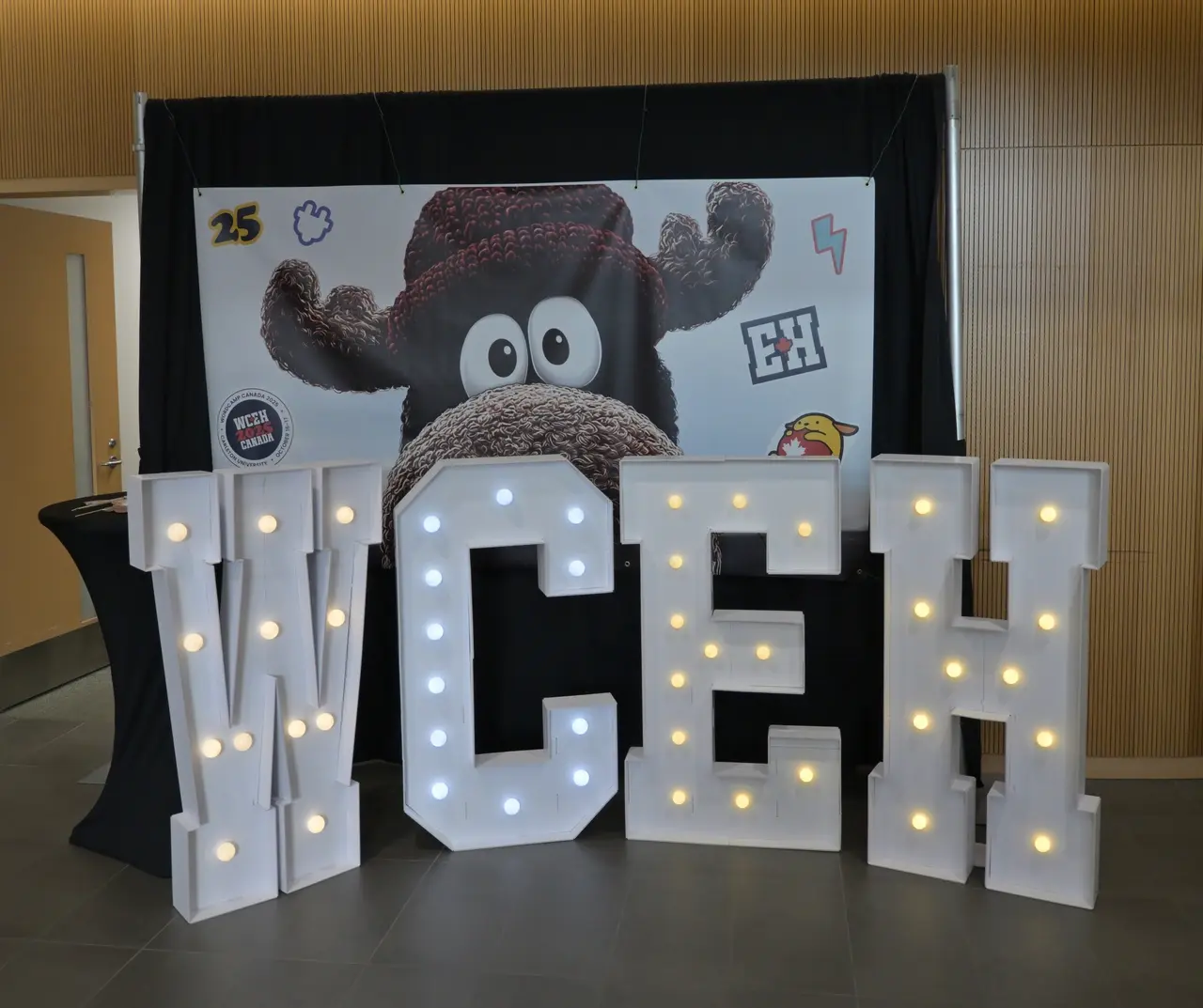
I attended the second WordCamp Canada, from October 15-17, 2025. This year the conference was held at Carleton University’s Richcraft Hall. This venue is more centrally located than last year’s venue, making it easier to get to. The facilities were nice – the building overlooks the Rideau river, which was quite beautiful in the autumn leaves.
Arriving in Ottawa on the afternoon of October 14, I was able to meet up with my colleague from CoLab Cooperative, Django Doucet, for dinner. As CoLab is a fully distributed agency, it was the first time we had met in person. It was great to finally connect in person.
#### Contributor Day – October 15
I attended my first contributor day in the WordPress community. Overall, I must say they did a great job of making it easy for new contributors to get started.
First off, I attended a session entitled [How does contributing to WordPress work (actually)?](https://canada.wordcamp.org/2025/session/how-does-contributing-to-wordpress-work-actually/)– which covered the contribution process, and what to expect.
Getting a local development environment could not be easier. I started by cloning the [WordPress Develop](https://github.com/WordPress/wordpress-develop) repository from Github. The Docker based setup was super easy – clone the repository, run a few npm commands, and the local instance of WordPress up and running. They really thought this out well. The whole process took me maybe 20 minutes.
From there it was on to finding an issue to work on. They had facilitators in the contribution room that guided us on how to get started, which was super helpful. Paul Bearne guided me through how to get the local environment up, and also walked me through finding a ticket to work on in the [Trac core issue tracker](https://core.trac.wordpress.org/). I managed to find an issue: [#28618 — Allow PHPMailer class to be reliably overridden](https://core.trac.wordpress.org/ticket/28618). It was an older bug with a patch, which needed to be updated. I looked through the old patch, re-applied the fixes in a feature branch in my forked repository, pushed them, and finally submitted a pull request against the issue. Not bad for about an hour’s time total. However, I didn't really understand the code base that the issue was addressing, so I feel that this ticket shouldn't have been labeled as suitable for first-time contributors.
##### [Custom Blocks: Ain’t Nobody Got Time for That!](https://canada.wordcamp.org/2025/session/custom-blocks-aint-nobody-got-time-for-that/), and [Custom Blocks: Here’s Some Time for That!](https://canada.wordcamp.org/2025/session/custom-blocks-heres-some-time-for-that/)
Ryan Welcher
My afternoon was spent at Ryan Welcher’s block development sessions. These sessions were really packed with information, and gave a great overview of the APIs involved with block development, and the JavaScript functions.
#### Day 1 – October 16
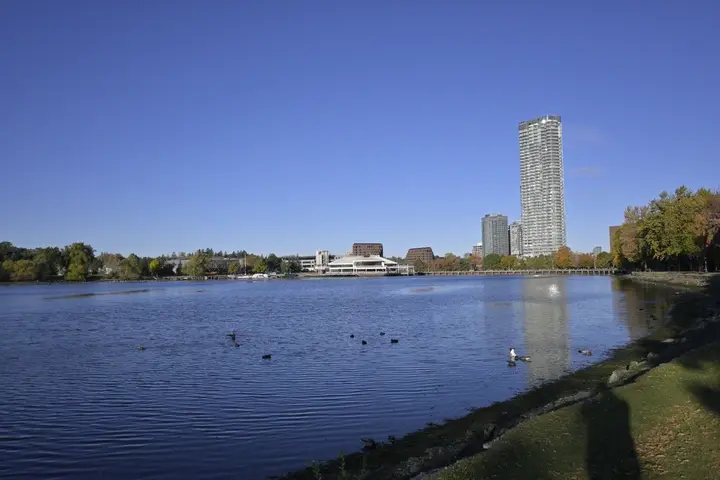
I walked to Carleton from my hotel, along Dow's Lake, which was nice, and good to get exercise before the day started.
Paul Sheldrake
This was a great talk about DevOps workflows, I learned about a couple of tools I never heard of:
* [Tugboat](https://www.tugboatqa.com/) (QA, multi dev environments)
* [Cypress](https://www.cypress.io/) (testing framework)
Paul’s company (Kanopi Studios), also has some tooling on GitHub – he called them ‘orbs’, aimed at implementing CI/CD workflows for WordPress.
I am definitely going to look into these tools, and try to integrate some of his techniques into my dev workflow.
##### [WordPress and the open social web](https://canada.wordcamp.org/2025/session/wordpress-and-the-open-social-web/)
Dave Winer
Just before lunch was the conference’s first keynote, [WordPress and the open social web](https://canada.wordcamp.org/2025/session/wordpress-and-the-open-social-web/), by Dave Winer. Dave is an industry veteran who helped write some of the foundational specs: the XML-RPC protocol, RSS (Really Simple Syndication), as well as adding an "enclosure" tag in RSS which became the foundation for podcasting.
He went over a bit of the history of WordPress, and how it has enabled an “open” web. However Dave noted that he dislikes the term “open web”, considering it to be redundant since the web, as originally intended, was open by default. He said it was like referring to “wet water”.
He then talked about his current project called WordLand, which aims to be a writer-friendly interface to WordPress. Unfortunately, it only works on WordPress.com or with Jetpack enabled on self-hosted sites, meaning there's no luck if you want to use this without sending all of your data to Automattic.
[Dave’s presentation slides](https://bullets.opml.org/?url=https://drummer.land/
[email protected]/wordcampSlides.opml#/)
Joe Simpson Jr
Over lunch, I was talking with a bunch of people about various topics, and all of a sudden realized I was about 15 minutes late for the next session. I quietly entered the room for Joe Simpson Jr’s session [Back on the Block: My Reasons for Returning to the Full Site Editor](https://canada.wordcamp.org/2025/session/back-on-the-block-my-reasons-for-returning-to-the-full-site-editor/). I am sorry that I missed the beginning, as it seemed quite interesting. I’ll have to watch the video once it’s uploaded to WordPress.tv.
Here are Joe's [presentation slides](https://docs.google.com/presentation/d/1n3CdWEltoWIfyD_Ly8KWuKeQrscJbtHiRDFDEwSkWns/edit?usp=sharing)
Ryan Welcher
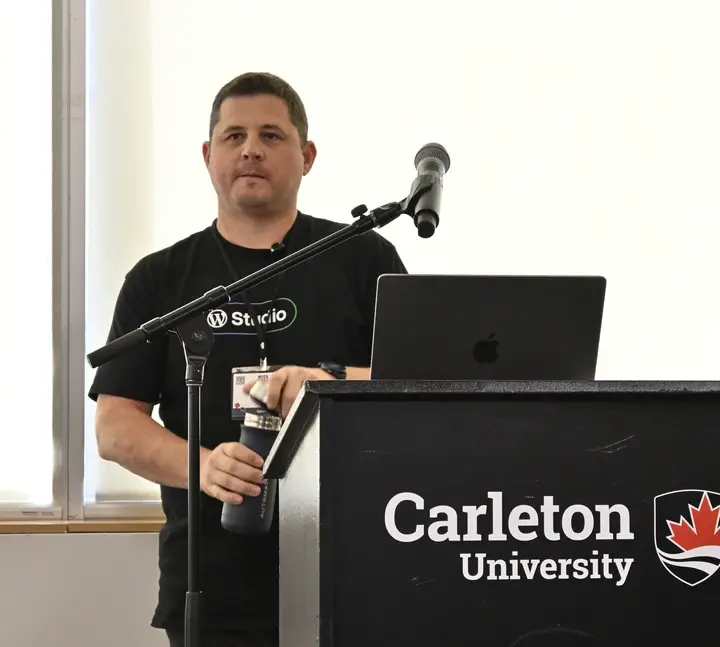
Ryan went over the interactivity API and gave an example of creating an image gallery slider. It was very informative, and his way of presenting is very approachable and easy to follow. I would definitely recommend you check out his YouTube channel at [RyanWelcherCodes](https://www.youtube.com/@RyanWelcherCodes)
Alycia Leno
Alycia went over some of the latest AI content creation tools, and how they can be used to inspire and assist creativity. I learned about many tools I had never heard of, including [Veo](https://aistudio.google.com/models/veo-3) (video generation), [Suno](https://suno.com/) (music / song generator), and [Flow](https://labs.google/flow/about), an AI tool for filmmakers. The video generators might be of interest to me, I can see the potential of using them for an avanced version of storyboards or previsualizations, if not an entirely standalone video tool. At the very least, the tools would be fun to experiment with.
She also walked us through creating a custom GPT prompt, based on feedback from attendees. We ended up with a GPT based on Don Draper from Mad Men, which got a few laughs.
[Alycia's slides](https://from-overwhelmed-to-augm-4q3ffjp.gamma.site/)
Jill Binder
Jill led the WP Speaker Diversity program for 5 years, and now runs public speaking workshops. Jill shared stories and lessons about how she scaled a local workshop in Vancouver to 50 countries. She spoke to cultural differences, sensitivity to individual needs, and also how to get beyond our own personal assumptions and blind spots that can hurt others when interacting in diverse groups.
Jill shared a story about the person who dropped out of one of her training sessions after she asked the person to change their label on the conference software to their real name. After a follow-up Jill discovered that the label used was his branding name, and he felt diminished.
Jill’s talk reminded me to always check myself and my unconscious assumptions when interacting in a group setting. Also, having sensitivity towards cultural differences, and those whose first language isn’t English, was a big takeaway for me.
#### Day 2 – October 17
##### [Intro to WordPress-ActivityPub: What it is, & how to use it!](https://canada.wordcamp.org/2025/session/intro-to-wordpress-activitypub-what-it-is-how-to-use-it/)
Django Doucet
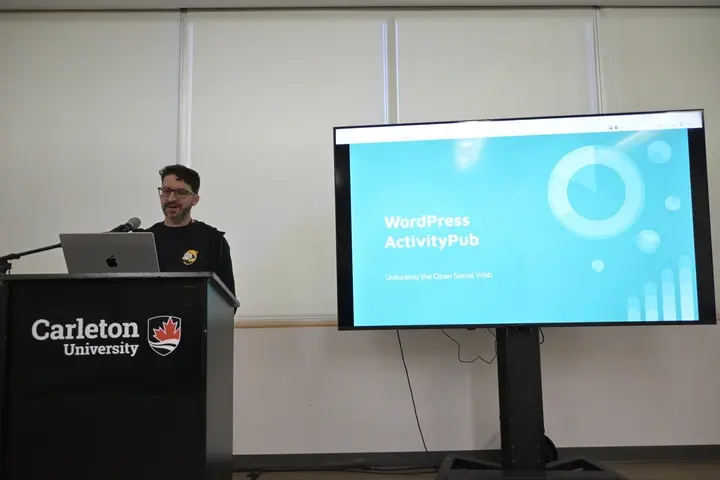
Day 2 started with my colleague Django’s presentation on the ActivityPub plugin in WordPress, the protocol itself, and the open web. He advocated for using the ActivityPub protocaol to control your own social media presence, and not be dedependent on the big tech giants.
Matt Mullenweg
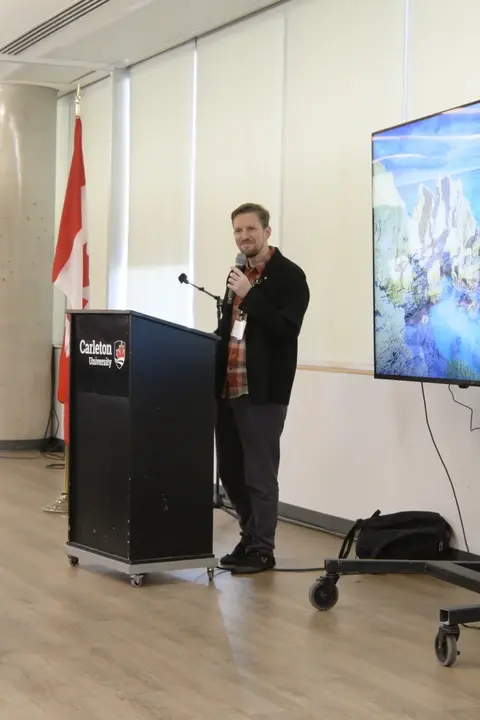
Matt, the co-founder of WordPress came to Ottawa for a live town hall session at WordCamp Canada.
Matt gave us an update on his activities and active projects within the WordPress community. He shared that he was inspired to blog more consistently since WordCamp US. He then took questions from the audience.
A comment from the audience mentioned the [WordPress Photos](https://wordpress.org/photos/) directory. Matt talked a bit about integrating creative commons photos into your site. He specifically mentioned [Openverse](https://openverse.org/), a directory of open-licensed stock photos, images, and audio. It is the successor to CC Search by Creative Commons in 2019 that Automattic took over in 2021.
There was discussion about the use of AI-generated imagery within the theme and plugin directories on wordpress.org (for instance, as a theme thumbnail or images included with block patterns). Matt seemed to think that there were likely ways to integrate it while respecting privacy, and also making it easy to use.
The complete [Town Hall / AMA video](https://youtu.be/RL-XccK30sY) has now been posted to YouTube.
Sasha Endoh
Sasha gave some practical advice for implementing accessibility from a content manager’s perspective. They really gave a good overview of best practices in crafting content.
* Text structure, such as the use of proper heading hierarchy
* Links
+ avoiding meaningless link text like “click here” (one of my pet peeves)
+ using link styling that is easily recognizable as a link
+ not opening links in a new tab, enabling user choice
* Color
+ not relying on colour to convey meaning
+ accessible colour contrast ratios
+ tools for checking how your site looks to color blind users
* Images
+ writing short and descriptive alt text
+ the differences between setting default alt text within the media library versus alt text based on the context in which the image is inserted into a post
* Providing alternative content for videos - such as transcripts and captions.
* Not automatically playing animations, or videos.
Jesse Dyck
Jesse covered how to tailor the block editor experience to make it less overwhelming for content editors, and also to help enforce brand standards and accessibility.
#### Afterparty
The after party was held at CRAFT Beer Market at Lansdowne Park. As a former Ottawa resident, I was amazed to see the transformation of the neighbourhood. I spent most of the evening talking with a group of fellow Montrealers. It was a fun time.
#### Takeaways from this year's conference.
**AI** – just like everywhere else, AI was a buzzword at WordCamp this year. A lot of people were talking about [Telex](https://telex.automattic.ai/), Automattic’s new AI-powered tool for building blocks. I will need to check it out and see if I can use it to build something useful.
[WordPress Photos](https://wordpress.org/photos/) – a Creative Commons licensed photo directory, that you can use and submit photos to. I believe Matt suggested that they are looking to add this to the block editor, to be able to quickly search the directory and add photos to your WordPress site.
Overall, I came away from the conference inspired and energized by the community. There’s really nothing like these in-person gatherings to connect and learn from some very smart people., WordCamp Canada 2025 Recap, Peter Hebert, 01k8ry6dy19x4cp7675h75psf0.