WordPress® Plugins Built by Plugin Pal

## Metadata
- Author: [[pluginpal.app]]
- Full Title: WordPress® Plugins Built by Plugin Pal
- Category: #articles
- Document Note: ---
tags:
- #wordpress
- #plugins
- #ai
- #development
- #nocode
- #automation
- #mvp
- #productivity
- #opensource
- #education
Author: pluginpal.app
Source: Website
Reference: https://pluginpal.app/
date created: 2025-08-21 00:00
---
# Title: WordPress Plugins Built by Plugin Pal — An AI-Powered Plugin Generator
## Table of Contents:
- [🚀 Overview](#-overview)
- [🧭 Who It’s For](#-who-its-for)
- [🧩 Example Plugins](#-example-plugins)
- [⚙️ How It Works](#️-how-it-works)
- [🏎️ Benefits](#️-benefits)
- [📝 Summary](#-summary)
- [📖 Main Content](#-main-content)
- [🗒️ Notes](#️-notes)
- [📖 References](#-references)
- [🗣️ Paraphrase](#-paraphrase)
- [📰 Newsletter](#-newsletter)
- [✅ Action Items (Advocacy + OSPO Alignment)](#-action-items-advocacy--ospo-alignment)
- [🧪 Hypotheses](#-hypotheses)
- [📊 Methodology](#-methodology)
- [❓ Questions](#-questions)
- [🔮 Future Research](#-future-research)
- [💡 Implications](#-implications)
- [🧠 Learning Styles Assessment](#-learning-styles-assessment)
- [📊 Accessibility Assessment](#-accessibility-assessment)
- [🌍 DEIB Assessment](#-deib-assessment)
- [✅ Logical Validity](#-logical-validity)
- [🔍 SEO Evaluation](#-seo-evaluation)
- [🎯 Conclusion](#-conclusion)
### References:
- pluginpal.app homepage
- WordPress plugin development best practices (general knowledge)
- AI-assisted code generation trends (general knowledge)
## 📝 Summary:
Plugin Pal is an AI-powered generator that helps WordPress professionals rapidly build custom plugins. It targets freelancers, agencies, and “WordPress hustlers,” streamlining MVP creation and development flow. The site highlights quick turnarounds, skill elevation, and showcases examples like BioBox, Subscribers, and Pizza Pledge plugins. The pitch: “Turn coffee-break ideas into market-ready WordPress plugins. Plugin Pal creates the code while you cash out the applause.”
## 📖 Main Content:
Plugin Pal positions itself as a workflow accelerator for plugin creation. It emphasizes:
- Speed: building MVPs in “record time” for rapid iteration.
- Accessibility: suitable for freelancers and agencies seeking reduced overhead on boilerplate and routine tasks.
- Upskilling: promises to “elevate your skills,” implying generated code you can inspect, learn from, and extend.
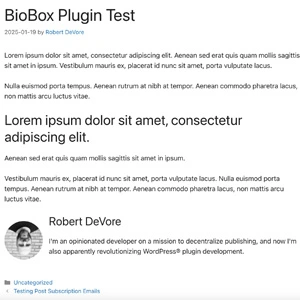
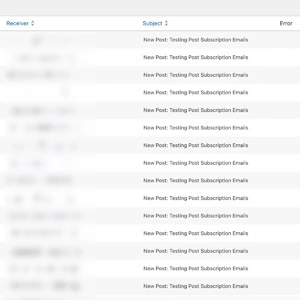
- Social proof via examples: screenshots of plugins like BioBox, Subscribers for WordPress, and Pizza Pledge.
How it fits typical WordPress work:
- Boilerplate generation (custom post types, settings pages, shortcodes, Gutenberg blocks).
- Rapid prototyping for client pitches.
- Scaffolding for production-grade enhancements (security, i18n, performance).
Constraints and considerations:
- Code quality and maintainability require human review.
- Security and licensing must be validated.
- Compatibility with core and major plugins/themes should be tested.
### 🗒️ Notes
- Value proposition
- “AI Plugin Generator for WordPress Professionals” frames a professional-grade tool.
- “Turn coffee-break ideas into market-ready plugins” emphasizes ideation-to-shipping velocity.
- Target audience
- “Freelancers, agencies, and WordPress hustlers” suggests breadth: solopreneurs to teams.
- Capabilities and outcomes
- “Streamline your development flow” implies boilerplate automation and scaffolding.
- “Build MVPs in record time” focuses on prototyping and validation.
- “Elevate your skills” hints at learning by reading/modifying generated code.
- Social proof/examples
- BioBox plugin (likely profile/bio presentation).
- Subscribers for WordPress (email capture/management).
- Pizza Pledge (pledge/donation or order-like interactions).
- UI artifacts mentioned
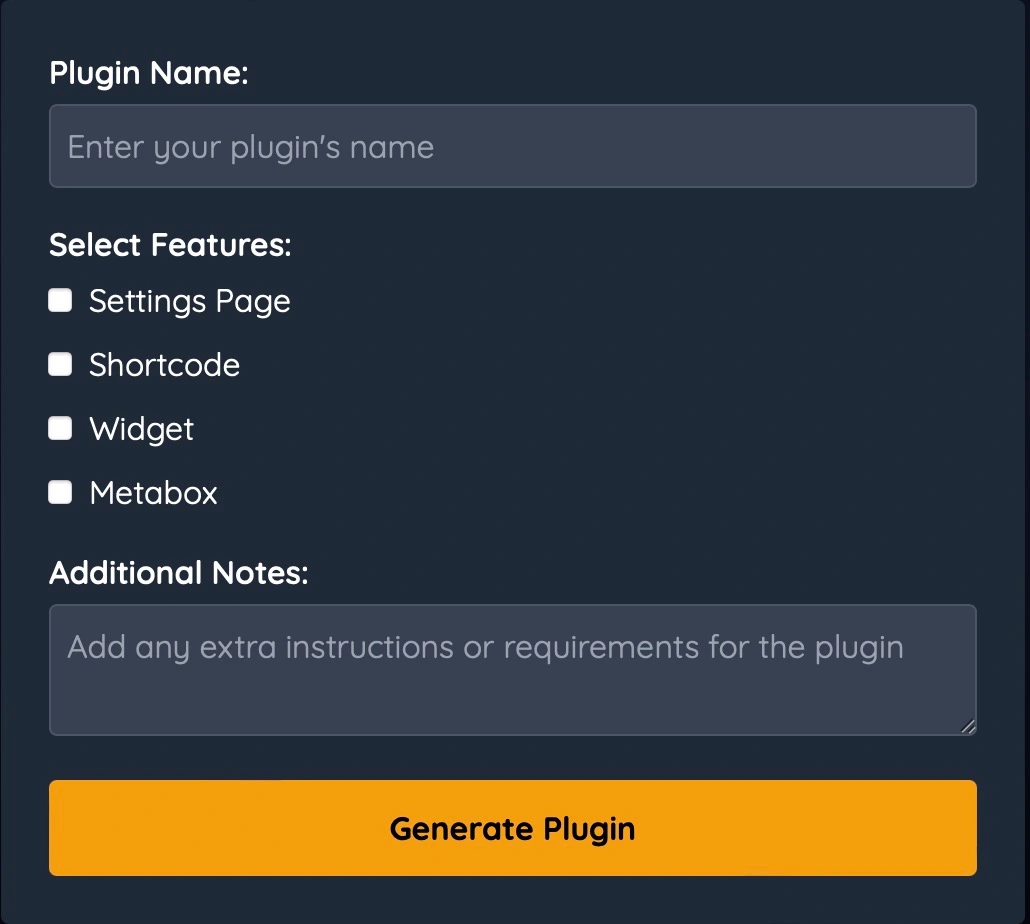
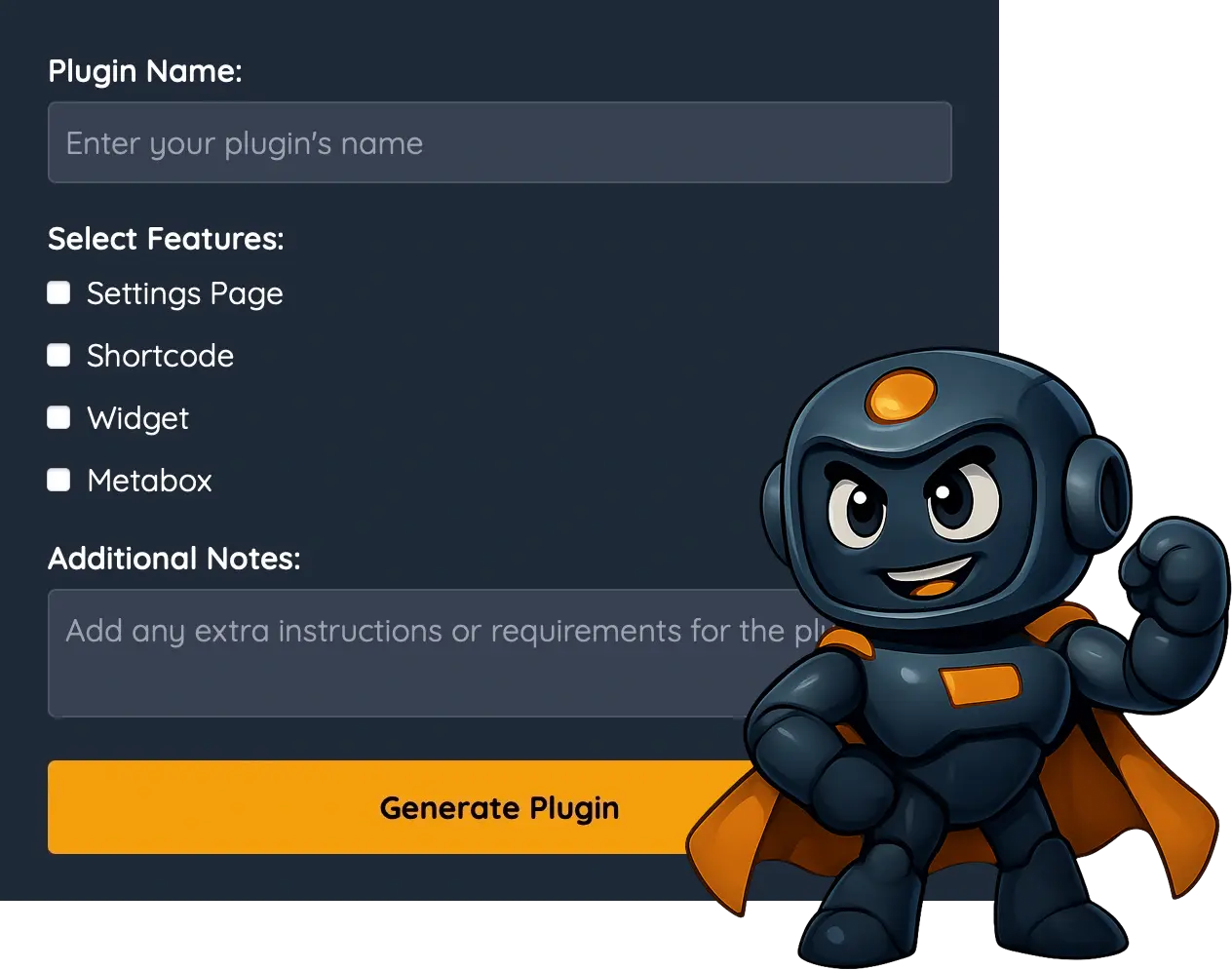
- “Plugin Pal Generator Dashboard” and mascot suggest a guided generation experience.
## 📖 References:
- Official site: https://pluginpal.app/
- WordPress Plugin Handbook (contextual best practices): https://developer.wordpress.org/plugins/
- Security guidelines (context): https://developer.wordpress.org/plugins/security/
## 🗣️ Paraphrase:
1) Original: “Turn coffee-break ideas into market-ready WordPress plugins. Plugin Pal creates the code while you cash out the applause.”
Paraphrase: Transform quick sparks of inspiration into deployable plugins. Plugin Pal handles the coding, so you can take the bow.
2) Original: “Building custom WordPress plugins just got ridiculously easier. Created for freelancers, agencies, and WordPress hustlers like you, Plugin Pal is the ultimate tool to streamline your development flow, build MVPs in record time, and elevate your skills.”
Paraphrase: Crafting bespoke WordPress plugins is now dramatically simpler. Designed for independents and teams alike, Plugin Pal smooths your workflow, accelerates MVP creation, and helps you grow your expertise.
## 📰 Newsletter:
If you’ve ever sketched a plugin idea on a napkin between sips of coffee, this one’s for you. Plugin Pal promises to turn those “what if…” moments into working WordPress plugins—fast. Aimed at freelancers and agencies, it streamlines boilerplate, accelerates MVPs, and gives you code you can extend. Examples include BioBox, a Subscribers tool for WordPress, and the delightfully named Pizza Pledge. As always, remember to audit generated code for security, licensing, and performance before going live. Curious? Explore Plugin Pal on their homepage: Plugin Pal — AI Plugin Generator for WordPress Professionals (https://pluginpal.app/). Pair it with the WordPress Plugin Handbook for best practices: WordPress Plugin Handbook (https://developer.wordpress.org/plugins/).
## ✅ Action Items (Advocacy + OSPO Alignment):
- Map to open-source advocacy
- Evaluate how Plugin Pal-generated code adheres to WordPress coding standards and GPL compatibility; create a checklist and public template for contributors.
- Publish a transparent review process for AI-generated code security (nonces, capability checks, sanitization/escaping).
- Contributor engagement
- Use Plugin Pal to scaffold “good first issue” plugins for contributor onboarding workshops; annotate code with learning comments.
- Host live sessions comparing generated code to core patterns; invite feedback and PRs to improve templates.
- Education and curriculum
- Develop a mini-course: From AI-generated scaffold to production-ready plugin (PHP, JS, WP APIs, Git/GitHub workflows).
- Provide labs on testing (WP-CLI, PHPUnit), CI, and release processes using GitHub Actions.
- Sustainable funding
- Pilot a model where Plugin Pal-generated MVPs become community-supported plugins with sponsorship tiers and transparent budgets.
- OSPO trajectory
- Draft governance guidelines for AI-assisted contributions: license clarity, provenance, model disclosures, and approval workflows.
- Define a rubric to accept AI-assisted contributions in org repos, aligning with WordPress community guidelines.
- Transparency and inclusivity
- Publish accessibility and DEIB review checklists for plugins generated via the tool.
- Add multilingual i18n/l10n practices to all scaffolds and documentation.
Prompt you can reuse for future articles:
“Analyze how this resource supports my role as a Developer Advocate focused on open source and WordPress. Explicitly map takeaways to: a) contributor onboarding and mentorship, b) educational content and curricula for PHP/JS/HTML/CSS/Git, c) sustainable funding and governance for community plugins, and d) my long-term goal of directing an OSPO with transparent, inclusive policies. Identify concrete workshop ideas, repository templates, and documentation artifacts I can produce. Flag any licensing, security, accessibility, or DEIB gaps and propose mitigation plans.”
## 🧪 Hypotheses:
- H1: AI scaffolding reduces initial development time for WordPress plugins by >50% without degrading final code quality after review.
- H2: Contributor onboarding completion rates increase when newcomers start from AI-generated scaffolds plus mentored code reviews.
- H3: Security defects per LOC remain comparable to hand-written scaffolds when teams apply a standardized review checklist.
- H4: Time-to-first-MVP for agencies shortens, increasing client conversion rates on prototypes.
- H5: Educational outcomes improve when learners modify generated plugins versus building from scratch in early phases.
### 📊 Methodology:
- Data sources: agency project logs; GitHub repos; CI security scans; code review tools; learner assessment scores; user surveys.
- Designs:
- Controlled experiment: manual scaffold vs AI scaffold; measure time, defects, maintainability.
- Cohort study: onboarding cohorts with/without AI scaffolds.
- A/B in client pitches: prototype delivery times and conversion.
- Analysis:
- Metrics: cycle time, defects/LOC, CWE categories, maintainability index, learning gains (pre/post tests).
- Statistical tests: t-tests/ANOVA for time and quality metrics; regression for confounders; survival analysis for onboarding completion.
### ❓ Questions:
- What plugin types does Plugin Pal scaffold best (CPTs, blocks, settings pages, REST endpoints)?
- How are security and licensing handled in generated code?
- Can templates be customized to a team’s standards and patterns?
- What’s the update path when WordPress APIs evolve?
- How does it support i18n, accessibility, and performance?
### 🔮 Future Research:
- Template evolution pipelines tied to core releases.
- Security-by-default scaffolds with verified patterns.
- Education-focused templates with inline learning prompts.
- Community marketplace of vetted templates and reviews.
### 💡 Implications:
- Faster prototyping could widen participation in plugin development.
- Standardized scaffolding may improve baseline security and accessibility.
- Education-integrated templates could scale contributor growth sustainably.
- Governance around AI provenance will influence trust in community repos.
### 🧠 Learning Styles Assessment:
- Readability: Likely easy-to-read marketing copy (approximately Grade 7–9).
- Visual (Present): Screenshots and mascot aid scanning. Improve: add architecture diagrams and flowcharts of generation steps.
- Aural (Present): Not indicated. Improve: add a short audio explainer or TTS.
- Verbal (Present): Concise, catchy phrasing. Improve: add examples, analogies, and links to deeper docs.
- Physical (Present): None. Improve: interactive demo or sandbox generation exercise.
- Logical (Present): Implicit benefits; no explicit frameworks. Improve: provide step-by-step generation logic and comparison matrices.
- Social (Present): Not evident. Improve: link to community, forums, and office hours.
- Solitary (Present): Not explicit. Improve: self-paced tutorials and reflection prompts.
- Naturalistic (Present): None. Improve: sustainability case studies for nonprofits or environmental orgs using generated plugins.
### 📊 Accessibility Assessment:
- Screen reader: Ensure semantic landmarks, descriptive headings, and alt text for all images/screenshots.
- Keyboard navigation: Confirm tabbable controls, visible focus states, and skip links.
- Contrast/readability: Use high-contrast color palette; ensure font scaling doesn’t break layout.
- Text resizing: Verify responsive typography and reflow at 200% zoom without loss of content.
### 🌍 DEIB Assessment:
- Cultural relevance: Add diverse case studies and global use-cases.
- Inclusive language: Maintain gender-neutral terms; define jargon for newcomers.
- Neurodiversity: Break content into bite-sized sections; add summaries and checklists.
- Representation: Use imagery reflecting diverse identities and roles.
- Psychological safety: State community guidelines and provide clear reporting channels for support.
### ✅ Logical Validity:
Tone of voice: Promotional, energetic, confidence-inspiring.
Strengths:
- Appeal to facts/evidence (implied efficiency gains): States faster MVPs and streamlined flow. Suggestion: add benchmarks and case studies.
- Logical flow: Problem (slow plugin builds) -> Solution (AI generator) -> Outcomes (speed, skill). Suggestion: include a decision tree for when to use it.
- Consistent analogy: “Coffee-break ideas” conveys rapid ideation. Suggestion: pair with concrete timelines.
Potential fallacies:
- Hasty generalization: Claims “ridiculously easier” without evidence. Improve: add measured time savings across sample projects.
- Appeal to emotion: “cash out the applause” focuses on acclaim. Improve: include objective metrics (defects, performance).
- Bandwagon (implied): Positioning for “WordPress hustlers” may imply universal fit. Improve: clarify limitations and best-fit scenarios.
DARVO analysis:
- Deny: No denial language present.
- Attack: No attacks on alternatives or developers; tone is positive.
- Reverse Victim/Offender: Not applicable. No framing of victims or offenders.
Overall, the content is standard marketing copy without DARVO tactics.
### 🔍 SEO Evaluation:
- Keywords: Present implicitly (WordPress plugins, AI plugin generator). Improve density naturally in headings and intro.
- Meta description: Add a concise 150–160 char description including “AI WordPress plugin generator” and “build plugins fast.”
- Title tag: Include “AI WordPress Plugin Generator | Plugin Pal” within 50–60 characters.
- Headers: Use H1/H2/H3 with keywords (“Build WordPress plugins with AI,” “MVPs,” “for freelancers and agencies”).
- Content length: Expand with features, examples, FAQs, and case studies to 1,200–1,800 words.
- Internal links: Link to docs, pricing, FAQ, and blog posts.
- External links: Add links to WordPress Plugin Handbook and security best practices.
- URL structure: Keep concise, keyworded slugs (e.g., /ai-wordpress-plugin-generator).
- Image optimization: Descriptive filenames and alt text; compress for speed; use srcset.
- Mobile optimization: Ensure responsive layout and fast LCP; audit with PageSpeed Insights.
- Engagement: Add demo video, interactive generator preview, and CTAs.
- Schema: Use Article/SoftwareApplication schema; add FAQ schema.
- Social sharing: Include Open Graph/Twitter Cards with optimized image and summary; visible share buttons.
## 🎯 Conclusion:
Plugin Pal pitches an AI-driven shortcut to building WordPress plugins, especially for freelancers and agencies needing rapid MVPs. The promise is speed, smoother workflows, and opportunities to learn by inspecting generated code. To fully realize its value for professional and community contexts, pair the tool with strong review practices (security, licensing, accessibility), transparent contribution guidelines, and educational scaffolds. With added evidence (benchmarks, case studies) and inclusive, accessible content, Plugin Pal could become a practical accelerator for both commercial projects and open-source contributor growth.
- Summary: Welcome to Plugin Pal, the AI-powered WordPress plugin generator.
- URL: https://pluginpal.app/
### AI Plugin Generator for WordPress Professionals
Turn coffee-break ideas into market-ready WordPress plugins. Plugin Pal creates the code while you cash out the applause.

[Get Started](https://pluginpal.app/pricing)
#### Building custom WordPress® plugins just got ridiculously easier.
Created for freelancers, agencies, and WordPress hustlers like you, Plugin Pal is the ultimate tool to streamline your development flow, build MVPs in record time, and elevate your skills.
Check out a handful of the countless examples of WordPress® plugins built with our AI-Powered WordPress® Plugin Generator
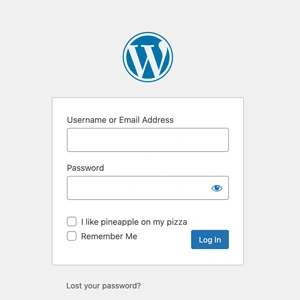
##### Pizza Pledge
Require users to declare their love of pineapple on pizza to log in
[View Code](https://github.com/pluginpalapp/pizza-pledge/)
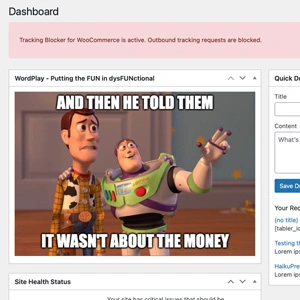
##### Tracking Blocker for WooCommerce®
Blocks outbound tracking requests to WooCommerce® and logs the data.
[View Code](https://github.com/pluginpalapp/tracking-blocker/)
#### Create an account today
Sign up now and watch Plugin Pal bring your ideas to life in record time.
[Get Started](https://pluginpal.app/pricing), WordPress® Plugins Built by Plugin Pal, pluginpal.app, 01jw7cnc9yh9ch9xjbyqpze8gs.