YouTube Video mlXF7CDaebY
## Metadata
- Author: [[YouTube]]
- Full Title: YouTube Video mlXF7CDaebY
- Category: #articles
- Document Tags: [[retention]] [[study]] [[vocabulary]]
- Summary: YouTube Video mlXF7CDaebY
- URL: https://www.youtube.com/watch?v=mlXF7CDaebY
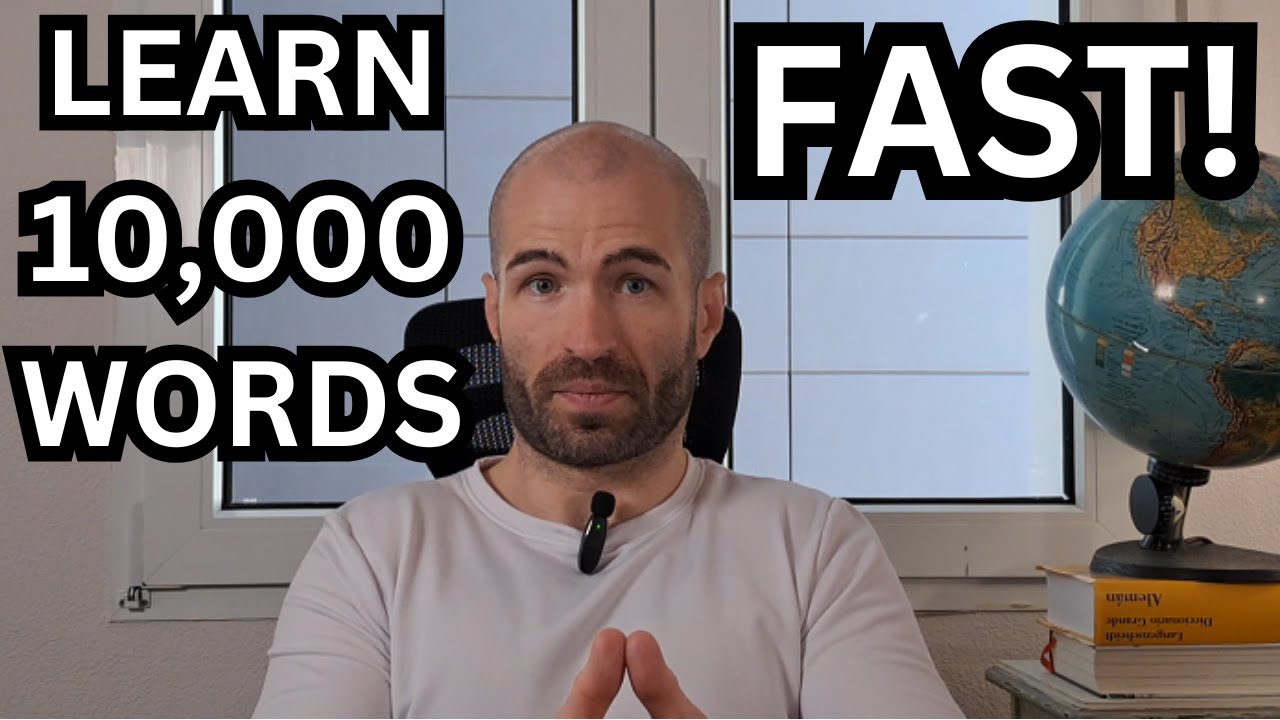
If you don't know enough words, you can'tspeak a language. Period. No amount oflistening, reading, or immersion will saveyou if you don't have the words toexpressyourself. So how do you fix this? In thenext few minutes, I’ll show you thefastest way to memorize thousands ofwords and actually use them inconversation. Let’s get started! My nameis Mika and I am a hyper polyglot. I speaka dozen languages, and I developed a fastand efficient language learning systemin the Innovation Center of theUniversity of Deusto in San Sebastian, Spain.I’ve helped thousands of people learnlanguages fast, and this is the truthabout language learning: vocabulary isthe most important thing. You need tolearn more words, and you need to learnthem faster, because if you don’t knowenough words, you simply can’t understandthe language, and you can’t speak. So youneed to learn more words, but I’m goingto show you exactly what you need to do.
If you ask any languageYouTuber or language guru online how tolearn vocabulary, most of them will say,“Just immerse yourself in the language. Readmore, watch more videos in the language.”Listening more and speaking to people and all of that is fine and it's helpful, but it's very slow.
It's extremely slow, in fact.Reading and listening is, uh, painfully slow when it comes to acquiring vocabulary because you need to already know a lot of vocab to be able to read and listen and understand the language to keep learning.If you want to learn by talking to people, you will learn a few words quickly in the beginning — the ones that you need.You learn really basic vocab very quickly, but then you'll very quickly get stuck.You will stop improving, and you will always stay at the beginner level.
So this is my advice: yes, do all of that — mess yourself, talk to people, read in the language, listen to the language, watch videos — do all of that as much as you want or as much as you can.But make sure you learn vocabulary deliberately. Vocabulary should be your number one priority, because if you don't know the words, you will not be able to speak, and you won't understand what you read, listen to, or watch.So you need to do more vocabulary learning.
So how do you study vocabulary?
The right way, the best way to learnvocabulary and do it fast is by usingword lists. I’m talking about frequencylists: the most common 1,000 words, themost common 2,000 words, 5,000 words,10,000 words,etc. You learn them as fast as youcan. You study them; you see a combinationofmnemonics, word families, spacedrepetition, and speed reading. Let’sstart with wordfamilies. A word family is a group of wordsthat are similar; they’ve got similarroots, and they all look similar, likeorganized, organized, disorganized,
organization, etc. That would be a wordfamily. If you learn words in groups ofsimilar words, you’ll be able to learn alot more words a lot faster because onceyou canrecognize one word, you’ll be able torecognize all the other ones as well. Now,the difficult thing is remembering allthe words, or at least one word of thegroup, and that’s where I recommendusing mnemonicassociations. Mnemonic associations arethe fastest and most effective way tomemorize random words.
That you can't learn logically; there'sno logic behind what it sounds likein a foreign language if that languageis not relatedto the languages you already speak.There's no way to logically figure outthe meaning behind it; you simply have tolearn the new word. Right? So you can usemnemonics for that. Once you've memorizednew words, you need to review them, andthe best way is using example sentences.
For every word you learn, read an examplesentence. This helps you learn in contexthow the word is actually used in reallife, instead of just reading randomarticles or books or things like that. Orwatching videos, you review a list ofexample sentences of all the words thatyou have been learning from the vocablist. This is much more effective andtime-efficient. You also need to applyspaced repetition; you shouldn't just readit once. You should keep rereading thatlist of example sentences again andagain and again. Spaced repetition isextremely important in language learningas well as when learning anything, really.And speaking of really powerfultechniques, active recall is anothertechnique you should be using.
Recall, according to neuroscience, is themost effective way to learn newinformation. This is how top studentsstudy, and it works really well forlanguage learning. To learn a language, you needto translate into the target languageand then check forfeedback. You do this with words andsentences you'vealready seen at least once. Obviously, youcan't translate words into a language ifyou don't know the words beforehand. If youhaven't seen those words before, then, uh,seeing them just once and trying torecall, trying toremember how to say those words in thetarget language, and then checking if yousaid them correctly or not, isextremely effective because your brainis solving a problem and your brain isfilling the gaps. You are, uh, learningfrom your mistakes because you make alot of mistakes when doing this. But youlearn very, very fast by doing this.
This is how top students learn.You review the content you need tolearn once, and then you test yourselfagain and again. Constant testing— and that's it! That's how you learnvocabulary very fast. You use vocabulary.
Lists ordered in groups of similar words,word families. You memorize some of thekeywords using mnemonic associations, andthen you review the list again and again,using examplesentences. Space repetition — you do it notjust once or twice; you do it dozens oftimes throughout several weeks, and youuse active recall to translate those wordsand sentences from your native languageor your working language into the targetlanguage — the language you're trying tolearn. Translate, you test your knowledge.
You translate into the target language,and then check. You keep doing this untilyou've learned the 5,000 or 10,000 mostcommon words, and then you'll be able tounderstand pretty much everything, andyou'll be able to speak fluently. That'sit — that's the fastest way to learnvocabulary in a new language. And again,vocabulary is the most important thingin language learning because if youdon't know the words, you won't be ableto understand or speak. So stop wastingtime and start learning the smart way.You can try my 7-Day challenge if youwant to learn 150 conversationalsentences to become conversational inany language in a week — in seven days.
The link is in the description., YouTube Video mlXF7CDaebY, YouTube, 01kac39mf7svjy1sncpypvkbt6.