YouTube Video pL4xTMww5gs
## Metadata
- Author: [[YouTube]]
- Full Title: YouTube Video pL4xTMww5gs
- Category: #articles
- Document Tags: [[policy]] [[safety]] [[strategy]]
- Summary: YouTube Video pL4xTMww5gs
- URL: https://www.youtube.com/watch?v=pL4xTMww5gs
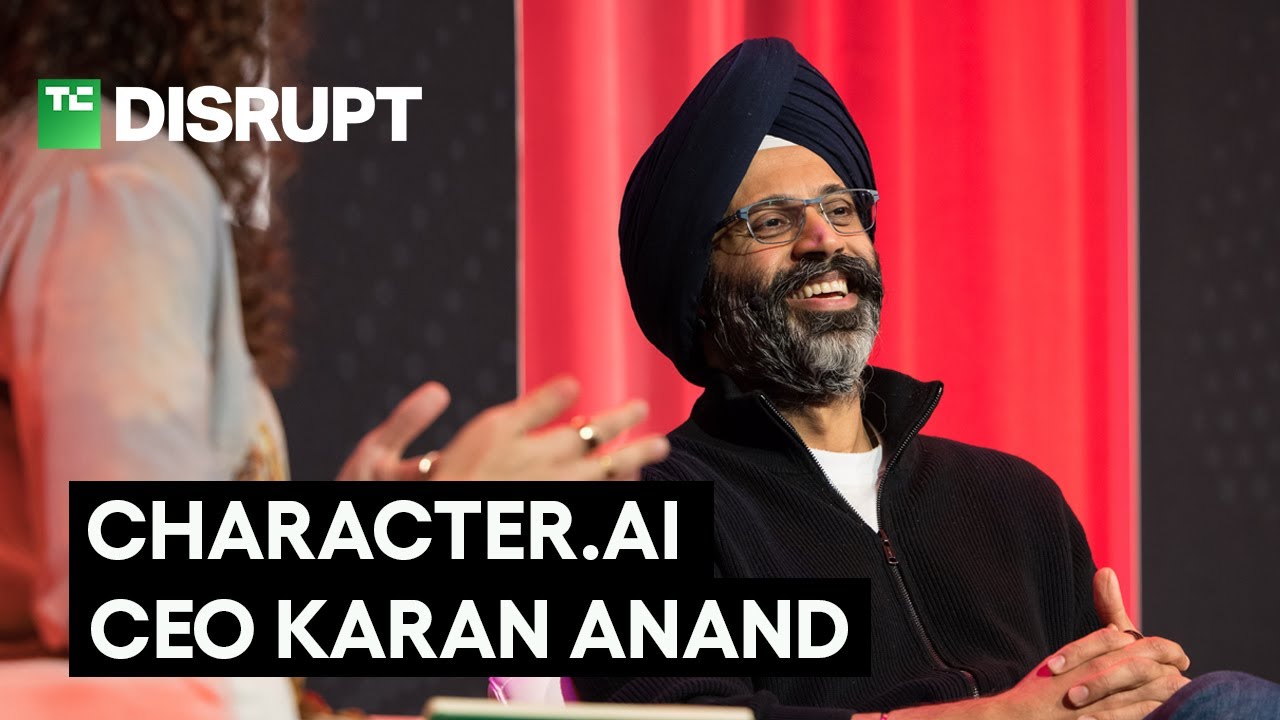
Hello. Hello. Thank you for people who are here. Can I get a round of applause for my guest, please? This is Karan Anand, >> CEO of Character AI. Now, a lot of you have probably heard of Character AI. And I guess Karan, maybe we should just talk about the elephant in the room. We've had a couple of serious lawsuits that are underway after at least two teenagers uh died by suicide after time spent on
the platform. Now this happened before you came to join you came back or you came to lead the company in June this year was it? >> Mhm. >> How are you addressing this? >> Yeah, I think you bring up a very important point Rebecca. uh the idea of safety in the world of AI is a very very rapidly evolving field and do we all fully understand you know how AI is being used how it's being developed I think that's definitely a a question for the entire industry for character AI as
well but open AI meta we're all working uh pretty quickly to understand rapid trait on what it means to to think about the whole notion of end to end safety for longitudinal long conversations with chat bots uh all up but I think the the way I look at it is most technology especially something like AI which is has no prior with the speed at scale at which it's it's growing we have to lean in to uh work very closely with regulators to make sure this is something we understand really well
>> to answer your question on how I see it uh I walked in with my eyes open like this is the most fascinatingly hard technical problem in the world that we are uh solving together and uh luckily uh I inherited something fantastic fantastic at character where we've been doing a lot of cutting edge work on safety for way before I even joined. >> So last 12 months uh I think character is a AI is the only product I know of which offers a very different under 18 experience exactly for that reason which is we believe that uh the platform has
to be open to everyone but there is different experiences we can give to teen users than over 18 users. >> Yes. And you've actually had some news that came out today that I covered this morning very early. Uh and I would love you if you can tell everyone about this because this is actually pretty big news and I think it will have some pretty serious implications. >> Indeed. Uh so this morning we announced that uh character AI in fact we had three pieces of the announcement this morning. We announced character AI will no longer uh allow chatbot conversations for teen users on our platform and it's
a pretty big bold statement to make uh in the industry and hence it's a news way beyond character. uh we we hope that this gets the right conversations going uh in across the whole industry and I would be very curious to see you know what's happening in open meta as they're looking at this news on what uh our decision means to the broader industry but our our belief comes from everything we've done in the last uh over 12 months which is we've always had a very different under 18 experience to start with and today we're taking the next step forward where we believe we can
serve our mission of having AI entertainment done in far better experienc experiences which are multimodal. So audio video, audio books, short videos, AI based feed, there's so many more amazing technologies available thanks to all the research that's happened that that is a much better way to serve AI entertainment than only giving access to chat bots. So I think that's a pretty big announcement that we made today and then with that we also are coupling with two important things. One is when users say we are over 18, we can assure that they actually over 18.
So we're rolling out a whole host of age assurance and age verification uh capabilities on the platform. Again, something way ahead of what anyone else uh needs us to do. So it's one of the things we believe in doing what's right for the community, especially in a space like AI where a lot is still unknown. >> Mhm. >> And I'll cover the third part real quick as well. Uh I'm sure a lot of you are working in the space of AI and AI is a very rapidly evolving field and our
changes of safety is not a onetime effort. We want to make sure we take all the learnings we've had but start partnering with industry. So we're creating this thing called the AI safety lab. It's a nonprofit that we are partnering with industry uh contributors from a whole host of academia researchers and other commercial companies as well to make sure we can advance what does safety mean in the world of AI. >> Yeah. Yeah, this is um it's really it's a it's a positive next step. I think I think a lot of people are seeing the the
effect that AI companions, AI chatbots are having on people at large, but especially teenagers, and they're not very happy with it. Um someone actually stopped me, a former co-orker stopped me about this news and said that this will save lives. So, I think that that's really important and uh in terms of setting an industry uh standard. But I also wanted to ask you, you know, I think yesterday, Senators Holly and Blumenthal, they um they introduced or they're planning to introduce some legislation that would ban AI companion
chat bots for children. Did you know this was coming? >> Uh no, we did not know this was coming and we're still uh reviewing the bills that that were proposed yesterday. But at the outset, I think I would really want to uh applaud Senator Holly and his co-sponsor uh Senator Benal as well because the meat of the content of the B bill sounds very similar to the announcements we already making today. uh and we're looking forward to an opportunity to engage with them and go lean in because one thing I've learned
and having worked in social media world for a very long time uh one biggest learning I had is you cannot take trust and safety and fix it after you build a very large platform. So the fact that we can engage with regulators we can engage with academia at this point I think is a is a right way to build AI at the get-go to be safer and smarter and engaging versus those things being trade-offs. So, uh, I'm looking forward to actually reading through the whole bill and and understanding what what it means to us, but industry as a whole.
>> Interesting that you say though that you can't kind of backtrack, right? So, like obviously you worked at Meta before. Meta's had some pretty bad press recently about how they allow their chat bots to talk to children. They've since changed their internal guidelines apparently, but long story short, they were allowed to have sensual romantic chats with children. Uh, which is, you know, pretty shocking I think. Uh, What do you like h how do you see the industry as a whole approaching this? Do
you think they're being irresponsible? >> I think the learning we've had is you have to treat your teen users very differently than over 18 users. And that's the reason why even though you know we're a very small startup, we're a 70 people startup today, we have overinvested in creating a very different safe experience for under 18 users because that's the responsible thing to do. to your point >> uh now larger companies have a lot more resources to throw at it and I I've seen some you know very very cutting edge
work coming out of open AI research on the work they think doing on things like psychosis and understanding mental health issues and I really hope that that becomes mainstream and the real use of AI to go solve these problems in the right way so overall I think our stance uh which is the reason why I'm very proud of the team at character which I'm sure they're their hard days when we are doing both underrating work and over 18 work but I think we responsibly want to keep investing in something like that because we don't want to look back five years and saying oh wow we could have
done built this differently. >> Yeah I mean I think it's interesting you say that you know with under 18s you have to do this. I think that what we've learned from the social media era is yeah, this, you know, technology has an outsized impact on teen mental health, but what we've also learned is that companies while they may have the resources to combat this, they also have the money to pay off whatever settlements like they don't need to do it, they don't need to be responsible because they will still have users coming to their platform. We're all still on Facebook, right? Or maybe not Facebook, but um yeah, what do you think
about that? I mean, like that you're taking a risk here. You told me previously that when you implemented quite a few of your parental controls and um and other safeguards for under 18s, you lost uh millions of users. And I can only imagine this will lose you some more. They might just go over to OpenAI where they can talk to Chat GBT at Nauseium. >> Yeah, Rebecca, I have a six-year-old. Uh so as a parent myself, I take my job very very seriously. That's the reason why I'm very very proud of the
announcements we're making today because uh we can optimize for short-term profits. Anyone can and we understand investor pressure. We all understand board pressure. We understand Wall Street pressure. But the magnitude of AI's impact in our lives is so large it's kind of even hard to to wrap our heads around it that if we don't take the effort to go build this right, uh we will all regret it. That's the reason why uh you know I'm I'm keep going back to the point of saying I'm very very proud of the team which actually takes these challenges and yes to your earlier
point we did lose a lot of users back in January February when we had a very different under 18 experience which is far more constrained than what we offered over 18 and as we look back I think that's the right thing we did back then and uh today's decisions are one step forward on that uh luckily though I'm also very very bullish on the power of technology so the reason why today's announcements um you know it's the right time to do it is the team has worked on insane amount of cutting edge audio
video models by the way a lot of them are open source now so you can actually use a lot of these video tech that we now know you don't have to give chat bots as text for people to have entertainment >> you can create short videos you can remix videos you can create your story books you can have audio books which you can interact with there's so many cool ways to interact so let's lean on technology and innovation as a way to go circumvent because most of the industry ends up making this a trade-off. You can either be safe or you can be engaging. I think what we've learned is how to break those trade-offs.
>> Yeah. And I do want to talk a little bit more about the way that you're kind of positioning uh character AI as, you know, more of a role playing entertainment platform than a companion chatbot platform. But before I do, you know, you are still allowing these kinds of open-ended chats with adults. This is not not a problem for adults, right? Like I know Sam Alman says we want to treat adults like adults, but like still people are uh having you know there's bad side effects to constantly being validated or or or you know spending all
of your time chatting immersed in this kind of a reality essentially. So why you know why doesn't it matter for adults? >> I think uh safety applies to adults as well. There should be no question about whether safety applies to under 18 or over 18. I think that's that's not a not even a choice. It applies across the board. I think under 18 is a far more uh sensitive audience than over 18. With over 18, our stance is not that this is free-for-all. We don't have animated sex bots. We do not do the NSFW chats. And
that's a both >> I'll say that for Grock. [laughter] >> I was trying not to use names of my friendly competitors, but >> I'll throw names out any >> I'm glad you did. But I think that's that's a very clear business decision we made. We do not want to be the NSFWX chat app. uh because we're trying to build a much broader entertainment platform. So think of Roblox, think of Netflix. That's how we see ourselves. And luckily we are the leading AI entertainment platform today and we do that. Uh yes, I think over 18 can definitely do more but we have very
clear content moderation and principles for what can happen even for over 18. So explicit sexual conversations, we still ban them. Extreme violence, we still ban them. Uh but we allow people to express themselves through storytelling and roleplay. Uh vampire is a very big theme especially given Halloween this week. A lot of uh conversations this week happened to be around Halloween. If people are talking about zombies and blood and gore, it's okay. I'm I'm I'm not going to censor that. >> Yeah. >> But uh we definitely draw some lines. >> Okay. So yeah, talk to me a little bit more about this. So what does it mean to
have a role playing entertainment platform? You said you've talked to me a lot about the new feed. So basically you can um you know create you can use whatever roleplaying character you've you've created or one that you're playing with and you can um create video out of them and post it to a feed and others can interact with it. Is that right? >> It is that's a pretty good summary actually. So why do people come to character AI? Uh and it's been you know the product's been around for over three years and people want a creative outlet.
Entertainment is a very core part of what makes us human. And when when users come up to character AI, they really want to explore this world building paradigms. 3 years ago, the only way they could do that was to have a chatbot. And it's kind of ironic like when you look at most AI products today are still a chatbot. The technology has come so much further since then that you can actually express yourself through interactive story books, interactive audio books. No longer do I need to read or watch a movie somebody else created. I can watch a scene and real time with
where geni video tech is today. You can remix the entire scene to whichever ending you want. That's what users are doing on the platform. They start with a scene and they role playing role playing. Think of Dungeons and Dragons. You like I don't like this ending. I want to have a different ending. You can prompt the model and it'll real time generate an entirely different ending. And that's what people post in feed. You see my feed, you're like, "Wow, I like the different ending." But I would love for um my favorite example even though it's not on the platform anymore is uh
how should Game of Thrones end? >> Oh god. >> Should Daenerys die? Should Jon Snow die? Now you can have every version of that story if you wanted to. >> Okay. Um can can you have every version of that story? So, I know that character has had some of that story specifically because I know you've had some issues with copyright and you've recently had to remove like a bunch of Disney characters which, you know, according to your Reddit page, really pissed some people off. So, what how are you Yeah. Like what how are you thinking about that? >> I walked straight into that, didn't I?
>> Yeah. Uh, also uh I think I think it's a the reason I do want to talk about this. I think it's a very important uh part of evolution of the industry. What does IP and copyright mean? In a world where somebody watches Game of Thrones, Game of Thrones and their fans really want to take the conversation forward. They really want to come and engage on a platform on what would happen if and these are, you know, all the content on our platform is user generated content. So users want to bring their imagination and and these are huge fans of of all of
these big uh IP houses. And our goal is like hey if the user wants to go create this bring their own characters they should be allowed to do it and understandably so a lot of the copyright holders don't yet understand what is in the world of genai copyright versus fanfiction versus UGC and I think the industry is still still struggling that that's the reason I walked into that example is uh we honor DMC takedown so when Disney asked us to take all the characters down we immediately did uh
and the users then get you know obviously kind of hurts the the user sentiment but users like, okay, I'm going to still role play. I'm going to still figure out other ways to go express my creativity. So, let's do that. But I'm hoping that in the coming weeks, months, years, we're able to work with a lot of the IP holders to saying this is the best way, especially with Gen Z and Gen Alpha, for you to nurture your fan fans here. Like these people will tell you what how Game of Thrones should have ended. >> Yeah. Well, existing IP is huge as we can all tell from the non-stop like
onslaught of our movies and our TV shows. Just the same stuff over and over and again are is like will you have to raise more money to to be able to get those IP licenses. Like when I when I talk to AI entertainment companies, a lot of the the things they spend their money on is is those licenses and trying to do those deals. >> Any investors in the room? I'm I I will happily hand my business cards out. But uh yes, I think the this is this is definitely a very expensive industry to be in. AI serving AI itself is very very
expensive than anything we've done in the past. Those to tokens do cost a lot of money. Uh so the good thing is we started focusing heavily on unit economics and monetization. So this year the team has done fantastic work in dialing up the subscriptions, advertising and we're looking at other ways to tap into the creator economy to increase our own monetization. So we rely less on external funding. >> But that being said, given how expensive this is and how much demand there is for it, we definitely are open to conversations with both investors but
also distribution partners, IP partners. But ultimately the way this works, Rebecca, in my opinion, is there has to be enough revenue sharing that's happening. So versus it just being funding, funding, funding, you're buying at one time, there has to be a very clear ref share. So this is an ongoing economy that we end up building and yeah, the world will look very different. uh and the way money gets cut will look very different but my my hope is that industry will very quickly wrap their heads around what does IP look like what does rev share look like and with the role of creators platforms and
the IP holders and the users in this new fully genai powered platform >> when you say revshare do you mean like with some of the creators on your platform as well >> indeed so we so one of the little known secrets about what makes character so sticky and so powerful is we have 3 million creators on the platform platform and they're the ones who creating the characters. So yes, you and I can walk up to the platform, we can co-create a new character and there 100 million those characters, but the most engaging ones come from the creators.
And today these creators are doing amazing work in writing the lore, the backstory, the avatars for these uh characters so people can visualize what they who they're talking to. But we want to be able to open up economic opportunities for them. So when their characters, their videos are being used, they should be able to participate through inapp purchases, virtual currency. And I think that's the path forward for us. >> Inapp purchases, virtual currency. You're getting into dicey territory again. I believe the FTC just get didn't they recently uh do an investigation or
there was a settlement with Epic Games because of um inapp purchases being potentially manipulative or or deceptive. And it's just, you know, it's uh it's it's another dicey field to get into. How do you protect yourself? I think we always if you're putting if you're on the cutting edge of technology, you'll always be be dealing with what is the right way to do it. The way we handle we I think we've done a fantastic job in handling safety. I think similarly there are a lot of good ways to co- handle monetization as well where creators do get to participate. So
it's less about typical games where doing a lot of inapp purchase. It's about how do you do true creator tipping. So creator tipping is an example of if you're creating content, you could be you'd be tipping the creator for creating more content. Uh that's an example of you can it's still virtual currency >> and still inapp purchase but it's not the traditional gaming style inapp uh buying skins or buying swords though I have no issues against that either but that's an example of there are other ways to go solve and in all of these cases we look ask the same question is
there a way to break this trade-off >> yeah okay so as as you make this pivot um this switch to more of an entertainment platform obviously there's there there's going to be so many iterations of this like you have to be quick on your Do you think that this will be enough to keep users under 18 users specifically on the platform? Do you think there'll be a churn? There will be like a different set of users that are attracted to the platform instead. >> Yeah, over the last uh six months we've launched a lot of very cool new features. So what you know three years
ago walking up to a chatbot was very novel but over the last six months we've launched something called Avatar FX. uh this is before Google VO3 sort of none of these things existed and we had a full UGC powered video creation tool working on the platform at scale. Similarly, we launched a whole bunch of video models. We launched streams, we launched scenes. Uh a lot of these are in my opinion far better ways to explore creativity and do role playing in gaming than the textbox based chat were. So I'm
I'm very very hopeful that the innovation that the team has been doing actually lends us to be uh on a cutting edge of what entertainment could be versus what cool what was cool 3 years ago in in the world of entertainment which chatbots >> you know so there's an ability to obviously as we talked about scroll on this feed you've once told me that you want to end doom scrolling I guess like okay so maybe under 18 teens can't spend hours upon hours having an open-ended role- playinging chat But is it better
that they're just doing like Tik Tok for fiction? >> I have very strong feelings about doing scrolling. Uh coming from a past life, uh we definitely and that's the reason that our entire feed is not designed to be infinitely scrollable content of algorithms feeding you content. I think there's now enough studies. >> Then how will you keep people engaged? How how could you possibly >> because you have to give them creative outlets to go create the story, be part of the story, immerse. So think of the examples I talked about. you so you see a short video, you don't want to say,
"Hey, go scroll, find the next one, find the next one." You want them to jump in and create their next turn of the of the story. So, I think the more we lean into interactivity and creation, the better it is for both, you know, the grays, overall health, but also that is what geni finally does, which was impossible in the past. The reason at MEA and you know, Tik Tok, all of us, all we could do is we could use ML to just tell you what next content to watch. which NI we don't need to wait for that we can give you the tools to go create the content
that you want to play in. So everything that used to be just dumb consumption can very rapidly shift to interactive entertainment. I think that is finally technically possible. Still pretty hard still pretty expensive but I think it's finally possible and Katya happens to be on a very cutting edge of making that possible. >> Okay. If you have any predictions for how you think AI is going to change the entertainment industry going forward. I'd love to hear them. Oh, I have such strong opinions on that one. Uh, but specul, you know, predicting anything in
the world of AI is is is a fool's errand. So, but there are three things which are which are relatively safer bets to make. One, if you genuinely believe the world of is a warning to AGI, people will have more time. In the world of more time, entertainment and entertainment experiences will become even more critical to get right than in the world of you know last 10 years where all of these big companies Google, Mera, Snap, all of us are competing for the same four hours of time people will have more time. So I think one is the
share of the pie is increasing for time for entertainment. The second thing is I think and there's enough studies after studies the world of doom scrubbing is gone because people have realized that if all you're doing is consuming content one way you actually your brain cells do start getting weaker. >> So and most people and that's the reason why on social media the time spent is actually declining especially with the younger audiences because they want to be creating they do not want to be consuming. So that's that second trend uh on its own would not do much except for the third part which is genai allows
you to infinitely remix the content and create the content at a much cheaper cost which is the last part which is uh earlier or in the in the last era entertainment was a oneto many broadcast like a big studio >> I love Mr. Beast but Mr. Beast has a whole production army right >> to go create content >> everyone in this room can be Mr. East. >> We're decentralizing entertainment people. Thank you so much, Karan, for coming on the show. >> Thank you for having me. >> One of the Equity podcast hosts. >> Thank you so much., YouTube Video pL4xTMww5gs, YouTube, 01kaby2nvvrft7r7e3a5v2xgxn.