Is WordPress One Big Marshmallow Experiment?

## Metadata
- Author: [[Noel Tock 🇺🇦]]
- Full Title: Is WordPress One Big Marshmallow Experiment?
- Category: #tweets
- Document Note: # Title: WordPress: A Marshmallow Experiment
---
tags: #WordPress #CMS #MarshmallowExperiment
Author: AI Researcher
Source: AI Research Institute
Reference: www.ai-research-institute.com/article123
---
## Table of Contents:
1. Introduction
2. WordPress vs. CMS SaaS Platforms
3. Depth vs. Quick Progress
4. WordPress Challenges and Rewards
5. WordPress in Market Comparison
6. Marshmallow Experiment Parallel
7. Ideal Onboarding for WordPress
8. WordPress Future Trends
9. Market Share vs. Time to Launch
10. User Experience Expectations
## Index Creation:
- Time to First Value (TTFV)
- Aha Moment
- CMS SaaS Platforms
- WordPress possibilities
- Marshmallow Experiment
- Enterprise segment
- User Experience
## 📝 Summary:
WordPress faces challenges with onboarding users due to a more complex setup process compared to CMS SaaS platforms like Wix and Webflow. However, WordPress offers vast capabilities that allow for a highly extendable website in the long run. This situation is compared to the Stanford Marshmallow experiment where delayed gratification can lead to a better outcome. The aim is to improve the WordPress onboarding process to attract more users.
## 📖 Main Content:
WordPress has a slower onboarding process compared to CMS SaaS platforms, but it offers greater depth and flexibility in the long run. This can be likened to the Stanford Marshmallow experiment where only a small percentage of participants were willing to delay gratification for better rewards. WordPress needs to focus on improving the initial user experience to attract and retain more users. The platform should aim to strike a balance between quick setup and complex capabilities to cater to different user needs across consumer, SMB, and enterprise segments.
### 🗒️ Notes
- WordPress offers more depth but has a challenging start compared to CMS SaaS platforms.
- The Stanford Marshmallow experiment parallels the decision-making process in choosing between immediate rewards or delayed gratification.
- There is a need for WordPress to enhance its onboarding process and improve the user experience.
- The future of WordPress may hinge on addressing its initial challenges while maintaining its broad capabilities.
- Market share should not be the sole focus; emphasis should be on reducing time to launch and enhancing user experiences.
## 📖 References:
1. www.ai-research-institute.com/article123
## 🗣️ Paraphrase:
The article highlights the similarities between WordPress's challenges in onboarding users and the Stanford Marshmallow experiment, emphasizing the importance of balancing immediate rewards with long-term benefits. Improving the initial user experience in WordPress is crucial for attracting and retaining a diverse user base across different segments.
## 🧪 Hypotheses:
1. Increased focus on better onboarding could lead to higher user acquisition and retention rates.
2. Enhancements in WordPress's initial setup process could attract users who value both quick progress and extensive capabilities.
3. Tailoring the user experience to different segments can result in a more diverse user base for WordPress.
### 📊 Methodology:
- Conduct user research to understand pain points in the current WordPress onboarding process.
- Implement A/B testing to compare different onboarding approaches and identify the most effective strategies.
- Analyze user feedback and behavior data to continuously improve WordPress's onboarding experience.
### ❓ Questions:
- How can WordPress strike a balance between offering a comprehensive platform and simplifying the onboarding process?
- What strategies can WordPress implement to improve user retention and attract new users?
- How important is the initial user experience in shaping long-term user satisfaction and engagement with the platform?
### 🔮 Future Research:
Investigating the impact of enhanced user onboarding on WordPress's market position and user growth.
Exploring user preferences and expectations in the CMS market to tailor WordPress's features and offerings effectively.
Studying the evolving trends in website creation and content management to predict future demands on WordPress.
### 💡 Implications:
Enhancing WordPress's onboarding process can lead to a more diverse user base and increased user satisfaction, ultimately driving growth and market expansion. By focusing on user experience and usability, WordPress can solidify its position in the competitive CMS market.
### ✅ Logical validity:
The article makes a compelling case for improving WordPress's onboarding process to attract and retain users effectively. By drawing parallels with the Stanford Marshmallow experiment and emphasizing user experience, the arguments presented are logically coherent and supported by relevant insights.
## 🎯 Conclusion:
Improving WordPress's onboarding experience is vital for addressing its initial challenges and attracting a broader user base across different segments. By prioritizing user experience and simplifying the setup process, WordPress can enhance its market position and facilitate user growth in the future.
- Summary: WordPress may be like a marshmallow experiment, offering depth but requiring a painful start. While other platforms provide quick wins, WordPress offers extensive capabilities in the long run. Improving onboarding and focusing on user experience could enhance WordPress's appeal.
- URL: https://x.com/noeltock/status/1774770416550314427?s=12&t=PeT9aZGj5WBhHm3cvTHSsQ
Is WordPress one big marshmallow experiment?
Let's dive in... 🧵

---
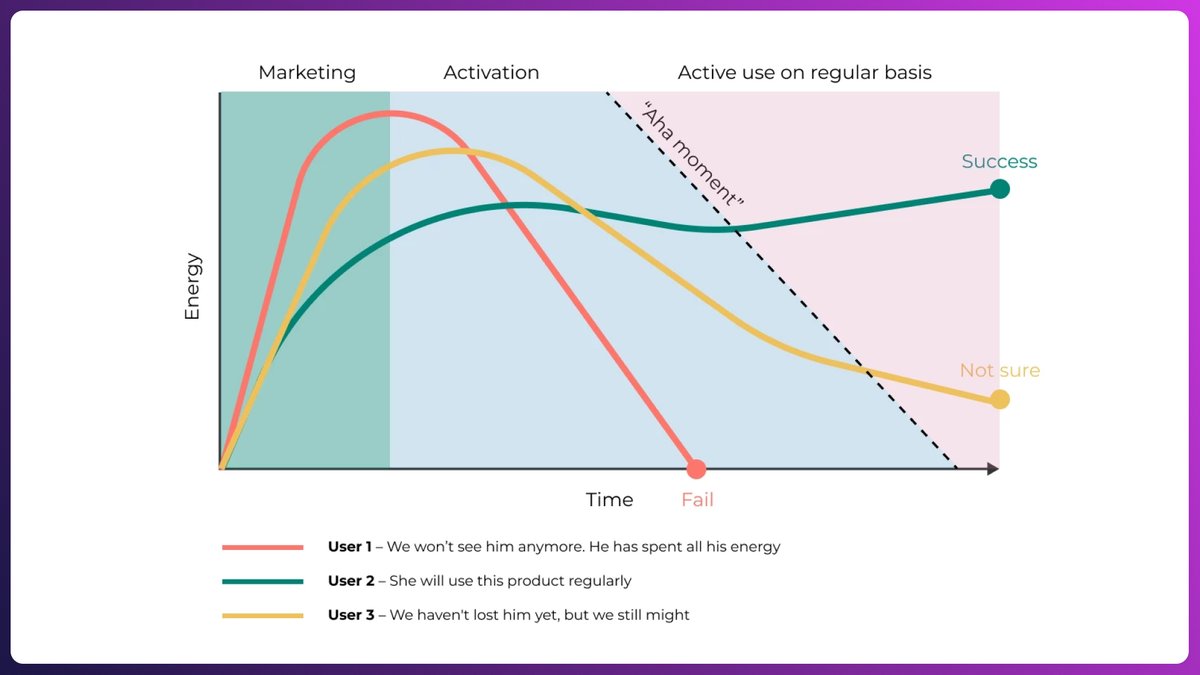
1/ Any online product these days optimises for Time to First Value (TTFV), and subsequent paid subscriptions. This means they try to get the user over the "Aha moment" with as little friction as possible.
---
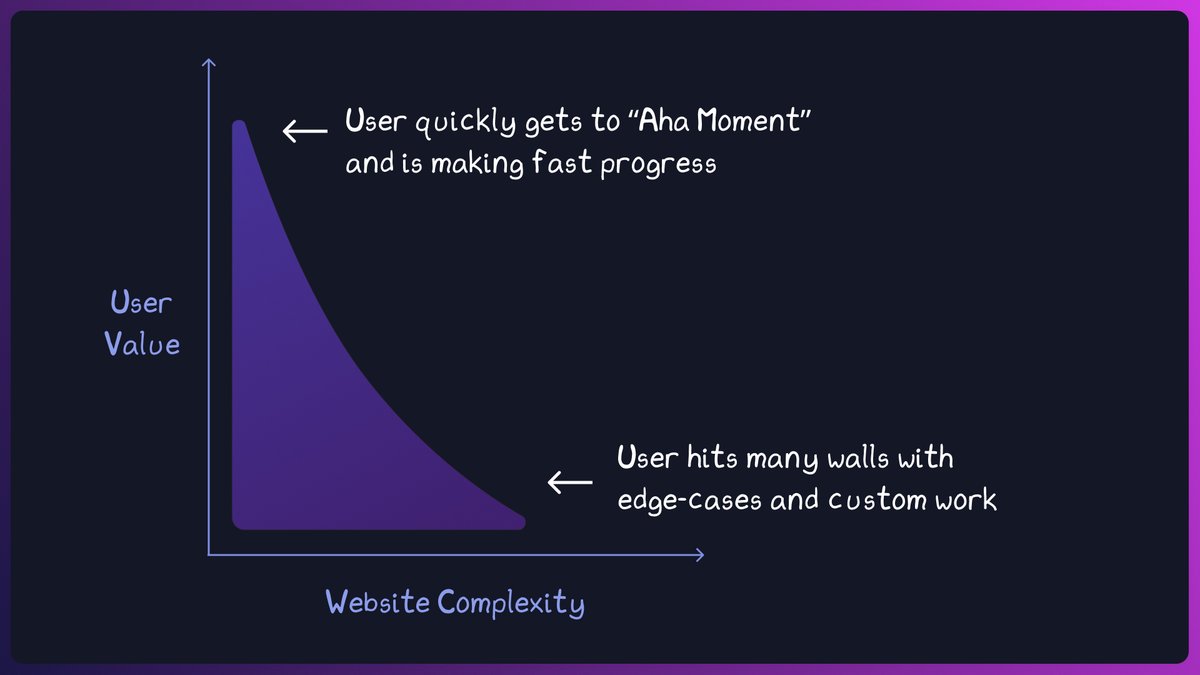
2/ In the CMS SaaS space, you can look at Wix, Webflow, Squarespace etc where you're quick to build-out a basic website (but will fail at later stages; edge-cases, custom functionality, etc.). One can imagine it like so:
---
3/ WordPress I feel, has a lot more depth across the board, however it's a painful start. So if you're willing to stick out the hurdles early on, and to figure out how the ecosystem works, you will be rewarded with infinite possibilites down the road. I imagine this:

---
4/ Merging the two models together, we can observe two things; 1) WordPress is lagging the market in early wins/onboarding, and 2) In the long run, WordPress covers a lot larger surface area of capabilities and possibilities 🌌

---
5/ This reminds me of the Stanford Marshmallow experiment, whereby children were given the option of receiving one marshmallow immediately, or if they waited 15 minutes, receive two. Do you want a simple website right now, or an infinitely extendable one some time later?
---
6/ In the original experiment, how many were willing to go through delayed gratification for a better outcome? Only 30%+. I guess the website/CMS space feels similar 😅 ... whereby many sites rotate to WordPress or Drupal in the end.
---
7/ In an ideal world, WordPress should give new users 2 marshmallows immediately. Best of both worlds achieved through...
→ Better onboarding, educational tracks
→ Strategic product marketing (SMB, headless, etc)
→ Streamlined/first-class tier of plugins (my recent thread)

---
8/ Observation #1: This thread is consumer/SMB-centric. In enterprise, WP is more of a leader, which also leads me to believe the largest (relative) WP commerical expansion in 2024 will come from the enterprise segment.
---
9/ Observation #2: Whilst the "famous WordPress 5-minute installation" still holds true (technically), the idea and edge behind it has been disrupted away. What is the WP 2025 equivalent? The 1-hour site build?
---
10/ We don't need to optimise for market share, but Time to Launch and other top of funnel metrics. This is not about code, but product marketing, positioning, packaging, simplifying, streamlining and more.
---
11/ Users simply expect excellent experiences nowadays. We have seen this across the entire spectrum; iOS, Slack, Shopify, Airtable, Monument Valley etc. We are also capable of that ✨ What's your take?, Is WordPress One Big Marshmallow Experiment?, Noel Tock 🇺🇦, 01htczy9nhh3x5m8mb0jgcmj41.