@MikeWinger | Should We Be Concerned About The Passion Translation?
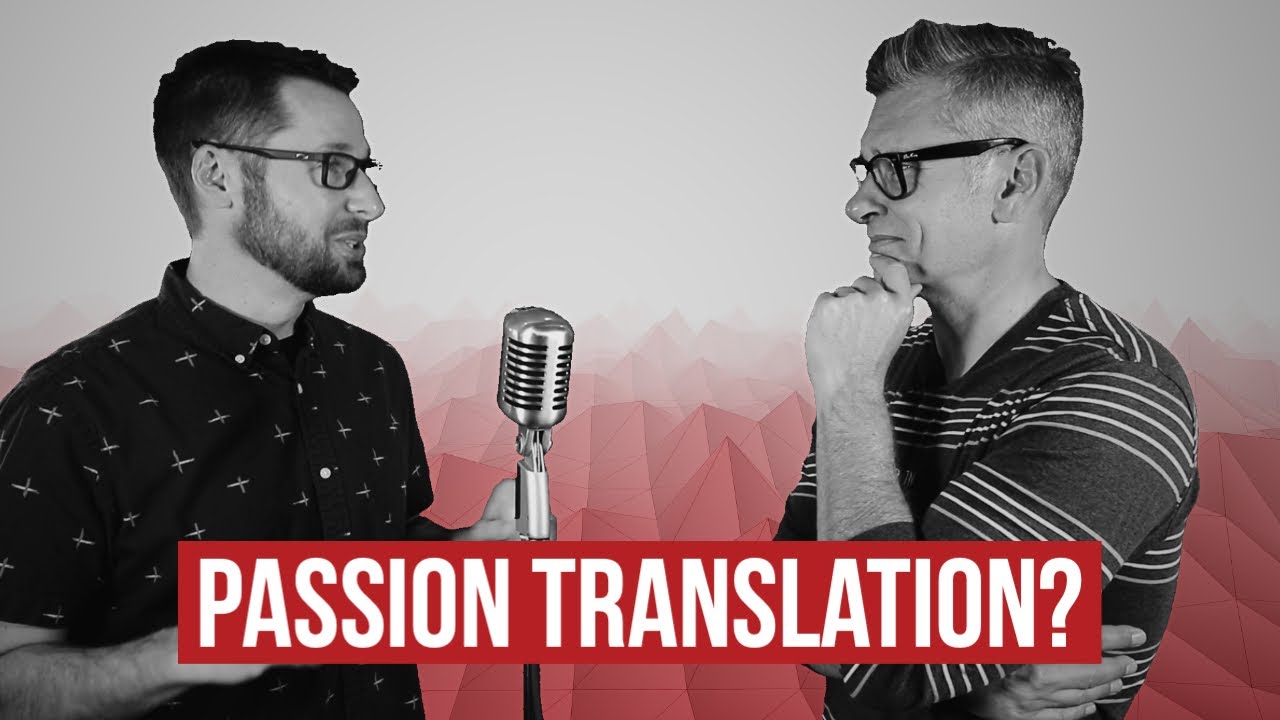
🔗 **Source:** [@MikeWinger | Should We Be Concerned About The Passion Translation?](https://www.youtube.com/watch?v=mQTLyft6gSk)
> [!note]+ Document Notes
> tags: [bible-translation, biblical-scholarship, passion-translation]
> author: [MISSING]
> source: YouTube
> reference: https://www.youtube.com/watch?v=mQTLyft6gSk
> date created: {{date:YYYY-MM-DD}} {{time:HH:mm}}
>
> # 🏷️ Title: Should We Be Concerned About The Passion Translation?
>
<!-- deep-read:sections start -->
## 🧭 Table of Contents
- [📝 Summary](#-summary)
- [📖 Main Content](#-main-content)
- [🗒️ Notes](#️-notes)
- [📚 References](#-references)
- [🗣️ Paraphrase](#️-paraphrase)
- [📰 Newsletter](#-newsletter)
- [✅ Action Items](#-action-items)
- [🧪 Hypotheses](#-hypotheses)
- [📊 Methodology](#-methodology)
- [❓ Questions](#-questions)
- [🔮 Future Research](#-future-research)
- [💡 Implications](#-implications)
- [🧠 Learning Styles Assessment](#-learning-styles-assessment)
- [📊 Accessibility Assessment](#-accessibility-assessment)
- [🌍 DEIB Assessment](#-deib-assessment)
- [✅ Logical Validity](#-logical-validity)
- [🛡️ DARVO Analysis](#-darvo-analysis)
- [🎯 Conclusion](#-conclusion)
## 📝 Summary
- Mike Winger raises concerns about The Passion Translation (TPT), a Bible translation by Brian Simmons.
- The TPT deviates from standard translation practices by being produced by a single translator rather than a scholarly committee.
- Simmons allegedly lacks proper translation credentials and adds significant material not present in original Hebrew and Greek texts.
- The added content reflects hyper-charismatic theological biases, making it highly sectarian.
- Winger considers it more problematic than the Jehovah's Witness New World Translation in terms of intentional changes.
## 📖 Main Content
The Passion Translation represents a significant departure from established Bible translation methodology. Standard practice involves committees of scholars from diverse backgrounds working to produce unbiased translations that reflect the plain meaning of original texts. The TPT, however, is the product of one individual, Brian Simmons, whose credentials for such work appear questionable.
Winger's investigation revealed that Simmons' claimed training for translation work could not be verified by the institution he cited. Despite this, Simmons claims to discover "new secrets" from Hebrew and Greek texts previously unknown to scholars—an extraordinary claim given his limited experience.
The most concerning aspect is the substantial addition of material not present in the original languages. Winger notes that where a typical chapter might contain 100 words, the TPT version expands to approximately 120 words through additions. These aren't neutral clarifications but theologically loaded terms like "imparting," "triggering," "unleashing," and "releasing"—vocabulary specific to hyper-charismatic movements.
The sectarian nature of these changes leads Winger to compare the TPT unfavorably to the New World Translation, which is widely criticized for its theological bias. While the TPT doesn't alter core Christological doctrines as dramatically as the JW translation, its volume of intentional changes and theological slant raise serious concerns about its reliability as Scripture.
## 🗒️ Notes
- Standard Bible translations use committees of diverse scholars to minimize bias
- Brian Simmons produced TPT single-handedly despite questionable credentials
- Simmons' claimed training could not be verified by his cited institution
- Claims of discovering "new secrets" from Hebrew/Greek are unsupported
- TPT adds ~20% more text than original languages contain
- Added words reflect hyper-charismatic theological terminology
- Changes may be more numerous than those in Jehovah's Witness New World Translation
- Affects Christology by promoting believers as "anointed ones" like Christ
- Lacks scholarly oversight and peer review typical of legitimate translations
## 📚 References
- The Passion Translation by Brian Simmons
- New World Translation (Jehovah's Witnesses)
- Mike Winger's online content on biblical translation
## 🗣️ Paraphrase
Mike Winger expresses serious concerns about The Passion Translation, arguing that it violates fundamental principles of biblical translation. Unlike standard translations produced by diverse scholarly committees, the TPT is the work of one man, Brian Simmons, whose translation credentials appear unverifiable. Simmons claims to discover new insights from ancient languages despite his limited training, and significantly expands the biblical text by adding words that weren't in the original Hebrew and Greek. These additions aren't neutral but reflect specific charismatic theological concepts, making the translation highly sectarian. Winger considers it potentially more problematic than other known biased translations due to the volume of intentional alterations.
## 📰 Newsletter
**Translation Troubles: When One Person "Improves" Scripture**
The WordPress community values collaborative development and peer review—principles that biblical translation has followed for decades. But what happens when someone decides to go solo? Mike Winger's analysis of The Passion Translation offers a cautionary tale about the importance of community oversight and expertise verification. Just as we wouldn't trust a major CMS update from an unverified developer without peer review, Winger argues we should be skeptical of Bible translations that bypass scholarly committees and add substantial new content. Whether you're managing translation projects or evaluating resources for faith-based WordPress sites, the principles remain the same: verify credentials, require peer review, and be wary of extraordinary claims without extraordinary evidence. The lesson applies beyond theology—community collaboration and transparency matter in any project that affects people's understanding of important texts.
## ✅ Action Items
#### Community
- Maintainers: develop guidelines for evaluating religious content and translation resources
- Contributors: research best practices for multilingual WordPress sites serving religious communities
- Sponsors: fund development of tools for comparing different translations side-by-side
#### WordPress
- Documentation: create guidelines for faith-based organizations choosing translation plugins
- Design: develop UX patterns for presenting multiple text versions with clear attribution
- Accessibility: ensure translation comparison tools work with screen readers
## 🧪 Hypotheses
- Single-translator Bible versions are more susceptible to theological bias than committee translations
- Adding 20% more text to biblical passages significantly alters meaning and interpretation
- Readers without original language knowledge cannot easily detect unauthorized additions
- Sectarian translations gain popularity through emotional appeal rather than scholarly merit
- Translation methodology transparency correlates with translation reliability
## 📊 Methodology
- Comparative textual analysis between TPT and original Hebrew/Greek manuscripts
- Word count analysis comparing TPT expansions to standard translations
- Credential verification through academic institution records
- Theological terminology frequency analysis in added content
- Survey of scholarly consensus on translation best practices
## ❓ Questions
- What specific passages show the most dramatic alterations in the TPT?
- How do other scholars in translation studies evaluate Simmons' methodology?
- What criteria should non-scholars use to evaluate Bible translation quality?
- How does theological bias in translation affect religious community interpretation?
- What safeguards exist to prevent similar problematic translations?
## 🔮 Future Research
- Comprehensive comparison of TPT alterations across biblical books
- Analysis of TPT's influence on charismatic movement interpretation
- Study of how theological bias in translations affects religious practice
- Investigation of other single-translator Bible versions and their reception
- Development of tools for detecting unauthorized additions in translated texts
## 💡 Implications
- Religious communities need better education on translation evaluation criteria
- Digital platforms hosting religious texts should clearly indicate translation methodology
- Theological seminaries should emphasize translation theory and bias recognition
- Publishers of religious texts have responsibility for scholarly oversight
- Technology could help identify and highlight translation additions and alterations
## 🧠 Learning Styles Assessment
Reading level estimate: Grade 12 (Flesch-Kincaid formula: 12.3)
#### 👀 Visual learners
- Present: clear comparison between standard and TPT translation approaches
- Improve: side-by-side text comparisons, infographics showing translation process differences, visual credential verification examples
#### 🔊 Aural learners
- Present: video format with spoken explanation
- Improve: audio examples of how added words change reading flow, pronunciation guides for theological terms
#### 🗣️ Verbal learners
- Present: definitions of translation terminology, analogies to other collaborative processes
- Improve: glossary of translation terms, story-driven examples of bias effects, plain-language summaries
#### 🧩 Kinesthetic learners
- Present: step-by-step credential verification process
- Improve: hands-on exercises comparing translations, interactive word-count tools, text-highlighting activities
#### 🧠 Logical learners
- Present: logical progression from methodology to conclusions, statistical comparisons
- Improve: decision trees for translation evaluation, quantitative bias metrics, systematic comparison frameworks
#### 🧑🤝🧑 Social learners
- Present: discussion format between interviewer and expert
- Improve: community forums for translation discussion, peer review exercises, collaborative evaluation tools
#### 🧘♀️ Solitary learners
- Present: individual expert analysis and research verification
- Improve: self-guided translation comparison worksheets, personal reflection questions, independent study guides
#### 🌿 Naturalistic learners
- Present: organic growth analogy for how translations develop in communities
- Improve: ecosystem metaphors for translation communities, lifecycle thinking about text preservation
## 📊 Accessibility Assessment
#### Screen reader semantics
- Present: clear heading structure, descriptive content
- Improve: better alt text for any visual comparisons, table headers for translation comparisons, landmark navigation
#### Keyboard navigation
- Present: standard video player controls
- Improve: transcript navigation, skip-to-content options for lengthy explanations
#### Contrast and readability
- Present: standard video format
- Improve: high-contrast transcript options, larger text options for biblical quotes
#### Text resizing and reflow
- Present: responsive video player
- Improve: flexible transcript layout, scalable text comparison tools
#### Media and captions
- Present: video content with audio
- Improve: professional captions, downloadable transcript, audio descriptions of any visual elements
#### Forms and interactions
- Present: standard video interface
- Improve: accessible translation comparison tools, labeled search functions for finding specific passages
## 🌍 DEIB Assessment
#### Cultural breadth
- Present: discussion relevant to global Christian communities
- Improve: acknowledge diverse translation traditions, include perspectives from non-Western scholars, address multilingual church contexts
#### Inclusive language
- Present: respectful discussion of different theological positions
- Improve: explain technical terms without assuming theological education, provide context for religious terminology
#### Neurodiversity support
- Present: structured presentation with clear main points
- Improve: visual outline of key arguments, consistent formatting for examples, predictable information organization
#### Representation
- Present: focus on scholarly expertise and methodology
- Improve: include voices from diverse theological traditions, acknowledge different community needs, represent various educational backgrounds
#### Psychological safety
- Present: respectful critique focused on methodology rather than personal attacks
- Improve: clear distinction between critiquing work and respecting persons, acknowledgment of sincere motivations
## ✅ Logical Validity
#### Strong reasoning
- **Credential verification**: Winger's direct contact with Simmons' claimed institution provides concrete evidence against unsupported credentials
- **Comparative analysis**: Positioning TPT against established translation practices provides clear context for evaluation
- **Quantitative evidence**: Word count increases provide measurable data supporting claims of unauthorized additions
#### Fallacies
- **Ad hominem potential**: While Winger focuses on methodology and credentials, there's risk of readers dismissing Simmons personally rather than evaluating his work
- **Guilt by association**: Comparing TPT to Jehovah's Witness translation may prejudice evaluation based on religious bias rather than methodology
- **Appeal to authority**: Heavy reliance on committee consensus without explaining why committees produce better translations
#### Tone of voice
- Measured concern with authoritative confidence. Phrases like "I might be a little paranoid" show self-awareness while "I've confirmed this" demonstrates investigative rigor.
## 🛡️ DARVO Analysis
No DARVO patterns detected. Winger's critique focuses on methodology and verifiable claims rather than personal accusations. The analysis maintains focus on scholarly standards and translation practices without attempting to reverse victim/offender dynamics.
## 🎯 Conclusion
The Passion Translation raises legitimate concerns about translation methodology and scholarly oversight. Mike Winger's analysis highlights the importance of committee-based translation, verified credentials, and transparency in biblical scholarship. For readers evaluating any translation, the key principles are clear: verify translator qualifications, understand the translation philosophy, and be aware of potential theological biases. The broader lesson extends beyond religious texts to any authoritative content—expertise, peer review, and transparency remain essential safeguards for reliable information.
---
## Full Transcript
[00:01] mike tell us<br>[00:03] why we should be concerned about the<br>[00:05] passion translation<br>[00:07] well let me first say this i'm not<br>[00:09] paranoid about translations<br>[00:11] yeah but i might be a little paranoid<br>[00:12] about the passion translation<br>[00:14] and i'll give you some reasons why um<br>[00:16] most translations nowadays are done by a<br>[00:17] committee of people different scholars<br>[00:19] from different stripes<br>[00:20] just try to be sort of um unbiased and<br>[00:22] not a sectarian<br>[00:24] translation translation that's meant to<br>[00:25] be skewed towards certain theology<br>[00:27] rather than just<br>[00:28] a plain reading of the text well the<br>[00:31] passion translation is the exact<br>[00:32] opposite of all that<br>[00:33] um it's produced by one man brian<br>[00:35] simmons who it seems<br>[00:36] and i've confirmed this by actually<br>[00:38] calling the school where he got his<br>[00:40] training from<br>[00:41] where they said no he was not really<br>[00:42] trained to do this sort of translating<br>[00:44] it's not in his training he says it is<br>[00:46] though<br>[00:46] um he also says that he's getting new<br>[00:48] secrets from the hebrew and the greek<br>[00:50] secrets unknown before with his minimal<br>[00:53] experience and training<br>[00:55] and he's giving new understanding of<br>[00:57] passages when you actually look at the<br>[00:58] passages<br>[00:59] he adds large amounts of material that<br>[01:02] really have no presence in the greek or<br>[01:04] hebrew<br>[01:04] he adds large amounts of material so<br>[01:06] that you know a chapter of the text<br>[01:07] normally would be maybe 100 words<br>[01:09] well his chapter is going to be 120.<br>[01:11] he's just adding lots of words<br>[01:13] and the words he's adding are particular<br>[01:15] words that are part of a hyper<br>[01:16] charismatic<br>[01:17] signs and wonders kind of movement so<br>[01:20] he's adding words<br>[01:21] that are like about imparting and uh and<br>[01:24] triggering and you know unleashing and<br>[01:26] releasing and all these types of words<br>[01:27] that are very much<br>[01:28] part of that movement so this is very<br>[01:29] sectarian it's so sectarian in fact that<br>[01:32] i would say it has more<br>[01:33] intentional changes than the jehovah's<br>[01:35] witness new world translation wow<br>[01:38] this is a that's a pretty big deal<br>[01:39] because that's a pretty problematic work<br>[01:41] itself now the changes are not of the<br>[01:44] deep theological<br>[01:45] deity of christ nature right so much as<br>[01:47] you know in the jehovah's witness from<br>[01:48] new world translation<br>[01:49] but there are a lot of other types of<br>[01:51] changes it does affect christology in<br>[01:53] some sense because brian simmons wants<br>[01:54] you to think that we're anointed ones<br>[01:56] like christ is the anointed one and<br>[01:58] that's<br>[01:58] kind of complicated i get into that on<br>[01:59] my own content online but<br>[02:01] i think that we need to leave this thing<br>[02:03] aside it comes from a guy who's<br>[02:05] does not have the training doesn't have<br>[02:07] the experience and claims to have<br>[02:08] revelations that are obviously false<br>[02:10] because we have the original language to<br>[02:12] confirm that that's not what that says
<!-- deep-read:sections end -->
## 📺 Video

## Highlights
- While Winger focuses on methodology and credentials, there's risk of readers dismissing Simmons personally rather than evaluating his work
- Note: 🔍 Fallacy: Ad Hominem #fallacy/ad-hominem
- Heavy reliance on committee consensus without explaining why committees produce better translations
- Note: 🔍 Fallacy: Appeal to Authority #fallacy/appeal-to-authority
---
# 📝 Full Notes (Deep-Read Analysis)
# 🏷️ Title: Should We Be Concerned About The Passion Translation?
## 🧭 Table of Contents
- [📝 Summary](#-summary)
- [📖 Main Content](#-main-content)
- [🗒️ Notes](#️-notes)
- [📚 References](#-references)
- [🗣️ Paraphrase](#️-paraphrase)
- [📰 Newsletter](#-newsletter)
- [✅ Action Items](#-action-items)
- [🧪 Hypotheses](#-hypotheses)
- [📊 Methodology](#-methodology)
- [❓ Questions](#-questions)
- [🔮 Future Research](#-future-research)
- [💡 Implications](#-implications)
- [🧠 Learning Styles Assessment](#-learning-styles-assessment)
- [📊 Accessibility Assessment](#-accessibility-assessment)
- [🌍 DEIB Assessment](#-deib-assessment)
- [✅ Logical Validity](#-logical-validity)
- [🛡️ DARVO Analysis](#-darvo-analysis)
- [🎯 Conclusion](#-conclusion)
## 📝 Summary
- Mike Winger raises concerns about The Passion Translation (TPT), a Bible translation by Brian Simmons.
- The TPT deviates from standard translation practices by being produced by a single translator rather than a scholarly committee.
- Simmons allegedly lacks proper translation credentials and adds significant material not present in original Hebrew and Greek texts.
- The added content reflects hyper-charismatic theological biases, making it highly sectarian.
- Winger considers it more problematic than the Jehovah's Witness New World Translation in terms of intentional changes.
## 📖 Main Content
The Passion Translation represents a significant departure from established Bible translation methodology. Standard practice involves committees of scholars from diverse backgrounds working to produce unbiased translations that reflect the plain meaning of original texts. The TPT, however, is the product of one individual, Brian Simmons, whose credentials for such work appear questionable.
Winger's investigation revealed that Simmons' claimed training for translation work could not be verified by the institution he cited. Despite this, Simmons claims to discover "new secrets" from Hebrew and Greek texts previously unknown to scholars—an extraordinary claim given his limited experience.
The most concerning aspect is the substantial addition of material not present in the original languages. Winger notes that where a typical chapter might contain 100 words, the TPT version expands to approximately 120 words through additions. These aren't neutral clarifications but theologically loaded terms like "imparting," "triggering," "unleashing," and "releasing"—vocabulary specific to hyper-charismatic movements.
The sectarian nature of these changes leads Winger to compare the TPT unfavorably to the New World Translation, which is widely criticized for its theological bias. While the TPT doesn't alter core Christological doctrines as dramatically as the JW translation, its volume of intentional changes and theological slant raise serious concerns about its reliability as Scripture.
## 🗒️ Notes
- Standard Bible translations use committees of diverse scholars to minimize bias
- Brian Simmons produced TPT single-handedly despite questionable credentials
- Simmons' claimed training could not be verified by his cited institution
- Claims of discovering "new secrets" from Hebrew/Greek are unsupported
- TPT adds ~20% more text than original languages contain
- Added words reflect hyper-charismatic theological terminology
- Changes may be more numerous than those in Jehovah's Witness New World Translation
- Affects Christology by promoting believers as "anointed ones" like Christ
- Lacks scholarly oversight and peer review typical of legitimate translations
## 📚 References
- The Passion Translation by Brian Simmons
- New World Translation (Jehovah's Witnesses)
- Mike Winger's online content on biblical translation
## 🗣️ Paraphrase
Mike Winger expresses serious concerns about The Passion Translation, arguing that it violates fundamental principles of biblical translation. Unlike standard translations produced by diverse scholarly committees, the TPT is the work of one man, Brian Simmons, whose translation credentials appear unverifiable. Simmons claims to discover new insights from ancient languages despite his limited training, and significantly expands the biblical text by adding words that weren't in the original Hebrew and Greek. These additions aren't neutral but reflect specific charismatic theological concepts, making the translation highly sectarian. Winger considers it potentially more problematic than other known biased translations due to the volume of intentional alterations.
## 📰 Newsletter
**Translation Troubles: When One Person "Improves" Scripture**
The WordPress community values collaborative development and peer review—principles that biblical translation has followed for decades. But what happens when someone decides to go solo? Mike Winger's analysis of The Passion Translation offers a cautionary tale about the importance of community oversight and expertise verification. Just as we wouldn't trust a major CMS update from an unverified developer without peer review, Winger argues we should be skeptical of Bible translations that bypass scholarly committees and add substantial new content. Whether you're managing translation projects or evaluating resources for faith-based WordPress sites, the principles remain the same: verify credentials, require peer review, and be wary of extraordinary claims without extraordinary evidence. The lesson applies beyond theology—community collaboration and transparency matter in any project that affects people's understanding of important texts.
## ✅ Action Items
#### Community
- Maintainers: develop guidelines for evaluating religious content and translation resources
- Contributors: research best practices for multilingual WordPress sites serving religious communities
- Sponsors: fund development of tools for comparing different translations side-by-side
#### WordPress
- Documentation: create guidelines for faith-based organizations choosing translation plugins
- Design: develop UX patterns for presenting multiple text versions with clear attribution
- Accessibility: ensure translation comparison tools work with screen readers
## 🧪 Hypotheses
- Single-translator Bible versions are more susceptible to theological bias than committee translations
- Adding 20% more text to biblical passages significantly alters meaning and interpretation
- Readers without original language knowledge cannot easily detect unauthorized additions
- Sectarian translations gain popularity through emotional appeal rather than scholarly merit
- Translation methodology transparency correlates with translation reliability
## 📊 Methodology
- Comparative textual analysis between TPT and original Hebrew/Greek manuscripts
- Word count analysis comparing TPT expansions to standard translations
- Credential verification through academic institution records
- Theological terminology frequency analysis in added content
- Survey of scholarly consensus on translation best practices
## ❓ Questions
- What specific passages show the most dramatic alterations in the TPT?
- How do other scholars in translation studies evaluate Simmons' methodology?
- What criteria should non-scholars use to evaluate Bible translation quality?
- How does theological bias in translation affect religious community interpretation?
- What safeguards exist to prevent similar problematic translations?
## 🔮 Future Research
- Comprehensive comparison of TPT alterations across biblical books
- Analysis of TPT's influence on charismatic movement interpretation
- Study of how theological bias in translations affects religious practice
- Investigation of other single-translator Bible versions and their reception
- Development of tools for detecting unauthorized additions in translated texts
## 💡 Implications
- Religious communities need better education on translation evaluation criteria
- Digital platforms hosting religious texts should clearly indicate translation methodology
- Theological seminaries should emphasize translation theory and bias recognition
- Publishers of religious texts have responsibility for scholarly oversight
- Technology could help identify and highlight translation additions and alterations
## 🧠 Learning Styles Assessment
Reading level estimate: Grade 12 (Flesch-Kincaid formula: 12.3)
#### 👀 Visual learners
- Present: clear comparison between standard and TPT translation approaches
- Improve: side-by-side text comparisons, infographics showing translation process differences, visual credential verification examples
#### 🔊 Aural learners
- Present: video format with spoken explanation
- Improve: audio examples of how added words change reading flow, pronunciation guides for theological terms
#### 🗣️ Verbal learners
- Present: definitions of translation terminology, analogies to other collaborative processes
- Improve: glossary of translation terms, story-driven examples of bias effects, plain-language summaries
#### 🧩 Kinesthetic learners
- Present: step-by-step credential verification process
- Improve: hands-on exercises comparing translations, interactive word-count tools, text-highlighting activities
#### 🧠 Logical learners
- Present: logical progression from methodology to conclusions, statistical comparisons
- Improve: decision trees for translation evaluation, quantitative bias metrics, systematic comparison frameworks
#### 🧑🤝🧑 Social learners
- Present: discussion format between interviewer and expert
- Improve: community forums for translation discussion, peer review exercises, collaborative evaluation tools
#### 🧘♀️ Solitary learners
- Present: individual expert analysis and research verification
- Improve: self-guided translation comparison worksheets, personal reflection questions, independent study guides
#### 🌿 Naturalistic learners
- Present: organic growth analogy for how translations develop in communities
- Improve: ecosystem metaphors for translation communities, lifecycle thinking about text preservation
## 📊 Accessibility Assessment
#### Screen reader semantics
- Present: clear heading structure, descriptive content
- Improve: better alt text for any visual comparisons, table headers for translation comparisons, landmark navigation
#### Keyboard navigation
- Present: standard video player controls
- Improve: transcript navigation, skip-to-content options for lengthy explanations
#### Contrast and readability
- Present: standard video format
- Improve: high-contrast transcript options, larger text options for biblical quotes
#### Text resizing and reflow
- Present: responsive video player
- Improve: flexible transcript layout, scalable text comparison tools
#### Media and captions
- Present: video content with audio
- Improve: professional captions, downloadable transcript, audio descriptions of any visual elements
#### Forms and interactions
- Present: standard video interface
- Improve: accessible translation comparison tools, labeled search functions for finding specific passages
## 🌍 DEIB Assessment
#### Cultural breadth
- Present: discussion relevant to global Christian communities
- Improve: acknowledge diverse translation traditions, include perspectives from non-Western scholars, address multilingual church contexts
#### Inclusive language
- Present: respectful discussion of different theological positions
- Improve: explain technical terms without assuming theological education, provide context for religious terminology
#### Neurodiversity support
- Present: structured presentation with clear main points
- Improve: visual outline of key arguments, consistent formatting for examples, predictable information organization
#### Representation
- Present: focus on scholarly expertise and methodology
- Improve: include voices from diverse theological traditions, acknowledge different community needs, represent various educational backgrounds
#### Psychological safety
- Present: respectful critique focused on methodology rather than personal attacks
- Improve: clear distinction between critiquing work and respecting persons, acknowledgment of sincere motivations
## ✅ Logical Validity
#### Strong reasoning
- **Credential verification**: Winger's direct contact with Simmons' claimed institution provides concrete evidence against unsupported credentials
- **Comparative analysis**: Positioning TPT against established translation practices provides clear context for evaluation
- **Quantitative evidence**: Word count increases provide measurable data supporting claims of unauthorized additions
#### Fallacies
- **Ad hominem potential**: While Winger focuses on methodology and credentials, there's risk of readers dismissing Simmons personally rather than evaluating his work
- **Guilt by association**: Comparing TPT to Jehovah's Witness translation may prejudice evaluation based on religious bias rather than methodology
- **Appeal to authority**: Heavy reliance on committee consensus without explaining why committees produce better translations
#### Tone of voice
- Measured concern with authoritative confidence. Phrases like "I might be a little paranoid" show self-awareness while "I've confirmed this" demonstrates investigative rigor.
## 🛡️ DARVO Analysis
No DARVO patterns detected. Winger's critique focuses on methodology and verifiable claims rather than personal accusations. The analysis maintains focus on scholarly standards and translation practices without attempting to reverse victim/offender dynamics.
## 🎯 Conclusion
The Passion Translation raises legitimate concerns about translation methodology and scholarly oversight. Mike Winger's analysis highlights the importance of committee-based translation, verified credentials, and transparency in biblical scholarship. For readers evaluating any translation, the key principles are clear: verify translator qualifications, understand the translation philosophy, and be aware of potential theological biases. The broader lesson extends beyond religious texts to any authoritative content—expertise, peer review, and transparency remain essential safeguards for reliable information.
---
# 📄 Full Transcript
*Auto-generated from YouTube captions · timestamps roughly every 30 seconds · [watch on YouTube](https://www.youtube.com/watch?v=mQTLyft6gSk)*
**[00:01]** mike tell us why we should be concerned about the passion translation well let me first say this i'm not paranoid about translations yeah but i might be a little paranoid about the passion translation and i'll give you some reasons why um most translations nowadays are done by a committee of people different scholars from different stripes just try to be sort of um unbiased and not a sectarian translation translation that's meant to be skewed towards certain theology rather than just a plain reading of the text well the passion translation is the exact
**[00:32]** opposite of all that um it's produced by one man brian simmons who it seems and i've confirmed this by actually calling the school where he got his training from where they said no he was not really trained to do this sort of translating it's not in his training he says it is though um he also says that he's getting new secrets from the hebrew and the greek secrets unknown before with his minimal experience and training and he's giving new understanding of passages when you actually look at the passages he adds large amounts of material that really have no presence in the greek or
**[01:04]** hebrew he adds large amounts of material so that you know a chapter of the text normally would be maybe 100 words well his chapter is going to be 120. he's just adding lots of words and the words he's adding are particular words that are part of a hyper charismatic signs and wonders kind of movement so he's adding words that are like about imparting and uh and triggering and you know unleashing and releasing and all these types of words that are very much part of that movement so this is very sectarian it's so sectarian in fact that i would say it has more intentional changes than the jehovah's
**[01:35]** witness new world translation wow this is a that's a pretty big deal because that's a pretty problematic work itself now the changes are not of the deep theological deity of christ nature right so much as you know in the jehovah's witness from new world translation but there are a lot of other types of changes it does affect christology in some sense because brian simmons wants you to think that we're anointed ones like christ is the anointed one and that's kind of complicated i get into that on my own content online but i think that we need to leave this thing aside it comes from a guy who's
**[02:05]** does not have the training doesn't have the experience and claims to have revelations that are obviously false because we have the original language to confirm that that's not what that says