Bible Professor Answers TOUGH Questions About Speaking in Tongues
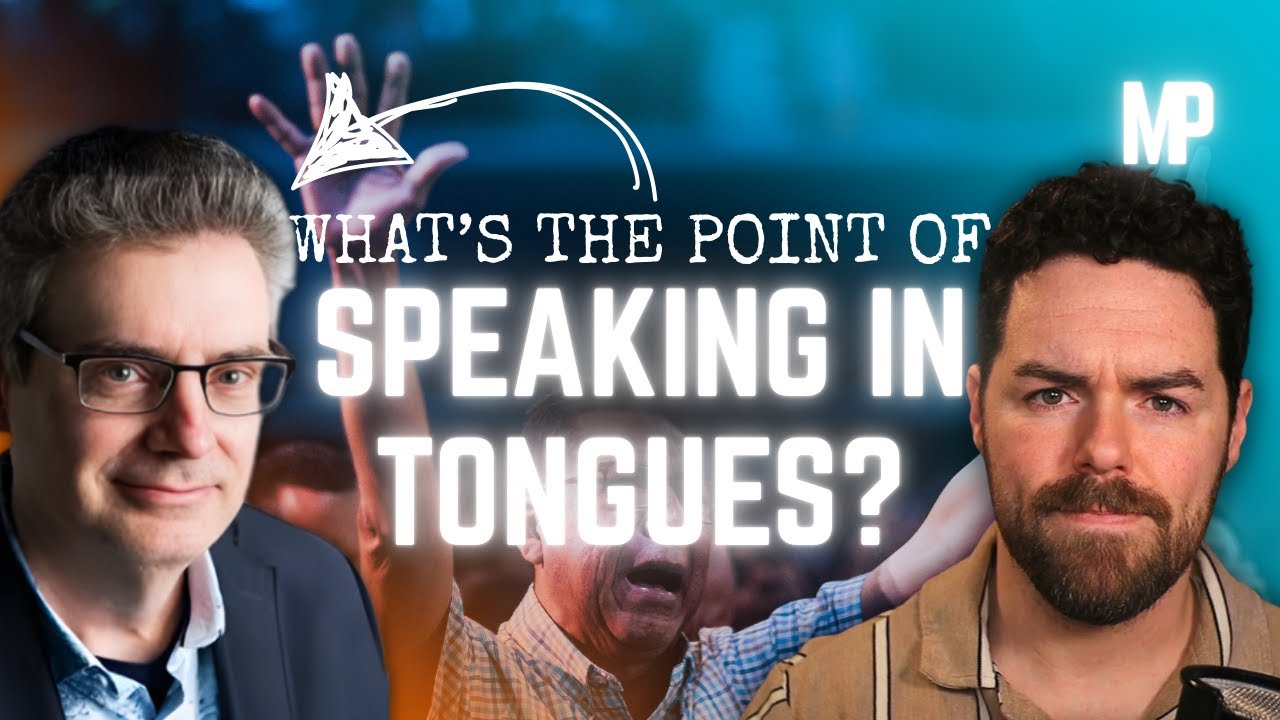
🔗 **Source:** [Bible Professor Answers TOUGH Questions About Speaking in Tongues](https://www.youtube.com/watch?v=Szps7jTwgxI)
> [!note]+ Document Notes
> tags: [tongues, holy-spirit, charismatic, pentecostal, spiritual-gifts, biblical-theology]
> author: Dr. Brian Ledbeck
> source: Minor Prophets Podcast
> reference: https://www.youtube.com/watch?v=Szps7jTwgxI
> date created: 2024-12-19 21:12
>
> # 🏷️ Title: Bible Professor Answers TOUGH Questions About Speaking in Tongues
>
<!-- deep-read:sections start -->
## 🧭 Table of Contents
- [📝 Summary](#-summary)
- [📖 Main Content](#-main-content)
- [🗒️ Notes](#️-notes)
- [📚 References](#-references)
- [🗣️ Paraphrase](#️-paraphrase)
- [📰 Newsletter](#-newsletter)
- [✅ Action Items](#-action-items)
- [🧪 Hypotheses](#-hypotheses)
- [📊 Methodology](#-methodology)
- [❓ Questions](#-questions)
- [🔮 Future Research](#-future-research)
- [💡 Implications](#-implications)
- [🧠 Learning Styles Assessment](#-learning-styles-assessment)
- [📊 Accessibility Assessment](#-accessibility-assessment)
- [🌍 DEIB Assessment](#-deib-assessment)
- [✅ Logical Validity](#-logical-validity)
- [🛡️ DARVO Analysis](#-darvo-analysis)
- [🎯 Conclusion](#-conclusion)
### 🔗 References
- Include links cited in or relevant to the article.
## 📝 Summary
Dr. Brian Ledbeck, professor at North Point College, discusses the biblical theology of speaking in tongues with Pastor John Mark Baker. The conversation addresses common pastoral concerns and theological questions about the gift of tongues, emphasizing its Christocentric purpose as glorification of Jesus rather than judgment or personal edification. Key issues covered include the difference between known human languages (xenolalia) and spiritual language (glossolalia), appropriate public vs. private use, and addressing pastoral problems like pressure to fake tongues or feeling like a "lesser Christian" without the gift. Ledbeck advocates for understanding tongues as symbolic empowerment for evangelizing the nations and maintaining fullness of God's presence.
## 📖 Main Content
The discussion centers on proper biblical understanding of speaking in tongues, moving beyond cultural applications to theological foundations. Ledbeck argues that tongues primarily serve to glorify Jesus as Lord of all nations, connecting pneumatology (doctrine of the Holy Spirit) with Christology (doctrine of Christ). The symbolic significance of different languages represents empowerment to preach to the nations, making Jesus' lordship known globally.
The conversation addresses the distinction between Acts 2 (where tongues were known human languages understood by observers) and later New Testament references where interpretation was needed. Ledbeck explains this as xenolalia (known languages) vs. glossolalia (spiritual languages), noting that the double miracle at Pentecost established the symbolic connection to nations.
Regarding public vs. private use, both speakers emphasize Paul's principle that "context is king" - mature believers must consider their audience, especially unbelievers who might be alienated by unintelligible speech. Private tongues serve for personal edification and maintaining spiritual fullness, while public tongues require interpretation for community benefit.
### 🗒️ Notes
#### ⏱️ [00:00:00](https://www.youtube.com/watch?v=Szps7jTwgxI&t=0) Introduction and Guest Background
- Dr. Brian Ledbeck, professor at North Point College, Grand Rapids
- Author of "Making Sense of Speaking in Tongues" (popular level)
- Academic work: "Celebrating Our Lord in Christ: A Biblical Theology of Tongues"
- Former teacher of Alex and Gracie Perry
#### ⏱️ [00:02:30](https://www.youtube.com/watch?v=Szps7jTwgxI&t=150) The Purpose of Tongues
- Primary purpose: to glorify Jesus as Lord of all nations
- Connects pneumatology with Christology
- Response to Christ's enthronement at God's right hand
- Tongues symbolize empowerment to preach to nations
#### ⏱️ [00:04:15](https://www.youtube.com/watch?v=Szps7jTwgxI&t=255) Connection to Spiritual Warfare
- Discussion of Michael Heiser's "divine council" theology
- Tongues as pronouncement of Jesus' lordship over "gods of nations"
- Ephesian context: contrast between Artemis worship and Jesus worship
- Underlying theme of Christ's superiority over false gods
#### ⏱️ [00:08:45](https://www.youtube.com/watch?v=Szps7jTwgxI&t=525) Known Languages vs. Spiritual Languages
- Acts 2: Double miracle (xenolalia + understanding)
- Acts 10, 19: No interpretation given, different context
- 1 Corinthians: "interpretation of tongues" gift wouldn't make sense for known languages
- Establishes symbolic significance at Pentecost, then varies by context
#### ⏱️ [00:12:00](https://www.youtube.com/watch?v=Szps7jTwgxI&t=720) Private vs. Public Use
- Private: Personal edification, maintaining spiritual fullness
- Public: Requires interpretation for community benefit
- Common content: praise, thanksgiving, magnifying God
- Always Christ-centered and vertical (toward God)
#### ⏱️ [00:16:30](https://www.youtube.com/watch?v=Szps7jTwgxI&t=990) Message in Tongues and Interpretation
- Ledbeck supports prophetic messages through tongues
- Shares personal testimony of identical interpreted messages
- Advocates for interpreting tongues as "prophetic pouring out of praise"
- Less emphasis on "message to congregation," more on corporate worship
#### ⏱️ [00:20:45](https://www.youtube.com/watch?v=Szps7jTwgxI&t=1245) Corporate Use Guidelines
- "Context is king" - mature believers consider their audience
- Acts examples: initial fillings vs. established church order
- Corinthian problem: not considering unbelievers present
- Different rules for different contexts and church maturity levels
#### ⏱️ [00:25:00](https://www.youtube.com/watch?v=Szps7jTwgxI&t=1500) Addressing Repetitive Phrases
- Jesus' teaching about "vain repetitions" doesn't directly apply
- Different context: not trying to be heard through repetition
- Encourages new believers starting with simple phrases
- Emphasis on spiritual development rather than criticism
#### ⏱️ [00:28:15](https://www.youtube.com/watch?v=Szps7jTwgxI&t=1695) Pastoral Concerns and Pressure
- Problem of pressuring people to speak in tongues
- Many fake it due to pressure, leading to humiliation
- Ledbeck's personal testimony: received privately, not in public meeting
- Jesus is the baptizer, not human ministers
#### ⏱️ [00:32:00](https://www.youtube.com/watch?v=Szps7jTwgxI&t=1920) Second Blessing Theology
- Delay is not rejection - God's love unchanged
- Human complexity requires different timing
- Seeking God is valuable regardless of immediate results
- Old Testament pattern: people of God receiving additional empowerment
#### ⏱️ [00:35:45](https://www.youtube.com/watch?v=Szps7jTwgxI&t=2145) "Do All Speak in Tongues?"
- 1 Corinthians 12: Context is corporate diversity, not individual capability
- Paul wants "all" to speak in tongues but seeks variety in public worship
- Distinction between private gift and public ministry
- Spirit is generous, not miserly with gifts
## 📚 References
- [Making Sense of Speaking in Tongues by Dr. Brian Ledbeck](Book title mentioned)
- [Celebrating Our Lord in Christ: A Biblical Theology of Tongues](Academic work by Ledbeck)
- [The Unseen Realm by Michael Heiser](Referenced regarding divine council theology)
- [Minor Prophets Podcast](https://www.youtube.com/watch?v=Szps7jTwgxI)
## 🗣️ Paraphrase
Professor Brian Ledbeck explains that speaking in tongues primarily serves to glorify Jesus as Lord of all nations, representing symbolic empowerment for global evangelism. The practice appears in two forms: known human languages (as in Acts 2) and spiritual languages requiring interpretation (as in Corinthians). The key principle governing usage is considering context - mature believers should think about their audience, especially avoiding alienating unbelievers through unintelligible public displays. Private tongues build personal spiritual fullness while public tongues need interpretation for community benefit. Common pastoral problems include pressuring people to fake tongues and feeling inferior without the gift, both of which miss the point that Jesus is the true baptizer and delays don't indicate rejection.
## 📰 Newsletter
🎙️ **Diving Deep into Spiritual Gifts** - Ever wondered about the theology behind speaking in tongues? This fascinating podcast discussion between Pastor John Mark Baker and Bible professor Dr. Brian Ledbeck tackles the tough questions many believers have about this spiritual gift. From addressing pastoral concerns about pressure and authenticity to exploring the connection between tongues and Christ's lordship over nations, this conversation offers both scholarly insight and practical wisdom. Whether you're Pentecostal, charismatic, or simply curious about biblical pneumatology, you'll find valuable perspectives on making sense of one of the more mysterious spiritual gifts. Perfect for pastors, Bible study leaders, and anyone wanting to understand the theological foundations behind contemporary Christian practice.
## ✅ Action Items
#### DevRel
- Create educational content explaining theological concepts for broader audiences
- Develop discussion guides for controversial topics that maintain unity
- Build bridges between different theological traditions through respectful dialogue
#### OSPO
- Consider how theological discussions model open, respectful disagreement
- Apply principles of contextual sensitivity to technical community management
#### Community
- Foster environments where complex questions can be explored safely
- Provide mentorship for those navigating theological uncertainties
- Create space for both scholarly and pastoral perspectives
#### WordPress
- **Community:** Develop guidelines for respectful theological discussion in forums
- **Training:** Create materials addressing pastoral concerns in digital ministry
- **Documentation:** Model clear explanation of complex topics
## 🧪 Hypotheses
- Theological education that emphasizes Christocentric interpretation reduces misapplication of spiritual gifts
- Pastoral pressure regarding spiritual experiences creates long-term negative associations with church community
- Contextual sensitivity in spiritual gift expression increases evangelistic effectiveness
- Understanding symbolic significance of biblical practices enhances personal spiritual development
- Academic theology accessible to lay audiences improves overall biblical literacy
### 📊 Methodology
- Comparative analysis of biblical passages regarding tongues across different contexts
- Case study methodology for examining pastoral scenarios and outcomes
- Historical-theological analysis connecting Old Testament empowerment patterns to New Testament practices
- Ethnographic study of Pentecostal/charismatic church cultures vs. biblical principles
### ❓ Questions
- How can churches balance encouragement of spiritual gifts with elimination of unhealthy pressure?
- What role should theological education play in addressing popular misconceptions about biblical practices?
- How do cultural expressions of faith sometimes conflict with biblical principles?
- What pastoral strategies best serve those who seek spiritual experiences but don't receive them immediately?
### 🔮 Future Research
- Longitudinal study of individuals who experienced pressure regarding tongues and their long-term church engagement
- Cross-cultural analysis of tongues practices in different Pentecostal/charismatic contexts
- Theological investigation of the relationship between pneumatology and Christology in contemporary practice
- Historical development of "second blessing" theology and its pastoral implications
### 💡 Implications
- **Practice:** Churches need better training for prayer ministry that avoids pressure and manipulation
- **Policy:** Denominational guidelines should address both theological foundations and pastoral applications
- **Security:** Spiritual experiences require safe environments free from coercion or judgment
- **Education:** Seminary curricula should include practical pneumatology alongside theoretical study
- **Funding:** Support needed for accessible theological resources that bridge academic and popular understanding
### 🧠 Learning Styles Assessment
Reading level: Grade 12-14 (Flesch-Kincaid analysis of theological vocabulary and complex sentence structures)
#### 👀 Visual learners
- Present: Clear distinctions between different types of tongues, biblical passage comparisons
- Improve: Diagrams showing relationship between pneumatology and Christology, timeline of tongues in scripture, visual aids for biblical contexts
#### 🔊 Aural learners
- Present: Podcast format allows for hearing theological discussion and personal testimonies
- Improve: Audio summary of key theological points, discussion questions for group listening
#### 🗣️ Verbal learners
- Present: Clear definitions of technical terms (xenolalia, glossolalia), analogies for complex concepts
- Improve: Glossary of theological terms, story-driven examples, plain-language theological explanations
#### 🧩 Kinesthetic learners
- Present: Practical scenarios and applications for different church contexts
- Improve: Role-play exercises for pastoral situations, hands-on prayer ministry training guides
#### 🧠 Logical learners
- Present: Systematic biblical analysis, cause-and-effect relationships between theology and practice
- Improve: Decision trees for appropriate tongues usage, logical frameworks for theological interpretation
#### 🧑🤝🧑 Social learners
- Present: Dialogue format modeling respectful theological discussion
- Improve: Small group discussion guides, peer learning opportunities for theological exploration
#### 🧘♀️ Solitary learners
- Present: Individual reflection opportunities through personal testimonies
- Improve: Self-study guides, personal spiritual assessment tools, journaling prompts
#### 🌿 Naturalistic learners
- Present: Organic development metaphors for spiritual growth
- Improve: Seasonal analogies for spiritual experiences, growth-oriented language for gift development
### 📊 Accessibility Assessment
#### Screen reader semantics
- Present: Clear headings and structure in transcript format
- Improve: Enhanced navigation landmarks, more descriptive alt text for concepts
#### Keyboard navigation
- Present: Standard video player controls
- Improve: Chapter navigation, skip-to-content options for different topics
#### Contrast and readability
- Present: Video format with clear audio
- Improve: High-contrast transcript options, larger text sizing options
#### Text resizing and reflow
- Present: Responsive transcript formatting
- Improve: Better line spacing for theological content, support for different reading preferences
#### Media and captions
- Present: Audio content with full transcript
- Improve: Time-stamped captions, downloadable transcript with theological term definitions
#### Forms and interactions
- Present: Basic video interaction
- Improve: Interactive theological discussion tools, accessible comment systems
### 🌍 DEIB Assessment
#### Cultural breadth
- Present: Acknowledgment of different denominational perspectives, personal testimony variety
- Improve: Global Pentecostal perspectives, non-Western theological insights, multilingual resources
#### Inclusive language
- Present: Respectful treatment of different theological positions
- Improve: Gender-neutral references where appropriate, plain-language theological explanations
#### Neurodiversity support
- Present: Structured conversation format, clear topic transitions
- Improve: Content warnings for sensitive spiritual topics, consistent formatting patterns
#### Representation
- Present: Academic and pastoral perspectives represented
- Improve: Diverse voices in theological discussion, varied denominational backgrounds
#### Psychological safety
- Present: Acknowledgment of negative spiritual experiences, validation of struggles
- Improve: Clear boundaries around spiritual pressure, trauma-informed pastoral approaches
### ✅ Logical Validity
#### Strong reasoning
- **Exegetical analysis:** Ledbeck's distinction between Acts 2 and Corinthians contexts shows strong biblical interpretation methodology
- **Theological integration:** Connection between Christology and pneumatology provides coherent framework
- **Pastoral application:** "Context is king" principle demonstrates practical wisdom grounded in biblical principles
#### Fallacies
- **Hasty generalization:** Some broad statements about Pentecostal culture without sufficient data
- **Appeal to personal experience:** While valuable, personal testimonies shouldn't carry theological weight alone
- **False dichotomy:** Occasionally presents only two options when more nuanced positions exist
#### Tone of voice
- **Academic yet accessible:** Ledbeck maintains scholarly precision while remaining conversational
- **Pastoral sensitivity:** Both speakers show care for those who've experienced spiritual harm
- **Respectful disagreement:** Models how to discuss controversial topics without attacking opponents
### 🛡️ DARVO Analysis
- **Deny:** No significant denial patterns observed; both speakers acknowledge problems in charismatic practices
- **Attack:** No attacks on those with different theological positions; respectful engagement throughout
- **Reverse victim/offender:** No evidence of reversing blame; speakers take responsibility for pastoral problems in their traditions
## 🎯 Conclusion
This conversation demonstrates how theological education can address practical pastoral concerns while maintaining biblical fidelity. The emphasis on Christ-centered interpretation of tongues provides a framework that avoids both cessationist dismissal and charismatic excess. Key takeaways include the importance of contextual sensitivity, the danger of spiritual pressure, and the need for patient pastoral care. For practitioners, the conversation offers guidance for healthy spiritual gift expression that serves both personal edification and community building.
## 🧱 Refactor Appendix
### 📚 Literature Split Pad
#### Ledbeck's Christocentric Approach to Tongues
> [!quote] [Bible Professor Answers TOUGH Questions About Speaking in Tongues](https://www.youtube.com/watch?v=Szps7jTwgxI) by [[Dr. Brian Ledbeck]] via [[Minor Prophets Podcast]]. Published [MISSING]. Accessed 2024-12-19.
> "The bottom line is that the purpose of tongues is to glorify Jesus... when he pours out his spirit, people are responding to his exaltation in a new language."
Provides theological framework connecting pneumatology with Christology rather than viewing tongues as isolated phenomenon.
[view highlight](https://www.youtube.com/watch?v=Szps7jTwgxI&t=255) #xref #articleseed ID:rw_tongues_christ
#### Contextual Sensitivity Principle
> [!quote] [Bible Professor Answers TOUGH Questions About Speaking in Tongues](https://www.youtube.com/watch?v=Szps7jTwgxI)
> "Context is king... mature believers consider their context when it comes to the use of really any of the gifts but tongues in particular."
Essential principle for appropriate spiritual gift expression in various settings and audiences.
[view highlight](https://www.youtube.com/watch?v=Szps7jTwgxI&t=1245) #xref ID:rw_context_king
### 🔖 Atomic Split Pad (Zettel Candidates)
#### Spiritual pressure damages long-term church engagement
- Observed pattern: forced spiritual experiences create lasting negative associations
- Multiple testimonies of people avoiding spiritual environments after pressure
#### Theological education reduces spiritual gift misapplication
- Academic understanding provides framework for appropriate practice
- Integration of scholarly and pastoral perspectives improves outcomes
#### Christocentric interpretation prevents spiritual gift excess
- Focusing on Jesus' lordship rather than personal experience maintains biblical balance
- Links individual spiritual practice to broader theological narrative
### ✏️ Fleeting Queue (Extract by Selection)
- Research correlation between spiritual pressure and church dropout rates — context/https://www.youtube.com/watch?v=Szps7jTwgxI #fleeting #inbox
- Develop training materials for pressure-free prayer ministry — context/pastoral application #fleeting #inbox
- Investigate cross-cultural expressions of tongues in global Pentecostalism — context/theological research #fleeting #inbox
- Create accessible theological education resources for controversial topics — context/bridging academic-popular gap #fleeting #inbox
---
## Full Transcript
[00:00] Not everybody speaks in tonesues. See,<br>[00:01] it's right here in black and white. Paul<br>[00:03] is assuming not everybody speaks in<br>[00:05] tonesues.<br>[00:05] >> I was just kneeling beside my bed one<br>[00:08] night praying and the spirit of the Lord<br>[00:11] filled me and I began to pray in a in a<br>[00:13] new language.<br>[00:14] >> One of [music] the pastoral concerns is<br>[00:16] somebody who has not uh exercised that<br>[00:19] gift of tongues ever before. Though<br>[00:21] they've sought it, they've [music] never<br>[00:23] experienced that and they walk away<br>[00:24] feeling like they are a less than<br>[00:27] Christian.<br>[00:27] >> Yeah. Right.<br>[00:29] Is is is that an avoidable pastoral<br>[00:32] [music] pitfall of second blessing<br>[00:34] theology? A lot of people see the gifts<br>[00:36] as these these unusual things that only<br>[00:41] the super elites are going to get. Paul<br>[00:44] sees the spirit as generous distributing<br>[00:47] the gifts and and we can even ask for<br>[00:49] more gifts [music] and the the church is<br>[00:52] by nature charismatic. Not one minute is<br>[00:55] lost because [music] anytime we are<br>[00:57] seeking God, anytime we're going after<br>[01:00] Jesus is time [music] well spent and<br>[01:05] being with God is its own reward. I have<br>[01:08] talked [music] to many who have said<br>[01:11] that I just felt so pressured<br>[01:14] into<br>[01:16] speaking in tongues that I faked it. And<br>[01:20] then unfortunately they were humiliated<br>[01:23] and didn't ever want to go back.<br>[01:25] >> We have to differentiate between<br>[01:27] Pentecostal culture and biblical<br>[01:29] principles.<br>[01:30] >> Um what is the true purpose of this gift<br>[01:33] as it pertains to to real life usage?<br>[01:40] Hello and welcome to the minor prophets<br>[01:42] podcast. I'm John Mark Baker and today I<br>[01:45] am joined by my special guest Dr. Brian<br>[01:48] Lidbeck. He is a professor at um Oh,<br>[01:53] North Point College. Is that uh you<br>[01:56] recently had a name change.<br>[01:58] >> Yes, we did. But you got it right. North<br>[01:59] Point College.<br>[02:00] >> Yeah, North Point College in uh Grand<br>[02:03] Rapids, Michigan. And um uh he had is<br>[02:07] the professor or was uh the Bible<br>[02:09] teacher for uh some of the folks that<br>[02:12] are in my church that are uh on staff.<br>[02:14] So, uh, Alex and Gracie Perry,<br>[02:17] >> um, dear friends of mine. Uh, you were<br>[02:19] their favorite professor and no, no<br>[02:21] offense to any of the other professors<br>[02:23] there.<br>[02:24] >> Yeah. Well, they're great people. I<br>[02:25] appreciate them.<br>[02:27] >> Yeah. So, um, you you come highly<br>[02:29] recommended and he has written this book<br>[02:32] called making sense of speaking in<br>[02:35] tongues and uh um this is sort of the<br>[02:38] popular level uh version of a scholarly<br>[02:42] work that you have been working on. Is<br>[02:44] it finished now?<br>[02:45] >> Yeah, it's finished and it should be<br>[02:47] available in oh the next month or two at<br>[02:50] the most. It's in the final stages of uh<br>[02:53] publication with Whip and Stock and<br>[02:55] that's called<br>[02:56] >> Yeah, that's called Celebrating Our Lord<br>[02:58] in Christ, a biblical Theology of<br>[03:00] Tongues.<br>[03:02] >> That's awesome. Uh so one of the things<br>[03:05] that I love so much about this book is<br>[03:07] it really tries to um put tongues into a<br>[03:12] theological category for people to<br>[03:15] actually understand um what is happening<br>[03:18] with this with this peculiar gift. Um,<br>[03:21] I've often wondered, and I think I'm not<br>[03:24] alone in this, that uh<br>[03:27] there there's a whole subset of<br>[03:30] Christians that make a big deal about<br>[03:33] what is ultimately kind of<br>[03:35] unintelligible<br>[03:37] um speech. And this is kind of an<br>[03:40] important thing for a lot of people. And<br>[03:43] you can't help but wonder why exactly as<br>[03:46] um tongues is is one of the more<br>[03:49] mysterious of these spiritual gifts and<br>[03:52] for that reason because some people<br>[03:54] don't see the use they don't see the<br>[03:56] purpose and they don't have a category<br>[03:57] in which to place it um end up just<br>[04:00] jettisoning it as being unimportant and<br>[04:03] in fact I have seen um even those who<br>[04:06] believe in this gift who maybe have<br>[04:09] received that gift they've operated in<br>[04:11] it from time to time because they don't<br>[04:14] really understand the purpose of that<br>[04:16] gift, uh, sort of let it go by the<br>[04:20] wayside. And yet, if this really is from<br>[04:23] the Holy Spirit, I would imagine that<br>[04:25] there's a reason he's giving this this<br>[04:27] gift and it probably is important to<br>[04:28] him. So, um, Dr. Ledbeck, what's the<br>[04:32] point of tongues anyway?<br>[04:34] >> Yeah. Well, to cut right to the chase,<br>[04:36] if you notice the subtitle of that um<br>[04:40] lay book that you just showed everyone,<br>[04:42] the subtitle is a look at tongues in<br>[04:44] light of Christ. I know it's kind of<br>[04:46] small print because it's the subtitle,<br>[04:49] but uh the bottom line is I feel that<br>[04:53] people have not properly married what we<br>[04:55] call pneumatology, the doctrine of the<br>[04:57] Holy Spirit with Christology, the<br>[04:59] doctrine of Christ. And the whole<br>[05:02] intention of this book is to make sure<br>[05:04] that people view speaking in tonesues<br>[05:06] and all the gifts of the spirit really<br>[05:09] in light of Christ. So to get right to<br>[05:12] the point then the bottom line is is<br>[05:14] that the purpose of tongues is to<br>[05:16] glorify Jesus. It's a response to his<br>[05:19] enthronement at the right hand of the<br>[05:22] father that he is lord of all. And so<br>[05:24] when he pours out his spirit, people are<br>[05:27] responding to his ex exaltation<br>[05:30] in a new language of speaking in other<br>[05:33] tongues. So in short, it's to glorify<br>[05:35] Jesus.<br>[05:37] >> So why the different languages?<br>[05:40] >> Oh, that's a great question. Glad you<br>[05:42] asked that because that it's funny, but<br>[05:45] you would think that that would be the<br>[05:47] most basic thing that people would<br>[05:48] understand, but it I think it's one of<br>[05:50] the most overlooked things actually. And<br>[05:53] the reason specifically for speaking in<br>[05:55] tonesues is because tongues symbolize<br>[05:58] nations. Um tonesues just means<br>[06:02] languages in Greek. That's all it is.<br>[06:04] It's not some, you know, special word or<br>[06:07] super spiritual word. It just means<br>[06:09] languages. So the idea is that when<br>[06:13] people speak in tongues, they are<br>[06:16] actually um it symbolizes their<br>[06:19] empowerment to preach Jesus to the<br>[06:21] nations and to glorify him as Lord of<br>[06:24] the nations. So when you remove the<br>[06:26] symbolism of the nations, you miss the<br>[06:29] point entirely. Jesus is Lord of all<br>[06:32] nations and we're empowered to preach<br>[06:34] him to the nations.<br>[06:37] So,<br>[06:38] uh, you know, I I'd like to get your<br>[06:40] opinion on this. Um,<br>[06:43] it's, uh, uh, he's gone to be with the<br>[06:46] Lord now, but, Dr. Michael Heiser is<br>[06:49] still living large in the, um, zeitgeist<br>[06:52] here of, uh, sort of<br>[06:56] theological um, discussion. you know, he<br>[06:59] he really is a a popular figure uh<br>[07:03] amongst those who are into sometimes<br>[07:06] more fringe things, but also um trying<br>[07:08] to understand the the gospel. His book,<br>[07:11] the unseen realm, uh it really explores<br>[07:16] Deuteronomy 32 and the fact that uh in<br>[07:20] the scripture it says that God has<br>[07:22] aortioned the nations according to the<br>[07:24] sons of God. and um connecting that with<br>[07:28] Psalm 82 that there's this divine<br>[07:30] council, the watchers, and that these<br>[07:32] are sort of like the gods of the nations<br>[07:35] are these spiritual entities that have<br>[07:37] rebelled against God and sought worship<br>[07:39] after themselves. Then he uh says that<br>[07:42] the gospel enterprise when Jesus rises<br>[07:44] from the dead and he says that that um<br>[07:47] his kingdom is coming, his kingdom is<br>[07:49] advancing. It's his rule. He is<br>[07:51] pronouncing judgment upon the gods of<br>[07:54] the nations and that his kingdom is is<br>[07:57] spreading out. That's why um in Matthew<br>[07:58] 28 he says go and make disciples of all<br>[08:02] nations um uh teaching them to obey all<br>[08:06] I've commanded you. Baptize in the name<br>[08:07] of the father, the son, and the holy<br>[08:09] spirit. I think I mixed those two in<br>[08:11] order. And uh behold, I am with you<br>[08:13] always. And so the um the question is<br>[08:18] that [clears throat] I had when I was<br>[08:19] reading the book um do you see any<br>[08:22] validity to that worldview for one and<br>[08:24] then two is there a connection between<br>[08:28] the proclamation of Jesus as Lord in<br>[08:31] other languages and the pronouncement of<br>[08:34] judgment upon the gods of the nations?<br>[08:38] >> Oh that's that's certainly certainly a<br>[08:40] good question. Um I think what we have<br>[08:43] to distinguish between is uh the primary<br>[08:46] teaching that we have on tongues and<br>[08:50] maybe secondary applications.<br>[08:52] Um also I think we have to distinguish<br>[08:55] between judgment on people and judgment<br>[08:57] as you put it on the gods of the<br>[08:58] nations. Um, one thing that I that I<br>[09:01] kind of want to caution against is the<br>[09:03] idea of seeing like speaking in tongues<br>[09:06] as some sort of a a judgment because uh<br>[09:09] some people have seen, you know, Acts<br>[09:11] chapter 2 with the fire as a judgment<br>[09:13] kind of a thing where I see it as a<br>[09:15] divine presence, the glory of God, not<br>[09:18] necessarily in primarily a judgment<br>[09:20] issue. And also in Corinthians, 1<br>[09:22] Corinthians, Paul cautions against uh<br>[09:26] tongues being used as a uh something to<br>[09:29] alienate unbelievers.<br>[09:31] And he says there that tongues basically<br>[09:34] basically to them can be perceived as a<br>[09:36] judgment. And uh and so we don't want to<br>[09:39] do that. We want to make sure that<br>[09:40] during the New Testament gospel era,<br>[09:42] we're inviting people in. Tongues are<br>[09:43] not a sign of judgment, you know, to<br>[09:46] them. But as far as on the gods of the<br>[09:48] nations, um I can think of a couple of<br>[09:51] connections in what you're saying. And<br>[09:53] one is kind of an oddball one that you<br>[09:55] might not expect, but actually in the<br>[09:58] temple of Aremis, there was gibberish<br>[10:01] like on the bottom of Artemis' statue.<br>[10:03] And this is um 1 Corinthians 19 is where<br>[10:06] we have all of this discussion about<br>[10:09] Artemis and and how Artemis is so great<br>[10:13] and using the same language for how<br>[10:15] great Jesus is and tongues being uh<br>[10:18] praise me and all of these phrases are<br>[10:21] used of Artemis and and when you think<br>[10:25] to know from history that there's this<br>[10:27] gibberish written on the bottom of her<br>[10:30] statue that nobody understands. And in<br>[10:32] the same chapter, chapter 19, um that<br>[10:36] same part of the story at Ephesus and<br>[10:37] Acts, you have them speaking in tongues,<br>[10:40] glorifying the real Jesus. There is, it<br>[10:44] appears to me, this sort of backhanded<br>[10:47] uh uh sort of a uh rebuke of Artemis and<br>[10:52] all the gods that the great one is not<br>[10:55] Artemis, but the great one is Jesus. And<br>[10:58] the great one is is the Lord of all the<br>[11:00] earth, Jesus. And so some of the same<br>[11:03] language used of in chapters 19 through<br>[11:07] I think it's 21 in Acts is used in Acts<br>[11:10] 2 is used all the way back at Babylon in<br>[11:14] uh Genesis in the Greek translation the<br>[11:16] Septuagent of Genesis Genesis 10-1<br>[11:20] there. And so there is this connection<br>[11:24] uh you know just kind of underlying the<br>[11:26] whole thing that God is judging through<br>[11:29] Jesus Christ the gods of this world. I<br>[11:32] know that's kind of a roundabout. You<br>[11:34] know it's pretty involved but yeah there<br>[11:37] is a connection there.<br>[11:39] So um I'm I'm thinking about the<br>[11:44] devotional application of that idea.<br>[11:47] Um I think it's just kind of cool to be<br>[11:50] thinking about as I am glorifying Jesus<br>[11:53] in with this gift of tongues um that uh<br>[11:58] there is a there is sort of a<br>[11:59] pronouncement of judgment upon<br>[12:02] everything that opposes his kingdom. Um<br>[12:05] >> yes<br>[12:06] >> and uh I I don't know just devotionally<br>[12:09] that seems awesome. As I said, it's not<br>[12:10] the primary thing that the the biblical<br>[12:13] text emphasizes in regard to tongues,<br>[12:16] but it is definitely there. There is<br>[12:19] this undercurrent that yes, when you are<br>[12:22] exalting Jesus as Lord of all nations,<br>[12:24] well, what are you doing? Every other<br>[12:26] God is therefore not God. Um and you<br>[12:29] have that all the way through the book<br>[12:31] of acts actually where and uh Luke and<br>[12:34] Luke acts of course are two volumes of<br>[12:36] one book both written by Luke and you<br>[12:39] there is this undercurrent of who is the<br>[12:41] real lord is it Caesar Augustus? Nope.<br>[12:45] You know even though in ancient writings<br>[12:47] he was called the lord Luke is<br>[12:50] subverting the lordship of Augustus and<br>[12:53] all of the other rulers by declaring<br>[12:56] Jesus as lord. So yeah, it's kind of<br>[12:58] it's it's it's built into the whole mix<br>[13:01] into the recipe this idea that the other<br>[13:04] gods are inferior and and Jesus is the<br>[13:07] true Lord.<br>[13:08] >> Yeah. So practically speaking,<br>[13:12] um what is the true purpose of this gift<br>[13:15] uh in as it pertains to to real life<br>[13:19] usage? Because um you see people that<br>[13:22] are more on the cessationist side, they<br>[13:24] say, "Well,<br>[13:24] >> tongues was real languages that were<br>[13:27] understood by uh by real people um uh in<br>[13:32] Acts 2."<br>[13:34] >> And so, and they sort of export that one<br>[13:39] um you know, description and make it a<br>[13:42] prescription, which ironically is what<br>[13:45] they accuse Pentecostals and<br>[13:46] charismatics of doing it. But but um but<br>[13:51] they say well that's what tongues is and<br>[13:53] that's what it's for. And so unless you<br>[13:55] are speaking intelligible languages to<br>[13:57] other people um that is glorifying<br>[14:00] Christ and it has sort of an<br>[14:01] evangelistic value of some sort um then<br>[14:05] any other expression that you sort of<br>[14:08] run into in you know a popular uh usage<br>[14:12] is is therefore invalid.<br>[14:15] Um uh then you get others that seem to<br>[14:21] use tongues for everything, you know. Uh<br>[14:25] which is not I'm not knocking this, but<br>[14:28] in my family, we've had a a term called<br>[14:31] emergency tongues.<br>[14:33] >> [laughter]<br>[14:33] >> when whenever you're something is uh you<br>[14:37] know like we live up north in uh the ice<br>[14:41] and the snow and I grew up in northern<br>[14:43] Michigan and uh all the times there's so<br>[14:47] many times where there would be like<br>[14:48] snow storms and you're driving at 15 m<br>[14:51] hour and you can barely see 10 ft in<br>[14:52] front of you and it's so icy and my mom<br>[14:55] would break out the emergency tongues<br>[14:56] you know and so like<br>[14:58] >> you know what is the proper uh use of<br>[15:02] tongues as it pertains to the Christian<br>[15:04] life.<br>[15:05] >> Yeah. Well, speaking as a Yuper myself,<br>[15:08] [laughter]<br>[15:09] >> I can't I can't blame your mom. But<br>[15:12] yeah, [laughter]<br>[15:14] what what is the proper what is the<br>[15:16] proper use? Well, you've you've asked<br>[15:18] kind of like three four different<br>[15:19] questions in your one question. So, let<br>[15:21] me let me start first of all with the<br>[15:24] what is tongues anyway? Is it known<br>[15:26] human language as well? In Acts two,<br>[15:29] there's clearly a double miracle. there<br>[15:31] is they are speaking in languages they<br>[15:34] never learned and they happen to also be<br>[15:38] known human languages that are<br>[15:40] understood by the observers there at<br>[15:42] Pentecost. So there's a double use. Uh<br>[15:45] of course scholars have a technical name<br>[15:47] for everything and that's called<br>[15:48] xenolia.<br>[15:50] Uh normal tongues they call glossleia<br>[15:53] when it's a known human language called<br>[15:56] xenolia. Well, here's here's part of the<br>[16:00] reason from a literary perspective of<br>[16:03] why that double miracle is important at<br>[16:05] Pentecost and that is it establishes the<br>[16:09] symbolic significance of tongues that<br>[16:12] tongues are related to the nations. So<br>[16:16] we we need that connection there. But<br>[16:19] once we get to Acts chapter 10,<br>[16:22] Cornelius household, there is no<br>[16:25] interpretation given. There's no people<br>[16:28] from foreign countries or anything and<br>[16:31] there they have the same response but<br>[16:34] there is no known human languages that<br>[16:36] we know of and no double miracle. Same<br>[16:39] thing goes in chapter 19 of Acts. Uh<br>[16:42] there there just isn't the same thing.<br>[16:44] It's a different context. Now, in fact,<br>[16:47] when you go over to first Corinthians,<br>[16:49] if you were to take um the word tongues<br>[16:53] and say that you you think that's known<br>[16:56] human languages, you use that<br>[16:57] definition, you plug that into every<br>[17:00] place you see the word tongues in 1<br>[17:03] Corinthians 12-14.<br>[17:05] It will not take you very long at all to<br>[17:08] realize it doesn't work. It doesn't fit.<br>[17:12] For example, interpretation of tongues.<br>[17:14] Why do we need that gift<br>[17:17] if it's known human languages? It's<br>[17:19] senseless. Makes no sense at all.<br>[17:22] >> So, um, it doesn't fit through those<br>[17:25] chapters by that definition. So, what we<br>[17:28] have at Pentecost is the symbolic<br>[17:30] significance of tongues is established.<br>[17:33] And after that, we don't really know for<br>[17:37] certain if it's known human languages,<br>[17:40] if it's um it just I just call it<br>[17:42] language of the spirit, whatever it is<br>[17:44] that he's giving. And I leave it there.<br>[17:47] I I've had to come to the place where I<br>[17:50] don't have all the answers. I know I<br>[17:52] don't and I'm okay with that.<br>[17:54] >> Oh man, I should have gotten somebody<br>[17:56] else to come on this podcast. I'm just<br>[17:57] kidding. [laughter]<br>[18:00] So but known in human languages just<br>[18:02] doesn't fit in other applications in the<br>[18:04] New Testament.<br>[18:05] >> So uh to the second part of your<br>[18:08] question then which is well what is this<br>[18:10] all about then? Well as part of being uh<br>[18:14] an experience of being filled with the<br>[18:15] Holy Spirit uh speaking in tonesues<br>[18:18] praying in tonesues on a daily basis is<br>[18:21] a glorifying of Jesus. Now we all know<br>[18:24] what happens when we praise Jesus. We<br>[18:27] get edified, we get refilled, we get<br>[18:30] built up, and he gets glorified. It's a<br>[18:33] win-winwin, right, for everybody. Well,<br>[18:36] when you're praying in tongues by the<br>[18:38] spirit, what you are doing is you are<br>[18:41] you are being filled aresh while you are<br>[18:44] glorifying Jesus in praise and prayer.<br>[18:48] And it's empowering you aresh to go out<br>[18:51] and minister in the power of the Holy<br>[18:53] Spirit again. And so it's a way of<br>[18:55] maintaining that fullness of God's<br>[18:58] presence in a powerful way in your life.<br>[19:02] >> Okay. So there's also this uh you know<br>[19:06] you mentioned uh these two sort of<br>[19:08] expressions of this gift. It's for<br>[19:11] public consumption and for private<br>[19:13] consumption, right? And so the tongues<br>[19:15] for public consumption needs to be<br>[19:17] interpreted uh for the edification of<br>[19:19] the community and for private<br>[19:22] consumption. That seems to be what Paul<br>[19:24] was talking about. He who speaks into<br>[19:26] tongues uh um utters mysteries unto God.<br>[19:31] >> And um and edifies himself.<br>[19:35] >> And so um<br>[19:38] what do you think is happening in that<br>[19:40] private usage? And what are the ways in<br>[19:43] which we as Christians are personally<br>[19:46] edified through that gift of tongues?<br>[19:49] >> That's a that's a great question. You'll<br>[19:52] notice I keep using the word like praise<br>[19:54] um you know in these answers and the<br>[19:57] reason for that is when you look at what<br>[20:00] what do tongues have in common in every<br>[20:04] passage where they occur whether that's<br>[20:06] even Mark 16 you know even that passage<br>[20:09] which I know is debated by some as to<br>[20:12] whether or not that's in the original<br>[20:14] manuscripts there but whether it's there<br>[20:16] whether it's in 1 Corinthians 12-14<br>[20:19] whether it's in Acts 2, Acts 10, Acts<br>[20:22] 19. There's two things in common. The<br>[20:25] number one thing they all have in common<br>[20:27] is that they are all Christ centered.<br>[20:30] Every context in which tongues occur in<br>[20:32] the New Testament, there is a focus<br>[20:34] specifically on the lordship of Jesus.<br>[20:38] Uh for example, 1 Corinthians 12, the<br>[20:41] whole uh unit 12-14<br>[20:44] begins with the confession that uh Jesus<br>[20:48] is Lord. That is the confession. That is<br>[20:51] the umbrella over the entire tongues and<br>[20:54] prophecy discussion in those three<br>[20:56] chapters. And so the other thing they<br>[20:59] really that tongues have in common is<br>[21:02] that whenever there is any commentary on<br>[21:05] what they are, they are vertical. Now<br>[21:09] there is no verse that comes out and<br>[21:10] says, "Okay, now we're going to talk<br>[21:12] about exactly the nature of tongues as<br>[21:14] to what they are, what their content<br>[21:16] is." But when we do see it come up in<br>[21:20] Acts uh chapter 2, uh they are praising<br>[21:24] God. They're magnifying God. It says uh<br>[21:27] you know uh so there it's that in<br>[21:29] chapter 10, same thing of Acts. And then<br>[21:32] you get to 1 Corinthians chapter 14 um I<br>[21:37] think it's like 13- 16 there. I think<br>[21:40] three times you have the word<br>[21:41] thanksgiving is used. And then you when<br>[21:44] it comes to singing in tongues, the word<br>[21:46] praise is used. So the bottom line is<br>[21:49] that tongues whenever there is a comment<br>[21:53] on what direction they are and what<br>[21:55] their content is, it's praise. It's<br>[21:59] vertical. It's oriented toward God in<br>[22:02] every circum in every situation where<br>[22:03] there's clear commentary.<br>[22:06] >> Yeah. Um,<br>[22:08] so what do you make of the verse where<br>[22:10] it says, "I will uh pray with my spirit<br>[22:14] >> and I will also pray with my mind." It's<br>[22:17] sort of the only comment I can think of<br>[22:19] that it's not at least strictly<br>[22:22] vertical, though you could easily say<br>[22:24] prayer is vertical. So, [laughter]<br>[22:27] but it you know uh is um is there a<br>[22:32] sense in which there is ever sort of a<br>[22:34] horizontal use of this gift of tongues?<br>[22:37] >> Well, I think the I'm I think the New<br>[22:40] Testament is open to that, but it<br>[22:42] doesn't focus on that. And what I mean<br>[22:45] by that is um when Paul starts talking<br>[22:48] about uh the speaking in tongues again<br>[22:51] there in 1 Corinthians 14, he says, "I<br>[22:54] will pray." The word is promi<br>[22:57] in Greek. That is the general word for<br>[23:00] prayer. But then when he goes to explain<br>[23:02] it, it's thanksgiving. It's praise. So<br>[23:06] in other words, the the prayer that he<br>[23:08] seems to have in mind there is actual<br>[23:11] praise. It's it's vertical. But the fact<br>[23:14] that the word the general word is used<br>[23:17] opens the door to the fact that tongues<br>[23:20] could could possibly be horizontal. And<br>[23:24] the other one is if you want to get into<br>[23:25] the controversial passages about not<br>[23:28] that any of this is controversial,<br>[23:29] right? [laughter]<br>[23:31] I just I decided to write on something<br>[23:33] that wasn't controversial. Maybe my next<br>[23:35] book will be on politics because I don't<br>[23:37] like controversy.<br>[23:38] >> I decided to make a podcast on something<br>[23:40] that's controversial. So I'm right there<br>[23:42] with you.<br>[23:43] >> Yeah. No, not not into politics<br>[23:45] personally that much. But in any event,<br>[23:48] um, so my point is that in some people<br>[23:52] go to Romans 8 and Romans 8 there<br>[23:55] clearly talks about intercession and<br>[23:58] they assume that Romans 8 is talking<br>[24:00] about tongues. Personally, I I don't<br>[24:04] think it is. I think it's better than<br>[24:06] tongues. I think the spirit himself<br>[24:10] along with Christ is a second<br>[24:12] intercessor who helps us make it from<br>[24:15] our present difficulties into the<br>[24:18] resurrection life in the escaton the end<br>[24:21] the uh the goal of our lives to make it<br>[24:25] to be with Jesus in our resurrected<br>[24:26] bodies. And so I think the spirit<br>[24:29] intercedes for us constantly. And the<br>[24:31] point there is that he intercedes,<br>[24:34] not that we are doing something, but a<br>[24:37] lot of people see that as tongues. And<br>[24:39] if it is, and if they're right, then<br>[24:41] there's clearly a intercessory<br>[24:45] aspect there as well in that passage.<br>[24:48] Uh so then<br>[24:52] my entire growing up in uh an Assemblies<br>[24:55] of God church.<br>[24:57] >> I'm so sorry. [laughter]<br>[25:00] every time there was a uh I think I'm<br>[25:04] describing a scene that has been played<br>[25:07] out in churches across uh the world and<br>[25:10] particularly in North America during a<br>[25:14] particular set of decades where there<br>[25:17] would be a lull in praise music. My my<br>[25:20] grandma uh my grandma used to have a<br>[25:24] standin for any any uh uh person as uh<br>[25:29] sister Papunik. So, uh, Sister Papunik<br>[25:33] stands up and and she begins to, uh,<br>[25:37] give a message in tongues and either,<br>[25:40] um, uh, Brother Billy Bob or Sister<br>[25:43] Papunik herself will stand up and, uh,<br>[25:48] give the interpretation for that word.<br>[25:50] And it was always something along the<br>[25:51] lines of, uh, yay, my children. Uh, I<br>[25:56] love you and I'm coming soon. Um, and<br>[25:59] those were sort of the the uh um the<br>[26:04] word that was given almost always. Uh<br>[26:08] there was one time uh in my church maybe<br>[26:12] cuz I gave a negative example. I'll give<br>[26:13] a positive one. Uh one time in my church<br>[26:16] uh a woman named Penny, she stood up.<br>[26:20] This wasn't a a a message in tongues<br>[26:22] that was interpreted. This was just a<br>[26:24] prophetic word. But it was the weirdest<br>[26:26] thing that had uh she stood up and she<br>[26:28] said, "Um, you you got up and you<br>[26:32] grabbed the keys from your kitchen table<br>[26:35] and you said to yourself such and such."<br>[26:38] And she just describes this person's day<br>[26:41] >> and and then sits down and nothing, you<br>[26:45] know, and my grandma who was leading the<br>[26:47] the service that night was insensed cuz<br>[26:50] she's like, "Oh, there's so many<br>[26:52] visitors here. The church was full. Uh<br>[26:55] there was so and and Penny gets up and<br>[26:58] she just says the weirdest thing ever<br>[27:01] and my grandmother was very embarrassed<br>[27:04] until<br>[27:06] um the uh the next day my grandma was in<br>[27:10] her office and a man knocks on the on<br>[27:13] the door and says, "How did she know?<br>[27:16] She said everything that happened and<br>[27:18] the things that I thought to myself and<br>[27:22] like how did she know? And it was it was<br>[27:24] truly a the secrets of the heart was<br>[27:27] revealed and God is truly among you sort<br>[27:29] of thing. But it was personally<br>[27:31] embarrassing to my grandmother. So I'm<br>[27:33] just going to say it's wasn't all bad.<br>[27:36] [laughter] I only give that story for<br>[27:38] that purpose. But for those times um and<br>[27:41] forgive the long- winded uh uh question,<br>[27:45] for those times when it's like there's a<br>[27:47] message in tongues and the<br>[27:49] interpretation is something like that,<br>[27:52] what do you make of that?<br>[27:54] >> Yeah, I I don't have a problem with it<br>[27:56] at all because I see tongues as a<br>[27:59] subcategory of a a bigger biblical<br>[28:02] category of prophecy and tongues as like<br>[28:05] a subset of that. So, in fact, I could I<br>[28:10] mean, we could start exchanging stories.<br>[28:12] Um, we had somebody speak in tongues at<br>[28:15] when I was pastoring in a church and uh<br>[28:18] my wife needed a healing at the time and<br>[28:21] and this uh this lady, she spoke in<br>[28:23] tongues, interpreted it. I was in<br>[28:25] another meeting a couple weeks later uh<br>[28:28] in another state and someone had the<br>[28:31] exact same uh they spoke in tongues<br>[28:34] interpreted exact same message about my<br>[28:37] wife's healing and then she was after<br>[28:39] that was was healed not long after that.<br>[28:41] So uh word for word verbatim same thing.<br>[28:46] So I don't have a problem with that. And<br>[28:49] I think the scriptures you know we're<br>[28:50] dealing with the Holy Spirit here. the<br>[28:52] spirit can, you know, he he's the Holy<br>[28:54] Spirit. He could do a lot of lot of<br>[28:56] things. He could do what he wants. But<br>[28:58] what I want to do is I want to shift if<br>[29:02] I if I had the influence to do so. And I<br>[29:05] and I hope that I can do this. I want to<br>[29:07] shift the church from just thinking of<br>[29:09] tongues as a message to a congregation<br>[29:13] like a typical prophetic word. And I<br>[29:16] want them to be open to the idea that<br>[29:19] tongues could just be a pouring out, a<br>[29:22] prophetic pouring out of praise to God<br>[29:25] and to and to Jesus. And that the<br>[29:28] interpretation could be that because<br>[29:31] there's actually more focus in the Bible<br>[29:34] on that than there is a message to<br>[29:37] someone when it comes to speaking in<br>[29:39] tonesues. And so I think because of the<br>[29:42] narrow perspective on tongues that it<br>[29:45] kind of like understood that it has to<br>[29:47] be a message to someone. I think we have<br>[29:50] lost much of the application in the gift<br>[29:53] because the church isn't open to the<br>[29:55] idea that it could just be a gushing<br>[29:58] forth of praise to God interpreted for<br>[30:00] the congregation to participate in. And<br>[30:03] so I'd like to move the needle a bit<br>[30:05] into what I believe is the area that the<br>[30:07] the scriptures emphasize more when it<br>[30:10] comes to tongues.<br>[30:13] So I think you know many who grew up<br>[30:17] Pentecostal<br>[30:19] um maybe less so the charismatics but um<br>[30:23] you you're familiar with the scene uh of<br>[30:26] everyone speaking in tongues together in<br>[30:30] the church<br>[30:31] >> and then you know you read 1 Corinthians<br>[30:35] 14<br>[30:36] >> and it seems to teach directly against<br>[30:39] that um practice Um<br>[30:43] uh but then you read Acts chapter 2 and<br>[30:47] Acts chapter 10 and it's like were they<br>[30:50] violating Paul's teaching in in Acts in<br>[30:54] these places and you know uh again in<br>[30:57] Ephesians<br>[30:58] in Ephesus in in Acts 19,<br>[31:00] >> right?<br>[31:01] >> Um so how do you square that circle and<br>[31:05] what are your recommendations your<br>[31:08] prescriptions for best practices? um in<br>[31:11] church life uh as it<br>[31:14] >> Yeah, great great question. And you're<br>[31:16] quite right. Acts chapter 10, there's a<br>[31:19] large group. They all speak in tongues<br>[31:21] when they're filled with the Holy Spirit<br>[31:24] and nobody interprets. Uh same thing in<br>[31:27] chapter 19. [clears throat] So I have a<br>[31:29] little phrase. It's real simple and it's<br>[31:32] simply this. Context is king<br>[31:36] as mature believers. And this is what<br>[31:38] Paul advocates in first advocates in 1<br>[31:40] Corinthians 14. What what he tells us is<br>[31:44] he says a mark of mature believers is<br>[31:47] they consider their context when it<br>[31:50] comes to the use of really any of the<br>[31:52] gifts but tongues in particular. You<br>[31:55] must consider your context. When you<br>[31:58] change context and there's different<br>[32:01] people around and there's it's a<br>[32:03] different occasion and a different<br>[32:04] purpose, you have to know uh your<br>[32:08] context.<br>[32:10] And what they weren't doing in in<br>[32:11] Corinthians is they weren't considering<br>[32:13] the unbelievers present in their midst.<br>[32:16] They weren't considering the fact that<br>[32:17] to them when they al when they would<br>[32:19] speak out in tongues and blurt out and<br>[32:21] nobody would interpret that. That was a<br>[32:24] sign of alienation to those unbelievers.<br>[32:27] We don't understand this. We don't know<br>[32:28] what's going on. We're not part of this.<br>[32:31] And in the gospel era, our our use of<br>[32:34] the gifts should be invite people into<br>[32:37] Christ. They should invite them into the<br>[32:39] gospel, not alienate them from the<br>[32:41] gospel.<br>[32:43] So you have a different context in Acts<br>[32:46] and the context there is an initial<br>[32:48] filling of a bunch of people who are<br>[32:51] being empowered with the spirit for the<br>[32:53] first time. So obviously there are<br>[32:56] exceptions to first Corinthians but the<br>[32:59] the the undergurting rule is consider<br>[33:04] your context. So the question that we<br>[33:06] have to ask and and even in first<br>[33:08] Corinthians when Paul says you know a<br>[33:11] couple people should uh with with<br>[33:13] prophecy a couple people can speak and<br>[33:15] then it has to be interpreted um and he<br>[33:18] limits the number. Would he have limited<br>[33:21] that so strictly in a place other than<br>[33:24] Corenth? Well the reason for the<br>[33:26] limitation is because Corinth is out of<br>[33:29] I mean they are just out of control.<br>[33:32] there there's no there's no sense of<br>[33:35] corporate edification and thinking of<br>[33:37] the body and thinking of unbelievers<br>[33:39] that might be present and so he has to<br>[33:41] put those rules down for them but I'm<br>[33:44] not sure he would have had such strict<br>[33:46] rules for a church that wasn't<br>[33:48] misbehaving so to speak so even there<br>[33:51] there's a context in in what he's saying<br>[33:54] so my question is this so if for example<br>[33:58] a whole church of people starts singing<br>[34:00] in tongues<br>[34:02] And the effect of that is beauty and<br>[34:07] invitation<br>[34:08] and and magnifying of Christ and an<br>[34:11] openness to the gospel that draws people<br>[34:15] in that could that context have a<br>[34:17] positive value. It could in some<br>[34:20] situations I think so what I would love<br>[34:23] to do is I would love to make a hard and<br>[34:25] fast rule about everything you know in<br>[34:27] every occurrence. But what we have to do<br>[34:30] is have the maturity to understand the<br>[34:32] context and the and anticipate the<br>[34:35] effect that the charisma will have on<br>[34:38] the uh hearers in that context.<br>[34:42] >> It also seems it seems like the the<br>[34:45] instruction was twofold, right? There<br>[34:47] was the hey beware of the inquirer that<br>[34:50] may be uh among you. It seems that to<br>[34:52] some degree Paul is encouraging Corinth<br>[34:54] to be somewhat seeker sensitive there.<br>[34:56] >> Yeah, you agree. Yeah. Right. And but<br>[34:58] there's also the um the idea that of<br>[35:02] intelligibility for the sake of the<br>[35:03] believer. He says, "How can I say amen<br>[35:06] >> uh to to your prayer or to your<br>[35:08] thanksgiving or to uh whatever um unless<br>[35:12] I understand what you're saying?" Um and<br>[35:16] when we look at sort of the corporate uh<br>[35:19] use of everybody in a gaggle sort of um<br>[35:23] uh speaking in tongues and and and<br>[35:26] exercising this gift um where is the uh<br>[35:31] is is that rationale for Paul's<br>[35:34] instruction being overlooked?<br>[35:37] >> Yeah, great great question. Um,<br>[35:41] so you know what I always love to<br>[35:43] caution against, of course, is like, uh,<br>[35:46] you know, people well-meaning, you're<br>[35:48] going to go pray for someone or<br>[35:50] something and they're, you know,<br>[35:51] blurting out and praying at the top of<br>[35:54] their lungs in tongues and no<br>[35:56] consideration what's going on or or they<br>[35:58] think if they pray in tongues louder,<br>[36:00] you know, the person they're praying for<br>[36:01] will get filled with the spirit or<br>[36:03] something and all of that. And it's just<br>[36:04] kind of like, no, that's not necessary.<br>[36:06] You know, we don't we don't need to do<br>[36:07] that. So, I get I get that. But once<br>[36:10] again, I have to I have to go back to<br>[36:12] context. So, let's say we're having a<br>[36:13] prayer meeting at church and and five<br>[36:16] believers are there praying and we're in<br>[36:19] the sanctuary and we put on some music.<br>[36:22] There's no unbelievers present and<br>[36:24] people are walking around and they're<br>[36:26] just praying in tongues on their own cuz<br>[36:28] we've just set a time where we come<br>[36:30] together and we're going to pray and<br>[36:32] then maybe at the end we'll join<br>[36:33] together and pray. Was Paul intending to<br>[36:37] stop that?<br>[36:39] My answer to that is no. I don't think<br>[36:42] that's what he was talking about. And I<br>[36:44] don't and neither do I think that what<br>[36:47] he was primarily talking about is those<br>[36:50] those moments like in a revival where<br>[36:53] the spirit just sort of takes over the<br>[36:55] whole place and there's this prophetic<br>[36:57] song that goes up. I don't think that's<br>[37:00] what he was trying to shut down. I think<br>[37:03] what he was trying to shut down was the<br>[37:05] total uh the total lack of of any kind<br>[37:10] of order, the total lack of considering<br>[37:14] the context, the total lack of<br>[37:15] considering other believers. And I don't<br>[37:18] think in those in those kind of moments<br>[37:20] that I've described<br>[37:22] that that's really what Paul was trying<br>[37:25] to shut down or that that is<br>[37:26] problematic. Now, I would put this<br>[37:28] caveat in there. If on the other hand,<br>[37:31] church comes together and they all sing<br>[37:33] in tongues in front of unbelievers every<br>[37:34] week, uh, then I'm going to say, you<br>[37:37] know what, we might have we might have a<br>[37:40] problem there because this doesn't seem<br>[37:42] to be a an unusual act of the spirit in<br>[37:46] a in a in a moment. This seems to be<br>[37:48] your culture. And one of the things we<br>[37:51] have to realize is that Pentecostalism<br>[37:53] and has its own kind of culture too. and<br>[37:56] we have to differentiate between<br>[37:58] Pentecostal culture and biblical<br>[38:00] principles. So that would be my response<br>[38:03] to that.<br>[38:04] >> Yeah. And and the context of the<br>[38:06] instruction does seem to indicate that<br>[38:08] this is one person standing up to have<br>[38:11] their tongues heard by everybody.<br>[38:14] >> Yeah. Yeah. That's the general idea.<br>[38:17] >> Yeah. Be because the because he says,<br>[38:19] "How can anyone say amen?" you may be<br>[38:22] giving thanks well enough, but how can<br>[38:24] we be edified or say amen or uh if we<br>[38:28] don't if if everybody else doesn't<br>[38:30] understand what you're saying.<br>[38:31] >> And so that does seem to be kind of the<br>[38:34] the practice that Paul uh may have in<br>[38:37] mind there.<br>[38:38] >> Yeah.<br>[38:38] >> Um I do I do think if we're going to<br>[38:40] heir on this issue though, we should<br>[38:42] heir on the side of unbelievers present<br>[38:45] in our midst that there needs to be<br>[38:47] intelligibility.<br>[38:49] Um, in other words, let's consider<br>[38:53] the lost person who doesn't know Jesus.<br>[38:56] That has got to be that has got to be<br>[38:59] number one on our concerns. And even<br>[39:02] even someone watching this podcast, you<br>[39:04] know, the the um might not know Jesus<br>[39:08] and and you know, and my admonition<br>[39:09] would be this is this is a really great<br>[39:11] topic and everything, but the most<br>[39:13] important thing is is for you to give<br>[39:15] your life to Jesus and exalt him and<br>[39:17] serve him as Lord of all. you know.<br>[39:20] >> Amen. Amen. Um<br>[39:24] so here's a question. If you've heard um<br>[39:28] tongues speech,<br>[39:31] uh you can pick out that there seems to<br>[39:34] be<br>[39:36] there's some people that seem to repeat<br>[39:39] the same phone name over and over and<br>[39:41] over again.<br>[39:43] Um be and<br>[39:46] you I I have just sort of a naturally<br>[39:50] kind of analytical cynical side to me<br>[39:54] and I am wondering like<br>[39:58] at the very least doesn't this violate<br>[40:02] Jesus's teaching about prayer not to<br>[40:05] heap up empty phrases? Um,<br>[40:09] and uh would the Holy Spirit be<br>[40:14] empowering somebody to violate the<br>[40:16] teachings of Jesus on on prayer? Um,<br>[40:20] what do you make of that?<br>[40:22] >> All right. Uh, well, first of all, the<br>[40:24] the passage that you're referring to is,<br>[40:26] you know, people just repeating the<br>[40:28] phrases, you know, before mute idols and<br>[40:30] that kind of thing, thinking that<br>[40:32] they're going to be heard because of<br>[40:34] their much speaking. that if they just<br>[40:36] keep saying it and saying it and saying<br>[40:37] they're going to be heard. I I don't<br>[40:40] know of anybody personally and and maybe<br>[40:42] your experience is broader than mine in<br>[40:44] this area, but I don't know of anybody<br>[40:47] personally who ever thought that they're<br>[40:50] they're repeating a certain phrase in<br>[40:53] tongues that they thought that they were<br>[40:55] repeating it for the purpose of being<br>[40:57] heard. So I I don't think contextually<br>[41:00] the two passages quite match, but uh<br>[41:05] yeah, go ahead.<br>[41:06] >> So So you're saying the the intention of<br>[41:10] the repetition<br>[41:12] uh if I can repeat this enough, then I<br>[41:15] can bend the ear of the gods, so to<br>[41:18] speak,<br>[41:19] >> is is what it Jesus is getting at. and<br>[41:22] he's saying you don't need to do that<br>[41:24] because you have a father who knows what<br>[41:26] you need before you even ask.<br>[41:27] >> Right. Yeah. So, so I don't think that<br>[41:30] that really applies to this other<br>[41:32] situation directly. Um<br>[41:34] >> Okay.<br>[41:35] >> Okay. But in any event, but to your to<br>[41:38] your question then, what about this<br>[41:39] person? Um, I can I I definitely can<br>[41:45] understand where people who are new in<br>[41:48] all of this might just start out with a<br>[41:51] phrase or two and and it might begin<br>[41:54] that way and as the spirit of God um,<br>[41:58] you know, is working in them, it could<br>[42:00] develop into something more broad uh,<br>[42:04] more of a language if you will. So I<br>[42:06] would never want to discourage the<br>[42:08] person who is just starting small and uh<br>[42:12] I would just want to encourage them hey<br>[42:14] just keep just keep going to God and<br>[42:17] allow him to fill your spirit so that<br>[42:19] there will be greater diversity in the<br>[42:21] things that you're saying. On the other<br>[42:23] hand, you know, is there that occasional<br>[42:27] nut [laughter]<br>[42:29] who is just saying things to say things?<br>[42:33] I'm sure that there is. And no, I I<br>[42:35] don't have too much sympathy for that<br>[42:37] other than gee, I hope you can get it<br>[42:38] together there, bro. You know, whoever<br>[42:40] that person is. Um,<br>[42:43] >> but uh, yeah, I I guess I'm going to<br>[42:46] take the stance is I just want to be the<br>[42:48] the encourager to the new person more<br>[42:51] than I want to be critical to people<br>[42:53] who,<br>[42:54] >> you know, maybe just need some teaching,<br>[42:56] some help, maybe they just want<br>[42:58] attention, whatever. That's that's all<br>[43:01] the opposite, isn't it, of what tongues<br>[43:03] is about, uh, you know, self-seeking and<br>[43:06] so forth. It's what we're doing is is<br>[43:08] not that.<br>[43:10] >> Yeah. So,<br>[43:12] one of the one of the questions that<br>[43:15] I've had regarding<br>[43:17] regarding um tongues, uh there's many um<br>[43:21] but one one of the questions that I've<br>[43:23] had just on a pastoral level,<br>[43:26] um you know, being Pentecostal, you<br>[43:30] know, I've I'm a an Assemblies of God uh<br>[43:32] credential holder, pastor at an<br>[43:34] Assemblies of God church, and um<br>[43:38] but I have seen that at times our<br>[43:43] teaching on the baptism of the Holy<br>[43:45] Spirit, the second blessing with the<br>[43:47] initial physical evidence of speaking in<br>[43:50] tongues um sometimes pastorally tends<br>[43:54] toward high pressure situations at the<br>[43:57] altar where uh people are receiving<br>[44:02] prayer and then um I have talked to many<br>[44:06] who have said that I just felt so<br>[44:11] um pressured<br>[44:13] into<br>[44:15] speaking uh in tongues that I faked it<br>[44:19] and then um unfortunately<br>[44:23] uh they were humiliated and didn't ever<br>[44:26] want to go back to uh that place again<br>[44:29] and reexperience this. And I I remember<br>[44:32] one woman told me it was the worst<br>[44:34] experience of her life. Um which might<br>[44:37] have an exaggeration. She's she's<br>[44:40] Latina, you know, so you know, she<br>[44:42] speaks in superlatives all the all the<br>[44:43] time.<br>[44:44] >> But but, you know, it had been, you<br>[44:47] know, over a decade since, and she was<br>[44:49] still like um open to uh open to<br>[44:54] receiving this gift from the Lord, but<br>[44:57] did not want to experience what she had<br>[45:00] experienced before. Um, I thought about<br>[45:03] that and said,"Well, those are just<br>[45:07] errant people that are maybe a little<br>[45:09] fanatical and they're not considering<br>[45:11] their their contacts, so to speak." But,<br>[45:14] um, nevertheless, I part of me thinks<br>[45:17] like our theology tends toward that<br>[45:20] practice being kind of a um a a natural<br>[45:24] that that is a natural outflowing of<br>[45:27] what we believe and teach. What are some<br>[45:30] of the ways that you address those<br>[45:31] situations? Address people who have<br>[45:33] experienced those types of things and<br>[45:35] and address those who have<br>[45:39] uh put people through those types of<br>[45:41] experiences.<br>[45:43] Oh, that's a great question and um<br>[45:46] something that I I haven't talked about<br>[45:48] a lot yet, but I'm actually I have<br>[45:51] several books in the pipeline right now.<br>[45:54] And for our denomination, I'm writing a<br>[45:56] book, a biblical theology of the Holy<br>[45:58] Spirit from Genesis to Revelation. It's<br>[46:00] going to take a couple years. But<br>[46:01] another one that I'm working on on the<br>[46:04] side is I'm also working on a youth book<br>[46:06] on the Holy Spirit because I often find<br>[46:09] that youth really have these struggles.<br>[46:12] um you know when they come into an<br>[46:13] environment where they have an<br>[46:14] opportunity to be baptized in the spirit<br>[46:16] but they uh but they feel the pressure<br>[46:19] but don't have the understanding or the<br>[46:21] theological background to know you know<br>[46:24] how to handle it all and so I think your<br>[46:27] question is really really good and my<br>[46:30] hope and prayer is that the Lord will<br>[46:32] enable me through through my writing and<br>[46:35] preaching and stuff to be to help with<br>[46:37] those areas because I think there's a<br>[46:39] real need for pastoral guidance in a lot<br>[46:42] of this. Um, so let me just start uh<br>[46:46] answering by saying that first of all, I<br>[46:48] am not from a Pentecostal background<br>[46:50] personally. I I did not grow up in a<br>[46:52] Pentecostal church and I had all of<br>[46:55] these same kind of questions when I came<br>[46:57] into this experience and I had great<br>[47:00] doubts about the whole thing. And so<br>[47:03] I've done a lot of research over the<br>[47:05] years just for my own benefit uh just so<br>[47:08] that I could have a grasp on all of<br>[47:10] this. So, I get the fears, the concerns,<br>[47:13] and everything. Um, but when I was<br>[47:16] finally filled with the Holy Spirit, I<br>[47:17] wasn't in a public meeting. I was just<br>[47:20] kneeling beside my bed one night<br>[47:22] praying, and the spirit of the Lord<br>[47:25] filled me, and I began to pray in a in a<br>[47:27] new language. And so, let me just say<br>[47:30] that we don't need uh pressure. We don't<br>[47:34] need Sister Greta speaking in tongues,<br>[47:37] you know, at 800 dB in your ear. We<br>[47:40] don't need to run around the building<br>[47:42] eight times. We don't need any of the<br>[47:45] culture.<br>[47:47] What we need is the Holy Spir<br>[47:50] say this, you know.<br>[47:51] >> Oh, yes. Please no. Please no. And and<br>[47:54] and to all our friends, you know,<br>[47:56] watching,<br>[47:58] please don't ask somebody to repeat<br>[48:01] after you as if you're going to like<br>[48:03] jump start the car. You're putting the<br>[48:05] cables on to get them going. None of<br>[48:07] that is necessary. None of it's<br>[48:08] biblical. You don't find this in the<br>[48:11] scriptures. So, we don't need to play<br>[48:13] games. The Holy Spirit will fill people<br>[48:18] and and he will enable them. They spoke<br>[48:20] as the spirit enabled them, not as not<br>[48:23] as sister Greta told them to repeat<br>[48:25] after repeat something after them. And<br>[48:28] so I think that we can just take a lot<br>[48:31] of the pressure off by just backing off<br>[48:35] of you know that kind of mentality. Uh<br>[48:38] but I don't think that's primarily a<br>[48:40] theological problem per se as it is<br>[48:44] simply a practical application problem<br>[48:48] that we think that we have to do<br>[48:50] something to make people be filled with<br>[48:52] the spirit. Well, I have never filled<br>[48:55] anybody with the spirit. I'm just a guy<br>[48:57] and I can't do that. Jesus is the<br>[49:00] baptizer in the spirit. My job is to let<br>[49:04] people know that Jesus fills people and<br>[49:07] to pray for them and give them<br>[49:09] opportunity,<br>[49:10] but it is not my job to pressure anyone<br>[49:14] and cuz he's the one who does the<br>[49:16] filling. So while while we're passionate<br>[49:20] about this experience,<br>[49:23] pressuring people is definitely not the<br>[49:25] way. And so I I think uh what can I say?<br>[49:29] There's a real pastoral need there for<br>[49:31] us to help people uh become, you know,<br>[49:34] receive the baptism of the spirit<br>[49:36] without the pressure.<br>[49:38] >> There's also a pastoral concern<br>[49:40] regarding second blessing theology. And<br>[49:44] I I after I ask this question, I want to<br>[49:46] ask for sort of your best argumentation<br>[49:49] for second blessing theology. But one of<br>[49:52] the pastoral concerns is somebody who<br>[49:55] has not uh exercised that gift of<br>[49:58] tongues ever before.<br>[50:00] >> Um and though they've sought it for<br>[50:03] years, I and I think you and I probably<br>[50:06] both know people that fit into this<br>[50:08] category. They've sought it, they've<br>[50:10] prayed for it, they've received prayer<br>[50:13] often. They've never experienced that<br>[50:16] and they walk away feeling like they are<br>[50:18] a less than Christian.<br>[50:20] >> Yeah. Right.<br>[50:21] How do we uh you know is is that um an<br>[50:27] avoidable pastoral pitfall of second<br>[50:30] blessing theology or is that um<br>[50:33] something that just<br>[50:35] what do we make of this?<br>[50:37] >> Okay, so of course I don't really use<br>[50:40] the phrasiology second blessing too much<br>[50:43] because with some people that has sort<br>[50:45] of a negative connotation. Uh but what I<br>[50:48] do is I develop the idea of people being<br>[50:53] filled with the Holy Spirit uh having an<br>[50:56] empowering encounter that comes from the<br>[50:58] Old Testament. It's not new. I mean the<br>[51:01] classic passage in Numbers uh 11, you<br>[51:04] have the 70 elders. They are already<br>[51:07] serving Israel. They're already the<br>[51:09] people of God, but they are filled with<br>[51:12] the Holy Spirit. And then prophetic<br>[51:15] speech is the immediate sign that uh<br>[51:18] demonstrates this filling. Um and in my<br>[51:21] book and of course we don't have time<br>[51:23] right now to develop the whole thing but<br>[51:25] in my academic book I go into it in<br>[51:27] great detail as well as in the uh making<br>[51:30] sense book I talk about it that that is<br>[51:34] developed all through the Bible that<br>[51:36] there is uh for the people of God more<br>[51:40] experiences with the spirit beyond just<br>[51:44] being born again or just becoming a<br>[51:46] child of God. And so that part is just<br>[51:51] part of the, you know, the the<br>[51:52] scriptures all the way through. It's not<br>[51:54] really new. Um, and the tongues is is<br>[52:00] the New Testament prophetic sign. It<br>[52:04] goes handinhand with that Old Testament<br>[52:06] theme of prophecy uh being the result of<br>[52:09] prophetic speech. And tongues is really<br>[52:11] just a new form of that for the New<br>[52:13] Testament era. Uh but in any event um to<br>[52:18] your question then well what about<br>[52:20] people who are they want this experience<br>[52:23] but they've asked and they haven't<br>[52:25] received. Uh first and foremost I think<br>[52:28] it's important to know that a delay is<br>[52:30] not a rejection<br>[52:32] that it doesn't mean that God loves you<br>[52:34] any less. It doesn't mean that it won't<br>[52:37] happen. Uh it it simply means that<br>[52:41] people are complex.<br>[52:43] So there is this pattern of God pours<br>[52:46] out his spirit and we respond in this<br>[52:49] way and and that's legitimate. But what<br>[52:53] we have to also account for is the fact<br>[52:55] that on our end we are complex people.<br>[52:58] For me I had a terrible time receiving<br>[53:01] this experience because I wasn't raised<br>[53:03] being taught about it. I wasn't sure if<br>[53:05] it was biblical. I had fears. Am I going<br>[53:08] to get a demon or something, you know,<br>[53:09] if I ask for this experience? I had all<br>[53:12] kinds of things going on with me and I<br>[53:15] needed time to to be able to be open to<br>[53:19] the experience and everybody's<br>[53:21] everyone's experience and and you know<br>[53:23] in life experience is different. So<br>[53:26] there is this biblical teaching but we<br>[53:29] have to remember that the complexity of<br>[53:32] human beings has to be taken into<br>[53:35] account and sometimes we just we just<br>[53:38] need time on our end. And so what I<br>[53:41] would say to those people who have been<br>[53:42] seeking for a long time now, one minute<br>[53:45] is lost because anytime we are seeking<br>[53:48] God, anytime we're going after Jesus is<br>[53:52] time well spent and being with God is<br>[53:57] its own reward. Whether I immediately<br>[54:00] get the desired um outcome that frankly<br>[54:05] that is almost secondary to the fact<br>[54:08] that I am seeking God. I'm being with<br>[54:10] him. I'm his child. I'm getting to know<br>[54:12] him. He's dealing with me. All of that<br>[54:15] is a good use of time. So, I would not<br>[54:19] take that away from anyone. And I would<br>[54:22] just again reaffirm just just know that<br>[54:24] a delay is not a rejection. Your your<br>[54:27] time is still coming.<br>[54:31] >> So, um boy, I don't know if we have time<br>[54:34] to get into your<br>[54:36] >> We have to do round two. [laughter]<br>[54:38] >> Yeah. Yeah. Would you be willing to do a<br>[54:40] round two?<br>[54:41] >> I would actually. Yeah, sure. This is<br>[54:43] this is fun. I love this stuff.<br>[54:45] >> Yeah, cuz I' I'd like to get uh I'd like<br>[54:48] to get get some interaction on um a a<br>[54:53] theology for uh for second blessing or<br>[54:56] or the baptism of the spirit being<br>[54:58] subsequent to salvation. That<br>[55:00] >> Yeah. Um, and uh may maybe I'll have one<br>[55:04] of my one of my charismatic guys uh come<br>[55:07] and have a dialogue with you. That that<br>[55:09] might be fun.<br>[55:10] >> Sure.<br>[55:11] >> Um, so [clears throat]<br>[55:13] uh I I do have um<br>[55:17] uh I I do have another question<br>[55:21] [sighs and gasps]<br>[55:22] but I have lost it. [laughter]<br>[55:26] Oh, I got it. I got it. Um<br>[55:31] so when<br>[55:33] so when Paul says that um he begins to<br>[55:39] ask these rhetorical questions where the<br>[55:42] assumed answer is no. Are all apostles?<br>[55:46] Are all prophets? You know and and then<br>[55:48] he begins to move into do all speak in<br>[55:53] tongues? Um, a lot of people say that,<br>[55:57] point to that to say, listen, um, not<br>[56:00] everybody speaks in tongues. See, it's<br>[56:02] right here in black and white. Paul is<br>[56:04] assuming not everybody speaks in<br>[56:05] tonesues. Um, the common rejoinder is<br>[56:09] that, well, he was talking about<br>[56:13] um within the within the assembly, not<br>[56:17] everybody speaks in tongues. And that is<br>[56:19] the the context of the passage. But he<br>[56:22] starts out his his line of questioning<br>[56:25] with, "Are all apostles?" Um, are all uh<br>[56:29] and and he begins to sort of ask about<br>[56:33] um things that are a little bit more uh<br>[56:38] uh static<br>[56:40] versus just a transient expression of a<br>[56:43] gift within within a particular context.<br>[56:47] Um how do you uh make sense of uh of<br>[56:51] that? I guess how do you respond to that<br>[56:53] uh objection?<br>[56:56] >> Yeah, another great boy, you're full of<br>[56:58] great questions, pastor. I'll tell you<br>[56:59] that. [laughter]<br>[57:00] Another great question. Well, I think<br>[57:02] first of all, we have to understand in 1<br>[57:04] Corinthians 12 where that occurs is that<br>[57:08] what he is getting at in that passage<br>[57:10] primarily is the need for diversity in<br>[57:13] the body. So it it's quite evident just<br>[57:16] reading you know between the lines from<br>[57:19] why Paul is talking about this in the<br>[57:21] first place that there was an an undue<br>[57:23] focus on the one gift of tongues in the<br>[57:27] corporate worship service and he is<br>[57:30] trying to get the the body to diversify.<br>[57:33] So that's why he lists all the gifts<br>[57:35] early on right at the beginning of the<br>[57:36] argument in 1 Corinthians 12:4 from<br>[57:39] there forward is he he's listing them<br>[57:42] all so that to say this you know you<br>[57:45] guys are so focused on Sunday morning if<br>[57:48] you will on speaking in tongues but<br>[57:50] there is all of this too these here's<br>[57:53] nine examples of what there what there<br>[57:55] can be plus there's obviously more so<br>[57:58] you need to diversify<br>[58:00] instead of it just being about this one<br>[58:02] thing. Well, to me, it's perfectly<br>[58:05] natural why they would focus on the one<br>[58:07] because if they've all had this baptism<br>[58:09] in the spirit experience and the church<br>[58:12] is by nature charismatic, well, it would<br>[58:15] be easy for them to just to just blurt<br>[58:18] out in tongues, you know, in the<br>[58:20] corporate setting without any variety.<br>[58:24] So, so what Paul's getting at there is<br>[58:26] in the corporate setting, there's got to<br>[58:28] be variety. He is not asking the<br>[58:32] question uh can all people speak in<br>[58:34] tongues. Uh but what he is saying is<br>[58:38] that you know in the corporate setting<br>[58:40] again no not all people are going to<br>[58:43] speak in tongues and there specifically<br>[58:45] he goes on to talk about the gift uh for<br>[58:48] use in the corporate setting. You you<br>[58:51] were right about that because he later<br>[58:53] on says in chapter 14 he says I want all<br>[58:56] of you to speak in tongues but in the<br>[58:59] corporate setting. And so he clearly<br>[59:02] makes a differentiation<br>[59:05] between the will, the purpose, the what<br>[59:08] I would like, what I want versus uh in a<br>[59:13] corporate setting using a gift. So that<br>[59:16] would be my basic response to that.<br>[59:18] >> Right? And so uh so you would point to<br>[59:21] the other verses that seem to imply<br>[59:25] uh all can speak in tongues and it seems<br>[59:28] to indicate that we're all to seek for<br>[59:31] this gift of prophecy as well. Um yeah,<br>[59:34] he says essentially the same thing about<br>[59:36] prophecy<br>[59:37] >> that you know that everyone could<br>[59:40] potentially<br>[59:42] you know have uh profession gifts that<br>[59:46] uh he sees he sees this is really<br>[59:48] important a lot of people see the gifts<br>[59:51] as these these unusual things that only<br>[59:55] the super elites are going to get. Paul<br>[59:58] doesn't see it that way. Paul sees the<br>[60:00] spirit as generous, distributing the<br>[60:03] gifts and and we can even ask for more<br>[60:05] gifts and the the church is by nature<br>[60:08] charismatic. So he has a generous view<br>[60:11] of these things rather than a kind of a<br>[60:14] miser view of God's not giving out very<br>[60:17] many of those things, you know.<br>[60:18] >> Right. Right.<br>[60:20] >> Yeah. And and uh so when you uh sort of<br>[60:24] the question about it it starts with<br>[60:27] sort of more static ontological maybe<br>[60:30] onlogical is not the right exactly the<br>[60:33] right word but these are<br>[60:34] >> offices.<br>[60:36] >> Yeah. Yeah. Though I I don't uh I don't<br>[60:40] to the office.<br>[60:42] >> Okay. We'll go to another word. We'll<br>[60:43] pick another word. [laughter]<br>[60:44] >> Yeah. Uh but you know he's he's talking<br>[60:47] about who people are and then he begins<br>[60:50] to talk about what people do and um so<br>[60:56] uh am I right uh in saying that maybe<br>[61:00] Paul is not thinking in as uh strict of<br>[61:05] categories as we would like him to.<br>[61:07] >> Oh, I definitely agree with that. Yes.<br>[61:10] Again, he's throwing out a variety of<br>[61:12] things to illustrate variety. Yeah.<br>[61:15] >> Yeah.<br>[61:16] >> No doubt about it.<br>[61:17] >> Got it. Got it, man. Well, uh uh Dr.<br>[61:21] Ledbeck, what is um something that you<br>[61:24] would encourage<br>[61:26] people to do um with what they've<br>[61:29] learned in this podcast? Um what's<br>[61:32] what's really the the the point of all<br>[61:35] this as it pertains to people's actual<br>[61:38] lives?<br>[61:39] >> Oh, that's great. Well, um, first of<br>[61:41] all, I'd like everyone to know that the<br>[61:44] invitation is out there, uh, you know,<br>[61:47] for people to receive a baptism in the<br>[61:50] spirit and and with this sign. And you<br>[61:52] should ask God and you don't and you<br>[61:54] don't need me there and and, uh, as much<br>[61:57] as we'd love to have, you know, Pastor<br>[61:59] John Mark there, you can ask God. Jesus<br>[62:02] is the baptizer in the spirit. But after<br>[62:05] that, I would like people to understand<br>[62:06] that when they pray in tongues, they are<br>[62:08] glorifying Jesus as Lord of all. That's<br>[62:11] what you're doing. And even though you<br>[62:14] don't understand the words, that's the<br>[62:16] most important thing to understand that<br>[62:18] you are glorifying him. And in doing so,<br>[62:20] he is filling you aresh with his spirit.<br>[62:24] And um I just like people to understand<br>[62:27] that that's what it's all about. And<br>[62:29] even if you are interceding, you are<br>[62:31] declaring that Jesus is Lord over<br>[62:34] whatever it is you're praying about.<br>[62:36] That that his lordship is being invited<br>[62:38] in uh and is and he's going to rule over<br>[62:41] whatever the situation.<br>[62:44] Yeah. I would I would encourage people<br>[62:48] uh this is a gift that it how many times<br>[62:51] is it mentioned in the New Testament? Is<br>[62:53] like 27 something like that.<br>[62:55] >> I'd think a total about 35 altogether.<br>[62:58] 35. Okay. So, I was way off.<br>[63:01] >> Uh you're close.<br>[63:02] >> But uh so if this gift is mentioned so<br>[63:07] frequently in the New Testament<br>[63:09] >> um with such ease as as though this is a<br>[63:13] matter of course for the New Testament<br>[63:15] believers<br>[63:16] and it's something uh you know this is<br>[63:20] this seems to be I I believe John Markan<br>[63:24] um he argues for this. this is a sign of<br>[63:27] the new covenant. This is like the the<br>[63:29] the outpouring of the spirit is the sign<br>[63:32] of the new covenant. And uh I think<br>[63:34] that's manifestly true.<br>[63:36] >> Um and this is such a unique and<br>[63:39] particular sign that seems to be pointed<br>[63:41] to in the New Testament. If God is going<br>[63:44] to all this trouble to give you this<br>[63:47] gift,<br>[63:48] I don't think that we should be<br>[63:51] neglecting it. I think that this is<br>[63:54] something that we should be<br>[63:55] participating in with elacrity. Um I<br>[63:59] might might need interpretation for<br>[64:01] those tongues [laughter]<br>[64:05] but but this is something we should be<br>[64:07] reveling in. This is something that we<br>[64:09] should be enjoying<br>[64:11] as as uh we have been given the one<br>[64:14] spirit to drink and we might as well<br>[64:17] drink deeply.<br>[64:19] Uh I I think that um the spirit of God<br>[64:24] in the church is something that should<br>[64:28] never should never be taken for granted,<br>[64:31] should never be treated as cheap, should<br>[64:34] never be treated as um something that is<br>[64:37] optional. Um the the the presence of the<br>[64:42] spirit and the gifts of the spirit are<br>[64:44] precious things and um they should be<br>[64:48] enjoyed as the great and wonderful gifts<br>[64:51] that they are to us. And my<br>[64:53] encouragement to everyone watching is<br>[64:55] enjoy the spirit of the Lord. Seek after<br>[64:58] these gifts. Um if you uh have spoken in<br>[65:02] tongues and that gift is active in your<br>[65:04] life, use it. Use it. And um if you have<br>[65:08] not yet received that gift, seek the<br>[65:11] giver of every good and perfect gift um<br>[65:14] that he would distribute to to you<br>[65:17] according to his grace um this gift for<br>[65:20] your for your benefit. You said<br>[65:22] something in your book uh Dr. Lbeck said<br>[65:24] if tongues is indeed a form of prayer<br>[65:28] why would God be limiting it to just a<br>[65:30] select few?<br>[65:31] >> Right? And I thought that that was a<br>[65:33] very compelling argument that this this<br>[65:36] this<br>[65:37] gift is for everybody. And um so I would<br>[65:42] just encourage you to seek the Lord for<br>[65:43] this. And so uh the book here, Making<br>[65:47] Sense of Speaking in Tongues by Dr.<br>[65:50] Brian W. Libbeck, though he doesn't go<br>[65:52] by doctor on the in the book. So and<br>[65:54] it's available on Amazon and um on your<br>[65:58] website, I imagine, which I will link<br>[66:00] down below. Yeah.<br>[66:01] >> Um, and so, uh, yeah, you can get the<br>[66:05] book down below. By the way, you may<br>[66:06] have noticed me sipping out of this<br>[66:08] handsome mug right here. This is new<br>[66:11] merch from the Minor Profits podcast.<br>[66:13] And if you buy this mer uh this merch,<br>[66:16] which I understand is expensive, but<br>[66:18] that is uh the nature of uh the company<br>[66:21] that I'm using. And I also have this<br>[66:24] this shirt that goes with it. If you buy<br>[66:27] the merch, um the proceeds that come to<br>[66:30] me right now, they're going to fund a<br>[66:32] missions trip to Czech Republic where we<br>[66:34] will be doing um some evangelistic uh<br>[66:37] efforts, working on um the JC camp<br>[66:40] facility, which is a uh ministry center<br>[66:43] that uh is there in the north of Czech<br>[66:45] Republic. Um and we'll be teaching a<br>[66:49] conference on House Church. I'm leading<br>[66:50] a team from my church there. So, um,<br>[66:53] please check out the mug, uh, the shirt,<br>[66:55] we've got hoodies, we've got hats. Um,<br>[66:58] and, uh, you'd support the, uh, you'd<br>[67:01] rep the channel and you'd also be<br>[67:03] supporting the the work of God, um,<br>[67:06] happening in Czech Republic. That is<br>[67:08] until, uh, March of 2026.<br>[67:11] Um, and then after that, the proceeds<br>[67:13] uh, will probably just go to the uh to<br>[67:16] the Minor Profits LLC.<br>[67:18] Um,<br>[67:20] uh, God bless you guys. Thank you so<br>[67:23] much for watching. Thank you so much,<br>[67:25] uh, Dr. Lid Beck for your time and<br>[67:27] >> for,<br>[67:28] >> yeah, it was, this was awesome. So, um,<br>[67:31] and I look forward to being able to have<br>[67:33] this further discussion in the future.<br>[67:36] So,<br>[67:36] >> that would be fun.<br>[67:37] >> All right.<br>[67:38] >> Yeah. God bless you guys. We'll see you<br>[67:40] in the next episode.
<!-- deep-read:sections end -->
## Highlights
- ** Some broad statements about Pentecostal culture without sufficient data
- Note: 🔍 Fallacy: Hasty Generalization #fallacy/hasty-generalization