False Prophecy At Azusa Street? Pentecostal Secrets
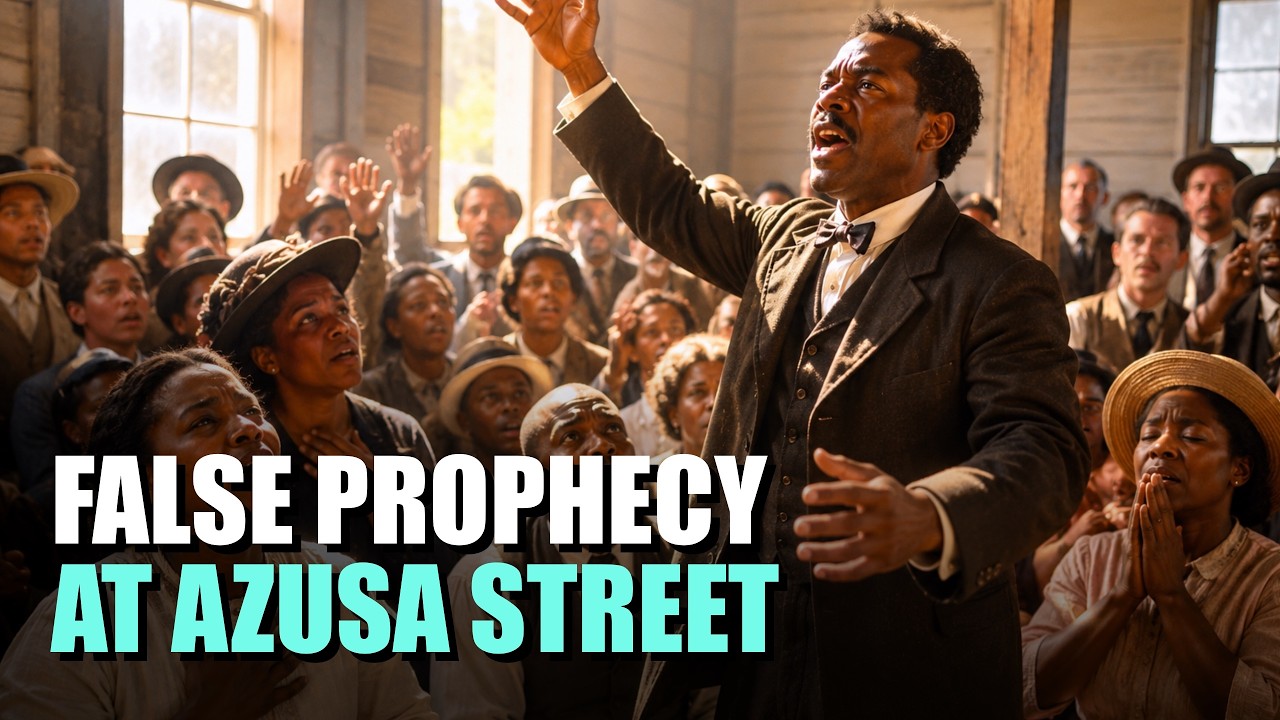
🔗 **Source:** [False Prophecy At Azusa Street? Pentecostal Secrets](https://www.youtube.com/watch?v=OL1--RYnMQs)
> [!note]+ Document Notes
> tags: [azusa-street-revival, pentecostalism, false-prophecy, religious-history, spiritual-discernment, revival-criticism]
> author: [MISSING]
> source: [MISSING]
> reference: https://www.youtube.com/watch?v=OL1--RYnMQs
> date created: {{date:YYYY-MM-DD}} {{time:HH:mm}}
>
> # 🏷️ Title: False Prophecy At Azusa Street? Pentecostal Secrets
>
<!-- deep-read:sections start -->
## 🧭 Table of Contents
- [📝 Summary](#-summary)
- [📖 Main Content](#-main-content)
- [🗒️ Notes](#️-notes)
- [📚 References](#-references)
- [🗣️ Paraphrase](#️-paraphrase)
- [📰 Newsletter](#-newsletter)
- [✅ Action Items](#-action-items)
- [🧪 Hypotheses](#-hypotheses)
- [📊 Methodology](#-methodology)
- [❓ Questions](#-questions)
- [🔮 Future Research](#-future-research)
- [💡 Implications](#-implications)
- [🧠 Learning Styles Assessment](#-learning-styles-assessment)
- [📊 Accessibility Assessment](#-accessibility-assessment)
- [🌍 DEIB Assessment](#-deib-assessment)
- [✅ Logical Validity](#-logical-validity)
- [🛡️ DARVO Analysis](#-darvo-analysis)
- [🎯 Conclusion](#-conclusion)
## 📝 Summary
- A critical examination of the Azusa Street Revival (1906-1909), foundational event of modern Pentecostalism
- Claims the revival prioritized speaking in tongues over gospel preaching and exhibited problematic behaviors
- Highlights false prophecies made during the revival that failed to materialize
- Accuses Pentecostal historians of selective reporting that omits negative aspects
- Argues genuine spiritual movements from God would not include false prophecies or family abandonment
- Uses newspaper accounts to document concerning behaviors contemporary observers witnessed
## 📖 Main Content
The Azusa Street Revival of 1906-1909 in Los Angeles is widely considered the birthplace of modern Pentecostalism. However, contemporary newspaper accounts reveal troubling aspects that Pentecostal historians allegedly omit from their narratives.
### Family Abandonment and Misplaced Priorities
According to Los Angeles newspaper reports, women were openly confessing they had left their husbands and children to pursue "the full measure of faith" at the revival. The speaker argues that legitimate spiritual leadership would have redirected these women back to their families and emphasized spreading the gospel. Instead, the focus remained on speaking in tongues rather than evangelism or family restoration.
### False Prophecies
On July 14, 1906, during the height of the revival, a prophecy was delivered through tongues and interpretation predicting:
- Railroad systems would fail across the United States
- Chicago would be destroyed
- Terrible destruction would come to Los Angeles and Pasadena
None of these predictions materialized, leading the speaker to conclude this demonstrates the revival was not genuinely from God, since true divine prophecy cannot be false.
### Mistreatment of Seekers
The most damning incident described involves a self-confessed sinner who stood up during a meeting expressing genuine desire to learn more about faith. Rather than welcoming him, attendees allegedly kicked him out and injured him in the process. The speaker views this as fundamentally contradicting Christian principles of welcoming sinners.
### Historical Transparency Issues
The speaker compares Pentecostal recruitment tactics to dishonest used car salesmen who highlight positives while concealing known problems. This selective historical narrative prevents people from making informed decisions about joining the movement.
## 🗒️ Notes
#### Women Abandoning Families
- Contemporary newspapers reported women confessing they left husbands and children for "full measure of faith"
- Revival lasted 2-3 years, making family abandonment a sustained issue
- Leadership allegedly failed to redirect women back to families
- Priority remained on tongues over gospel or family restoration
#### False Prophecy Documentation
- July 14, 1906 prophecy through tongues and interpretation
- Predicted railroad failure, Chicago's destruction, LA/Pasadena calamity
- Delivered by "negro prophetess" to "Holy Kickers" congregation
- None of the predictions came to pass
- Speaker sees this as definitive proof revival wasn't from God
#### Mistreatment of Genuine Seeker
- Self-confessed sinner stood up wanting to learn more
- Was physically kicked out and injured by attendees
- Speaker considers this the worst aspect of entire revival
- Contradicts fundamental Christian principle of welcoming sinners
#### Historical Selectivity
- Pentecostal histories allegedly omit problematic aspects
- Newspapers.com subscription reveals daily circus-like atmosphere
- Called "carnival," "vaudeville show" by contemporary observers
- Compared to dishonest car salesman hiding engine problems
- Prevents informed decision-making about joining movement
#### Contemporary Public Perception
- Los Angeles viewed revival as risqué, odd behavior
- Women grabbing men from streets and bringing them in
- Described in terms of "ecstasy" and carnival atmosphere
- Christians of that era would have found behavior questionable
- Resembled "black and white movie" risqué crowds
## 📚 References
- Los Angeles Times newspaper archives (newspapers.com)
- Contemporary newspaper reports from 1906-1909
- Pentecostal historical accounts (unnamed sources)
## 🗣️ Paraphrase
This analysis presents a critical examination of the Azusa Street Revival using contemporary newspaper accounts to challenge the sanitized version typically found in Pentecostal histories. The speaker argues that several factors—family abandonment, false prophecies, mistreatment of seekers, and priority of tongues over gospel—indicate the revival was not a genuine move of God. They particularly emphasize how Pentecostal recruitment practices allegedly hide these problematic aspects, comparing it to dishonest sales tactics that prevent informed decision-making.
## 📰 Newsletter
🔍 **Historical Deep Dive**: Ever wondered what contemporary newspapers said about the famous Azusa Street Revival? This fascinating analysis digs into the Los Angeles Times archives to uncover aspects of Pentecostalism's founding event that don't make it into official church histories. From failed prophecies to family abandonment, the research raises important questions about historical transparency in religious movements. Whether you're studying church history, religious sociology, or just curious about how movements get mythologized over time, this offers valuable insights into the gap between official narratives and documented reality. Check out newspapers.com if you want to do your own primary source research!
## ✅ Action Items
#### DevRel
- Research: Create tutorial on using newspapers.com for historical primary source research
- Education: Develop workshop on evaluating historical claims vs. contemporary documentation
- Content: Write guide on identifying selective historical narratives in any field
#### Community
- Documentation: Best practices for transparent historical reporting in open source projects
- Governance: Guidelines for acknowledging past mistakes or problematic episodes in project history
#### WordPress
- Core: Historical documentation standards for major WordPress milestones and controversies
- Training: Lesson plan on media literacy and primary source evaluation
- Documentation: Style guide for balanced historical narratives that include both positive and negative aspects
## 🧪 Hypotheses
- Religious movements systematically omit problematic founding events from official histories
- Contemporary newspaper coverage provides more accurate picture than later denominational histories
- False prophecies and family disruption indicate non-divine origin of spiritual movements
- Transparency about negative aspects increases rather than decreases movement credibility
- Recruitment tactics that hide known problems indicate leaders' own doubts about movement validity
### 📊 Methodology
- Comparative analysis: Pentecostal histories vs. contemporary newspaper accounts
- Content analysis: Frequency of gospel mentions vs. tongues emphasis in news reports
- Historical verification: Cross-reference prophecy claims with actual historical events
- Ethnographic study: Interview former Pentecostals about what they were/weren't told during recruitment
### ❓ Questions
- What systematic biases affect religious historical writing vs. secular contemporary reporting?
- How do other religious movements handle transparency about problematic founding events?
- What percentage of 1906 prophecies from various religious sources proved accurate?
- Do movements that acknowledge historical problems show greater long-term stability?
### 🔮 Future Research
- Comprehensive analysis of all 1906-1909 LA newspaper coverage of Azusa Street
- Comparative study of how different Christian denominations handle historical transparency
- Longitudinal study of religious conversion rates when full vs. selective history is presented
- Cross-cultural analysis of revival movements and their treatment of failed prophecies
### 💡 Implications
- **Religious Practice**: Need for greater historical honesty in denominational education
- **Academic Study**: Primary sources may contradict official religious histories more frequently than assumed
- **Media Literacy**: Contemporary journalism can provide crucial counterbalance to institutional narratives
- **Recruitment Ethics**: Transparency about negative aspects may be moral imperative even if it reduces conversions
### 🧠 Learning Styles Assessment
Reading level estimate: Grade 10-11 (Flesch-Kincaid) - accessible but assumes some religious knowledge
#### 👀 Visual learners
- Present: None in original audio content
- Improve: Timeline of 1906 events, newspaper headline collages, map of Azusa Street location, before/after comparison charts
#### 🔊 Aural learners
- Present: Full podcast-style audio presentation with clear narration
- Improve: Interview format with multiple perspectives, background music transitions between topics
#### 🗣️ Verbal learners
- Present: Clear definitions (false prophecy, Pentecostalism), historical analogies (used car salesman)
- Improve: Glossary of religious terms, more contemporary parallels, story-driven explanations of each incident
#### 🧩 Kinesthetic learners
- Present: References to newspapers.com for hands-on research
- Improve: Step-by-step guide to newspaper archive research, checklist for evaluating historical claims
#### 🧠 Logical learners
- Present: Logical progression from evidence to conclusions, cause-and-effect reasoning
- Improve: Decision tree for evaluating spiritual movements, formal criteria for authentic vs. false prophecy
#### 🧑🤝🧑 Social learners
- Present: None in solo presentation format
- Improve: Discussion prompts for group analysis, collaborative research projects, moderated debate format
#### 🧘♀️ Solitary learners
- Present: Self-directed research suggestions, independent thinking encouraged
- Improve: Reflection questions, personal evaluation worksheets, journaling prompts about historical discernment
#### 🌿 Naturalistic learners
- Present: None apparent
- Improve: Analogies to natural cycles, ecosystem thinking about how movements grow and change
### 📊 Accessibility Assessment
#### Screen reader semantics
- Present: Clear audio content, logical flow
- Improve: Transcript with proper heading structure, alt text for any future visual materials
#### Keyboard navigation
- Present: Standard audio controls
- Improve: Timestamp navigation, chapter markers, skip-to-content options
#### Contrast and readability
- Present: Audio-only format avoids visual contrast issues
- Improve: High-contrast transcript formatting, readable font choices
#### Text resizing and reflow
- Present: Audio format accommodates all visual needs
- Improve: Responsive transcript that reflows at high zoom levels
#### Media and captions
- Present: Full transcript provided
- Improve: Accurate timestamps, speaker identification, notation for laughter/clearing throat
#### Forms and interactions
- Present: Simple audio playback
- Improve: Accessible feedback forms for listener questions, keyboard-navigable related content
### 🌍 DEIB Assessment
#### Cultural breadth
- Present: Discusses African American religious leadership in historical context
- Improve: Multiple cultural perspectives on revival movements, international Pentecostal experiences
#### Inclusive language
- Present: Generally respectful, though uses some period-specific terms
- Improve: Content warning for historical racial language, more inclusive framing of religious diversity
#### Neurodiversity support
- Present: Clear structure, logical progression
- Improve: Content outline at beginning, consistent section markers, predictable format
#### Representation
- Present: Acknowledges racial dynamics in early Pentecostalism
- Improve: Broader range of historical voices, women's perspectives beyond negative examples
#### Psychological safety
- Present: Respectful critique without personal attacks on current believers
- Improve: Clearer framing about intention to inform rather than attack faith, resources for those questioning beliefs
### ✅ Logical Validity
#### Strong reasoning
- **Causal reasoning**: Failed prophecies indicate non-divine origin (strong logical connection between divine omniscience and prophetic accuracy)
- **Evidence-based argument**: Uses contemporary newspaper accounts as primary sources rather than later denominational histories
- **Consistency test**: Applies same standards to spiritual movements that would be applied to other truth claims
#### Fallacies
- **Hasty generalization**: Drawing conclusions about entire Pentecostal movement from single revival
- **Cherry-picking**: Selecting only negative newspaper accounts while dismissing possibility of positive ones
- **Genetic fallacy**: Arguing current movement invalid based solely on problematic origins
#### Tone of voice
- **Analytical and measured**: "For me this is problem number two" shows personal assessment rather than absolute claims
- **Educational**: Provides specific dates, sources, and research methods
- **Critical but respectful**: Critiques practices without attacking individual believers
### 🛡️ DARVO Analysis
- **Deny**: No clear denial patterns detected - speaker acknowledges Pentecostal perspective exists
- **Attack**: Mild attack on Pentecostal historians for selective reporting, but focuses on practices rather than personal character
- **Reverse victim/offender**: Some elements of portraying Pentecostals as deceptive while positioning potential converts as victims of misinformation
- **Assessment**: Low DARVO risk - critique focuses on verifiable historical claims rather than manipulation tactics
## 🎯 Conclusion
This analysis presents a critical examination of the Azusa Street Revival using contemporary newspaper sources to challenge sanitized denominational histories. The speaker's core argument—that false prophecies, family abandonment, and mistreatment of seekers indicate the revival was not genuinely divine—relies on the principle that authentic spiritual movements should demonstrate consistency with claimed divine attributes. While the research methodology of using primary sources is sound, readers should consider potential newspaper bias and seek additional contemporary perspectives. The broader point about historical transparency in religious movements raises important questions about informed consent in spiritual communities that extend far beyond Pentecostalism.
## 🔄 Refactor Appendix — False Prophecy At Azusa Street? Pentecostal Secrets
### 📚 Literature Atoms
#### False prophecies indicate non-divine spiritual movement origins
> [!quote] ID:transcript_001
> For me something that is based off of speaking in tongues and the tongues that have an interpretation that humans can understand evolves into false prophecy, well, this isn't from God.
**Context & use**:
- Speaker's core argument against Azusa Street Revival's divine origin
- Applied as theological test for evaluating spiritual movements
- Based on principle that divine omniscience precludes false predictions
**Tags**: #false-prophecy #spiritual-discernment #theological-criticism
**Highlight**: Audio transcript
<!-- atomicity: 1 idea ✓ -->
#### Religious movements prioritize distinctive practices over core missions
> [!quote] ID:transcript_002
> It wasn't about the gospel, it was about the speaking in tongues. And really that is the bottom line.
**Context & use**:
- Critique of Azusa Street Revival's emphasis on tongues vs. evangelism
- Pattern recognition applicable to other religious movements
- Diagnostic tool for identifying mission drift in spiritual communities
**Tags**: #religious-priorities #mission-drift #pentecostalism
**Highlight**: Audio transcript
<!-- atomicity: 1 idea ✓ -->
#### Selective historical narratives undermine movement credibility
> [!quote] ID:transcript_003
> The problem that I have with Pentecostalism as a recruitment engine, which it is, they don't always recruit telling you the things that might make you skeptical.
**Context & use**:
- Speaker's main criticism of Pentecostal historical methodology
- Parallel to "used car salesman" analogy for incomplete disclosure
- Principle applicable beyond religious contexts to any institutional history
**Tags**: #historical-transparency #recruitment-ethics #institutional-credibility
**Highlight**: Audio transcript
<!-- atomicity: 1 idea ✓ -->
### 🧠 Permanent Candidates
#### Primary sources reveal gaps in institutional narratives
**Claim**: Contemporary newspaper accounts often contradict sanitized official histories produced by institutions decades later.
**Evidence pointer**: [[#Selective historical narratives undermine movement credibility]]
**Scope & conditions**: Most applicable when institutions have reputational incentives to minimize negative events; less reliable when newspapers had clear bias against the institution
**Links**:
- [[Historical methodology]] — because extends to broader source criticism
- [[Media literacy]] — because applies-in evaluating competing narratives
- [[Institutional transparency]] — because evidence-for the need for honest historical accounting
<!-- atomicity: 1 idea ✓ -->
### ✏️ Fleeting Queue
- Research other religious movements' handling of failed prophecies for comparative analysis #fleeting #research
- Investigate newspaper bias in early 1900s religious reporting #fleeting #methodology
- Examine how other institutions (political, corporate) handle problematic founding events #fleeting #comparative-study
### → Things 3
- [ ] Check newspapers.com subscription options for historical research access #things
- [ ] Create research template for evaluating competing historical narratives #things
---
## Full Transcript
[00:00] If you're listening this podcast and<br>[00:01] you're trying to learn more about the<br>[00:03] spiritual aspects of Azusa Street<br>[00:05] Revival, was this a spiritual thing and<br>[00:07] was it a spirit by God or some other<br>[00:09] spirit?<br>[00:11] The newspaper captures it well when it<br>[00:12] says, "The horror of it."<br>[00:15] There's an article the subsection is<br>[00:17] called the horror of it and it's<br>[00:18] describing [clears throat]<br>[00:20] this this event where women were openly<br>[00:23] confessing that they were telling people<br>[00:26] that they left their husbands and their<br>[00:27] children in order to<br>[00:30] enjoy what they called the full measure<br>[00:32] of faith.<br>[00:34] Leadership [clears throat]<br>[00:35] who were in the revival were hearing<br>[00:36] this thing. They're hearing how women<br>[00:38] were literally abandoning their families<br>[00:40] to come participate. And remember this<br>[00:42] revival went on for what was it? Two,<br>[00:45] three years. So, if you have the<br>[00:48] situation where people are abandoning<br>[00:50] their families, you would expect<br>[00:52] leadership who are in the correct spirit<br>[00:55] to say, "No, don't do that.<br>[00:56] >> [laughter]<br>[00:57] >> They can be saved, too. Let's bring them<br>[00:59] or you can go home to them and teach<br>[01:02] them what you learned." In other words,<br>[01:04] spread the gospel.<br>[01:05] But it wasn't about the gospel, it was<br>[01:07] about the speaking in tongues. And<br>[01:09] really that is the bottom line.<br>[01:11] If you're looking at this from a<br>[01:12] spiritual aspect, the speaking in<br>[01:14] tongues took the priority.<br>[01:17] Any mention of the gospel, in fact, you<br>[01:19] don't find it in any of the newspapers.<br>[01:21] There's no mention of the gospel and the<br>[01:23] spreading of the gospel, you're not<br>[01:25] going to find this.<br>[01:26] And I I want to say that many of the<br>[01:28] Pentecostal histories that I've read,<br>[01:31] not many of them, if any, mention the<br>[01:33] gospel as part of what happened at the<br>[01:35] revival. It's more about the tongues. I<br>[01:38] mentioned in the beginning that there<br>[01:39] were also false prophecies associated<br>[01:42] with this revival. And it's not, after<br>[01:45] all of the weirdness became more weird.<br>[01:48] During the early part of the revival,<br>[01:51] July 14th, 1906. So, this is right at<br>[01:55] the heart of when this thing is<br>[01:56] beginning<br>[01:57] >> [clears throat]<br>[01:58] >> in the article the Holy Kickers carry on<br>[02:01] mad orgies.<br>[02:03] >> [snorts]<br>[02:03] >> There is a description of a prophecy<br>[02:05] that was given in this gift of tongues<br>[02:08] and interpretation<br>[02:10] that went out among the crowds that said<br>[02:12] in the railroad shall bend and the<br>[02:14] girder shall fall and the cars shall<br>[02:16] stand for want of power. In other words,<br>[02:19] all cars in the United States are going<br>[02:20] to stop.<br>[02:22] Chicago will be destroyed and there will<br>[02:24] be a terrible mangling in Los Angeles<br>[02:27] and Pasadena.<br>[02:28] This message from the Lord was conveyed<br>[02:31] to the Holy Kickers by a negro<br>[02:33] prophetess Friday night.<br>[02:36] So,<br>[02:37] if you understand what is happening, the<br>[02:39] people who are coming to this thing and<br>[02:41] they're hearing the tongues, they're<br>[02:43] believing that this is a word from God<br>[02:46] and God tells them this thing that did<br>[02:48] not happen.<br>[02:49] So, for me this is problem number two.<br>[02:52] If you're looking for something to<br>[02:54] identify was this of God or was this not<br>[02:57] a spirit of God?<br>[02:58] For me some something that is based off<br>[03:01] of speaking in tongues and the tongues<br>[03:03] that<br>[03:04] have an interpretation that humans can<br>[03:06] understand<br>[03:08] evolves into false prophecy, well, this<br>[03:11] isn't from God. It's It clearly can't be<br>[03:13] from God because this did not happen.<br>[03:16] I can understand why they would think it<br>[03:18] might happen because they just came<br>[03:19] through the<br>[03:21] through the event the destruction of San<br>[03:23] Francisco.<br>[03:25] But that was a part where mentally the<br>[03:27] brain had connected to the event that<br>[03:30] just happened, but the mouth was<br>[03:32] repeating it as though it came from God.<br>[03:34] So, for me this is the second problem<br>[03:36] that is huge when you think about the<br>[03:38] Pentecostal faith and the Azusa Street<br>[03:41] Revival. Now,<br>[03:43] again, these kind of histories you're<br>[03:45] not going to find in the Pentecostal<br>[03:47] history books<br>[03:49] because they are so highly problematic<br>[03:51] that anybody who is<br>[03:52] wanting to learn more is this a movement<br>[03:55] by God or not<br>[03:56] the moment they come across this the<br>[03:59] question's going to be asked well if<br>[04:00] it's from God how can you have a false<br>[04:03] prophecy there is a lot of questionable<br>[04:05] things happening in the Azusa Street<br>[04:08] Revival right there from the very<br>[04:10] beginning<br>[04:11] not from years after after people say<br>[04:14] that it might have gone down the wrong<br>[04:17] pathway I'm talking right at the very<br>[04:18] beginning there's some weird things<br>[04:20] happening that are very questionable<br>[04:23] I don't have a problem so much even with<br>[04:25] the questionable things because if you<br>[04:28] believe God is all powerful and you've<br>[04:30] got people with people problems coming<br>[04:33] in and suddenly there's an outpouring<br>[04:35] and they become better Christians then<br>[04:37] that makes sense<br>[04:39] I don't see that but it it would make<br>[04:41] sense if it did happen<br>[04:43] for me the [clears throat] bigger<br>[04:44] problem is<br>[04:45] somebody who wants to join the<br>[04:47] Pentecostal faith and they want to learn<br>[04:50] more about this because this is the<br>[04:52] epicenter this is the thing that started<br>[04:54] the modern Pentecostal faith<br>[04:56] I want to learn more about it tell me<br>[04:58] more<br>[04:59] and then the people telling them will<br>[05:01] tell you the parts that they want you to<br>[05:03] hear but they don't tell you these parts<br>[05:05] that I've mentioned today for me this is<br>[05:07] a problem<br>[05:09] picture yourself if you go to used car<br>[05:11] lot and you buy a used car and the car<br>[05:13] salesman comes out and tells you this is<br>[05:14] a great engine it was just rebuilt<br>[05:17] two months ago some little old lady has<br>[05:20] had it in her garage barely drove it<br>[05:23] um decided she was going to rebuild the<br>[05:25] engine and sell it and this thing is<br>[05:28] really really good it's a good car for<br>[05:29] your family<br>[05:31] and doesn't tell you that<br>[05:33] the little old lady had her<br>[05:36] >> [laughter]<br>[05:36] >> shade tree mechanic son do it in his<br>[05:39] spare time and he had no clue what he<br>[05:41] was doing when he rebuilt that engine<br>[05:43] if you knew that you wouldn't buy the<br>[05:45] car right<br>[05:46] >> [laughter]<br>[05:46] >> now does it mean it's a bad car? Not<br>[05:48] necessarily. Maybe he got it right.<br>[05:50] But, you would want to know the<br>[05:52] information before you make an informed<br>[05:54] decision about buying the car.<br>[05:57] The problem that I have with<br>[05:59] Pentecostalism as a recruitment<br>[06:03] engine, which it is,<br>[06:05] they don't always recruit telling you<br>[06:07] the things that might make you<br>[06:09] skeptical. They'll tell you the things<br>[06:11] that might make it appealing, and they<br>[06:13] leave out all of the rest.<br>[06:15] For me, this [clears throat] is a<br>[06:16] problem because inwardly, you you must<br>[06:19] not really believe it solidly because if<br>[06:23] you believed it, you would have enough<br>[06:24] confidence in the good parts that you<br>[06:27] could also talk about the bad. And<br>[06:29] there's some bad.<br>[06:30] >> [laughter]<br>[06:30] >> When you talk about women leaving their<br>[06:32] husbands and all kinds of weird things<br>[06:33] happening, that's pretty bad.<br>[06:36] But, for me,<br>[06:38] it all goes back to that one article<br>[06:39] that I read that I mentioned where a<br>[06:42] sinner legitimately wanted to know more.<br>[06:46] He stood up, he confessed, "I'm a<br>[06:48] sinner. I'm in this revival. I want to<br>[06:50] know more."<br>[06:52] And he was injured as they kicked him<br>[06:53] out of the meeting.<br>[06:55] That's not something that you're going<br>[06:56] to hear in a Pentecostal history book.<br>[06:58] That's not something that I would put up<br>[07:00] with. If I watch this and I'm in the<br>[07:02] revival, that's the moment that I leave.<br>[07:04] I don't stay there when I watch a sinner<br>[07:06] being kicked out. Absolutely not.<br>[07:09] And that's not the part that they tell<br>[07:11] you. So, for me, that is the biggest<br>[07:13] problem of the entire event in my mind<br>[07:16] is the sinner who wants to learn more,<br>[07:19] and he's ejected from the revival.<br>[07:22] So, so much more I could get into. This<br>[07:24] is just a highlight of all of the<br>[07:26] weirdness that happened. Again, if you<br>[07:28] want to learn more, you can get a use<br>[07:30] newspapers.com subscription and just<br>[07:33] start reading daily in the Los Angeles<br>[07:35] Times because this was a circus. You<br>[07:38] could read daily of what was happening,<br>[07:39] and people they even called it like a<br>[07:42] carnival. It was like a<br>[07:44] vaudeville show, I think was one of the<br>[07:46] terms that they used. They used<br>[07:47] different terms. And it's kind of funny<br>[07:49] when you read it because you're<br>[07:50] picturing all these black and white<br>[07:52] movies where the risqué crowd are doing<br>[07:54] the risqué things.<br>[07:55] That's how the city of Los Angeles saw<br>[07:58] the Azusa Street Revival from the<br>[08:00] outside looking in. Women leaving their<br>[08:02] husbands, ecstasy, women running out and<br>[08:05] grabbing men from the streets and taking<br>[08:07] them in.<br>[08:08] And all of this weirdness that, you<br>[08:11] know, if you if you were a Christian<br>[08:12] back then and you saw this happening,<br>[08:14] you would think, "Truly, there's<br>[08:15] something odd about this group of<br>[08:17] people, and I don't know that this is a<br>[08:19] movement from God."<br>[08:29] >> [music]
<!-- deep-read:sections end -->
## 📺 Video

## Highlights
- For me something that is based off of speaking in tongues and the tongues that have an interpretation that humans can understand evolves into false prophecy, well, this isn't from God.
- Note: 📚 False prophecies indicate non-divine spiritual movement origins · - Speaker's core argument against Azusa Street Revival's divine origin - Applied as theological test for evaluating spiritual movements - Based on principle that divine omniscience precludes false predictions · #atom/literature/h1
- It wasn't about the gospel, it was about the speaking in tongues. And really that is the bottom line.
- Note: 📚 Religious movements prioritize distinctive practices over core missions · - Critique of Azusa Street Revival's emphasis on tongues vs. evangelism - Pattern recognition applicable to other religious movements - Diagnostic tool for identifying mission drift in spiritual communities · #atom/literature/h2
- The problem that I have with Pentecostalism as a recruitment engine, which it is, they don't always recruit telling you the things that might make you skeptical.
- Note: 📚 Selective historical narratives undermine movement credibility · - Speaker's main criticism of Pentecostal historical methodology - Parallel to "used car salesman" analogy for incomplete disclosure - Principle applicable beyond religious contexts to any institutional history · #atom/literature/h3
- Primary sources reveal gaps in institutional narratives
- Note: [[Historical methodology]] — because extends to broader source criticism · - [[Historical methodology]] — because extends to broader source criticism · #atom/zettel/z1
- Research other religious movements' handling of failed prophecies for comparative analysis #fleeting #research
- Note: ✏️ Fleeting capture #atom/fleeting/f1
- Investigate newspaper bias in early 1900s religious reporting #fleeting #methodology
- Note: ✏️ Fleeting capture #atom/fleeting/f2
- Examine how other institutions (political, corporate) handle problematic founding events #fleeting #comparative-study
- Note: ✏️ Fleeting capture #atom/fleeting/f3
- Drawing conclusions about entire Pentecostal movement from single revival
- Note: 🔍 Fallacy: Hasty Generalization #fallacy/hasty-generalization
---
# 📝 Full Notes (Deep-Read Analysis)
# 🏷️ Title: False Prophecy At Azusa Street? Pentecostal Secrets
## 🧭 Table of Contents
- [📝 Summary](#-summary)
- [📖 Main Content](#-main-content)
- [🗒️ Notes](#️-notes)
- [📚 References](#-references)
- [🗣️ Paraphrase](#️-paraphrase)
- [📰 Newsletter](#-newsletter)
- [✅ Action Items](#-action-items)
- [🧪 Hypotheses](#-hypotheses)
- [📊 Methodology](#-methodology)
- [❓ Questions](#-questions)
- [🔮 Future Research](#-future-research)
- [💡 Implications](#-implications)
- [🧠 Learning Styles Assessment](#-learning-styles-assessment)
- [📊 Accessibility Assessment](#-accessibility-assessment)
- [🌍 DEIB Assessment](#-deib-assessment)
- [✅ Logical Validity](#-logical-validity)
- [🛡️ DARVO Analysis](#-darvo-analysis)
- [🎯 Conclusion](#-conclusion)
## 📝 Summary
- A critical examination of the Azusa Street Revival (1906-1909), foundational event of modern Pentecostalism
- Claims the revival prioritized speaking in tongues over gospel preaching and exhibited problematic behaviors
- Highlights false prophecies made during the revival that failed to materialize
- Accuses Pentecostal historians of selective reporting that omits negative aspects
- Argues genuine spiritual movements from God would not include false prophecies or family abandonment
- Uses newspaper accounts to document concerning behaviors contemporary observers witnessed
## 📖 Main Content
The Azusa Street Revival of 1906-1909 in Los Angeles is widely considered the birthplace of modern Pentecostalism. However, contemporary newspaper accounts reveal troubling aspects that Pentecostal historians allegedly omit from their narratives.
### Family Abandonment and Misplaced Priorities
According to Los Angeles newspaper reports, women were openly confessing they had left their husbands and children to pursue "the full measure of faith" at the revival. The speaker argues that legitimate spiritual leadership would have redirected these women back to their families and emphasized spreading the gospel. Instead, the focus remained on speaking in tongues rather than evangelism or family restoration.
### False Prophecies
On July 14, 1906, during the height of the revival, a prophecy was delivered through tongues and interpretation predicting:
- Railroad systems would fail across the United States
- Chicago would be destroyed
- Terrible destruction would come to Los Angeles and Pasadena
None of these predictions materialized, leading the speaker to conclude this demonstrates the revival was not genuinely from God, since true divine prophecy cannot be false.
### Mistreatment of Seekers
The most damning incident described involves a self-confessed sinner who stood up during a meeting expressing genuine desire to learn more about faith. Rather than welcoming him, attendees allegedly kicked him out and injured him in the process. The speaker views this as fundamentally contradicting Christian principles of welcoming sinners.
### Historical Transparency Issues
The speaker compares Pentecostal recruitment tactics to dishonest used car salesmen who highlight positives while concealing known problems. This selective historical narrative prevents people from making informed decisions about joining the movement.
## 🗒️ Notes
#### Women Abandoning Families
- Contemporary newspapers reported women confessing they left husbands and children for "full measure of faith"
- Revival lasted 2-3 years, making family abandonment a sustained issue
- Leadership allegedly failed to redirect women back to families
- Priority remained on tongues over gospel or family restoration
#### False Prophecy Documentation
- July 14, 1906 prophecy through tongues and interpretation
- Predicted railroad failure, Chicago's destruction, LA/Pasadena calamity
- Delivered by "negro prophetess" to "Holy Kickers" congregation
- None of the predictions came to pass
- Speaker sees this as definitive proof revival wasn't from God
#### Mistreatment of Genuine Seeker
- Self-confessed sinner stood up wanting to learn more
- Was physically kicked out and injured by attendees
- Speaker considers this the worst aspect of entire revival
- Contradicts fundamental Christian principle of welcoming sinners
#### Historical Selectivity
- Pentecostal histories allegedly omit problematic aspects
- Newspapers.com subscription reveals daily circus-like atmosphere
- Called "carnival," "vaudeville show" by contemporary observers
- Compared to dishonest car salesman hiding engine problems
- Prevents informed decision-making about joining movement
#### Contemporary Public Perception
- Los Angeles viewed revival as risqué, odd behavior
- Women grabbing men from streets and bringing them in
- Described in terms of "ecstasy" and carnival atmosphere
- Christians of that era would have found behavior questionable
- Resembled "black and white movie" risqué crowds
## 📚 References
- Los Angeles Times newspaper archives (newspapers.com)
- Contemporary newspaper reports from 1906-1909
- Pentecostal historical accounts (unnamed sources)
## 🗣️ Paraphrase
This analysis presents a critical examination of the Azusa Street Revival using contemporary newspaper accounts to challenge the sanitized version typically found in Pentecostal histories. The speaker argues that several factors—family abandonment, false prophecies, mistreatment of seekers, and priority of tongues over gospel—indicate the revival was not a genuine move of God. They particularly emphasize how Pentecostal recruitment practices allegedly hide these problematic aspects, comparing it to dishonest sales tactics that prevent informed decision-making.
## 📰 Newsletter
🔍 **Historical Deep Dive**: Ever wondered what contemporary newspapers said about the famous Azusa Street Revival? This fascinating analysis digs into the Los Angeles Times archives to uncover aspects of Pentecostalism's founding event that don't make it into official church histories. From failed prophecies to family abandonment, the research raises important questions about historical transparency in religious movements. Whether you're studying church history, religious sociology, or just curious about how movements get mythologized over time, this offers valuable insights into the gap between official narratives and documented reality. Check out newspapers.com if you want to do your own primary source research!
## ✅ Action Items
#### DevRel
- Research: Create tutorial on using newspapers.com for historical primary source research
- Education: Develop workshop on evaluating historical claims vs. contemporary documentation
- Content: Write guide on identifying selective historical narratives in any field
#### Community
- Documentation: Best practices for transparent historical reporting in open source projects
- Governance: Guidelines for acknowledging past mistakes or problematic episodes in project history
#### WordPress
- Core: Historical documentation standards for major WordPress milestones and controversies
- Training: Lesson plan on media literacy and primary source evaluation
- Documentation: Style guide for balanced historical narratives that include both positive and negative aspects
## 🧪 Hypotheses
- Religious movements systematically omit problematic founding events from official histories
- Contemporary newspaper coverage provides more accurate picture than later denominational histories
- False prophecies and family disruption indicate non-divine origin of spiritual movements
- Transparency about negative aspects increases rather than decreases movement credibility
- Recruitment tactics that hide known problems indicate leaders' own doubts about movement validity
### 📊 Methodology
- Comparative analysis: Pentecostal histories vs. contemporary newspaper accounts
- Content analysis: Frequency of gospel mentions vs. tongues emphasis in news reports
- Historical verification: Cross-reference prophecy claims with actual historical events
- Ethnographic study: Interview former Pentecostals about what they were/weren't told during recruitment
### ❓ Questions
- What systematic biases affect religious historical writing vs. secular contemporary reporting?
- How do other religious movements handle transparency about problematic founding events?
- What percentage of 1906 prophecies from various religious sources proved accurate?
- Do movements that acknowledge historical problems show greater long-term stability?
### 🔮 Future Research
- Comprehensive analysis of all 1906-1909 LA newspaper coverage of Azusa Street
- Comparative study of how different Christian denominations handle historical transparency
- Longitudinal study of religious conversion rates when full vs. selective history is presented
- Cross-cultural analysis of revival movements and their treatment of failed prophecies
### 💡 Implications
- **Religious Practice**: Need for greater historical honesty in denominational education
- **Academic Study**: Primary sources may contradict official religious histories more frequently than assumed
- **Media Literacy**: Contemporary journalism can provide crucial counterbalance to institutional narratives
- **Recruitment Ethics**: Transparency about negative aspects may be moral imperative even if it reduces conversions
### 🧠 Learning Styles Assessment
Reading level estimate: Grade 10-11 (Flesch-Kincaid) - accessible but assumes some religious knowledge
#### 👀 Visual learners
- Present: None in original audio content
- Improve: Timeline of 1906 events, newspaper headline collages, map of Azusa Street location, before/after comparison charts
#### 🔊 Aural learners
- Present: Full podcast-style audio presentation with clear narration
- Improve: Interview format with multiple perspectives, background music transitions between topics
#### 🗣️ Verbal learners
- Present: Clear definitions (false prophecy, Pentecostalism), historical analogies (used car salesman)
- Improve: Glossary of religious terms, more contemporary parallels, story-driven explanations of each incident
#### 🧩 Kinesthetic learners
- Present: References to newspapers.com for hands-on research
- Improve: Step-by-step guide to newspaper archive research, checklist for evaluating historical claims
#### 🧠 Logical learners
- Present: Logical progression from evidence to conclusions, cause-and-effect reasoning
- Improve: Decision tree for evaluating spiritual movements, formal criteria for authentic vs. false prophecy
#### 🧑🤝🧑 Social learners
- Present: None in solo presentation format
- Improve: Discussion prompts for group analysis, collaborative research projects, moderated debate format
#### 🧘♀️ Solitary learners
- Present: Self-directed research suggestions, independent thinking encouraged
- Improve: Reflection questions, personal evaluation worksheets, journaling prompts about historical discernment
#### 🌿 Naturalistic learners
- Present: None apparent
- Improve: Analogies to natural cycles, ecosystem thinking about how movements grow and change
### 📊 Accessibility Assessment
#### Screen reader semantics
- Present: Clear audio content, logical flow
- Improve: Transcript with proper heading structure, alt text for any future visual materials
#### Keyboard navigation
- Present: Standard audio controls
- Improve: Timestamp navigation, chapter markers, skip-to-content options
#### Contrast and readability
- Present: Audio-only format avoids visual contrast issues
- Improve: High-contrast transcript formatting, readable font choices
#### Text resizing and reflow
- Present: Audio format accommodates all visual needs
- Improve: Responsive transcript that reflows at high zoom levels
#### Media and captions
- Present: Full transcript provided
- Improve: Accurate timestamps, speaker identification, notation for laughter/clearing throat
#### Forms and interactions
- Present: Simple audio playback
- Improve: Accessible feedback forms for listener questions, keyboard-navigable related content
### 🌍 DEIB Assessment
#### Cultural breadth
- Present: Discusses African American religious leadership in historical context
- Improve: Multiple cultural perspectives on revival movements, international Pentecostal experiences
#### Inclusive language
- Present: Generally respectful, though uses some period-specific terms
- Improve: Content warning for historical racial language, more inclusive framing of religious diversity
#### Neurodiversity support
- Present: Clear structure, logical progression
- Improve: Content outline at beginning, consistent section markers, predictable format
#### Representation
- Present: Acknowledges racial dynamics in early Pentecostalism
- Improve: Broader range of historical voices, women's perspectives beyond negative examples
#### Psychological safety
- Present: Respectful critique without personal attacks on current believers
- Improve: Clearer framing about intention to inform rather than attack faith, resources for those questioning beliefs
### ✅ Logical Validity
#### Strong reasoning
- **Causal reasoning**: Failed prophecies indicate non-divine origin (strong logical connection between divine omniscience and prophetic accuracy)
- **Evidence-based argument**: Uses contemporary newspaper accounts as primary sources rather than later denominational histories
- **Consistency test**: Applies same standards to spiritual movements that would be applied to other truth claims
#### Fallacies
- **Hasty generalization**: Drawing conclusions about entire Pentecostal movement from single revival
- **Cherry-picking**: Selecting only negative newspaper accounts while dismissing possibility of positive ones
- **Genetic fallacy**: Arguing current movement invalid based solely on problematic origins
#### Tone of voice
- **Analytical and measured**: "For me this is problem number two" shows personal assessment rather than absolute claims
- **Educational**: Provides specific dates, sources, and research methods
- **Critical but respectful**: Critiques practices without attacking individual believers
### 🛡️ DARVO Analysis
- **Deny**: No clear denial patterns detected - speaker acknowledges Pentecostal perspective exists
- **Attack**: Mild attack on Pentecostal historians for selective reporting, but focuses on practices rather than personal character
- **Reverse victim/offender**: Some elements of portraying Pentecostals as deceptive while positioning potential converts as victims of misinformation
- **Assessment**: Low DARVO risk - critique focuses on verifiable historical claims rather than manipulation tactics
## 🎯 Conclusion
This analysis presents a critical examination of the Azusa Street Revival using contemporary newspaper sources to challenge sanitized denominational histories. The speaker's core argument—that false prophecies, family abandonment, and mistreatment of seekers indicate the revival was not genuinely divine—relies on the principle that authentic spiritual movements should demonstrate consistency with claimed divine attributes. While the research methodology of using primary sources is sound, readers should consider potential newspaper bias and seek additional contemporary perspectives. The broader point about historical transparency in religious movements raises important questions about informed consent in spiritual communities that extend far beyond Pentecostalism.
## 🔄 Refactor Appendix — False Prophecy At Azusa Street? Pentecostal Secrets
### 📚 Literature Atoms
#### False prophecies indicate non-divine spiritual movement origins
> [!quote] ID:transcript_001
> For me something that is based off of speaking in tongues and the tongues that have an interpretation that humans can understand evolves into false prophecy, well, this isn't from God.
**Context & use**:
- Speaker's core argument against Azusa Street Revival's divine origin
- Applied as theological test for evaluating spiritual movements
- Based on principle that divine omniscience precludes false predictions
**Tags**: #false-prophecy #spiritual-discernment #theological-criticism
**Highlight**: Audio transcript
<!-- atomicity: 1 idea ✓ -->
#### Religious movements prioritize distinctive practices over core missions
> [!quote] ID:transcript_002
> It wasn't about the gospel, it was about the speaking in tongues. And really that is the bottom line.
**Context & use**:
- Critique of Azusa Street Revival's emphasis on tongues vs. evangelism
- Pattern recognition applicable to other religious movements
- Diagnostic tool for identifying mission drift in spiritual communities
**Tags**: #religious-priorities #mission-drift #pentecostalism
**Highlight**: Audio transcript
<!-- atomicity: 1 idea ✓ -->
#### Selective historical narratives undermine movement credibility
> [!quote] ID:transcript_003
> The problem that I have with Pentecostalism as a recruitment engine, which it is, they don't always recruit telling you the things that might make you skeptical.
**Context & use**:
- Speaker's main criticism of Pentecostal historical methodology
- Parallel to "used car salesman" analogy for incomplete disclosure
- Principle applicable beyond religious contexts to any institutional history
**Tags**: #historical-transparency #recruitment-ethics #institutional-credibility
**Highlight**: Audio transcript
<!-- atomicity: 1 idea ✓ -->
### 🧠 Permanent Candidates
#### Primary sources reveal gaps in institutional narratives
**Claim**: Contemporary newspaper accounts often contradict sanitized official histories produced by institutions decades later.
**Evidence pointer**: [[#Selective historical narratives undermine movement credibility]]
**Scope & conditions**: Most applicable when institutions have reputational incentives to minimize negative events; less reliable when newspapers had clear bias against the institution
**Links**:
- [[Historical methodology]] — because extends to broader source criticism
- [[Media literacy]] — because applies-in evaluating competing narratives
- [[Institutional transparency]] — because evidence-for the need for honest historical accounting
<!-- atomicity: 1 idea ✓ -->
### ✏️ Fleeting Queue
- Research other religious movements' handling of failed prophecies for comparative analysis #fleeting #research
- Investigate newspaper bias in early 1900s religious reporting #fleeting #methodology
- Examine how other institutions (political, corporate) handle problematic founding events #fleeting #comparative-study
### → Things 3
- [ ] Check newspapers.com subscription options for historical research access #things
- [ ] Create research template for evaluating competing historical narratives #things
---
# 📄 Full Transcript
*Auto-generated from YouTube captions · timestamps roughly every 30 seconds · [watch on YouTube](https://www.youtube.com/watch?v=OL1--RYnMQs)*
**[00:00]** If you're listening this podcast and you're trying to learn more about the spiritual aspects of Azusa Street Revival, was this a spiritual thing and was it a spirit by God or some other spirit? The newspaper captures it well when it says, "The horror of it." There's an article the subsection is called the horror of it and it's describing [clears throat] this this event where women were openly confessing that they were telling people that they left their husbands and their children in order to
**[00:30]** enjoy what they called the full measure of faith. Leadership [clears throat] who were in the revival were hearing this thing. They're hearing how women were literally abandoning their families to come participate. And remember this revival went on for what was it? Two, three years. So, if you have the situation where people are abandoning their families, you would expect leadership who are in the correct spirit to say, "No, don't do that. >> [laughter] >> They can be saved, too. Let's bring them or you can go home to them and teach
**[01:02]** them what you learned." In other words, spread the gospel. But it wasn't about the gospel, it was about the speaking in tongues. And really that is the bottom line. If you're looking at this from a spiritual aspect, the speaking in tongues took the priority. Any mention of the gospel, in fact, you don't find it in any of the newspapers. There's no mention of the gospel and the spreading of the gospel, you're not going to find this. And I I want to say that many of the Pentecostal histories that I've read, not many of them, if any, mention the
**[01:33]** gospel as part of what happened at the revival. It's more about the tongues. I mentioned in the beginning that there were also false prophecies associated with this revival. And it's not, after all of the weirdness became more weird. During the early part of the revival, July 14th, 1906. So, this is right at the heart of when this thing is beginning >> [clears throat] >> in the article the Holy Kickers carry on mad orgies. >> [snorts] >> There is a description of a prophecy
**[02:05]** that was given in this gift of tongues and interpretation that went out among the crowds that said in the railroad shall bend and the girder shall fall and the cars shall stand for want of power. In other words, all cars in the United States are going to stop. Chicago will be destroyed and there will be a terrible mangling in Los Angeles and Pasadena. This message from the Lord was conveyed to the Holy Kickers by a negro prophetess Friday night.
**[02:36]** So, if you understand what is happening, the people who are coming to this thing and they're hearing the tongues, they're believing that this is a word from God and God tells them this thing that did not happen. So, for me this is problem number two. If you're looking for something to identify was this of God or was this not a spirit of God? For me some something that is based off of speaking in tongues and the tongues that have an interpretation that humans can
**[03:06]** understand evolves into false prophecy, well, this isn't from God. It's It clearly can't be from God because this did not happen. I can understand why they would think it might happen because they just came through the event the destruction of San Francisco. But that was a part where mentally the brain had connected to the event that just happened, but the mouth was repeating it as though it came from God. So, for me this is the second problem that is huge when you think about the
**[03:38]** Pentecostal faith and the Azusa Street Revival. Now, again, these kind of histories you're not going to find in the Pentecostal history books because they are so highly problematic that anybody who is wanting to learn more is this a movement by God or not the moment they come across this the question's going to be asked well if it's from God how can you have a false prophecy there is a lot of questionable things happening in the Azusa Street Revival right there from the very
**[04:10]** beginning not from years after after people say that it might have gone down the wrong pathway I'm talking right at the very beginning there's some weird things happening that are very questionable I don't have a problem so much even with the questionable things because if you believe God is all powerful and you've got people with people problems coming in and suddenly there's an outpouring and they become better Christians then that makes sense I don't see that but it it would make
**[04:41]** sense if it did happen for me the [clears throat] bigger problem is somebody who wants to join the Pentecostal faith and they want to learn more about this because this is the epicenter this is the thing that started the modern Pentecostal faith I want to learn more about it tell me more and then the people telling them will tell you the parts that they want you to hear but they don't tell you these parts that I've mentioned today for me this is a problem picture yourself if you go to used car lot and you buy a used car and the car
**[05:13]** salesman comes out and tells you this is a great engine it was just rebuilt two months ago some little old lady has had it in her garage barely drove it um decided she was going to rebuild the engine and sell it and this thing is really really good it's a good car for your family and doesn't tell you that the little old lady had her >> [laughter] >> shade tree mechanic son do it in his spare time and he had no clue what he was doing when he rebuilt that engine
**[05:43]** if you knew that you wouldn't buy the car right >> [laughter] >> now does it mean it's a bad car? Not necessarily. Maybe he got it right. But, you would want to know the information before you make an informed decision about buying the car. The problem that I have with Pentecostalism as a recruitment engine, which it is, they don't always recruit telling you the things that might make you skeptical. They'll tell you the things that might make it appealing, and they leave out all of the rest.
**[06:15]** For me, this [clears throat] is a problem because inwardly, you you must not really believe it solidly because if you believed it, you would have enough confidence in the good parts that you could also talk about the bad. And there's some bad. >> [laughter] >> When you talk about women leaving their husbands and all kinds of weird things happening, that's pretty bad. But, for me, it all goes back to that one article that I read that I mentioned where a sinner legitimately wanted to know more.
**[06:46]** He stood up, he confessed, "I'm a sinner. I'm in this revival. I want to know more." And he was injured as they kicked him out of the meeting. That's not something that you're going to hear in a Pentecostal history book. That's not something that I would put up with. If I watch this and I'm in the revival, that's the moment that I leave. I don't stay there when I watch a sinner being kicked out. Absolutely not. And that's not the part that they tell you. So, for me, that is the biggest problem of the entire event in my mind
**[07:16]** is the sinner who wants to learn more, and he's ejected from the revival. So, so much more I could get into. This is just a highlight of all of the weirdness that happened. Again, if you want to learn more, you can get a use newspapers.com subscription and just start reading daily in the Los Angeles Times because this was a circus. You could read daily of what was happening, and people they even called it like a carnival. It was like a vaudeville show, I think was one of the terms that they used. They used
**[07:47]** different terms. And it's kind of funny when you read it because you're picturing all these black and white movies where the risqué crowd are doing the risqué things. That's how the city of Los Angeles saw the Azusa Street Revival from the outside looking in. Women leaving their husbands, ecstasy, women running out and grabbing men from the streets and taking them in. And all of this weirdness that, you know, if you if you were a Christian back then and you saw this happening, you would think, "Truly, there's something odd about this group of
**[08:17]** people, and I don't know that this is a movement from God." >> [music]