Here's Why Personality Tests ALWAYS Work*
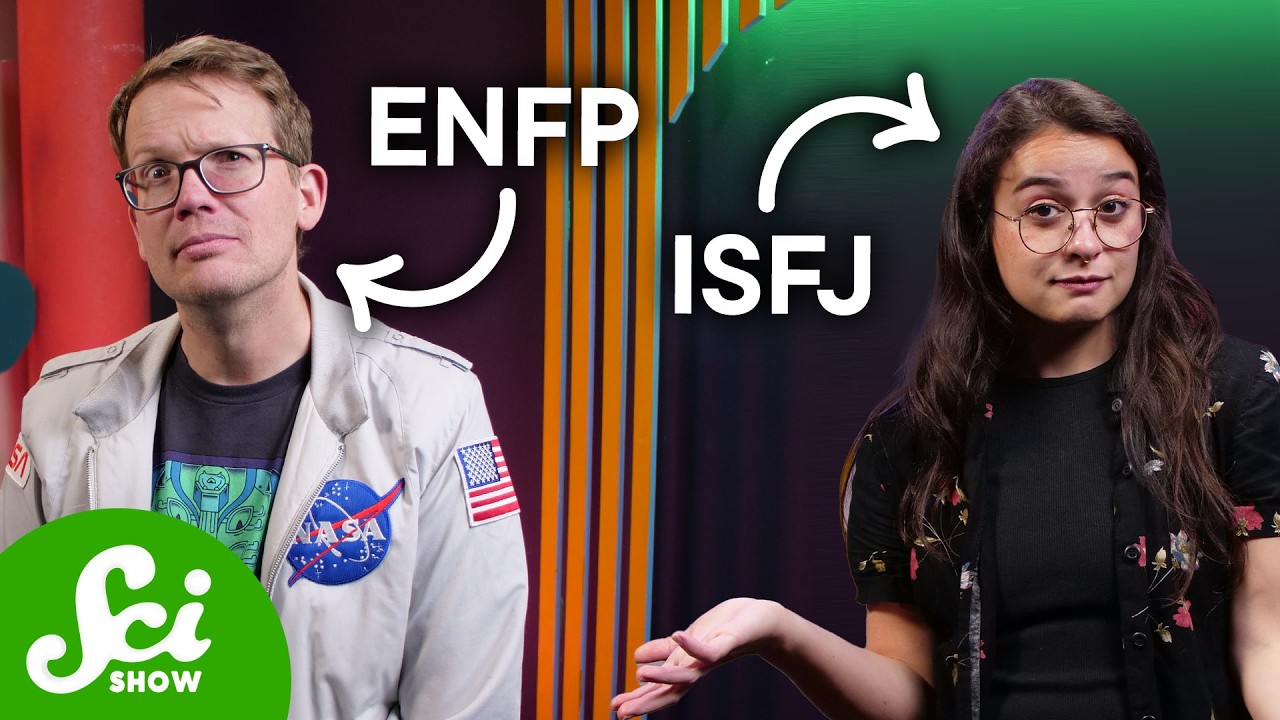
🔗 **Source:** [Here's Why Personality Tests ALWAYS Work*](https://www.youtube.com/watch?v=cnlL-7wp7MQ&t=312s)
> [!note]+ Document Notes
> tags: [personality-tests, barnum-effect, psychological-bias]
> author: [MISSING]
> source: SciShow
> reference: https://www.youtube.com/watch?v=cnlL-7wp7MQ&t=312s
> date created: {{date:YYYY-MM-DD}} {{time:HH:mm}}
>
> # 🏷️ Title: Here's Why Personality Tests ALWAYS Work*
>
<!-- deep-read:sections start -->
## 🧭 Table of Contents
- [📝 Summary](#-summary)
- [📖 Main Content](#-main-content)
- [🗒️ Notes](#️-notes)
- [📚 References](#-references)
- [🗣️ Paraphrase](#️-paraphrase)
- [📰 Newsletter](#-newsletter)
- [✅ Action Items](#-action-items)
- [🧪 Hypotheses](#-hypotheses)
- [📊 Methodology](#-methodology)
- [❓ Questions](#-questions)
- [🔮 Future Research](#-future-research)
- [💡 Implications](#-implications)
- [🧠 Learning Styles Assessment](#-learning-styles-assessment)
- [📊 Accessibility Assessment](#-accessibility-assessment)
- [🌍 DEIB Assessment](#-deib-assessment)
- [✅ Logical Validity](#-logical-validity)
- [🛡️ DARVO Analysis](#-darvo-analysis)
- [🎯 Conclusion](#-conclusion)
## 📝 Summary
- The Barnum effect explains why generic personality profiles feel personally accurate to most people.
- Bertram Forer's 1949 experiment revealed that students rated identical, vague personality descriptions as highly accurate for themselves.
- Modern tests like MBTI show poor test-retest reliability, with up to half of participants receiving different results on retakes.
- The Big Five model shows better reliability but only works for WEIRD (Western, Educated, Industrialized, Rich, Democratic) populations.
- Key stakeholders include employers using personality tests for hiring, individuals seeking self-understanding, and test companies profiting from these tools.
## 📖 Main Content
The video explores the psychological phenomenon behind why personality tests feel accurate even when they're generic. The Barnum effect, named after showman P.T. Barnum, describes how people tend to accept vague, flattering personality descriptions as uniquely applicable to themselves.
### Historical Context
Personality testing began with the 1917 Woodworth Personal Data Sheet (WPDS), designed to identify soldiers vulnerable to shell shock (PTSD). Though never widely deployed due to WWI ending, it established the foundation for modern personality testing. Early tests served capitalistic interests, focusing on "adjustment" - identifying workers who would conform to workplace norms and avoid unionization.
### The Forer Experiment
In 1949, psychologist Bertram Forer conducted a landmark experiment. He gave his students a personality questionnaire, promising individualized results. Instead, all students received identical profiles with statements like "You have a great need for other people to like and admire you" and "You pride yourself as an independent thinker." Nearly all students rated their profiles as highly accurate, despite receiving identical feedback.
### Modern Applications
The Myers-Briggs Type Indicator (MBTI), despite its popularity in corporate settings, shows poor test-retest reliability. Studies indicate up to half of participants receive different personality types when retaking the test. The Big Five personality model demonstrates better reliability but fails to work effectively outside WEIRD populations.
## 🗒️ Notes
#### ⏱️ [00:00:00](https://www.youtube.com/watch?v=cnlL-7wp7MQ&t=0s) Opening hook with fake personality profile
- SciShow presents fake "market research" about viewer personalities
- Lists five generic statements that feel personally applicable
- Reveals these are made up but likely felt accurate to viewers
#### ⏱️ [00:02:45](https://www.youtube.com/watch?v=cnlL-7wp7MQ&t=165s) History of personality testing
- 1917 Woodworth Personal Data Sheet designed for shell shock prediction
- 125 yes/no questions including "Have you ever fainted away?"
- Early tests focused on workplace "adjustment" and conformity
#### ⏱️ [00:05:12](https://www.youtube.com/watch?v=cnlL-7wp7MQ&t=312s) Bertram Forer's experiment
- 1949 psychology class given identical personality profiles
- Students rated accuracy highly despite receiving same feedback
- Profiles contained vague, flattering, universally relatable statements
#### ⏱️ [00:08:30](https://www.youtube.com/watch?v=cnlL-7wp7MQ&t=510s) Barnum effect mechanisms
- People believe favorable statements about themselves
- Confirmation bias reinforces profile acceptance
- Weak self-image correlates with higher profile acceptance
#### ⏱️ [00:12:15](https://www.youtube.com/watch?v=cnlL-7wp7MQ&t=735s) MBTI reliability issues
- Up to 50% of test-takers receive different results on retests
- Popular despite poor scientific validation
- 93 questions create illusion of comprehensive assessment
#### ⏱️ [00:15:45](https://www.youtube.com/watch?v=cnlL-7wp7MQ&t=945s) Big Five model limitations
- Better test-retest reliability than MBTI
- Based on linguistic analysis across cultures
- Only validated for WEIRD populations
- Forced-choice format flattens personality nuance
## 📚 References
- [Woodworth Personal Data Sheet (1917)](https://www.youtube.com/watch?v=cnlL-7wp7MQ)
- [Bertram Forer's 1949 experiment](https://www.youtube.com/watch?v=cnlL-7wp7MQ)
- [Myers-Briggs Type Indicator assessment](https://www.youtube.com/watch?v=cnlL-7wp7MQ)
- [Big Five Personality Trait model](https://www.youtube.com/watch?v=cnlL-7wp7MQ)
## 🗣️ Paraphrase
Personality tests succeed because humans have a psychological blind spot called the Barnum effect. When presented with vague, flattering statements about ourselves, we tend to see them as uniquely accurate descriptions rather than generic platitudes. This phenomenon was scientifically demonstrated in 1949 when a psychology professor gave his entire class identical personality profiles, and nearly everyone found their "personalized" results highly accurate. Modern personality tests like the Myers-Briggs exploit this tendency, maintaining popularity despite poor scientific reliability. Even scientifically grounded models like the Big Five only work for specific populations and flatten the true complexity of human personality into rigid categories.
## 📰 Newsletter
Ever wonder why that personality quiz nailed your character so perfectly? You're not alone - and you're probably not as special as you think! This week's SciShow deep-dive reveals the Barnum effect: our tendency to see generic, flattering statements as uniquely personal truths. From 1917 shell shock assessments to modern MBTI workplace evaluations, personality tests have been fooling us for over a century. Before you put "ENFJ" in your bio, learn why up to half of test-takers get different results when retaking these "scientific" assessments. The real science? Human personality is far too complex for any forced-choice questionnaire to capture accurately.
## ✅ Action Items
#### DevRel
- Education: Workshop on cognitive bias in user research and product design
- Developer experience: Avoid personality-based user segmentation in onboarding
- Community management: Guidelines against personality type discrimination in forums
#### Community
- Contributors: Training on avoiding bias in user persona development
- Maintainers: Code review guidelines to prevent algorithmic personality profiling
#### WordPress
- Design: UX audits to remove personality-based feature recommendations
- Documentation: Style guide warning against personality type generalizations
- Community: Meetup guidelines discouraging personality test team-building activities
## 🧪 Hypotheses
- People with stronger self-concept show less susceptibility to Barnum effect personality profiles
- Test length positively correlates with perceived accuracy regardless of actual validity
- Cultural background significantly influences personality test interpretation and acceptance
- Workplace personality test usage correlates with increased hiring bias
- Digital personality assessments exploit confirmation bias more effectively than paper versions
### 📊 Methodology
- Longitudinal study tracking personality test results over multiple administrations
- Cross-cultural validation comparing Big Five results across WEIRD and non-WEIRD populations
- Randomized controlled trial measuring hiring bias with and without personality assessments
- Meta-analysis of personality test reliability across different demographic groups
- Experimental study manipulating test length while keeping content identical
### ❓ Questions
- How do personality tests affect workplace dynamics and team formation?
- What ethical obligations do companies have when using scientifically questionable assessments?
- Can machine learning create more reliable personality assessments than traditional questionnaires?
- How does social media personality quiz culture influence professional assessment acceptance?
### 🔮 Future Research
- Development of culturally adaptive personality assessment frameworks
- Investigation of personality assessment bias in AI recommendation systems
- Longitudinal tracking of personality stability across life stages and contexts
- Alternative assessment methods beyond forced-choice questionnaires
### 💡 Implications
- Practice: HR departments should reevaluate personality test usage in hiring and team formation
- Policy: Professional psychology organizations need stronger guidelines for personality test validation
- Education: Critical thinking curricula should include bias recognition in psychological assessments
- Technology: AI personality profiling requires transparency about scientific limitations
### 🧠 Learning Styles Assessment
Reading level estimate: Grade 10-11 (Flesch-Kincaid), accessible to general audiences with some scientific vocabulary.
#### 👀 Visual learners
- Present: Timeline of personality test development, Barnum effect demonstration diagram
- Improve: Infographic showing MBTI reliability statistics, personality trait distribution charts
#### 🔊 Aural learners
- Present: Video format with clear narration and engaging delivery
- Improve: Audio-only version, discussion questions for group reflection
#### 🗣️ Verbal learners
- Present: Clear definitions, historical examples, analogies to everyday experiences
- Improve: Glossary of psychological terms, comparison tables between test types
#### 🧩 Kinesthetic learners
- Present: Take a personality test and analyze results
- Improve: Interactive demonstration of Forer experiment, hands-on bias detection exercises
#### 🧠 Logical learners
- Present: Scientific methodology explanation, statistical reliability data
- Improve: Decision tree for evaluating test validity, causal relationship diagrams
#### 🧑🤝🧑 Social learners
- Present: Discussion of workplace applications, social implications
- Improve: Group activities analyzing different personality frameworks
#### 🧘♀️ Solitary learners
- Present: Self-reflection prompts about personal test experiences
- Improve: Individual assessment checklist, personal bias identification worksheet
#### 🌿 Naturalistic learners
- Present: Evolution of human personality understanding over time
- Improve: Cultural ecology of personality concepts, environmental factors in personality expression
### 📊 Accessibility Assessment
#### Screen reader semantics
- Present: Clear heading structure, descriptive video content
- Improve: Alt text for visual demonstrations, transcript with speaker identification
#### Keyboard navigation
- Present: Standard YouTube controls
- Improve: Chapter navigation, transcript search functionality
#### Contrast and readability
- Present: High contrast text overlays in video
- Improve: Adjustable caption styling, dark mode option
#### Text resizing and reflow
- Present: Responsive YouTube interface
- Improve: Scalable transcript text, flexible layout at high zoom
#### Media and captions
- Present: Auto-generated captions available
- Improve: Professional captions with scientific term accuracy, downloadable transcript
#### Forms and interactions
- Present: Basic YouTube interface
- Improve: Accessible quiz implementation for demonstrating concepts
### 🌍 DEIB Assessment
#### Cultural breadth
- Present: Acknowledgment of WEIRD population limitations
- Improve: Examples from non-Western personality frameworks, diverse cultural perspectives
#### Inclusive language
- Present: Gender-neutral examples, accessible vocabulary
- Improve: Avoid Western-centric personality assumptions, culturally sensitive terminology
#### Neurodiversity support
- Present: Clear structure, consistent pacing
- Improve: Content warnings about self-assessment, alternative personality conceptualization
#### Representation
- Present: Diverse historical examples
- Improve: Multiple cultural approaches to personality understanding, varied researcher backgrounds
#### Psychological safety
- Present: Non-judgmental tone about test-taking behavior
- Improve: Explicit validation of different personality approaches, cultural relativism emphasis
### ✅ Logical Validity
#### Strong reasoning
- **Experimental evidence**: Forer's 1949 study provides clear demonstration of Barnum effect with controlled methodology
- **Historical analysis**: Traces personality testing evolution showing consistent patterns of bias and misuse
- **Statistical support**: MBTI reliability data (50% retest inconsistency) provides quantifiable evidence of poor validity
#### Fallacies
- **Appeal to popularity**: Video correctly identifies that MBTI popularity doesn't indicate scientific validity
- **Hasty generalization**: Appropriately limits Big Five conclusions to WEIRD populations rather than universal claims
- **False precision**: Effectively critiques forced-choice tests for creating artificial personality categories
#### Tone of voice
- **Educational and accessible**: "Here at SciShow, we like to get to know our viewers" - friendly, inclusive approach
- **Playfully skeptical**: "Madelyn's Ultra-Awesome Personality Matrix" - uses humor to illustrate absurdity without condescension
- **Scientifically rigorous**: Provides specific study details and acknowledges research limitations
### 🛡️ DARVO Analysis
No DARVO tactics detected. The video maintains objective, educational tone without defensiveness or victim-blaming. Content criticizes testing industry practices rather than individual test-takers, avoiding attack strategies.
## 🎯 Conclusion
The Barnum effect reveals fundamental human susceptibility to flattering, vague personality descriptions. While this psychological bias explains the enduring popularity of personality tests from horoscopes to corporate assessments, it also highlights the danger of making important decisions based on scientifically questionable tools. Even well-researched instruments like the Big Five have significant limitations, working only for specific populations and reducing complex human personality to forced-choice categories. Understanding these limitations empowers individuals and organizations to make more informed decisions about when and how personality assessments should be used.
## 🧱 Refactor Appendix
### 📚 Literature Split Pad
### The Barnum effect makes generic personality profiles feel personally accurate
> [!quote] [Here's Why Personality Tests ALWAYS Work*](https://www.youtube.com/watch?v=cnlL-7wp7MQ&t=312s) by [MISSING] via SciShow. Published [MISSING]. Accessed {{date:YYYY-MM-DD}}.
> "The Barnum effect is the phenomenon where if you give someone a personality test, they're pretty likely to believe that the results are true and accurate."
Named after P.T. Barnum, this cognitive bias explains widespread acceptance of vague, flattering personality descriptions.
[view highlight](https://www.youtube.com/watch?v=cnlL-7wp7MQ&t=312s#barnum-effect) #xref #articleseed ID:rw_001
### Forer's 1949 experiment demonstrated identical profiles rated as highly personal
> [!quote] [Here's Why Personality Tests ALWAYS Work*](https://www.youtube.com/watch?v=cnlL-7wp7MQ&t=312s)
> "Those assessments were not in fact tailor-made for each student, and instead, they all got the exact same list."
Psychology students rated identical personality profiles as highly accurate, with only one student scoring below 4 out of 5.
[view highlight](https://www.youtube.com/watch?v=cnlL-7wp7MQ&t=312s#forer-experiment) #xref ID:rw_002
### MBTI shows poor test-retest reliability despite widespread workplace adoption
> [!quote] [Here's Why Personality Tests ALWAYS Work*](https://www.youtube.com/watch?v=cnlL-7wp7MQ&t=312s)
> "Up to half or even more test takers received a different result for at least one of the four letters."
Popular corporate personality assessment fails basic scientific validity despite extensive marketing and certification programs.
[view highlight](https://www.youtube.com/watch?v=cnlL-7wp7MQ&t=312s#mbti-reliability) #xref ID:rw_003
---
### 🔖 Atomic Split Pad (Zettel Candidates)
#### Generic flattering statements exploit confirmation bias universally
- Applies across cultures and contexts when statements remain vague and positive.
- Links: [[Confirmation Bias]] [[Universal Cognitive Biases]]
#### Perceived test comprehensiveness increases result acceptance regardless of validity
- More questions create illusion of scientific rigor without improving accuracy.
- Links: [[Illusion of Knowledge]] [[Assessment Design]]
#### Workplace personality testing perpetuates hiring bias under scientific veneer
- Corporate adoption lacks scientific foundation but influences personnel decisions.
- Links: [[Employment Discrimination]] [[Pseudoscience in Business]]
---
### ✏️ Fleeting Queue (Extract by Selection)
- Research WEIRD population bias in other psychological assessments — context/https://www.youtube.com/watch?v=cnlL-7wp7MQ&t=312s #fleeting #inbox
- Investigate forced-choice limitations in survey design — context/https://www.youtube.com/watch?v=cnlL-7wp7MQ&t=312s #fleeting #inbox
- Explore cultural personality frameworks outside Western psychology — context/https://www.youtube.com/watch?v=cnlL-7wp7MQ&t=312s #fleeting #inbox
---
## Full Transcript
[00:00] Here at SciShow, we like
to get to know our viewers.<br>[00:02] And we know that the people who
find our videos are pretty special.<br>[00:06] So we decided to do a little market research<br>[00:08] to get to know you all better.<br>[00:09] We found that SciShow fans are extremely likely<br>[00:12] to identify with the following statements:<br>[00:14] You have an analytical mind, though
you also might space out at times<br>[00:18] You pride yourself as an independent thinker,<br>[00:20] and don’t accept other people’s
statements without good proof<br>[00:23] You love variety and tend to rebel against<br>[00:25] too many restrictions and limitations<br>[00:27] You don’t always reveal all of yourself to others,<br>[00:29] and finally,<br>[00:30] You have a great desire for other
people to like and admire you<br>[00:33] That sounds a lot like you, doesn’t it?<br>[00:35] Except, we’re just kidding.<br>[00:36] We didn’t actually do any research,<br>[00:38] and we made up all of those statements.<br>[00:40] But we’re willing to bet that some of you<br>[00:41] really did feel a connection to them.<br>[00:44] Why is that?<br>[00:44] Personality tests and profiles
take advantage of a weird<br>[00:48] psychological tendency that
also benefits everything<br>[00:51] from horoscopes to fortune
tellers to Buzzfeed quizzes.<br>[00:55] Here’s how it works, why we fall for it,<br>[00:57] and what to look for so you don’t get duped.<br>[01:00] [♪INTRO]<br>[01:03] Before we can get into why these
profiles are so easy to believe,<br>[01:06] let’s step back and get into the
history of personality tests.<br>[01:10] The first modern standardized
personality test was the<br>[01:13] Woodworth Personal Data Sheet, also know as WPDS,<br>[01:17] which came out in 1917.<br>[01:20] It was designed to predict
which soldiers were vulnerable<br>[01:22] to shell shock, or what we now call PTSD.<br>[01:26] However, right when it was set
to launch, World War 1 ended,<br>[01:29] so this particular test never got passed<br>[01:31] around at scale among soldiers.<br>[01:33] The first version of this test consisted of<br>[01:35] around 125 yes or no questions.<br>[01:38] These included things like,
“Have you ever fainted away?”,<br>[01:41] “Are you bothered by
fluttering of the heart?”, and<br>[01:44] “Do you think you have hurt yourself
by going too much with women?”<br>[01:48] All very relatable questions, if you ask me.<br>[01:50] And while this version of the
test never got widely used,<br>[01:54] Woodworth’s later work on personality
testing started a craze of<br>[01:58] people wanting a test to
tell them about themselves,<br>[02:01] and the WPI WPDS helped set the standards<br>[02:04] for personality testing going forward.<br>[02:06] Academic institutions,
employers, and psychologists soon<br>[02:10] began devising and using tools
to assess people’s tendencies.<br>[02:14] These early tools have roots in capitalistic,<br>[02:16] industrial interests, and were obsessed with the<br>[02:19] concept of adjustment in
early personality test design.<br>[02:23] In this context, adjustment
refers to how adaptable people<br>[02:26] are to the norms of the era, including the rules<br>[02:29] and decorum expected of a booming workforce.<br>[02:32] Basically, they wanted to find
tests that would weed out the people<br>[02:35] who couldn’t get in line, or worse,
wanted to get on the picket line.<br>[02:39] Because we all know, a unionized
workforce is bad for business!<br>[02:44] From there, these tests found broader popularity,<br>[02:46] including glowing coverage of
a widely used test called the<br>[02:49] Humm-Wadsworth Scale, in a
1942 Reader’s Digest article.<br>[02:53] The story, titled “Fitting the Worker to the Job,”<br>[02:56] explained to readers that these tests were used by<br>[02:58] companies like Lockheed Aircraft as a<br>[03:00] so-called scientific way to
fit people to their jobs.<br>[03:03] There were questions like “Do you
like to pass along a good story?”,<br>[03:07] “Do most of the people you meet interest you?”,<br>[03:09] and “Do you like to see the villain punished?”<br>[03:11] The results supposedly
revealed personality traits,<br>[03:14] like a tendency to be overly emotional or whether<br>[03:17] you’re more of a lone wolf than a team player.<br>[03:20] But, there’s often a difference
between something seeming<br>[03:22] sciencey and being based on, like,
actual high-quality research.<br>[03:27] And in 1949, a researcher
and college professor named<br>[03:30] Bertram Forer~ expressed his doubts about<br>[03:33] all this personality testing hullabaloo.<br>[03:35] He even said that most of the
time, personality profiles weren’t<br>[03:38] any more specific than saying that
a person has opposable thumbs.<br>[03:42] Meaning that the profile might
say things that are true about<br>[03:46] whoever’s reading it, but they’re
also true for like, everybody else.<br>[03:49] Which is when Forer decided
to experiment on his students.<br>[03:53] He passed out a personality questionnaire<br>[03:54] in his intro to psychology
class, and told them all that<br>[03:58] he’d be analyzing the results and creating<br>[04:00] unique personality profiles for each of them.<br>[04:02] Everyone received their
assessments in the classroom,<br>[04:05] seated far enough apart that they
couldn’t read others’ papers.<br>[04:08] The students then reviewed and
rated their personality summary<br>[04:11] for accuracy, and even scored each
bullet point in the list of thirteen.<br>[04:15] Only one student rated their
results below a 4 out of 5,<br>[04:19] so basically the entire class felt
that their scores were pretty accurate.<br>[04:22] But you may have anticipated the twist here.<br>[04:25] Those assessments were not in
fact tailor-made for each student,<br>[04:28] and instead, they all got the exact same list.<br>[04:31] Actually, you did too, because all
those statements from the start<br>[04:35] of this video were basically
paraphrased versions of<br>[04:38] what Forer told his students. Sorry, by the way.<br>[04:40] Forer made a list of general, vaguely flattering,<br>[04:43] and universally relatable statements.<br>[04:46] So why did everyone believe that their list<br>[04:48] was so perfectly tailored to them?<br>[04:50] Well, that’s the Barnum effect.<br>[04:52] The Barnum effect was named after PT Barnum,<br>[04:55] the iconic and problematic showman
known for his ability to captivate,<br>[04:59] and often manipulate, an audience.<br>[05:01] The Barnum effect is the phenomenon where<br>[05:03] if you give someone a personality test,<br>[05:05] they’re pretty likely to believe that
the results are true and accurate,<br>[05:09] regardless of how hard the
profile-maker actually tried.<br>[05:12] There’s something about
taking the test itself that<br>[05:14] makes an audience more likely
to believe the end result.<br>[05:17] All of these different generic
personality assessments are<br>[05:20] called Barnum profiles, and
they’re all show, no substance.<br>[05:24] Other experiments have been done after Forer<br>[05:26] dunked on his intro class, with similar results.<br>[05:29] Humans just have a tendency
to fall for Barnum profiles.<br>[05:32] It’s still not entirely clear why this happens.<br>[05:34] Some researchers think that the
broad and highly generalizable<br>[05:37] statements do apply to all or
most people, just like Forer said,<br>[05:42] and the reason so many people
put stock into them is that<br>[05:44] they’re written to be pretty one-size fits all,<br>[05:47] but that’s not obvious to the test-taker.<br>[05:49] Multiple studies have also
shown that some individuals<br>[05:52] will even believe that a Barnum
profile applies more to them<br>[05:56] than to the general population,
which means that even though<br>[05:59] the statements are really vague and non-specific,<br>[06:02] the recipient doesn’t see it that way.<br>[06:04] It could also be that people want
to believe favorable statements<br>[06:06] about themselves, which is why
even the more negative parts of a<br>[06:10] profile usually come with a compliment
or positive spin at the end.<br>[06:13] Like this morning, CoStar told
me your temper gets the better<br>[06:17] of you sometimes, but deep
down you have a heart of gold.<br>[06:19] There could also be confirmation bias at play.<br>[06:21] This is when someone affirms
statements or evidence that support<br>[06:24] their pre-conceived notions, while
overlooking what doesn’t fit.<br>[06:28] It’s pretty likely that some or
even all of these reasons are<br>[06:31] part of what makes a Barnum profile so believable.<br>[06:34] Once you know what to look for,
you can see how our tendency<br>[06:37] towards buying into the Barnum
effect has been around in many forms<br>[06:40] for ages, in everything from
horoscopes and fortune telling to how<br>[06:44] ChatGPT and other Large
Language Models tap into the<br>[06:48] Barnum effect to make its vague
statements seem believable.<br>[06:51] And the likelihood of somebody
believing that their Barnum profile<br>[06:54] is a perfect fit for them might
be related to a few key traits.<br>[06:57] For instance, studies have looked
at how self-image might influence<br>[07:00] whether people believe these
vague personality descriptors.<br>[07:03] The idea is that if you
have a weaker sense of self,<br>[07:06] you tend to look to other
people to tell you who you are,<br>[07:09] and one of those other people
might be your local astrologist,<br>[07:12] or a litany of online personality quizzes.<br>[07:15] People with an external locus of control,<br>[07:17] which means they don’t feel
they have a lot of control<br>[07:19] over their own lives, also
tend to accept Barnum profiles.<br>[07:23] Moreover, if you give someone a personality test<br>[07:25] and they like what they got,
they’ll end up believing<br>[07:28] that the entire test itself
is a really accurate test.<br>[07:31] Like, let’s say I’ve invented
“Madelyn’s Ultra-Awesome<br>[07:34] Personality Matrix” and gave you that test,<br>[07:37] and your results say you’re
smart, and funny, and nice,<br>[07:40] and really pretty, and you have great hair.<br>[07:42] Then when you go tell your friends about my test,<br>[07:45] you’ll be like “that personality
test was amazing and super accurate,<br>[07:49] and totally worth it, you should give it a try!<br>[07:51] It only cost me eight bucks!”<br>[07:52] Hang on, this is giving me
an idea for a side hustle…<br>[07:55] Some research also suggests
that people tend to accept their<br>[07:58] Barnum profiles if the assessment
tool uses lots of data,<br>[08:02] or at least, if the recipient thinks they did.<br>[08:05] For instance, you’re more
likely to believe your horoscope<br>[08:07] if it’s based on the specific
date and time of your birth,<br>[08:10] rather than just the month and year.<br>[08:12] Or, you’d be more likely to love
your Ultra-Awesome Personality<br>[08:15] type if the test is fifty questions
long instead of just ten questions,<br>[08:19] even if the actual results
are the same either way.<br>[08:21] Which is good news, because my new and improved<br>[08:23] questionnaire is eight hundred
questions long. Bring snacks.<br>[08:27] There’s still a lot to tease out
around the various types of Barnum<br>[08:30] profiles and the factors contributing
to people’s acceptance of them.<br>[08:34] Despite Forer’s early work exposing this effect,<br>[08:37] personality tests are still super popular today,<br>[08:40] and even claim to be based on lots
of their own data and research.<br>[08:43] Have we cracked the code on making accurate<br>[08:45] personality tests in this modern era?<br>[08:48] It’s… complicated.<br>[08:49] One of the most common
personality tests out there is<br>[08:52] the Myers-Briggs Type
Indicator assessment, or MBTI,<br>[08:56] which has been around for over half a century.<br>[08:58] It’s a proprietary questionnaire that
sorts people into personality types<br>[09:02] based on four binary categories:
introversion vs. extroversion,<br>[09:07] sensing vs. intuition, thinking vs.
feeling, and judging vs. perceiving.<br>[09:11] The assessment groups people into
one of the two tendencies for<br>[09:15] each category, so someone can be INTJ, or ENFP,<br>[09:20] which means there are sixteen possible
personality profiles in total.<br>[09:23] It’s gone through many iterations over the years,<br>[09:25] and the current version available
online is 93 questions long.<br>[09:29] Remember what I said before
about the illusion of more data<br>[09:32] giving you more accurate
results? I know you remember.<br>[09:35] You have a great memory — of course you do.<br>[09:37] They even offer training
courses so you too can become<br>[09:40] certified to administer the
test and interpret the results.<br>[09:43] Their big thing is using MBTI in the workplace<br>[09:46] to understand the dynamics on a team,<br>[09:48] so you can pair the right personalities
together for the best outcomes.<br>[09:51] So you’d think that if this
company has poured so much<br>[09:54] time and effort into refining
their test, it’s gotta be good.<br>[09:58] Unfortunately, that’s not really what the<br>[10:00] evidence from non-MBTI-affiliated studies says.<br>[10:03] See, when researchers want to
see how well a certain assessment<br>[10:07] tool, test, or survey actually
works, one thing they’ll do is have<br>[10:11] the same people take the same test multiple times.<br>[10:14] If they get the same score each time,<br>[10:15] we’d say that tool has good
test-retest reliability.<br>[10:18] And in studies of MBTI where participants took the<br>[10:21] assessment multiple times, up
to half or even more test takers<br>[10:26] received a different result for
at least one of the four letters.<br>[10:29] Not a problem with the Madelyn’s
Ultra-Awesome Personality test,<br>[10:32] I assure you.<br>[10:33] It’s not clear what percentage
of people who take the<br>[10:35] MBTI assessment accept the
accuracy of their results.<br>[10:38] But the internet is rife with
people singing its praises,<br>[10:41] both about how well their profile fits them,<br>[10:44] and how well MBTI scores fit their friends.<br>[10:47] Whether or not the data supports
it, MBTI is an extremely popular<br>[10:51] and well-liked system to try to
categorize people’s personalities.<br>[10:55] Which brings us to the question of whether<br>[10:56] or not it’s even possible to use a survey or<br>[10:59] questionnaire to accurately
evaluate someone’s personality.<br>[11:02] Like, is this whole thing a losing game?<br>[11:05] Well, researchers don’t all think
so, and there have been quite a few<br>[11:08] attempts to make a statistically
validated personality testing tool.<br>[11:11] One example is the Big Five
Personality Trait model,<br>[11:14] which gives people a low, medium,
or high rating in five dimensions:<br>[11:19] extroversion, neuroticism, openness,<br>[11:22] conscientiousness, and agreeableness.<br>[11:24] These tests, and newer variations
that include subcategories<br>[11:27] of these five, do seem to show
better test-retest reliability.<br>[11:31] One major reason that newer
tests based on the Big Five are<br>[11:34] more reliable is that they’re
based on accumulating data<br>[11:37] from multiple long-term
studies from the 1990s onwards.<br>[11:41] And they’re rooted in the principle
that, if a personality trait<br>[11:44] exists in humans, languages
will adopt words to describe it.<br>[11:48] The more cultures and languages
there are that talk about,<br>[11:51] say, extroversion, the more likely it is that<br>[11:53] that’s a valid metric on which to assess people.<br>[11:56] So these Big Five studies
looked at the actual language<br>[11:58] that participants and cultures
all over the world use<br>[12:01] to describe personality, in multiple languages.<br>[12:04] However, there’s a problem. Pretty
much all the data we have on<br>[12:08] the BIg Five comes from what
researchers call “WEIRD countries”.<br>[12:12] That stands for Western, Educated,<br>[12:14] Industrialized, Rich, and Democratic.<br>[12:17] Researchers have come up with
this framework to basically remind<br>[12:19] themselves that people in these
highly educated, industrialized<br>[12:23] societies are so different from the
vast majority of human history that<br>[12:27] they’re not a great proxy for
understanding everyone, everywhere.<br>[12:30] Which means that if you
only study WEIRD countries,<br>[12:33] you can’t assume that your results
are universal for everybody.<br>[12:36] And yeah, it seems that the evidence says that the<br>[12:38] Big Five doesn’t really work
for non-WEIRD populations.<br>[12:41] So there’s definitely a lot of work
left to do if we want to figure out<br>[12:44] how to understand personalities
for everyone, WEIRD or not.<br>[12:48] Plus, there’s a concern that
even the best test out there<br>[12:50] might be flawed just by the
nature of what a test is.<br>[12:54] When you have to answer
every question from a list of<br>[12:56] predetermined options, it’s
called a forced-choice measure.<br>[13:00] These tests are easy to administer and to grade,<br>[13:03] but the downside is that they’re
really rigid and can flatten nuance,<br>[13:06] including how people’s
personality traits can change<br>[13:09] due to the passage of time and other variables.<br>[13:11] We’ve all stared at a multiple-choice question<br>[13:13] and wished there was an option to check “other.”<br>[13:16] So trying to make a questionnaire-style
test that can accurately<br>[13:19] gauge anybody’s personality
might be kind of impossible.<br>[13:22] In any case, if you’ve ever found
yourself putting a lot of stock in<br>[13:25] your horoscope or MBTI or
any other personality test,<br>[13:30] it’s not a unique intellectual
failing on your part.<br>[13:33] It’s just human nature.<br>[13:34] Personalities are so much more varied and dynamic<br>[13:37] than we’re led to believe, and
it’s hard to reduce them to types.<br>[13:40] After all, I’m far too complex to
be summarized by one single test.<br>[13:44] My Ultra-Awesome Personality
Matrix report told me so!<br>[13:48] [♪OUTRO]
<!-- deep-read:sections end -->
## Highlights
- Appropriately limits Big Five conclusions to WEIRD populations rather than universal claims
- Note: 🔍 Fallacy: Hasty Generalization #fallacy/hasty-generalization