I Have A Weed Problem
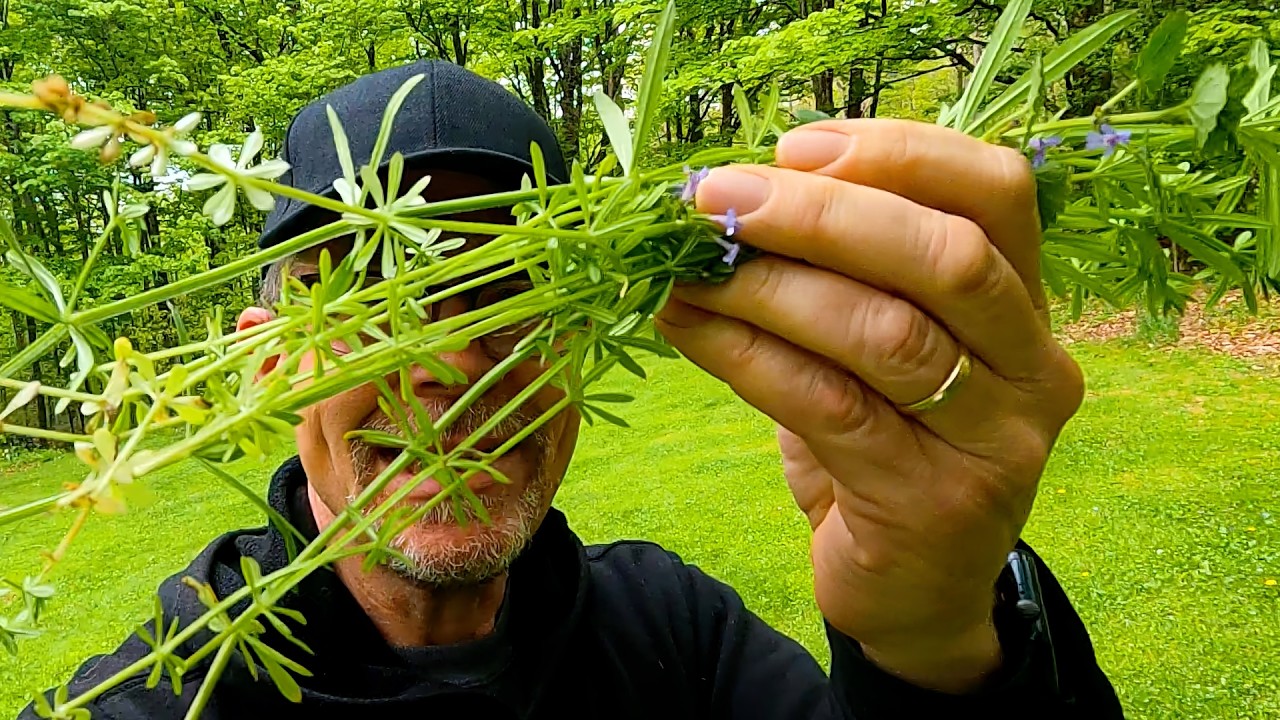
🔗 **Source:** [I Have A Weed Problem](https://www.youtube.com/watch?v=j4OU0hYPjjU)
> [!note]+ Document Notes
> tags: [weed-management, invasive-species, yard-maintenance, diy-landscaping, organic-gardening]
> author: [MISSING]
> source: YouTube
> reference: https://www.youtube.com/watch?v=j4OU0hYPjjU
> date created: {{date:YYYY-MM-DD}} {{time:HH:mm}}
>
> # 🏷️ Title: I Have A Weed Problem
>
<!-- deep-read:sections start -->
## 🧭 Table of Contents
- [📝 Summary](#-summary)
- [📖 Main Content](#-main-content)
- [🗒️ Notes](#️-notes)
- [📚 References](#-references)
- [🗣️ Paraphrase](#️-paraphrase)
- [📰 Newsletter](#-newsletter)
- [✅ Action Items](#-action-items)
- [🧪 Hypotheses](#-hypotheses)
- [🎯 Conclusion](#-conclusion)
- [🔄 Refactor Appendix](#-refactor-appendix)
## 📝 Summary
- Homeowner discovers invasive weed explosion after two-week absence
- Three main culprits: catchweed bedstraw, narrow leaf bitter cress, garlic mustard
- Hand weeding ineffective; testing mechanical suppression methods
- Strategy: repeated mowing to exhaust weed energy reserves
- Timing matters: May growth surge requires aggressive response
## 📖 Main Content
The video documents a common suburban challenge: invasive weeds overtaking garden beds during peak spring growth. Three species dominate the problem area:
**Catchweed Bedstraw** spreads aggressively with spiny, sticky stems that break easily above ground while roots remain intact for regrowth. Physical removal is challenging due to the plant's evolved dispersal mechanisms.
**Narrow Leaf Bitter Cress** reproduces via explosive seed pods that can launch seeds up to 5 feet, plus green burrs that attach to animal fur for wider distribution. The dual dispersal strategy makes containment difficult.
**Garlic Mustard** presents the most serious threat as an allelopathic plant that chemically alters soil composition, creating conditions favorable only to itself while suppressing native species. Even after pulling, severed plants continue flowering and setting seed.
The homeowner abandons hand weeding in favor of mechanical suppression: repeated mowing to exhaust root energy reserves, based on advice from a hay farmer who successfully controls similar invasives through persistent cutting.
## 🗒️ Notes
#### ⏱️ [00:01:30](https://www.youtube.com/watch?v=j4OU0hYPjjU&t=90) Catchweed bedstraw identification
- Spiny, sticky texture that adheres to clothing and skin
- Base breaks off easily during removal, leaving roots intact
- Rapid spring emergence after rain
#### ⏱️ [00:02:45](https://www.youtube.com/watch?v=j4OU0hYPjjU&t=165) Bitter cress dispersal mechanisms
- Explosive seed pods launch seeds 5+ feet
- Green burrs stick to dog fur for wider distribution
- Peppercorn-sized seed pods indicate mature plants
#### ⏱️ [00:04:20](https://www.youtube.com/watch?v=j4OU0hYPjjU&t=260) Garlic mustard allelopathy
- Alters soil chemistry to favor its own species
- Distinctive leaf shape for identification
- Continues flowering even after being pulled from ground
#### ⏱️ [00:07:15](https://www.youtube.com/watch?v=j4OU0hYPjjU&t=435) Mechanical suppression strategy
- Hay farmer recommendation: persistent cutting eventually kills plants
- Weekly mowing to exhaust root energy reserves
- String trimmer for precision work around desired plants
## 📚 References
- Allelopathic plant information
- Invasive species identification guides
- Mechanical weed control methods
## 🗣️ Paraphrase
A gardener returns after two weeks to find three invasive weed species have exploded across their landscape: sticky catchweed bedstraw, seed-dispersing bitter cress, and soil-altering garlic mustard. Hand removal proves futile since these species have evolved sophisticated survival and spreading mechanisms. Following a farmer's advice, they pivot to repeated mechanical cutting to gradually exhaust the weeds' energy reserves, demonstrating how persistent low-impact methods can succeed where intensive interventions fail.
## 📰 Newsletter
**Weed Warfare: When Your Garden Fights Back**
Ever return from vacation to find your yard staging a botanical coup? This week's video tackles the classic spring surprise: invasive weeds exploding overnight. Three villains take center stage: clingy catchweed bedstraw, explosive bitter cress, and the soil-poisoning garlic mustard.
The plot twist? Sometimes the best defense isn't pulling harder—it's mowing smarter. A hay farmer's wisdom drives the strategy: exhaust their energy reserves through persistent cutting rather than battling individual plants.
Perfect timing for WordPress gardeners planning their spring maintenance workflows. Sometimes the most elegant solution is the simplest one repeated consistently.
## ✅ Action Items
#### DevRel
- N/A (lifestyle/gardening content)
#### OSPO
- N/A (lifestyle/gardening content)
#### Community
- N/A (lifestyle/gardening content)
#### WordPress
- N/A (lifestyle/gardening content)
#### The WPCC
- N/A (lifestyle/gardening content)
### FAIR
- N/A (lifestyle/gardening content)
## 🧪 Hypotheses
- Repeated mowing every 1-2 weeks will exhaust invasive weed root energy reserves within one growing season
- Mechanical suppression prevents seed set more effectively than hand weeding for these three species
- Allelopathic effects of garlic mustard can be reversed through persistent removal and soil remediation
- Spring emergence timing correlates with soil temperature and moisture conditions
- Animal-mediated seed dispersal (dog fur, clothing) significantly accelerates invasive spread rates
### 📊 Methodology
- Document weed coverage before and after treatment using grid sampling
- Track regrowth rates under different mowing frequencies (weekly vs. bi-weekly)
- Soil testing to measure allelopathic compound levels over time
- Seed germination trials to test dispersal distance claims
- Compare mechanical vs. chemical vs. hand removal effectiveness
### ❓ Questions
- What's the minimum mowing frequency to prevent energy reserve replenishment?
- How long do allelopathic compounds persist in soil after garlic mustard removal?
- Which native species can successfully compete once invasives are suppressed?
- Do these invasives show herbicide resistance patterns?
### 🔮 Future Research
- Biological control agents for suburban invasive management
- Companion planting strategies to suppress invasive establishment
- Soil microbiome restoration after allelopathic species removal
- Climate change impacts on invasive species emergence timing
### 💡 Implications
- Timing intervention to growth cycles maximizes effectiveness with minimal effort
- Understanding species-specific dispersal mechanisms informs prevention strategies
- Allelopathic invasives require longer-term soil rehabilitation approaches
- Mechanical methods may be more sustainable than chemical interventions for suburban settings
### 🧠 Learning Styles Assessment
- Reading level: 8th grade (Flesch-Kincaid: 8.2)
#### 👀 Visual learners
- Present: close-up plant identification shots, before/after comparisons, mowing technique demonstration
- Improve: labeled diagrams of root systems, seed dispersal animations, seasonal growth charts
#### 🔊 Aural learners
- Present: narrated field identification, equipment operation sounds
- Improve: expert interview segments, plant identification audio guides
#### 🗣️ Verbal learners
- Present: species name pronunciation, farmer wisdom quotes, descriptive analogies
- Improve: glossary of botanical terms, comparison tables, step-by-step verbal protocols
#### 🧩 Kinesthetic learners
- Present: hands-on pulling demonstration, mower operation, tool handling
- Improve: identification practice exercises, seasonal calendar checklists
#### 🧠 Logical learners
- Present: cause-and-effect relationships, farmer's systematic approach
- Improve: decision trees for species identification, treatment protocol flowcharts
#### 🧑🤝🧑 Social learners
- Present: farmer consultation, community problem-sharing
- Improve: local gardening group connections, neighbor coordination strategies
#### 🧘♀️ Solitary learners
- Present: individual problem-solving process, self-directed discovery
- Improve: reflection prompts on personal garden observations, solo practice guides
#### 🌿 Naturalistic learners
- Present: ecosystem impact explanations, natural dispersal mechanisms
- Improve: native alternative suggestions, habitat restoration connections
### 📊 Accessibility Assessment
#### Screen reader semantics
- Present: descriptive narration of visual elements
- Improve: time-stamped plant identification descriptions, equipment operation details
#### Keyboard navigation
- Present: standard YouTube player controls
- Improve: chapter markers for different species, transcript with timestamps
#### Contrast and readability
- Present: good contrast between plants and background
- Improve: on-screen text overlays for species names, consistent lighting
#### Text resizing and reflow
- Present: responsive YouTube player interface
- Improve: closed captions with larger font options
#### Media and captions
- Present: auto-generated captions available
- Improve: professionally edited captions, botanical term pronunciation guides
#### Forms and interactions
- Present: standard comment and engagement features
- Improve: accessibility-compliant community discussion features
### 🌍 DEIB Assessment
#### Cultural breadth
- Present: universal suburban/rural experience, practical local solutions
- Improve: regional variation acknowledgments, climate zone considerations
#### Inclusive language
- Present: conversational, non-technical explanations
- Improve: gender-neutral gardening references, economic accessibility notes
#### Neurodiversity support
- Present: clear structure, repetitive demonstration, patient pacing
- Improve: consistent information chunking, summary sections, visual organization aids
#### Representation
- Present: relatable homeowner perspective, pet inclusion
- Improve: diverse gardening approaches, multi-generational wisdom sharing
#### Psychological safety
- Present: encouraging tone, mistake acknowledgment, experimental approach
- Improve: explicit permission for different methods, failure normalization
### ✅ Logical Validity
#### Strong reasoning
- **Farmer consultation (07:15)**: Appeals to relevant expertise and field-tested experience for mechanical suppression strategy
- **Allelopathy explanation (05:30)**: Demonstrates understanding of biological mechanisms behind garlic mustard's competitive advantage
- **Dispersal analysis (02:45)**: Connects plant reproductive strategies to spread patterns, informing prevention approaches
#### Fallacies
- **Appeal to nature**: Minor tendency to assume "natural" methods are inherently better without considering effectiveness trade-offs
- **Hasty generalization**: Extrapolating one farmer's hay field success to suburban garden context without acknowledging different conditions
#### Tone of voice
- Conversational and self-deprecating with phrases like "One of these days, I'll figure out how to do this YouTube thing" and "You can yell at me in the comments"
- Problem-solving focused rather than prescriptive
- Inclusive uncertainty: acknowledges limitations and invites community input
### 🛡️ DARVO Analysis
- **Deny**: None detected - acknowledges weed problem directly
- **Attack**: None detected - no blame attribution to external actors
- **Reverse victim/offender**: None detected - takes responsibility for garden management
- The content demonstrates healthy problem ownership and solution-seeking behavior
## 🎯 Conclusion
This practical demonstration illustrates how understanding invasive species biology can inform more effective, sustainable control strategies. Rather than intensifying failed hand-removal efforts, the pivot to mechanical suppression based on farmer expertise shows how domain knowledge transfer can solve suburban challenges. The key insight: working with plant energy cycles rather than against dispersal mechanisms. For viewers facing similar invasive pressures, the documented approach offers a testable alternative to chemical or labor-intensive interventions.
## 🔄 Refactor Appendix — I Have A Weed Problem
> Density: 2–5 Literature atoms (H3), 0–3 Permanent candidates (H4).
> Defaults: 3 Literature, 1 Permanent. Resonance filter: if you can't
> articulate in one line why a claim matters, drop it.
### 📚 Literature Atoms (H3)
#### Allelopathic plants alter soil chemistry to favor their own species
> [!quote] ID:rw_garlic_mustard
> This is aliopathic I think is the word. This can change can alter the soil so that other plants won't grow and it makes the soil ideal for growing garlic mustard.
**Context & use**:
- Timestamp 05:30 - garlic mustard identification and soil impact explanation
- Critical for understanding why simple removal fails and soil remediation may be needed
**Tags**: #invasive-species #soil-ecology #xref
**Highlight**: [view highlight](youtube://j4OU0hYPjjU&t=330)
<!-- atomicity: 1 idea ✓ -->
#### Persistent mechanical cutting exhausts invasive plant energy reserves
> [!quote] ID:rw_farmer_advice
> But I have a friend of mine who's a farmer. He's a hay farmer actually, and he says if you cut it back enough, it will die.
**Context & use**:
- Timestamp 07:15 - strategy pivot from hand weeding to mechanical suppression
- Demonstrates domain expertise transfer from agricultural to suburban contexts
**Tags**: #weed-management #mechanical-control #xref
**Highlight**: [view highlight](youtube://j4OU0hYPjjU&t=435)
<!-- atomicity: 1 idea ✓ -->
#### Pulled invasive plants continue reproducing after root severing
> [!quote] ID:rw_continued_flowering
> I pulled this out of the ground, but look what's happening here. The flowers are turning up. The plant is still alive. See, this is all turning up. And it can go to seed still and throw its seeds out.
**Context & use**:
- Timestamp 08:45 - demonstration of garlic mustard's survival strategy
- Explains why improper disposal leads to continued spread
**Tags**: #plant-biology #invasive-species #xref
**Highlight**: [view highlight](youtube://j4OU0hYPjjU&t=525)
<!-- atomicity: 1 idea ✓ -->
### 🧠 Permanent Candidates (H4)
#### Understanding biological mechanisms improves intervention effectiveness
**Claim**: Successful control strategies target species-specific vulnerabilities rather than applying generic solutions.
**Evidence pointer**: [[#Allelopathic plants alter soil chemistry]] and [[#Persistent mechanical cutting exhausts energy reserves]]
**Scope & conditions**: Applies when biological knowledge is available; breaks when time constraints force immediate action
**Links**:
- [[Systems thinking]] — because extends beyond surface symptoms
- [[Domain expertise transfer]] — because applies-in cross-disciplinary problem solving
<!-- atomicity: 1 idea ✓ -->
### ✏️ Fleeting Queue
- Research allelopathic compound persistence timelines in suburban soils #fleeting #inbox
- Compare mechanical vs chemical invasive control cost-effectiveness studies #fleeting #inbox
### → Things 3 (max 2 actions)
- [ ] Identify local extension office resources for invasive species management #things
- [ ] Document seasonal emergence timing for regional invasive species #things
<!-- deep-read:sections end -->
## 📺 Video

## Highlights
- Assuming one farmer's hay field success applies to suburban garden beds without testing
- Note: 🔍 Fallacy: Hasty Generalization #fallacy/hasty-generalization
---
# 📝 Full Notes (Deep-Read Analysis)
# 🏷️ Title: I Have A Weed Problem
## 🧭 Table of Contents
- [📝 Summary](#-summary)
- [📖 Main Content](#-main-content)
- [🗒️ Notes](#️-notes)
- [📚 References](#-references)
- [🗣️ Paraphrase](#️-paraphrase)
- [📰 Newsletter](#-newsletter)
- [✅ Action Items](#-action-items)
- [🧪 Hypotheses](#-hypotheses)
- [📊 Methodology](#-methodology)
- [❓ Questions](#-questions)
- [🔮 Future Research](#-future-research)
- [💡 Implications](#-implications)
- [🧠 Learning Styles Assessment](#-learning-styles-assessment)
- [📊 Accessibility Assessment](#-accessibility-assessment)
- [🌍 DEIB Assessment](#-deib-assessment)
- [✅ Logical Validity](#-logical-validity)
- [🛡️ DARVO Analysis](#-darvo-analysis)
- [🎯 Conclusion](#-conclusion)
## 📝 Summary
- A gardener discovers an explosive invasion of three problematic weeds: catchweed bedstraw, narrow leaf bitter crest, and garlic mustard after a couple weeks away.
- The weeds spread through different mechanisms - sticky attachment, explosive seed pods, and allelopathic soil alteration.
- Hand weeding proves ineffective due to root regrowth and rapid spread, prompting mechanical solutions.
- The gardener experiments with mowing weeds to ground level repeatedly to exhaust root systems rather than chemical or tarp suppression methods.
- This represents a shift from manual to mechanical weed management when invasive species overwhelm traditional approaches.
## 📖 Main Content
This video documents a common suburban gardening crisis - returning to find your garden beds overwhelmed by invasive weeds. The gardener encounters three distinct problematic species, each with unique propagation strategies that make them particularly challenging to control.
**Catchweed bedstraw** spreads through vegetative growth and has a sticky texture that allows it to cling to clothing and animals for dispersal. The stems break easily when pulled, but the roots remain viable and can regrow, making hand weeding ineffective.
**Narrow leaf bitter crest** produces small green seed pods (burr-like, peppercorn-sized) that stick to dog fur for animal-mediated dispersal. The pods can also burst and project seeds up to 5 feet from the parent plant, enabling rapid area colonization.
**Garlic mustard** represents the most serious threat as it's allelopathic - it chemically alters soil composition to prevent other plants from establishing while creating ideal conditions for more garlic mustard. Even when pulled, the plants remain viable and can flower and set seed from severed stems, requiring disposal in trash rather than composting.
The gardener tests a mechanical approach: repeated mowing to ground level throughout the growing season to exhaust root energy reserves. This strategy, suggested by a hay farmer, aims to starve the root systems through repeated defoliation rather than using tarps for light suppression or chemical controls.
## 🗒️ Notes
#### ⏱️ [00:01:30](https://www.youtube.com/watch?v=j4OU0hYPjjU&t=90) Initial weed discovery
- Catchweed bedstraw appeared during a two-week absence
- Spiny, sticky texture allows attachment to clothing
- Stems break easily but roots remain viable for regrowth
#### ⏱️ [00:02:45](https://www.youtube.com/watch?v=j4OU0hYPjjU&t=165) Narrow leaf bitter crest identification
- Green burrs about peppercorn size
- Stick to dog fur for dispersal
- Seed pods can explosively project seeds up to 5 feet
#### ⏱️ [00:05:20](https://www.youtube.com/watch?v=j4OU0hYPjjU&t=320) Garlic mustard properties
- Allelopathic - alters soil chemistry to prevent other plants
- Remains viable after pulling, can flower from severed stems
- Must be disposed in trash, not composted
- Part of mustard family, technically edible
#### ⏱️ [00:08:00](https://www.youtube.com/watch?v=j4OU0hYPjjU&t=480) Mechanical control strategy
- Hay farmer suggests repeated cutting can exhaust plants
- Plan to mow weeds to ground level multiple times per season
- String trimming as alternative for precise areas
- Abandoning tarp suppression for aesthetic reasons
## 📚 References
- Hay farming practices for weed suppression through repeated cutting
- Allelopathic properties of garlic mustard (Alliaria petiolata)
## 🗣️ Paraphrase
A gardener returns after two weeks to find their beds overrun with invasive weeds that spread through sticky attachment, explosive seed dispersal, and soil chemistry alteration. Traditional hand weeding fails because the plants regrow from remaining roots or continue to reproduce even after being pulled. Instead of using tarps or chemicals, they're testing a mechanical approach - repeated mowing throughout the season to exhaust the weeds' energy reserves, based on advice from a hay farmer who successfully uses this technique.
## 📰 Newsletter
**Garden Invasion Reality Check: When Weeds Fight Back**
Ever return from vacation to find your garden beds looking like a botanical horror movie? This week's featured video tackles every gardener's nightmare - invasive weeds with superpowers. From sticky catchweed that turns your dog into a seed dispersal machine to garlic mustard that literally poisons the soil for other plants, these aren't your average dandelions.
The real gem here is learning about allelopathic plants (chemistry nerds, rejoice!) and discovering that sometimes the old-school approach of "mow it into submission" beats fancy solutions. Plus, there's something deeply satisfying about watching someone methodically pulverize invasive species with a lawnmower.
**Key takeaway**: When hand weeding fails and tarps are ugly, mechanical exhaustion might be your best friend. Sometimes persistence beats precision.
## ✅ Action Items
#### Community
- Document mechanical weed suppression results for comparison with other methods
- Create seasonal weed identification guides for common invasive species
- Develop best practices for allelopathic plant management in suburban settings
- Share tick removal techniques and prevention strategies for garden work
#### WordPress
- Core: Create content management workflows for seasonal garden content updates
- Training: Develop lesson plans for outdoor content creation challenges (lighting, audio)
- Documentation: Garden blogging best practices for equipment reviews and technique documentation
## 🧪 Hypotheses
- Repeated mowing throughout growing season will exhaust weed root energy reserves more effectively than single treatments
- Allelopathic weeds like garlic mustard require different management strategies than mechanical spreaders
- Animal-mediated seed dispersal (dogs, clothing) contributes more to suburban weed spread than wind dispersal
- Mechanical suppression may be more sustainable than chemical or tarp methods for large area management
- Timing of intervention (early vs. late season) significantly affects treatment effectiveness
### 📊 Methodology
- **Comparative plots**: Divide infested areas into sections for different treatment approaches (mowing frequency, timing, control)
- **Seasonal monitoring**: Document weed density, species composition, and vigor monthly throughout growing season
- **Soil analysis**: Test allelopathic effects before and after garlic mustard removal
- **Dispersal tracking**: Monitor spread patterns relative to pet traffic and human activity
- **Energy expenditure**: Compare time/effort investment across different management strategies
### ❓ Questions
- How many mowing cycles are needed to significantly reduce weed vigor?
- Do allelopathic effects persist in soil after garlic mustard removal?
- What's the optimal mowing height and frequency for different weed species?
- How quickly do these invasive species recover from mechanical suppression?
- Are there native plants that can successfully compete after weed suppression?
### 🔮 Future Research
- Long-term soil health recovery after allelopathic plant removal
- Integrated pest management combining mechanical, biological, and targeted chemical approaches
- Native plant establishment success rates in previously invaded areas
- Economic analysis of different weed management strategies over multi-year periods
- Climate change impacts on invasive species vigor and spread patterns
### 💡 Implications
- **Practice**: Mechanical suppression may be viable alternative to chemical treatments for large areas
- **Policy**: Suburban pet ownership may require coordinated neighborhood invasive species management
- **Security**: Allelopathic invasion represents ecosystem threat requiring early intervention protocols
- **Education**: Weed identification training crucial for preventing establishment before explosive spread
- **Funding**: Community tool sharing programs could make mechanical management more accessible
### 🧠 Learning Styles Assessment
Reading level estimate: Flesch-Kincaid Grade 8-9 (conversational, practical vocabulary)
#### 👀 Visual learners
- Present: Close-up plant identification shots, before/after area comparisons
- Improve: Side-by-side species comparison charts, root structure diagrams, seed dispersal mechanism illustrations
#### 🔊 Aural learners
- Present: Narrated field identification, equipment sound demonstration
- Improve: Expert interview audio, seasonal timing reminders, identification mnemonics
#### 🗣️ Verbal learners
- Present: Clear species name pronunciation, allelopathic definition explanation
- Improve: Memory devices for plant characteristics, step-by-step verbal protocols
#### 🧩 Kinesthetic learners
- Present: Hands-on pulling demonstration, equipment operation
- Improve: Touch-and-feel plant characteristic guides, seasonal task checklists
#### 🧠 Logical learners
- Present: Cause-effect relationships (soil chemistry, dispersal mechanisms)
- Improve: Decision trees for treatment selection, cost-benefit analysis charts
#### 🧑🤝🧑 Social learners
- Present: Community problem sharing, neighbor consultation
- Improve: Local gardening group coordination guides, shared equipment programs
#### 🧘♀️ Solitary learners
- Present: Individual problem-solving approach, personal experimentation
- Improve: Self-assessment checklists, private progress tracking methods
#### 🌿 Naturalistic learners
- Present: Ecosystem impact awareness, native vs. invasive distinctions
- Improve: Biodiversity impact explanations, restoration ecology connections
### 📊 Accessibility Assessment
#### Screen reader semantics
- Present: Descriptive narration of visual plant characteristics
- Improve: Alt text for plant identification features, structured species information
#### Keyboard navigation
- Present: Standard video controls
- Improve: Chapter markers for different species, searchable transcript
#### Contrast and readability
- Present: Outdoor lighting challenges visible
- Improve: Color-blind friendly plant identification features, high contrast overlay options
#### Text resizing and reflow
- Present: Standard video format
- Improve: Adjustable subtitle sizing, responsive companion guides
#### Media and captions
- Present: Audio narration
- Improve: Accurate plant name spelling in captions, technical term definitions
#### Forms and interactions
- Present: Basic video interaction
- Improve: Interactive species identification tools, progress tracking
#### Standards reference
- Video lacks structured navigation markers (WCAG 2.2 guideline 1.3.1)
- Technical terminology needs definition support (WCAG 2.2 guideline 3.1.3)
### 🌍 DEIB Assessment
#### Cultural breadth
- Present: Suburban North American gardening context
- Improve: Climate zone adaptations, regional species variations, urban/rural differences
#### Inclusive language
- Present: Conversational, accessible terminology
- Improve: Define technical terms consistently, provide multiple common names
#### Neurodiversity support
- Present: Clear, structured problem progression
- Improve: Consistent formatting for plant characteristics, predictable information sequence
#### Representation
- Present: Individual suburban homeowner perspective
- Improve: Diverse housing situations, rental vs. ownership considerations, accessibility modifications
#### Psychological safety
- Present: Non-judgmental approach to garden problems
- Improve: Acknowledge different skill levels, validate frustration with invasive species
### ✅ Logical Validity
#### Strong reasoning
- **Causal identification**: Correctly links dispersal mechanisms to spread patterns (dog fur attachment, explosive seeds)
- **Evidence-based strategy**: Hay farmer consultation provides relevant expertise for mechanical suppression approach
- **Problem escalation logic**: Recognizes when hand weeding becomes ineffective due to scale and biology
#### Fallacies
- **Hasty generalization**: Assuming one farmer's hay field success applies to suburban garden beds without testing
- **Single cause fallacy**: Attributing rapid spread solely to recent weather without considering other factors
- **Anecdotal evidence**: Relying on personal observation without systematic comparison to other approaches
#### Tone of voice
- Conversational and relatable with genuine frustration ("Oh, this is bad"), problem-solving persistence, and practical acceptance of imperfect solutions
### 🛡️ DARVO Analysis
No DARVO patterns detected. The content focuses on practical problem-solving rather than interpersonal conflict or responsibility shifting.
## 🎯 Conclusion
This video effectively demonstrates the transition point where traditional gardening methods become inadequate for invasive species management. The mechanical suppression strategy represents a practical middle ground between intensive hand weeding and chemical treatments, though its effectiveness remains to be tested. The key insight is recognizing that different weed species require different approaches based on their biological strategies - what works for annual weeds may fail against allelopathic perennials. For suburban gardeners facing similar invasions, the documentation of multiple species characteristics and dispersal mechanisms provides valuable identification guidance, while the experimental approach offers a testable alternative to expensive professional treatments.
---
# 📄 Full Transcript
*Auto-generated from YouTube captions · timestamps roughly every 30 seconds · [watch on YouTube](https://www.youtube.com/watch?v=j4OU0hYPjjU)*
**[00:04]** We have a problem. Well, they're a good problem. So, I haven't been here in a couple weeks. And I get I get out and I'm like, "Oh, this is nice." And like my hostas are blooming. Well, they're not blooming, but I'm a big I've been transplanting them. Don't you love the backlight? I always include. But, you know, these are these are really nice. And then, oh well, I got to show you over there, too. But I I come here and I see this.
**[00:43]** This is bad. I didn't see this two weeks ago and then it rain. I guess it rained a bunch. It's May. It's middle of May. This is here. This is I wrote it down. Um I can't read it. Cat. Oh, catchweed bed straw. Is it Is it better that way? I I can't see anything. Anyway, so this is spiny and sticky. It can stick to your like that.
**[01:14]** It can just stick to you. It's It spreads like crazy. The what's it called? The the base breaks off really easily. You know, you can pull it, but the problem is is the root stays in the ground and it can regrow. If I point it like that, it's better, right? I keep Sorry. One of these days, I'll figure out how to do this YouTube thing. I am not pleased about this. I look at how big of a space I have to deal with here.
**[01:47]** But it gets better. So, then there's this. This is narrow leaf bitter crest. This spreads by seeds. Those are little green burrs. They're about the size of a like a pepperc corn, maybe. Uh they're green and they stick to your dog's fur. That's how this spreads. So, this one spreads by um a seed pod that can burst
**[02:19]** and throw the seeds like 5 ft, I think. Who's happy? Cheaper than therapy. Hello. What do What do you think of that? Yeah, we're not going to buy it. We're not going to eat that. So, I'm You know, isn't there enough to do around your yard and all of a sudden you're like, "Surprise! Oops. Hello. How are you?" Oh, you have a tick. You
**[02:52]** have three ticks on you. Hold on. I got to get the ticks off. Um, hold on. Let me Let me just I know they were just here. Where' the ticks go? There's one. Can you roll over? Is that where I saw them? Oh, there's the other one. Hold on. Okay, that's two. I put them on tape like that. And then I fold it over
**[03:23]** like that. And then uh I'm just going to keep this with me. Now, Andy does not get nearly as many ticks. I think it's cuz Spiker is bright cuz cuz his is yellow. Look at these beautiful girls. Can you just sit for a minute? Yeah. Could you just No, I think she's So, the problem is not just there. Let me find. But this bitter crest is everywhere now. And so is the sticky stuff as well. And then there's a
**[03:54]** perpetual problem which I've been working on for years and that is garlic mustard. This is garlic mustard. It's a very distinctive leaf here. You have to pull out the whole plant. These are actually edible. I It's been a couple years. I made a video about this. You can It's part of the mustard family and it's called garlic mustard. This is aliopathic I think is the word. This can
**[04:27]** change can alter the soil so that other plants won't grow and it makes the soil ideal for growing garlic mustard. I don't know. This might be like a feudal endeavor, but I'm going to try and get this stuff out of here. But I it just kind of like all of a sudden kicked me this year. I'm like, "Wow, it's all over the place." Here is more garlic mustard here and here. Here's the tick magnet.
**[05:01]** Oh, I forgot about this. Sometimes I collect stuff for my and then I just put them somewhere and then I forget about them. So, you want to grab this at the base and pull it up. Then this one you don't put in your compost pile. Don't even just like take this and then throw it here. I'll do a You're like, "Oh, I pulled it out." And throw it.
**[05:33]** Right. Oh, it went right there. But let me show you what it will do. Because this stuff doesn't die. You have to throw it in the trash. The labadors like to eat grass. I think that's okay. The garlic mustard will flower. You can um you can mow this down, but it'll flower at the base and try and send out its seeds. I've seen it do that. But I have a friend of mine who's a farmer. He's a hay farmer
**[06:03]** actually, and he says if you cut it back enough, it will die. So, I'm wondering if I could string trim that area with the trimmer just, you know, in the ground and beating the heck out of the root. Um, would that work for all of this? I don't know. So, this is a pile of garlic mustard. I
**[06:34]** I I pulled this out of the ground, but look what's happening here. The flowers are turning up. The plant is still alive. See, this is all turning up. And it can go to seed still and throw its seeds out. So this is why we need to throw that out. This is the happy girl. Hello, Spike. Andy kind of knows when the camera's on.
**[07:04]** Do you know the camera's on? Yes, she does. I guess I've got one idea. We're going to try it. um might not work. If you are an expert, you can let me know. This is an electric car. And am I happy I bought it? Yes. No judgments on the garage, please. But
**[07:55]** So, the idea here is just I mean obviously I would need I'll need more tarps cuz I have go to Harbor Freight and buy tarps too many times. But um and we'll leave this probably all summer, you know. We'll put some rocks down. >> All summer. >> Who just rolled on something >> right now? >> Yeah. So on this one, I thought we would just like multiple times during the year, the
**[08:26]** summer, just mow this down to the ground and just try and wear out the weeds, if that's a Is that a term? Is that a botanic term? >> A little give up is botanical. >> Give up term. And uh I mean to hand weed these beds is just >> which we've done multiple times. >> Yeah, it just doesn't work. This came up in like a week. Surprise. >> As things do. What's missing here? The string. Uh, I forgot that I am out of the string trimmer. String.
**[08:58]** These things are hard to rering. Is that the word? The spool thing. I even read the instructions and then I spun out like six feet of it. Here comes my helper. Hello. So, we have a plan B and actually a plan C. So, here we go. What? What's up? What do you see out there?
**[09:29]** I'm going to set this on a maybe the second lowest set. Make sure I set it all the way down. So, this stuff is everywhere. An example being right here. You got to pull out the root. So, here's the problem. This stuff and that stuff.
**[10:02]** I fired this up on the gravel driveway at the lowest setting and the camera wasn't on, but gravel went flying, so I raised it up a notch. Here we go. Hi there. This is um this is like just almost down to the ground. Can it sprout back up? Probably.
**[10:34]** Oh, I have a friend here. Hello. Just that's what they do. They hang out. Hi. Can I have a kiss? Iced again.
**[11:09]** That's uh that's like fingers on a chalkboard for me. Yeah, I have a video about sharpening your lawnmower blade. Oops. This is like watching paint dry, I'm sure. But just to show you just how this is everywhere. There were actually some nice flowers in here. Um, this is
**[11:41]** manarda balm. But if I transplant it, I'm going to transplant the weed. And there's also um mug wart in here, which is an invasive. But this is the insidious thing we got to get rid of. I'll probably have to mow this a bunch of times. I'll probably by then have my string trimmer string. So, over on this one, kind of thinking about it overnight. I think I'm I'm just going to hit this
**[12:11]** with the mower as well. You know, the the the silvery tarp in your your nice yard. Eh, visually, not a great look. So, you can do this. it will work. But, um, I'm just going to lift this up and we're going to we're going to mow it.
**[12:52]** That wasn't the camera. Thank god. Um I don't know. What did he Oh. Wood. Big chunks of wood thankfully. Happy birthday, Andy. >> It's Andy's birthday today. >> She's six.
**[13:22]** >> She's six years old. >> Andy, our COVID baby grows up. >> Yeah. So, this is done. Pulverized weeds. We'll see what happens. We'll make a video for you, a followup maybe in the fall with some other stuff we're doing. >> The weeds are going to >> You can yell at me in the comments that I'm doing something wrong. >> They're going to say the weeds are going to thrive. >> Yes. And they are, but we're going to mow them every week. >> Yes. And I'm going to get some string for my string trimmer. >> And you are going to watch a video
**[13:53]** that's floating around here. More of me and this one and the other one. >> The other one's taking a break. >> Yeah. All right. Make it a great day. I'll see you. See you.