The Dark Network Behind The Azusa Street Revival
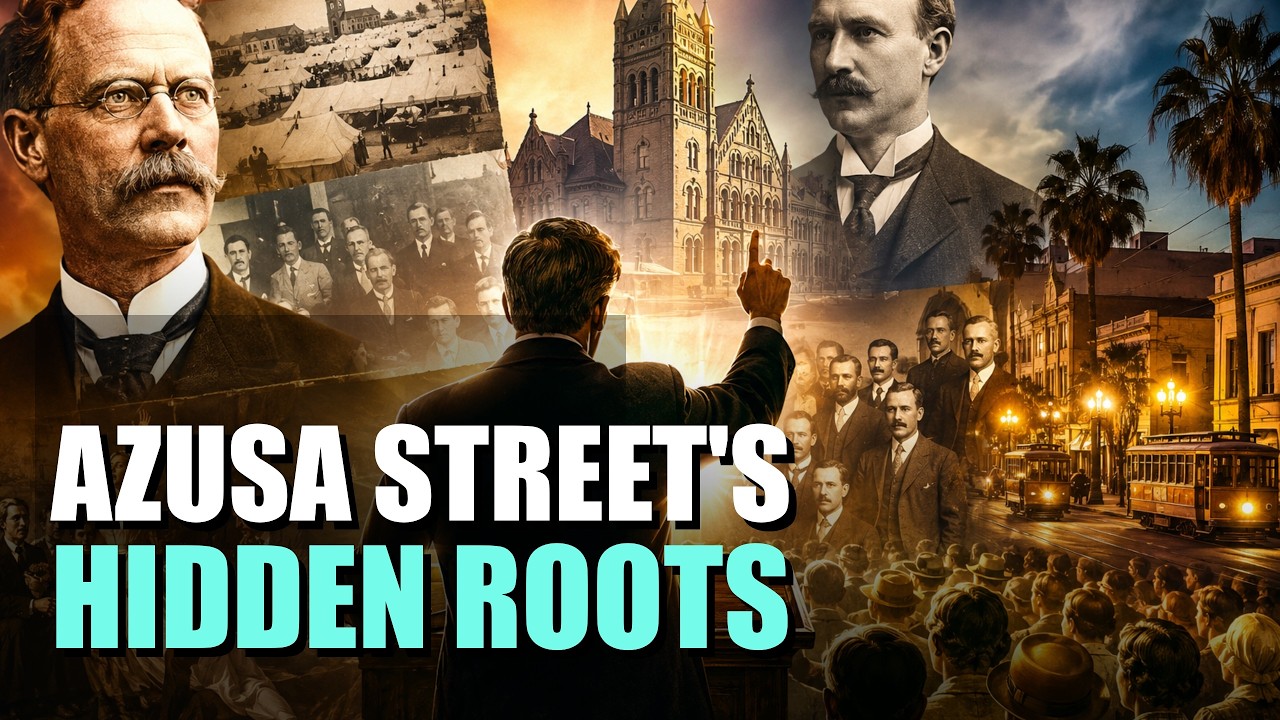
🔗 **Source:** [The Dark Network Behind The Azusa Street Revival](https://www.youtube.com/watch?v=w44Xkn0emZI)
> [!note]+ Document Notes
> tags: [azusa-street-revival, pentecostalism, charles-fox-parham, religious-history, cult-networks, john-alexander-dowie]
> author: [MISSING]
> source: [MISSING]
> reference: https://www.youtube.com/watch?v=w44Xkn0emZI
> date created: {{date:YYYY-MM-DD}} {{time:HH:mm}}
>
> # 🏷️ Title: The Dark Network Behind The Azusa Street Revival
>
<!-- deep-read:sections start -->
## 🧭 Table of Contents
- [📝 Summary](#-summary)
- [📖 Main Content](#-main-content)
- [🗒️ Notes](#️-notes)
- [📚 References](#-references)
- [🗣️ Paraphrase](#️-paraphrase)
- [📰 Newsletter](#-newsletter)
- [✅ Action Items](#-action-items)
- [🧪 Hypotheses](#-hypotheses)
- [📊 Methodology](#-methodology)
- [❓ Questions](#-questions)
- [🔮 Future Research](#-future-research)
- [💡 Implications](#-implications)
- [🧠 Learning Styles Assessment](#-learning-styles-assessment)
- [📊 Accessibility Assessment](#-accessibility-assessment)
- [🌍 DEIB Assessment](#-deib-assessment)
- [✅ Logical Validity](#-logical-validity)
- [🛡️ DARVO Analysis](#-darvo-analysis)
- [🎯 Conclusion](#-conclusion)
## 📝 Summary
- The video reveals hidden connections between the famous Azusa Street Revival (1906) and earlier cult networks.
- Charles Fox Parham, trained William Joseph Seymour (leader of Azusa Street), but historians often omit Parham due to scandal.
- John Alexander Dowie's cult empire in Zion City, Illinois (1890s) provided the financial and theological foundation for later Pentecostal movements.
- Key figures like F.F. Bosworth and John G. Lake moved from Dowie's network to Parham's, then influenced Azusa Street.
- Both networks involved financial exploitation, deadly healing practices, and accusations of inappropriate conduct with children.
- These suppressed connections challenge the sanitized narrative of Pentecostal origins.
## 📖 Main Content
The Azusa Street Revival of 1906, widely celebrated as the birthplace of modern Pentecostalism, emerged from a network of controversial figures whose histories have been deliberately obscured. Understanding this revival requires examining Charles Fox Parham, who trained William Joseph Seymour but has been largely erased from official Pentecostal histories due to serious accusations against him.
### The Dowie Empire (1890s)
John Alexander Dowie established a massive cult operation in Zion City, Illinois, accumulating nearly half a billion dollars (in today's money) within a decade. His method involved convincing people with sick family members to forfeit all possessions in exchange for placement in his "healing homes." Despite promising miraculous cures, hundreds died under his care, with bodies secretly removed under cover of darkness to avoid detection.
Dowie proclaimed himself the biblical Elijah prophesied in Malachi, teaching that the end times were imminent. Followers sold everything and signed thousand-year leases on his land, believing they would live in the new millennium at Zion City.
### The Network Transfer (1905-1906)
In October 1905, Dowie suffered a major stroke and retreated to Mexico to recover. During his absence, he secretly recorded sermons to maintain the illusion of continued leadership. As news of his condition spread, Chicago newspapers reported an influx of would-be prophets seeking to claim his empire.
Charles Fox Parham saw this as an opportunity to expand his Apostolic Faith missions. He had been building his own denomination through Bible schools, including one in Houston where he trained William Joseph Seymour as a black minister for segregated outreach.
### The Azusa Connection
The timeline reveals the coordinated nature of this network:
- Late 1905: Parham deploys Seymour as his apostolic representative
- February 1906: Seymour receives an invitation to Los Angeles with Parham's blessing
- March 1906: Parham closes the Houston Bible School, credentials his workers, and moves to capture Dowie's collapsing network
Key figures from Dowie's organization, including F.F. Bosworth (later William Branham's mentor) and John G. Lake (founder of Apostolic Faith Missions in South Africa), joined Parham's network and appear in photographs at the Azusa Street Revival.
### The Cover-Up
Both networks engaged in dangerous practices. The Parham sect accidentally killed followers during "deliverance" sessions, including a woman whose bones they broke while attempting to cast out demons causing her arthritis. In 1907, multiple parents accused Parham of inappropriate relations with their children in his school, with Parham admitting to at least one incident.
These scandals led to Parham being systematically removed from Pentecostal histories, despite his foundational role in training Seymour and providing the theological framework for the revival.
## 🗒️ Notes
#### ⏱️ [00:00:15](https://www.youtube.com/watch?v=w44Xkn0emZI?t=15) Charles Fox Parham's Erased Legacy
- Trained William Joseph Seymour but eliminated from most histories
- Known as "father of modern Pentecostalism" by secular historians
- Pentecostal historians deliberately erase this connection
#### ⏱️ [00:01:30](https://www.youtube.com/watch?v=w44Xkn0emZI?t=90) Dowie's Financial Empire
- Amassed nearly $500 million (today's money) in 10 years through "healing homes"
- Convinced people to forfeit possessions for promised healing
- Hundreds died, bodies secretly removed by undertakers
#### ⏱️ [00:04:15](https://www.youtube.com/watch?v=w44Xkn0emZI?t=255) The 1905 Stroke Crisis
- Dowie's stroke created power vacuum
- Recorded sermons secretly to maintain illusion of health
- Chicago flooded with prophets seeking to claim his empire
#### ⏱️ [00:06:45](https://www.youtube.com/watch?v=w44Xkn0emZI?t=405) Parham's Strategic Positioning
- Built Apostolic Faith missions while Dowie weakened
- Used segregated ministry model with Seymour
- Positioned to absorb Dowie's collapsing network
#### ⏱️ [00:09:30](https://www.youtube.com/watch?v=w44Xkn0emZI?t=570) Network Migration
- F.F. Bosworth and John G. Lake moved from Dowie to Parham
- Key figures appear in famous Azusa Street photographs
- Demonstrates coordinated denominational takeover
#### ⏱️ [00:11:15](https://www.youtube.com/watch?v=w44Xkn0emZI?t=675) Deadly Deliverance Practices
- Attempted demon casting through physical manipulation
- Woman died from broken bones during arthritis "healing"
- Multiple accidental deaths from deliverance sessions
#### ⏱️ [00:12:45](https://www.youtube.com/watch?v=w44Xkn0emZI?t=765) Parham's Downfall
- Multiple parents accused him of inappropriate conduct with children
- Admitted to at least one incident
- Led to his removal from Pentecostal histories
## 📚 References
- Historical records from Chicago newspapers (1905-1907)
- Zion City, Illinois historical documentation
- Azusa Street Revival photographs and records
- Houston Bible School records
## 🗣️ Paraphrase
The celebrated Azusa Street Revival didn't emerge in isolation but grew from a network of controversial religious leaders who exploited followers financially and spiritually. John Alexander Dowie built a massive cult empire by promising healing in exchange for followers' life savings, resulting in hundreds of deaths. When Dowie suffered a stroke in 1905, Charles Fox Parham positioned himself to absorb the collapsing network while simultaneously training William Joseph Seymour for ministry in Los Angeles. The resulting revival involved many of the same figures and practices that had proven deadly in earlier iterations. Parham's later removal from official histories due to accusations of child abuse reveals how Pentecostal denominations have sanitized their origins to obscure these troubling connections.
## 📰 Newsletter
Uncover the hidden history behind one of Christianity's most influential movements. This week's deep dive reveals how the famous Azusa Street Revival emerged from a network of cult leaders and financial exploitation schemes. Learn about the systematic cover-up that removed key figures from official histories and discover resources for researching religious movement origins. Perfect for church historians, religious studies students, and anyone interested in how institutional narratives shape our understanding of spiritual movements. Includes timeline of events and primary source recommendations for further investigation.
## ✅ Action Items
#### Community
- Research primary sources on early Pentecostal history beyond official denominational accounts
- Document patterns of financial exploitation in religious revival movements
- Create educational resources about cult tactics and manipulation techniques
- Develop fact-checking protocols for religious historical claims
## 🧪 Hypotheses
- Religious movements often emerge from networks of connected leaders rather than isolated events
- Financial exploitation patterns repeat across different religious revival movements
- Official denominational histories systematically exclude inconvenient foundational figures
- Cult recruitment tactics evolved into mainstream evangelical practices
- Geographic proximity and timing suggest coordinated rather than spontaneous religious movements
### 📊 Methodology
- Comparative analysis of newspaper archives from 1905-1907 Chicago and Los Angeles
- Network analysis mapping leadership connections between Zion City, Houston Bible School, and Azusa Street
- Financial records analysis of Dowie's empire and subsequent movements
- Cross-referencing official denominational histories with contemporary secular reporting
### ❓ Questions
- What other religious movements have similarly sanitized their founding narratives?
- How do financial exploitation patterns in early Pentecostalism compare to modern prosperity gospel movements?
- What role did segregation play in the spread of these religious networks?
- How many followers died across all three connected movements (Dowie, Parham, Azusa Street)?
### 🔮 Future Research
- Investigation of F.F. Bosworth's role in later Latter Rain revivals
- John G. Lake's South African mission and its connection to apartheid-era politics
- Financial flows between the three movements and their modern descendants
- Comparative study of other religious movements that emerged from cult networks
### 💡 Implications
- **Religious Studies**: Need for more critical examination of sanitized institutional histories
- **Cult Education**: Early Pentecostal practices provide case studies in religious manipulation
- **Media Literacy**: Demonstrates importance of examining who controls historical narratives
- **Legal Policy**: Religious exemptions may protect continuation of harmful practices with historical precedent
### 🧠 Learning Styles Assessment
Reading level: College level (15-16 grade equivalent using Flesch-Kincaid)
#### 👀 Visual learners
- Present: Timeline graphic of network connections and leadership transfers
- Improve: Add network diagram showing personnel flows between organizations, maps of geographic spread
#### 🔊 Aural learners
- Present: Video format with clear narration
- Improve: Podcast version with chapter markers for each movement
#### 🗣️ Verbal learners
- Present: Clear definitions of terms like "deliverance ministry" and "apostolic faith"
- Improve: Glossary of Pentecostal terminology, comparison charts of theological differences
#### 🧩 Kinesthetic learners
- Present: Step-by-step timeline reconstruction
- Improve: Interactive timeline tool, primary source document analysis exercises
#### 🧠 Logical learners
- Present: Clear cause-and-effect relationships between events
- Improve: Decision tree showing how different choices might have changed outcomes
#### 🧑🤝🧑 Social learners
- Present: Discussion of group dynamics and social influence
- Improve: Discussion questions for group study, role-playing exercises
#### 🧘♀️ Solitary learners
- Present: Dense information for independent processing
- Improve: Self-assessment questions, reflection prompts on personal belief evaluation
#### 🌿 Naturalistic learners
- Present: Pattern recognition across different movements
- Improve: Ecosystem metaphors for religious network growth and adaptation
### 📊 Accessibility Assessment
#### Screen reader semantics
- Present: Clear heading structure and descriptive text
- Improve: Alt text for any visual elements, proper ARIA labels for interactive content
#### Keyboard navigation
- Present: Standard web navigation
- Improve: Skip links for long content sections, keyboard shortcuts for timeline navigation
#### Contrast and readability
- Present: Standard text contrast
- Improve: High contrast mode option, adjustable font sizes
#### Text resizing and reflow
- Present: Responsive design
- Improve: Text-only version option, line spacing controls
#### Media and captions
- Present: Video with transcript
- Improve: Closed captions with speaker identification, audio description track
### 🌍 DEIB Assessment
#### Cultural breadth
- Present: Discussion of racial segregation in religious contexts
- Improve: International perspective on Pentecostal spread, non-Western religious movement comparisons
#### Inclusive language
- Present: Clear explanation of historical context
- Improve: Content warnings for discussion of child abuse, trauma-informed presentation
#### Neurodiversity support
- Present: Clear structure and logical progression
- Improve: Executive summary for overview processors, detailed appendices for deep processors
#### Representation
- Present: Acknowledgment of racial dynamics in early Pentecostalism
- Improve: Voices of survivors and descendants, diverse scholarly perspectives
#### Psychological safety
- Present: Factual approach to sensitive topics
- Improve: Resources for those questioning religious authority, support information for cult survivors
### ✅ Logical Validity
#### Strong reasoning
- **Historical documentation**: Uses newspaper archives and contemporary records rather than denominational sources
- **Network analysis**: Demonstrates clear personnel and organizational connections between movements
- **Timeline correlation**: Shows temporal relationships that suggest coordination rather than coincidence
#### Fallacies
- **Guilt by association**: While connections are factual, need to distinguish between organizational links and individual culpability
- **Post hoc reasoning**: Temporal sequence doesn't always prove causation; need stronger evidence for intentional coordination
#### Tone of voice
- Investigative and critical, with clear bias toward exposing cover-ups. Uses loaded terms like "dark network" and "scrubbed from history."
### 🛡️ DARVO Analysis
- **Deny**: No direct denial present in content
- **Attack**: Content attacks denominational historians for "scrubbing" history rather than addressing counterarguments
- **Reverse victim/offender**: Positions mainstream Pentecostals as deceptive while presenting controversial figures as victims of historical erasure
- The framing suggests institutional conspiracy rather than acknowledging legitimate reasons for distancing from problematic figures
## 🎯 Conclusion
This investigation reveals that the Azusa Street Revival emerged from a network of financially exploitative and dangerous religious movements rather than as a spontaneous spiritual awakening. The systematic removal of Charles Fox Parham from Pentecostal histories, despite his foundational role in training William Joseph Seymour, demonstrates how religious institutions sanitize their origins. The connections between John Alexander Dowie's deadly cult empire, Parham's abusive practices, and the celebrated revival challenge traditional narratives about Pentecostalism's founding. Understanding these suppressed connections is crucial for religious studies, cult education, and anyone seeking to evaluate religious authority claims critically.
---
## Full Transcript
[00:00] To understand the Azusa Street Revival,<br>[00:02] you must first understand Charles Fox<br>[00:04] Parham.<br>[00:05] And he is a key figure that you may find<br>[00:08] in the history books related to Azusa<br>[00:10] Street Revival, but by and large, many<br>[00:12] of the historians want to eliminate him<br>[00:15] for obvious reasons that I'll mention<br>[00:17] later.<br>[00:18] Charles Fox Parham was the person who<br>[00:21] trained William Joseph Seymour in the<br>[00:24] revival culture that existed in that<br>[00:27] day, the end-of-days focus, the<br>[00:30] apostolic faith, etc.<br>[00:33] And Charles Fox Parham is known by many<br>[00:36] as the father of modern modern<br>[00:38] Pentecostalism.<br>[00:39] You won't find him called this by the<br>[00:41] people who are<br>[00:44] Pentecostal-leaning<br>[00:45] historians because they want to totally<br>[00:48] erase that history, but you do have to<br>[00:50] understand the history to understand the<br>[00:52] Azusa Street Revival. But more<br>[00:53] specifically, you have to understand<br>[00:55] Charles Fox Parham's relationship to the<br>[00:58] cult that was founded in Zion City,<br>[01:01] Illinois, after cult leader John<br>[01:03] Alexander Dowie, who I mentioned<br>[01:05] earlier, was in the Los Angeles area<br>[01:08] from Los Angeles to San Francisco,<br>[01:10] priming the region for what would<br>[01:13] eventually break out into the Azusa<br>[01:15] Street Revival.<br>[01:17] So, John Alexander Dowie, in the 1890s,<br>[01:21] he amassed somewhere In today's money,<br>[01:24] it's almost a half a billion dollars,<br>[01:26] and he was able to get this in only just<br>[01:28] 10 years with his revival mentality,<br>[01:32] faith healing, and his entire array of<br>[01:36] different unique things that would later<br>[01:38] be built upon even today in the New<br>[01:41] Apostolic Reformation.<br>[01:42] Dowie was convincing [clears throat]<br>[01:44] people that if they had sick loved ones<br>[01:47] or if they themselves were sick, they<br>[01:49] could forfeit all of their possessions<br>[01:51] to him,<br>[01:52] and they could come be in his healing<br>[01:54] homes, and he would heal them of their<br>[01:57] various diseases, sicknesses, ailments,<br>[01:59] etc.<br>[02:00] And so he was amassing this massive<br>[02:02] amount of money just from robbing the<br>[02:05] rich to heal the poor<br>[02:07] >> [clears throat]<br>[02:08] >> to heal the poor that he created poor.<br>[02:11] And people were actually doing this.<br>[02:13] The problem was he wasn't actually<br>[02:14] healing them. Many of them died and they<br>[02:17] would be<br>[02:18] under the cover of darkness, they would<br>[02:19] be snuck out by the undertaker and go to<br>[02:22] the morgue. So, hundreds of people were<br>[02:23] dying as a result of the cult following<br>[02:27] of John Alexander Dowie.<br>[02:29] So, let's talk timelines just a bit.<br>[02:32] You've got in the 1890s, Dowie becomes<br>[02:35] internationally famous as one of the<br>[02:37] wealthiest people in the United States.<br>[02:39] He was labeled the richest man in the<br>[02:40] West through religion and you had a<br>[02:44] large number of copycats wanting to do<br>[02:46] the same exact thing because he just<br>[02:49] amassed in today's money half a billion<br>[02:51] dollars.<br>[02:52] In 1905, [clears throat]<br>[02:55] the the world was shaken whenever it was<br>[02:58] learned that he had suffered a major<br>[02:59] stroke. And he went later to Mexico to<br>[03:03] recoup recover from the stroke. But<br>[03:05] there's a period of time in which Dowie<br>[03:08] was not meeting the public and he was<br>[03:10] even recording his sermons and passing<br>[03:13] them to the leadership in Zion City<br>[03:16] while he was off where people could not<br>[03:19] see that<br>[03:20] the faith healer could not heal himself.<br>[03:23] Over time, what happened is people began<br>[03:26] to realize something's wrong here.<br>[03:28] He has taught this end of days theology.<br>[03:31] People had sold everything that they<br>[03:33] had. They were taking out leases for<br>[03:36] land that he owned for thousand-year<br>[03:38] leases because he had taught them that<br>[03:41] the end of world is coming. We're going<br>[03:43] to live in the new millennium here in<br>[03:44] Zion City. This is the place.<br>[03:47] And [clears throat] the the large<br>[03:48] numbers of people who had adopted either<br>[03:51] his theology or variations of it were<br>[03:54] watching as he suffered a stroke and<br>[03:56] goes<br>[03:57] off the scene.<br>[03:58] And so what happened was, according to<br>[04:01] the newspapers in Chicago, Chicago is<br>[04:03] suddenly flooded with prophets who are<br>[04:05] wanting to take over<br>[04:07] what would be called today the a mantle<br>[04:10] of John Alexander Dowie.<br>[04:12] Dowie claimed that he was the Elijah<br>[04:14] [clears throat]<br>[04:15] of the Old Testament. If you read the<br>[04:17] last chapter of Malachi, the book of<br>[04:20] Malachi, it talks about, "Behold, I will<br>[04:22] send you Elijah."<br>[04:24] And under his framework of theology,<br>[04:26] that wasn't John the Baptist according<br>[04:29] to his doctrine.<br>[04:31] And [clears throat] instead, he was this<br>[04:33] Elijah that was to come to his people.<br>[04:36] So you had all of this influx of<br>[04:38] prophets in Zion City wanting to take<br>[04:41] over his empire.<br>[04:43] One of those people was Charles Fox<br>[04:45] Parham.<br>[04:46] So, according [clears throat] to the<br>[04:48] timeline, Dowie uh amasses this massive<br>[04:52] amount of fortune in 1890.<br>[04:54] In late It was October, I believe, 1905,<br>[04:58] he suffers the stroke.<br>[05:00] During [clears throat] this time,<br>[05:01] Charles Fox Parham is building his<br>[05:04] Apostolic Faith missions and network,<br>[05:07] basically forming a denomination.<br>[05:10] And he is holding these meetings in the<br>[05:13] school, prepping people to become<br>[05:15] leaders in what would eventually become<br>[05:17] his organization.<br>[05:19] One of those leaders that he was priming<br>[05:21] was William Joseph Seymour.<br>[05:24] So this was key to understand.<br>[05:27] In the south, this was in Houston where<br>[05:30] uh Parham is holding these big meetings,<br>[05:32] massive meetings, with William Joseph<br>[05:34] Seymour as a black preacher for outreach<br>[05:37] to the black communities.<br>[05:39] And he [clears throat] is helping Parham<br>[05:42] kind of divide and conquer. Parham<br>[05:44] speaking to the white audiences,<br>[05:46] Seymour [clears throat] to the black<br>[05:47] audiences.<br>[05:49] And whenever this thing happens with<br>[05:51] John Alexander Dowie, Parham closes the<br>[05:54] Houston Bible School<br>[05:56] and he begins credentialing all of the<br>[05:59] workers who are working with him.<br>[06:01] So, this would have been where William<br>[06:03] Joseph Seymour received his credentials,<br>[06:06] which<br>[06:06] >> [clears throat]<br>[06:07] >> would have in fact been required to have<br>[06:11] the prestige that he had in Azusa<br>[06:12] Street.<br>[06:14] So, through those credentials and<br>[06:15] through people that he met in that<br>[06:17] school, Seymour had a connection to Los<br>[06:20] Angeles. That connection would not have<br>[06:22] existed without um Charles Fox Parham.<br>[06:26] Parham himself goes to Zion City to try<br>[06:29] to establish himself and key figures who<br>[06:33] would later be part of the Pentecostal<br>[06:36] faith, the heroes of the What are they<br>[06:38] called? The The God's generals of the<br>[06:40] New Apostolic Reformation.<br>[06:43] F. F. Bosworth,<br>[06:45] who was William Branham's mentor in the<br>[06:47] Latter Rain revivals,<br>[06:49] was [clears throat]<br>[06:50] in Zion City<br>[06:51] a leader underneath John Alexander<br>[06:54] Dowie,<br>[06:55] but joined the Parhamite group as it was<br>[06:57] developing in Zion City.<br>[07:00] John G. Lake, who later went to the<br>[07:03] [clears throat] Apostolic Faith Missions<br>[07:04] in South Africa,<br>[07:06] was also a member of the Parhamite sect.<br>[07:09] So, you had these key figures who start<br>[07:11] in Zion City casting out demons, holding<br>[07:14] what would have actually evolved into<br>[07:15] the deliverance ministries,<br>[07:18] and [clears throat] started killing<br>[07:20] people accidentally. One of the ladies<br>[07:22] who had an alleged demon they were<br>[07:24] trying to deliver her from<br>[07:27] had arthritis and was had crooked bones,<br>[07:30] and they tried to eliminate the demon by<br>[07:33] straightening her bones until they<br>[07:34] snapped. And through the pain,<br>[07:37] [clears throat] the woman actually died.<br>[07:39] But, all of that took place at the<br>[07:41] height of the Azusa Street Revival, not<br>[07:44] the early years.<br>[07:45] So,<br>[07:46] let's put it let's talk about the<br>[07:47] timeline and put this together in proper<br>[07:50] perspective, knowing all of these<br>[07:52] connections. Late 1905, Parham uses<br>[07:55] William Joseph Seymour as a black<br>[07:57] minister for his outreach. So, he<br>[07:59] becomes in in today's [clears throat]<br>[08:01] world, new apostolic reformation, he<br>[08:03] becomes an apostle for Parham, if you<br>[08:05] understand how all of this works.<br>[08:08] February 1906, William Joseph Seymour<br>[08:11] receives an invitation to go to Los<br>[08:13] Angeles and with Charles Fox Parham's<br>[08:15] blessing, he goes to begin what would<br>[08:18] eventually evolve into the Azusa Street<br>[08:20] Revival. March 1906, I believe it was,<br>[08:24] Parham closes the Houston Bible School<br>[08:27] and he begins credentialing the workers<br>[08:30] and he still has his heart set on<br>[08:33] attaining Zion City.<br>[08:35] So, as you've got this network of people<br>[08:37] that are now credentialed,<br>[08:39] you have essentially built a<br>[08:41] denomination of faith and you're<br>[08:43] watching another denomination topple.<br>[08:46] The central figure is<br>[08:48] soon to be out of the scene. He's<br>[08:49] actually started to be replaced by<br>[08:51] members of Zion City.<br>[08:53] Parham seizes this as an opportunity<br>[08:56] that he can bring those people into the<br>[08:59] into [clears throat] his network of his<br>[09:01] apostolic faith. So, as William Joseph<br>[09:04] Seymour is out in Los Angeles and the<br>[09:07] Azusa [clears throat] Street Revival is<br>[09:08] growing to full steam, Parham is<br>[09:11] building his network of leadership,<br>[09:13] which included John G. Lake, F.F.<br>[09:15] Bosworth, Tom Hesmalhauch,<br>[09:17] the figures who are seen in a photograph<br>[09:20] with William Joseph Seymour at the Azusa<br>[09:22] Street Revival, which becomes part of a<br>[09:25] key element of Pentecostal history.<br>[09:27] Connecting all of this together, you can<br>[09:29] see that there is a collaboration of the<br>[09:31] networks and the problem is, the reason<br>[09:35] Parham has been si- kind of scrubbed<br>[09:38] from the Pentecostal history<br>[09:40] after the Parhamite murders happened,<br>[09:42] which is in 1907.<br>[09:45] And the sect [clears throat] is under<br>[09:46] scrutiny for their deadly deliverance.<br>[09:49] Parham actually evades this because he's<br>[09:52] in Texas fighting a battle after several<br>[09:55] parents, not just one, but several<br>[09:57] parents claimed that he was having<br>[09:59] inappropriate relations with their<br>[10:01] children in the children's school.<br>[10:03] One of which Parham did admit to. And<br>[10:07] >> [clears throat]<br>[10:07] >> he said something to the effect of, "I<br>[10:09] can't help what I did in my sleep, but I<br>[10:12] did the thing."<br>[10:13] And so Parham is sort of scrubbed from<br>[10:17] the Pentecostal histories because the<br>[10:20] accusations, which I won't mention on<br>[10:22] this podcast, are very, very bad<br>[10:25] accusations and not somebody that you<br>[10:26] want to be the father of modern<br>[10:28] Pentecostalism.<br>[10:37] >> [music]
<!-- deep-read:sections end -->
## 📺 Video

## Highlights
- Temporal sequence doesn't always prove causation; need stronger evidence for intentional coordination
- Note: 🔍 Fallacy: Post Hoc #fallacy/post-hoc
---
# 📝 Full Notes (Deep-Read Analysis)
# 🏷️ Title: The Dark Network Behind The Azusa Street Revival
## 🧭 Table of Contents
- [📝 Summary](#-summary)
- [📖 Main Content](#-main-content)
- [🗒️ Notes](#️-notes)
- [📚 References](#-references)
- [🗣️ Paraphrase](#️-paraphrase)
- [📰 Newsletter](#-newsletter)
- [✅ Action Items](#-action-items)
- [🧪 Hypotheses](#-hypotheses)
- [📊 Methodology](#-methodology)
- [❓ Questions](#-questions)
- [🔮 Future Research](#-future-research)
- [💡 Implications](#-implications)
- [🧠 Learning Styles Assessment](#-learning-styles-assessment)
- [📊 Accessibility Assessment](#-accessibility-assessment)
- [🌍 DEIB Assessment](#-deib-assessment)
- [✅ Logical Validity](#-logical-validity)
- [🛡️ DARVO Analysis](#-darvo-analysis)
- [🎯 Conclusion](#-conclusion)
## 📝 Summary
- The video reveals hidden connections between the famous Azusa Street Revival (1906) and earlier cult networks.
- Charles Fox Parham, trained William Joseph Seymour (leader of Azusa Street), but historians often omit Parham due to scandal.
- John Alexander Dowie's cult empire in Zion City, Illinois (1890s) provided the financial and theological foundation for later Pentecostal movements.
- Key figures like F.F. Bosworth and John G. Lake moved from Dowie's network to Parham's, then influenced Azusa Street.
- Both networks involved financial exploitation, deadly healing practices, and accusations of inappropriate conduct with children.
- These suppressed connections challenge the sanitized narrative of Pentecostal origins.
## 📖 Main Content
The Azusa Street Revival of 1906, widely celebrated as the birthplace of modern Pentecostalism, emerged from a network of controversial figures whose histories have been deliberately obscured. Understanding this revival requires examining Charles Fox Parham, who trained William Joseph Seymour but has been largely erased from official Pentecostal histories due to serious accusations against him.
### The Dowie Empire (1890s)
John Alexander Dowie established a massive cult operation in Zion City, Illinois, accumulating nearly half a billion dollars (in today's money) within a decade. His method involved convincing people with sick family members to forfeit all possessions in exchange for placement in his "healing homes." Despite promising miraculous cures, hundreds died under his care, with bodies secretly removed under cover of darkness to avoid detection.
Dowie proclaimed himself the biblical Elijah prophesied in Malachi, teaching that the end times were imminent. Followers sold everything and signed thousand-year leases on his land, believing they would live in the new millennium at Zion City.
### The Network Transfer (1905-1906)
In October 1905, Dowie suffered a major stroke and retreated to Mexico to recover. During his absence, he secretly recorded sermons to maintain the illusion of continued leadership. As news of his condition spread, Chicago newspapers reported an influx of would-be prophets seeking to claim his empire.
Charles Fox Parham saw this as an opportunity to expand his Apostolic Faith missions. He had been building his own denomination through Bible schools, including one in Houston where he trained William Joseph Seymour as a black minister for segregated outreach.
### The Azusa Connection
The timeline reveals the coordinated nature of this network:
- Late 1905: Parham deploys Seymour as his apostolic representative
- February 1906: Seymour receives an invitation to Los Angeles with Parham's blessing
- March 1906: Parham closes the Houston Bible School, credentials his workers, and moves to capture Dowie's collapsing network
Key figures from Dowie's organization, including F.F. Bosworth (later William Branham's mentor) and John G. Lake (founder of Apostolic Faith Missions in South Africa), joined Parham's network and appear in photographs at the Azusa Street Revival.
### The Cover-Up
Both networks engaged in dangerous practices. The Parham sect accidentally killed followers during "deliverance" sessions, including a woman whose bones they broke while attempting to cast out demons causing her arthritis. In 1907, multiple parents accused Parham of inappropriate relations with their children in his school, with Parham admitting to at least one incident.
These scandals led to Parham being systematically removed from Pentecostal histories, despite his foundational role in training Seymour and providing the theological framework for the revival.
## 🗒️ Notes
#### ⏱️ [00:00:15](https://www.youtube.com/watch?v=w44Xkn0emZI?t=15) Charles Fox Parham's Erased Legacy
- Trained William Joseph Seymour but eliminated from most histories
- Known as "father of modern Pentecostalism" by secular historians
- Pentecostal historians deliberately erase this connection
#### ⏱️ [00:01:30](https://www.youtube.com/watch?v=w44Xkn0emZI?t=90) Dowie's Financial Empire
- Amassed nearly $500 million (today's money) in 10 years through "healing homes"
- Convinced people to forfeit possessions for promised healing
- Hundreds died, bodies secretly removed by undertakers
#### ⏱️ [00:04:15](https://www.youtube.com/watch?v=w44Xkn0emZI?t=255) The 1905 Stroke Crisis
- Dowie's stroke created power vacuum
- Recorded sermons secretly to maintain illusion of health
- Chicago flooded with prophets seeking to claim his empire
#### ⏱️ [00:06:45](https://www.youtube.com/watch?v=w44Xkn0emZI?t=405) Parham's Strategic Positioning
- Built Apostolic Faith missions while Dowie weakened
- Used segregated ministry model with Seymour
- Positioned to absorb Dowie's collapsing network
#### ⏱️ [00:09:30](https://www.youtube.com/watch?v=w44Xkn0emZI?t=570) Network Migration
- F.F. Bosworth and John G. Lake moved from Dowie to Parham
- Key figures appear in famous Azusa Street photographs
- Demonstrates coordinated denominational takeover
#### ⏱️ [00:11:15](https://www.youtube.com/watch?v=w44Xkn0emZI?t=675) Deadly Deliverance Practices
- Attempted demon casting through physical manipulation
- Woman died from broken bones during arthritis "healing"
- Multiple accidental deaths from deliverance sessions
#### ⏱️ [00:12:45](https://www.youtube.com/watch?v=w44Xkn0emZI?t=765) Parham's Downfall
- Multiple parents accused him of inappropriate conduct with children
- Admitted to at least one incident
- Led to his removal from Pentecostal histories
## 📚 References
- Historical records from Chicago newspapers (1905-1907)
- Zion City, Illinois historical documentation
- Azusa Street Revival photographs and records
- Houston Bible School records
## 🗣️ Paraphrase
The celebrated Azusa Street Revival didn't emerge in isolation but grew from a network of controversial religious leaders who exploited followers financially and spiritually. John Alexander Dowie built a massive cult empire by promising healing in exchange for followers' life savings, resulting in hundreds of deaths. When Dowie suffered a stroke in 1905, Charles Fox Parham positioned himself to absorb the collapsing network while simultaneously training William Joseph Seymour for ministry in Los Angeles. The resulting revival involved many of the same figures and practices that had proven deadly in earlier iterations. Parham's later removal from official histories due to accusations of child abuse reveals how Pentecostal denominations have sanitized their origins to obscure these troubling connections.
## 📰 Newsletter
Uncover the hidden history behind one of Christianity's most influential movements. This week's deep dive reveals how the famous Azusa Street Revival emerged from a network of cult leaders and financial exploitation schemes. Learn about the systematic cover-up that removed key figures from official histories and discover resources for researching religious movement origins. Perfect for church historians, religious studies students, and anyone interested in how institutional narratives shape our understanding of spiritual movements. Includes timeline of events and primary source recommendations for further investigation.
## ✅ Action Items
#### Community
- Research primary sources on early Pentecostal history beyond official denominational accounts
- Document patterns of financial exploitation in religious revival movements
- Create educational resources about cult tactics and manipulation techniques
- Develop fact-checking protocols for religious historical claims
## 🧪 Hypotheses
- Religious movements often emerge from networks of connected leaders rather than isolated events
- Financial exploitation patterns repeat across different religious revival movements
- Official denominational histories systematically exclude inconvenient foundational figures
- Cult recruitment tactics evolved into mainstream evangelical practices
- Geographic proximity and timing suggest coordinated rather than spontaneous religious movements
### 📊 Methodology
- Comparative analysis of newspaper archives from 1905-1907 Chicago and Los Angeles
- Network analysis mapping leadership connections between Zion City, Houston Bible School, and Azusa Street
- Financial records analysis of Dowie's empire and subsequent movements
- Cross-referencing official denominational histories with contemporary secular reporting
### ❓ Questions
- What other religious movements have similarly sanitized their founding narratives?
- How do financial exploitation patterns in early Pentecostalism compare to modern prosperity gospel movements?
- What role did segregation play in the spread of these religious networks?
- How many followers died across all three connected movements (Dowie, Parham, Azusa Street)?
### 🔮 Future Research
- Investigation of F.F. Bosworth's role in later Latter Rain revivals
- John G. Lake's South African mission and its connection to apartheid-era politics
- Financial flows between the three movements and their modern descendants
- Comparative study of other religious movements that emerged from cult networks
### 💡 Implications
- **Religious Studies**: Need for more critical examination of sanitized institutional histories
- **Cult Education**: Early Pentecostal practices provide case studies in religious manipulation
- **Media Literacy**: Demonstrates importance of examining who controls historical narratives
- **Legal Policy**: Religious exemptions may protect continuation of harmful practices with historical precedent
### 🧠 Learning Styles Assessment
Reading level: College level (15-16 grade equivalent using Flesch-Kincaid)
#### 👀 Visual learners
- Present: Timeline graphic of network connections and leadership transfers
- Improve: Add network diagram showing personnel flows between organizations, maps of geographic spread
#### 🔊 Aural learners
- Present: Video format with clear narration
- Improve: Podcast version with chapter markers for each movement
#### 🗣️ Verbal learners
- Present: Clear definitions of terms like "deliverance ministry" and "apostolic faith"
- Improve: Glossary of Pentecostal terminology, comparison charts of theological differences
#### 🧩 Kinesthetic learners
- Present: Step-by-step timeline reconstruction
- Improve: Interactive timeline tool, primary source document analysis exercises
#### 🧠 Logical learners
- Present: Clear cause-and-effect relationships between events
- Improve: Decision tree showing how different choices might have changed outcomes
#### 🧑🤝🧑 Social learners
- Present: Discussion of group dynamics and social influence
- Improve: Discussion questions for group study, role-playing exercises
#### 🧘♀️ Solitary learners
- Present: Dense information for independent processing
- Improve: Self-assessment questions, reflection prompts on personal belief evaluation
#### 🌿 Naturalistic learners
- Present: Pattern recognition across different movements
- Improve: Ecosystem metaphors for religious network growth and adaptation
### 📊 Accessibility Assessment
#### Screen reader semantics
- Present: Clear heading structure and descriptive text
- Improve: Alt text for any visual elements, proper ARIA labels for interactive content
#### Keyboard navigation
- Present: Standard web navigation
- Improve: Skip links for long content sections, keyboard shortcuts for timeline navigation
#### Contrast and readability
- Present: Standard text contrast
- Improve: High contrast mode option, adjustable font sizes
#### Text resizing and reflow
- Present: Responsive design
- Improve: Text-only version option, line spacing controls
#### Media and captions
- Present: Video with transcript
- Improve: Closed captions with speaker identification, audio description track
### 🌍 DEIB Assessment
#### Cultural breadth
- Present: Discussion of racial segregation in religious contexts
- Improve: International perspective on Pentecostal spread, non-Western religious movement comparisons
#### Inclusive language
- Present: Clear explanation of historical context
- Improve: Content warnings for discussion of child abuse, trauma-informed presentation
#### Neurodiversity support
- Present: Clear structure and logical progression
- Improve: Executive summary for overview processors, detailed appendices for deep processors
#### Representation
- Present: Acknowledgment of racial dynamics in early Pentecostalism
- Improve: Voices of survivors and descendants, diverse scholarly perspectives
#### Psychological safety
- Present: Factual approach to sensitive topics
- Improve: Resources for those questioning religious authority, support information for cult survivors
### ✅ Logical Validity
#### Strong reasoning
- **Historical documentation**: Uses newspaper archives and contemporary records rather than denominational sources
- **Network analysis**: Demonstrates clear personnel and organizational connections between movements
- **Timeline correlation**: Shows temporal relationships that suggest coordination rather than coincidence
#### Fallacies
- **Guilt by association**: While connections are factual, need to distinguish between organizational links and individual culpability
- **Post hoc reasoning**: Temporal sequence doesn't always prove causation; need stronger evidence for intentional coordination
#### Tone of voice
- Investigative and critical, with clear bias toward exposing cover-ups. Uses loaded terms like "dark network" and "scrubbed from history."
### 🛡️ DARVO Analysis
- **Deny**: No direct denial present in content
- **Attack**: Content attacks denominational historians for "scrubbing" history rather than addressing counterarguments
- **Reverse victim/offender**: Positions mainstream Pentecostals as deceptive while presenting controversial figures as victims of historical erasure
- The framing suggests institutional conspiracy rather than acknowledging legitimate reasons for distancing from problematic figures
## 🎯 Conclusion
This investigation reveals that the Azusa Street Revival emerged from a network of financially exploitative and dangerous religious movements rather than as a spontaneous spiritual awakening. The systematic removal of Charles Fox Parham from Pentecostal histories, despite his foundational role in training William Joseph Seymour, demonstrates how religious institutions sanitize their origins. The connections between John Alexander Dowie's deadly cult empire, Parham's abusive practices, and the celebrated revival challenge traditional narratives about Pentecostalism's founding. Understanding these suppressed connections is crucial for religious studies, cult education, and anyone seeking to evaluate religious authority claims critically.
---
# 📄 Full Transcript
*Auto-generated from YouTube captions · timestamps roughly every 30 seconds · [watch on YouTube](https://www.youtube.com/watch?v=w44Xkn0emZI)*
**[00:00]** To understand the Azusa Street Revival, you must first understand Charles Fox Parham. And he is a key figure that you may find in the history books related to Azusa Street Revival, but by and large, many of the historians want to eliminate him for obvious reasons that I'll mention later. Charles Fox Parham was the person who trained William Joseph Seymour in the revival culture that existed in that day, the end-of-days focus, the
**[00:30]** apostolic faith, etc. And Charles Fox Parham is known by many as the father of modern modern Pentecostalism. You won't find him called this by the people who are Pentecostal-leaning historians because they want to totally erase that history, but you do have to understand the history to understand the Azusa Street Revival. But more specifically, you have to understand Charles Fox Parham's relationship to the cult that was founded in Zion City,
**[01:01]** Illinois, after cult leader John Alexander Dowie, who I mentioned earlier, was in the Los Angeles area from Los Angeles to San Francisco, priming the region for what would eventually break out into the Azusa Street Revival. So, John Alexander Dowie, in the 1890s, he amassed somewhere In today's money, it's almost a half a billion dollars, and he was able to get this in only just 10 years with his revival mentality,
**[01:32]** faith healing, and his entire array of different unique things that would later be built upon even today in the New Apostolic Reformation. Dowie was convincing [clears throat] people that if they had sick loved ones or if they themselves were sick, they could forfeit all of their possessions to him, and they could come be in his healing homes, and he would heal them of their various diseases, sicknesses, ailments, etc. And so he was amassing this massive
**[02:02]** amount of money just from robbing the rich to heal the poor >> [clears throat] >> to heal the poor that he created poor. And people were actually doing this. The problem was he wasn't actually healing them. Many of them died and they would be under the cover of darkness, they would be snuck out by the undertaker and go to the morgue. So, hundreds of people were dying as a result of the cult following of John Alexander Dowie. So, let's talk timelines just a bit. You've got in the 1890s, Dowie becomes
**[02:35]** internationally famous as one of the wealthiest people in the United States. He was labeled the richest man in the West through religion and you had a large number of copycats wanting to do the same exact thing because he just amassed in today's money half a billion dollars. In 1905, [clears throat] the the world was shaken whenever it was learned that he had suffered a major stroke. And he went later to Mexico to recoup recover from the stroke. But
**[03:05]** there's a period of time in which Dowie was not meeting the public and he was even recording his sermons and passing them to the leadership in Zion City while he was off where people could not see that the faith healer could not heal himself. Over time, what happened is people began to realize something's wrong here. He has taught this end of days theology. People had sold everything that they had. They were taking out leases for
**[03:36]** land that he owned for thousand-year leases because he had taught them that the end of world is coming. We're going to live in the new millennium here in Zion City. This is the place. And [clears throat] the the large numbers of people who had adopted either his theology or variations of it were watching as he suffered a stroke and goes off the scene. And so what happened was, according to the newspapers in Chicago, Chicago is suddenly flooded with prophets who are wanting to take over
**[04:07]** what would be called today the a mantle of John Alexander Dowie. Dowie claimed that he was the Elijah [clears throat] of the Old Testament. If you read the last chapter of Malachi, the book of Malachi, it talks about, "Behold, I will send you Elijah." And under his framework of theology, that wasn't John the Baptist according to his doctrine. And [clears throat] instead, he was this Elijah that was to come to his people. So you had all of this influx of
**[04:38]** prophets in Zion City wanting to take over his empire. One of those people was Charles Fox Parham. So, according [clears throat] to the timeline, Dowie uh amasses this massive amount of fortune in 1890. In late It was October, I believe, 1905, he suffers the stroke. During [clears throat] this time, Charles Fox Parham is building his Apostolic Faith missions and network, basically forming a denomination.
**[05:10]** And he is holding these meetings in the school, prepping people to become leaders in what would eventually become his organization. One of those leaders that he was priming was William Joseph Seymour. So this was key to understand. In the south, this was in Houston where uh Parham is holding these big meetings, massive meetings, with William Joseph Seymour as a black preacher for outreach to the black communities. And he [clears throat] is helping Parham
**[05:42]** kind of divide and conquer. Parham speaking to the white audiences, Seymour [clears throat] to the black audiences. And whenever this thing happens with John Alexander Dowie, Parham closes the Houston Bible School and he begins credentialing all of the workers who are working with him. So, this would have been where William Joseph Seymour received his credentials, which >> [clears throat] >> would have in fact been required to have the prestige that he had in Azusa
**[06:12]** Street. So, through those credentials and through people that he met in that school, Seymour had a connection to Los Angeles. That connection would not have existed without um Charles Fox Parham. Parham himself goes to Zion City to try to establish himself and key figures who would later be part of the Pentecostal faith, the heroes of the What are they called? The The God's generals of the New Apostolic Reformation.
**[06:43]** F. F. Bosworth, who was William Branham's mentor in the Latter Rain revivals, was [clears throat] in Zion City a leader underneath John Alexander Dowie, but joined the Parhamite group as it was developing in Zion City. John G. Lake, who later went to the [clears throat] Apostolic Faith Missions in South Africa, was also a member of the Parhamite sect. So, you had these key figures who start in Zion City casting out demons, holding
**[07:14]** what would have actually evolved into the deliverance ministries, and [clears throat] started killing people accidentally. One of the ladies who had an alleged demon they were trying to deliver her from had arthritis and was had crooked bones, and they tried to eliminate the demon by straightening her bones until they snapped. And through the pain, [clears throat] the woman actually died. But, all of that took place at the height of the Azusa Street Revival, not the early years.
**[07:45]** So, let's put it let's talk about the timeline and put this together in proper perspective, knowing all of these connections. Late 1905, Parham uses William Joseph Seymour as a black minister for his outreach. So, he becomes in in today's [clears throat] world, new apostolic reformation, he becomes an apostle for Parham, if you understand how all of this works. February 1906, William Joseph Seymour receives an invitation to go to Los Angeles and with Charles Fox Parham's
**[08:15]** blessing, he goes to begin what would eventually evolve into the Azusa Street Revival. March 1906, I believe it was, Parham closes the Houston Bible School and he begins credentialing the workers and he still has his heart set on attaining Zion City. So, as you've got this network of people that are now credentialed, you have essentially built a denomination of faith and you're watching another denomination topple.
**[08:46]** The central figure is soon to be out of the scene. He's actually started to be replaced by members of Zion City. Parham seizes this as an opportunity that he can bring those people into the into [clears throat] his network of his apostolic faith. So, as William Joseph Seymour is out in Los Angeles and the Azusa [clears throat] Street Revival is growing to full steam, Parham is building his network of leadership, which included John G. Lake, F.F. Bosworth, Tom Hesmalhauch,
**[09:17]** the figures who are seen in a photograph with William Joseph Seymour at the Azusa Street Revival, which becomes part of a key element of Pentecostal history. Connecting all of this together, you can see that there is a collaboration of the networks and the problem is, the reason Parham has been si- kind of scrubbed from the Pentecostal history after the Parhamite murders happened, which is in 1907. And the sect [clears throat] is under scrutiny for their deadly deliverance.
**[09:49]** Parham actually evades this because he's in Texas fighting a battle after several parents, not just one, but several parents claimed that he was having inappropriate relations with their children in the children's school. One of which Parham did admit to. And >> [clears throat] >> he said something to the effect of, "I can't help what I did in my sleep, but I did the thing." And so Parham is sort of scrubbed from the Pentecostal histories because the
**[10:20]** accusations, which I won't mention on this podcast, are very, very bad accusations and not somebody that you want to be the father of modern Pentecostalism. >> [music]