The Untold Tragedy Behind the Jesus Movement?
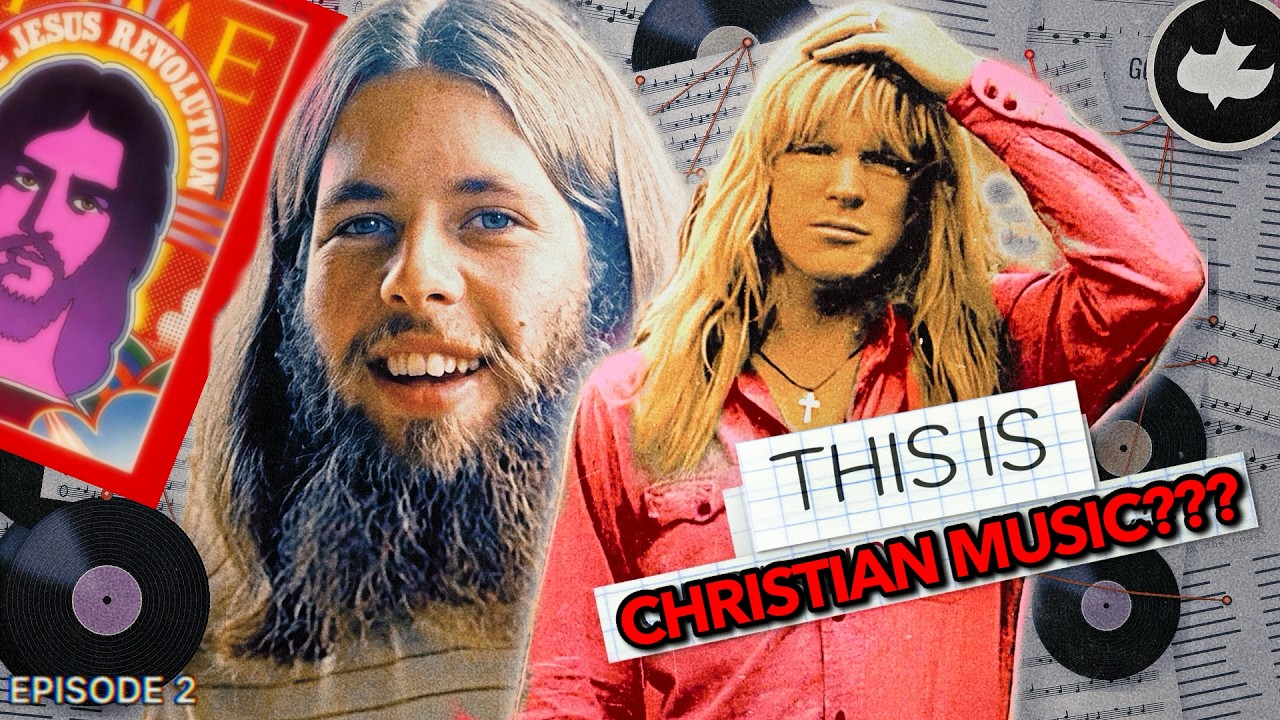
🔗 **Source:** [The Untold Tragedy Behind the Jesus Movement?](https://www.youtube.com/watch?v=4ZzWUSkAh20)
> [!note]+ Document Notes
> tags: [jesus-movement, christian-rock-history, calvary-chapel, contemporary-christian-music, lonnie-frisbee, church-history]
> author: Jonathan Allen Wright
> source: YouTube
> reference: https://www.youtube.com/watch?v=4ZzWUSkAh20
> date created: 2026-08-22 09:40
>
> > [!info] Generated analysis — not the author's words. Sections below are machine-written
> > from the captured source. Only text inside `> [!quote]` blocks is verbatim from the author.
> > Do not quote or attribute any other line to the named author.
>
> # 🏷️ Title: The Untold Tragedy Behind the Jesus Movement?
>
<!-- deep-read:sections start -->
## 🧭 Table of Contents
- [📝 Summary](#-summary)
- [📖 Main Content](#-main-content)
- [🗒️ Notes](#️-notes)
- [📚 References](#-references)
- [🗣️ Paraphrase](#️-paraphrase)
- [📰 Newsletter](#-newsletter)
- [✅ Action Items](#-action-items)
- [🧪 Hypotheses](#-hypotheses)
- [📊 Methodology](#-methodology)
- [❓ Questions](#-questions)
- [🔮 Future Research](#-future-research)
- [💡 Implications](#-implications)
- [🧠 Learning Styles Assessment](#-learning-styles-assessment)
- [📊 Accessibility Assessment](#-accessibility-assessment)
- [🌍 DEIB Assessment](#-deib-assessment)
- [✅ Logical Validity](#-logical-validity)
- [🛡️ DARVO Analysis](#-darvo-analysis)
- [🎯 Conclusion](#-conclusion)
### 🔗 References
- [Time, "Is God Dead?" cover, 1966](https://en.wikipedia.org/wiki/Is_God_Dead%3F) — the cover the video contrasts with 1971
- [Time, "The Jesus Revolution," June 21, 1971](https://en.wikipedia.org/wiki/Jesus_movement) — the cover that names the movement
- [Calvary Chapel Costa Mesa](https://calvarycca.org/) — Chuck Smith's church, ground zero of the events described
- [Explo '72](https://en.wikipedia.org/wiki/Explo_%2772) — Campus Crusade for Christ's Dallas gathering
- [Larry Norman, *Only Visiting This Planet* (1972)](https://en.wikipedia.org/wiki/Only_Visiting_This_Planet) — National Recording Registry entry, 2014
## 📝 Summary
- Between 1968 and 1972, a small circle of Southern California hippies-turned-Christians built the musical and institutional foundations of the entire modern Christian music industry — Maranatha, and eventually Hillsong, Bethel, and the CCM/worship business.
- The catalyst was Lonnie Frisbee, a 19-year-old former acid-dropping, Laguna Beach hippie who had a desert vision of Jesus, meeting Chuck Smith, a buttoned-up 41-year-old Pentecostal pastor of a 100-person church.
- Their partnership turned Calvary Chapel into a hub for "Jesus music" — folk rock with Jesus as the subject — that eventually got recorded, packaged, and sold, birthing Maranatha Music and, later, modern congregational worship music as a format.
- Stakeholders: Chuck Smith and Calvary Chapel; Lonnie Frisbee; the Love Song-era Calvary bands; Larry Norman as an independent, more confrontational voice; Campus Crusade for Christ (Bill Bright) as the organization that scaled and commercialized the movement at Explo '72; the "Jesus people" themselves, whose informal cassette-and-car-trunk economy got absorbed into formal distribution.
- Risk/tradeoff at the center of the video: the same process that made Jesus music sustainable (recording, distribution, mass events) also began stripping it of its grassroots ownership — and the human being most responsible for igniting it, Lonnie Frisbee, was written out of the institutional record because of his sexuality, then died of AIDS in 1993 at 43, largely uncredited.
- Bottom line: this episode frames 1968–1972 as the moment the 400-year "wall" between sacred and secular music moved further than ever before — and as the origin story of an industry that would eventually be worth close to a billion dollars, built partly on the erased legacy of the person who started it.
## 📖 Main Content
- **Setting**: By 1967 mainline Protestant attendance was falling for the first time in the modern era, and the counterculture — LSD, Eastern mysticism, the Summer of Love — looked like it was winning young people away from the church. The Manson murders and 1968's assassinations soured the countercultural promise, leaving many hippies looking for something else — some of them found a countercultural reading of Jesus as a long-haired, establishment-defying prophet.
- **The catalyst meeting**: Lonnie Frisbee, a teenage former Laguna Beach hippie with a claimed desert vision of Jesus after an acid trip, was picked up hitchhiking by John, who was dating Chuck Smith's daughter. John connected Lonnie to Chuck, a conventional Pentecostal pastor actively looking to reach hippie communities. The two "hit it off immediately," and Lonnie moved into the Smith home and began preaching within weeks.
- **Growth and conflict**: Lonnie's charismatic, unfiltered preaching style drew hundreds and then thousands of young people to Calvary Chapel, alienating the older congregation (the "no bare feet" sign incident is presented as the emblem of this clash). Chuck sided with the newcomers, and the church expanded into tents and eventually mass ocean baptisms at Pirate's Cove that drew national press.
- **From revival to genre**: The music the new congregants played — folk rock modeled on Crosby, Stills & Nash or James Taylor, but about Jesus — became "Jesus music." Bands like Love Song and songwriters like Karen Lafferty ("Seek Ye First") formed the core of a scene that grew to 15+ acts at Calvary Chapel alone by the early 1970s.
- **A parallel, sharper voice**: Larry Norman, formerly of the secular band People, released *Upon This Rock* (1969) — the first Christian rock album on a major label — and *Only Visiting This Planet* (1972), later inducted into the Library of Congress National Recording Registry. Norman was overtly political (racism, hypocrisy, the rapture) and was frequently rejected by Christian bookstores and pastors even as secular critics took him seriously — a contrast the video uses to show the movement wasn't monolithic.
- **Commercialization begins**: Chuck Smith self-funded a compilation album in 1971 (*The Everlasting Living Jesus Music Concert*) and it was distributed by literally selling records out of car trunks — 160,000 copies sold this way. This informal operation became Maranatha Music, whose later "praise series" is presented as the direct seed of modern congregational worship music.
- **Scaling and the start of "selling out"**: Explo '72 in the Dallas Cotton Bowl (80,000 attendees, Campus Crusade for Christ, Billy Graham, Kris Kristofferson, Johnny Cash) is framed as the moment the movement went from grassroots to branded and merchandised — simultaneously its peak and, in some original participants' eyes, its corporate capture.
- **The cost**: Lonnie Frisbee split from Chuck Smith in 1971 over both doctrine (spiritual gifts) and, more quietly, Lonnie's sexuality — he had been part of the Laguna Beach gay scene before his conversion and was told to stop discussing it. He went on to help found the Vineyard movement, was again pushed out, and died of AIDS in 1993 at age 43. Chuck Smith preached his funeral and called him a "Samson figure," but the video's throughline is that Calvary Chapel's official history minimizes him.
- **Uncertainties/contested claims**: The "why should the devil have all the good music" line is presented with an explicit hedge — it's popularly attributed to Martin Luther, but the video is honest that this attribution is unverified and that Larry Norman is what actually popularized it as a song title.
## 🗒️ Notes
- No timestamps are present in the supplied transcript, so notes are organized thematically rather than by timecode.
- **Historical throughline claim**: the video frames this as the continuation of a 400-year pattern — Luther's tavern tunes, Watts's original hymn lyrics, Wesley's emotional worship, Moody's commercialization, Pentecostal loudness — and argues the Jesus movement is the largest single move of the sacred/secular "wall" in that whole history, because it imported the *entire* secular counterculture sound (not just an adjacent style) into the church.
- **Institutional resistance**: Bob Larson's early-70s books calling Christian rock "satanic infiltration" and Christian bookstores debating whether to stock Larry Norman are both cited as evidence the establishment fought this shift even as it happened.
- **Distribution-as-origin-story**: The video is explicit that nobody at Calvary Chapel intended to build an industry — Maranatha Music's founding is presented as an accident of demand (people wanted tapes) meeting scrappy logistics (records in car trunks), not a business plan.
- **Explo '72 as inflection point**: presented with real ambivalence — described as "either the moment the Jesus Movement reached its peak or the moment it started to be corporatized. Probably both."
- **Lonnie Frisbee's erasure**: the video's strongest editorializing is here — noting that even the movie made about him "didn't actually tell the whole story," and connecting his sexuality directly to why Calvary Chapel's institutional history "barely mentions him."
- **Teaser for next episode**: ends by flagging that "somebody in Waco, Texas" (unnamed in this transcript, almost certainly gesturing at Word Records/the CCM industry's Texas roots) looked at the crowds and record sales and "had a thought: there's business here" — setting up episode 3.
## 📚 References
- [Time magazine, "The Jesus Revolution" cover story, June 21, 1971](https://en.wikipedia.org/wiki/Jesus_movement)
- [Explo '72 overview](https://en.wikipedia.org/wiki/Explo_%2772)
- [Larry Norman, *Only Visiting This Planet*, National Recording Registry induction (2014)](https://www.loc.gov/programs/national-recording-preservation-board/recording-registry/)
- [Calvary Chapel Costa Mesa history](https://calvarycca.org/)
## 🗣️ Paraphrase
- A struggling Pentecostal pastor and a teenage ex-hippie with a drug-fueled vision of Jesus formed an unlikely partnership that turned a 100-person Southern California church into the launchpad for an entire genre. What started as informal folk-rock singalongs about Jesus, recorded on cassette and passed hand to hand, hardened within a few years into record labels, mass rallies, and a business model — Maranatha Music, and eventually the modern worship industry.
- That same expansion had a cost. The man most responsible for lighting the fuse, Lonnie Frisbee, was quietly pushed to the margins once his sexuality became inconvenient for the institution he helped build, and he died of AIDS in 1993 largely uncredited — a pattern the video argues repeats whenever grassroots movements get absorbed into durable institutions.
## 📰 Newsletter
Ever wonder where the modern worship set — the four chords and a lyric slide you sing every Sunday — actually came from? This episode traces it back to a genuinely wild origin story: a Laguna Beach hippie with a vision, a pastor willing to rip up his own carpet, and a compilation album sold out of car trunks that somehow sold 160,000 copies. It's a great watch for anyone curious about how Maranatha Music (and by extension the whole CCM/worship pipeline) actually got started — and a sobering reminder that origin stories often edit out the people who made them possible. Worth pairing with the [Explo '72](https://en.wikipedia.org/wiki/Explo_%2772) Wikipedia page if you want the receipts.
## ✅ Action Items
#### DevRel
- Not applicable — source has no DevRel content.
#### OSPO
- Not applicable — source has no OSPO/licensing/governance content.
#### Community
- Transferable pattern worth borrowing: Calvary Chapel's "no bare feet" moment is a clean case study in what happens when a community's founders protect newcomers against an incumbent membership's discomfort — relevant to any online or open-source community managing a culture shift.
#### WordPress
- Not applicable — source has no WordPress content.
#### The WPOCC
- Not applicable.
### FAIR
- Not applicable.
## 🧪 Hypotheses
- If a religious or cultural movement's music is recorded and distributed informally (cassette/word-of-mouth) before any label exists, the resulting genre will retain more of its original voice than one that is commercialized from inception.
- Institutions that absorb a charismatic founder's movement are more likely to minimize that founder's biography if it conflicts with the institution's later respectability needs (testable via Lonnie Frisbee vs. Chuck Smith's relative treatment in Calvary Chapel's official materials).
- Mass single-event gatherings (e.g., Explo '72) accelerate commercialization of a grassroots music scene faster than gradual label growth does.
- The "wall" between sacred and secular musical style tends to move in discrete jumps tied to specific youth-culture crises (post-WWII youth culture, 1960s counterculture) rather than gradually.
- Contemporary Christian Music's willingness to platform politically confrontational artists (Larry Norman) was inversely correlated with commercial success within Christian retail specifically, even as it correlated with credibility among secular critics.
### 📊 Methodology
- Archival comparison of Calvary Chapel's own historical materials/documentaries against independent biographies of Lonnie Frisbee to quantify how his role and biography are represented.
- Sales and distribution records for *The Everlasting Living Jesus Music Concert* (1971) and early Maranatha releases to trace the actual path from car-trunk sales to formal distribution.
- Comparative content analysis of Larry Norman's lyrics vs. contemporaneous Calvary Chapel bands' lyrics to test the "confrontational vs. commercially safe" claim.
### ❓ Questions
- What specifically triggered Explo '72's organizers (Campus Crusade for Christ) to invest at that scale in 1972, and what did they model financially?
- How much of Lonnie Frisbee's marginalization was driven by his sexuality specifically vs. the doctrinal dispute over spiritual gifts — the video presents both but doesn't disentangle them.
- What happened to the original Jesus people who, per the video, "hated" Explo '72 as a sellout — did any of them found competing, deliberately non-commercial scenes?
### 🔮 Future Research
- A dedicated oral history project interviewing surviving members of the original Calvary Chapel "Jesus music" bands before that generation is gone.
- Comparative study of Lonnie Frisbee's arc against other queer or otherwise-marginalized founding figures written out of the institutions they built (a recurring pattern the video itself flags: "we find that the institutions tend to write people out of the story because this isn't the only time that we will see this happen").
### 💡 Implications
- For practice: worship leaders and CCM historians have a direct throughline to trace between today's licensing-heavy worship-music economy and a literal car-trunk distribution hustle 50+ years ago — useful context for anyone in that industry today.
- For education: this is a strong case study for religious studies or music history courses on how genres get formalized and who gets credited when they are.
- For funding models: Maranatha's origin (self-funded by a pastor, sold informally) is a useful counter-example in discussions of how new artistic movements can bootstrap without label backing.
### 🧠 Learning Styles Assessment
- Reading level estimate: approximately Flesch-Kincaid grade 8–9 (conversational spoken narration, short sentences, minimal jargon).
#### 👀 Visual learners
- Present: none — this is audio-only narration with no on-screen diagrams described in the transcript.
- Improve: a timeline graphic (1966 Time cover → 1968 Frisbee/Smith meeting → 1971 Time cover/compilation album → 1972 Explo) would substantially help retention.
#### 🔊 Aural learners
- Present: the source itself is audio/video narration with embedded music clips (Love Song, Larry Norman), which directly serves this learning style.
- Improve: none needed — this is already native to its format.
#12
#### 🗣️ Verbal learners
- Present: strong use of direct quotes (Chuck Smith's "I was not at all prepared for the love...") and analogy ("a Samson figure").
- Improve: a short glossary of terms like "Jesus people," "Jesus music," and "shepherding movement" for viewers unfamiliar with 1970s evangelical subculture.
#### 🧩 Kinesthetic learners
- Present: none directly.
- Improve: a companion listening guide/playlist of the songs mentioned (Love Song, Larry Norman, Karen Lafferty) would give kinesthetic/aural learners something to do alongside watching.
#### 🧠 Logical learners
- Present: the video's own explicit historical throughline (Luther → Watts → Wesley → Moody → Pentecostals → Jesus movement) is essentially a causal chain argument.
- Improve: a simple table mapping each era to "what moved" and "who resisted" would sharpen this for logical learners.
#### 🧑🤝🧑 Social learners
- Present: the parasocial framing of named figures (Chuck Smith, Lonnie Frisbee, Larry Norman) as characters in a relationship-driven story.
- Improve: discussion prompts (e.g., "should Explo '72 be seen as growth or as selling out?") would suit a group/classroom setting.
#### 🧘♀️ Solitary learners
- Present: reflective, narrative pacing that rewards quiet listening.
- Improve: a short set of journaling questions about institutional memory and erasure, tied to the Lonnie Frisbee section, would extend solitary reflection.
#### 🌿 Naturalistic learners
- Present: minimal.
- Improve: none clearly applicable to this subject matter.
### 📊 Accessibility Assessment
#### Screen reader semantics
- Present: N/A (transcript-only source).
- Improve: if published as a video description or companion article, use proper heading structure and descriptive link text rather than "click here."
#### Keyboard navigation
- Present: N/A.
- Improve: N/A for a video-only source.
#### Contrast and readability
- Present: N/A (audio/video).
- Improve: any accompanying on-screen text (band names, dates) should meet 4.5:1 contrast if added in editing.
#### Text resizing and reflow
- Present: N/A.
- Improve: N/A.
#### Media and captions
- Present: unknown from transcript alone whether captions exist on the published video.
- Improve: ensure accurate captions/transcript are published alongside the video (WCAG 1.2.2), and consider a downloadable transcript given the density of proper nouns (band names, place names).
#### Forms and interactions
- Present: N/A.
- Improve: N/A.
#### Standards reference
- Primary gap versus WCAG 2.2 AA: 1.2.2 (captions) and 1.2.3/1.2.5 (audio description or transcript) — can't verify compliance from transcript text alone, so this should be checked on the actual published video.
### 🌍 DEIB Assessment
#### Cultural breadth
- Present: narrowly Southern California/Texas, white evangelical subculture — no international or multilingual framing.
- Improve: acknowledging parallel Jesus movements outside the U.S., or noting this is a specifically American story, would sharpen scope.
#### Inclusive language
- Present: generally neutral narration; "Jesus freaks" is used but attributed to the press of the era, not as the narrator's own label.
- Improve: define "shepherding movement" and other insider terms on first use.
#### Neurodiversity support
- Present: chunked, chronological structure (roughly year by year) aids comprehension.
- Improve: more explicit signposting ("now let's talk about the music," "now back to Calvary Chapel") already appears and could be extended throughout.
#### Representation
- Present: the video foregrounds Lonnie Frisbee's queerness and its consequences rather than omitting it, which is notable restraint for a mainstream-facing history piece.
- Improve: no female figures beyond Karen Lafferty and Debbie Kerner are named in detail; more on women's contributions to the scene (there were female-fronted Calvary Chapel acts) would balance representation.
#### Psychological safety
- Present: the AIDS-era account of Lonnie Frisbee's death is handled with a factual, non-sensational tone.
- Improve: a brief content note ahead of the AIDS/death discussion would help viewers who have their own history with that era's epidemic.
### ✅ Logical Validity
#### Strong reasoning
- Causal chain reasoning: the Luther→Watts→Wesley→Moody→Pentecostal→Jesus-movement sequence is a coherent, well-sequenced historical argument for "the wall moving," each step explicitly justified by a specific change (tavern tunes, original lyrics, emotional worship, commercial packaging, volume/style).
- Evidentiary support: claims about commercial scale (160,000 copies, 80,000 attendees) are stated as concrete, falsifiable numbers rather than vague superlatives, which strengthens credibility.
#### Fallacies
- Mild post hoc/teleological framing: the narration repeatedly implies inevitability ("all of it traces back to..."), which risks overstating a single causal path to today's billion-dollar CCM industry when multiple contributing movements likely existed in parallel (e.g., Word Records, Southern gospel radio) — the video does hint at this in its teaser for episode 3, but within this episode the causal chain reads more linear than it likely was.
- Hasty generalization: describing the early Calvary Chapel songs as "all... earnest, folky, simple, and unashamedly about Jesus" flattens what was likely a more varied catalog into a single stylistic claim for narrative convenience.
#### Tone of voice
- Conversational, informal narration ("So, let's go ahead and start talking about the music"), with clear editorializing at emotional high points (Lonnie Frisbee's death), but otherwise restrained and source-citing (Time magazine, LA Times, Library of Congress).
### 🛡️ DARVO Analysis
- **Deny**: the video doesn't depict Calvary Chapel outright denying Lonnie Frisbee's contribution — rather, it depicts a softer minimization: "the history of Calvary Chapel barely mentions him," and even a film about him "didn't actually tell the whole story."
- **Attack**: not directly present in the transcript — Chuck Smith is quoted warmly about Lonnie even after their split, and his funeral eulogy ("a Samson figure... powerfully anointed... but also deeply broken") reads as generous rather than attacking.
- **Reverse victim/offender**: not present as classic DARVO; if anything the video argues the reverse — that Lonnie, the person who built the movement, ended up the one erased, while the institution retained the credit and the money.
- **Emotional cues/rhetoric**: the video's closing lines ("died... having been quietly written out of the official record by the institutions that he had helped build") are the clearest rhetorical crescendo in the piece, deliberately framing institutional memory-management as a form of harm.
## 🎯 Conclusion
- The modern Christian worship-music industry has a specific, traceable origin: a 1968 meeting between a countercultural teenager and a struggling suburban pastor, formalized through improvised distribution (car trunks, cassette tapes) into Maranatha Music and, eventually, a global industry.
- The video's real argument is less about the music and more about institutional memory: the same movement that platformed Lonnie Frisbee ultimately minimized him once his sexuality became inconvenient, and he died largely uncredited for work that underpins a business worth close to a billion dollars today.
- Practical next step for viewers: watch for episode 3, which the video frames as the moment someone in Texas turned this grassroots scene into deliberate commerce — worth watching as the throughline continues from "accidental industry" to "designed industry."
## 🔄 Refactor Appendix — The Untold Tragedy Behind the Jesus Movement?
### 📚 Literature Atoms (H3)
#### Lonnie–Chuck meeting sparked the whole Jesus-music movement
> [!quote]
> "I was not at all prepared for the love that this young man would radiate."
**Context & use**:
- Chuck Smith describing his first impression of Lonnie Frisbee after John brought him home.
- This single quote is the hinge of the entire episode — everything downstream (bands, Maranatha, Explo '72) traces to this meeting being allowed to happen at all.
**Tags**: #xref
<!-- atomicity: 1 idea ✓ -->
#### Car-trunk album sales founded Maranatha Music
> [!quote]
> "That first album sold from car trunks through mail order 160,000 copies."
**Context & use**:
- Describes the origin of Maranatha Music's distribution, funded by Chuck Smith's own $2,500.
- Directly relevant to any note on how grassroots music scenes bootstrap distribution before formal labels exist.
**Tags**: #xref #articleseed
<!-- atomicity: 1 idea ✓ -->
#### Frisbee was erased from Calvary Chapel's official history
> [!quote]
> "died at 43 of AIDS having been quietly written out of the official record by the institutions that he had helped built"
**Context & use**:
- Closing claim of the episode; ties Frisbee's sexuality to his institutional erasure despite being the movement's catalytic figure.
- Strong candidate for a Permanent note on institutions vs. founders.
**Tags**: #xref #aphorisms
<!-- atomicity: 1 idea ✓ -->
### 🧠 Permanent Candidates (H4)
#### Institutions credit the movement, not the marginalized founder
**Claim** (one sentence, Courtney's voice): When a movement is absorbed into a durable institution, credit tends to accrue to the institution while founders who don't fit its later respectability needs get quietly minimized from the official record.
**Evidence pointer**: [[#Frisbee was erased from Calvary Chapel's official history]]
**Scope & conditions**: Holds when the institution outlives the founder's personal involvement and controls the historical record (church histories, official documentaries); breaks when independent biographers or journalists preserve a competing account.
**Links**:
- [[Grassroots-to-institution capture]] — because extends
- [[Explo-72-as-corporatization-moment]] — because applies-in the same episode's Explo '72 discussion
<!-- atomicity: 1 idea ✓ -->
### ✏️ Fleeting Queue
- [F1] Verify whether Calvary Chapel's own published histories or documentaries actually name Lonnie Frisbee's role in detail, or confirm the video's claim independently — https://calvarycca.org/ #xref
- [F2] Look up who "somebody in Waco, Texas" refers to in episode 3 (likely Word Records) — context from this video's teaser #articleseed
### → Things 3 (max 2 actions)
- [ ] Watch/read episode 1 and episode 3 of this creator's Christian-music-industry series for full context — series continuity #things
---
## Full Transcript
[00:00] In 1971, Time magazine put Jesus on the<br>[00:03] cover. This was really strange because 5<br>[00:06] years earlier the same magazine had run<br>[00:08] a cover that asked in bold red letters<br>[00:10] on a black background, is God dead? That<br>[00:14] cover had been a good representation of<br>[00:16] how people felt. The 1960s were ending,<br>[00:20] the church was losing, American<br>[00:22] Christianity in the eyes of popular<br>[00:24] magazines was dead. But in June of 1971,<br>[00:28] Time magazine changed its mind for some<br>[00:31] reason. The June 21st cover was a<br>[00:33] psychedelic pop art image of Jesus<br>[00:35] painted in orange and reds and yellows<br>[00:38] and glowing. And the headline simply<br>[00:40] said, the Jesus Revolution. This is<br>[00:43] episode two of our series on how the<br>[00:45] Christian music world got bought. And<br>[00:47] this episode is about the 5-year period<br>[00:50] that created the foundation [music]<br>[00:51] for every single thing that comes next.<br>[00:54] Maranatha, Hillsong, Bethel, the<br>[00:56] billion-dollar machine that produces<br>[00:59] Christian [music] songs that you sing on<br>[01:01] Sunday. All of it traces back to a few<br>[01:04] hundred hippies in California in 1968.<br>[01:10] So by 1967, the American church was, by<br>[01:14] every account, in crisis. Church<br>[01:16] attendance was plummeting. Mainline<br>[01:18] Protestant denominations were losing<br>[01:20] members year over year for the first<br>[01:23] time in modern history. Young people<br>[01:26] were leaving in numbers that nobody knew<br>[01:28] how to deal with. The Vietnam War was<br>[01:30] tearing the country apart and the<br>[01:32] counterculture, the hippies, the<br>[01:35] anti-war movement and sexual revolution<br>[01:38] was offering a kind of alternative<br>[01:40] spirituality that the church was<br>[01:43] struggling to compete with. In San<br>[01:44] Francisco in the summer of 1967,<br>[01:47] somewhere between 75,000 and 100,000<br>[01:50] young people poured into a neighborhood.<br>[01:54] They were looking for something. With<br>[01:55] that, they tried a lot of things. LSD,<br>[01:58] Eastern mysticism, Hare Krishna, the<br>[02:01] Maharishi. But, the summer of love ended<br>[02:04] and gave way to the tough year of 1968<br>[02:07] with assassinations and riots and the<br>[02:10] Manson murders just around the bend. The<br>[02:12] promises of the counterculture had<br>[02:14] turned out to be hollow. A whole<br>[02:16] generation was suddenly looking for<br>[02:18] something else. [music] And some of them<br>[02:20] started looking at Jesus again or for<br>[02:23] the first time. Not the Jesus that their<br>[02:26] parents, the suburban church people,<br>[02:28] had. A Jesus who was in their<br>[02:30] imagination basically a long-haired<br>[02:32] countercultural prophet guy who hung out<br>[02:35] with prostitutes and tax collectors<br>[02:37] [music] and told the religious<br>[02:38] establishment that they were a bunch of<br>[02:40] hypocrites. And they called themselves<br>[02:42] the Jesus people. The press called them<br>[02:45] Jesus freaks and they were about to walk<br>[02:48] into a church and freak everyone out.<br>[02:51] Let's move to Chuck Smith. He was 41<br>[02:54] years old in 1968. He was a pastor of a<br>[02:56] tiny church called Calvary Chapel in<br>[02:58] Costa Mesa, California. About 100 people<br>[03:01] on a good Sunday. And he had been in the<br>[03:03] ministry for almost 20 years and spent<br>[03:06] most of that in a small struggling<br>[03:08] congregation. He was balding and wore a<br>[03:11] suit and a tie and preached old school<br>[03:14] Pentecostal doctrine. And he looked in<br>[03:16] every visible way like the exact kind of<br>[03:20] Christian that hippies of Southern<br>[03:21] California hated. But, Chuck had a<br>[03:24] daughter named Janet. And Janet was<br>[03:26] dating a young Christian named John. And<br>[03:29] one day John was driving down the<br>[03:31] Pacific Coast Highway and saw a<br>[03:33] hitchhiker. The hitchhiker had hair<br>[03:36] [music] past his shoulders and a beard<br>[03:38] and sandals and a robe and it kind of<br>[03:40] made him look like an Old Testament<br>[03:42] prophet of sorts. So, John picked him<br>[03:44] up. Not necessarily safe. The<br>[03:47] hitchhiker's name was Lonnie Frisbee. He<br>[03:49] was 19 years old and Lonnie had grown up<br>[03:52] in Costa Mesa. He'd gotten heavily<br>[03:54] involved into the hippie scene, LSD, and<br>[03:57] involved in the Laguna Beach gay scene.<br>[04:00] And then about a year before this car<br>[04:02] ride, he had taken a tab of acid and<br>[04:05] gone into the desert. And he had what he<br>[04:07] described as a vision of Jesus. He had<br>[04:10] come out of the desert convinced that<br>[04:12] he'd been called to be an evangelist.<br>[04:14] The problem was that nobody would let<br>[04:15] him. The Christian establishment of 1968<br>[04:18] wanted nothing to do with him. John, who<br>[04:20] at this point was driving down the<br>[04:22] highway with this guy in his passenger<br>[04:24] seat, had an idea. His girlfriend's dad<br>[04:27] was a pastor who had been talking about<br>[04:30] wanting to reach out to hippie<br>[04:31] communities, so maybe his girlfriend's<br>[04:33] dad would want to meet Lonnie. So John<br>[04:36] drove Lonnie straight to Chuck's house,<br>[04:39] and this is the catalyst. Two guys who<br>[04:41] on paper should not have been able to<br>[04:43] sit down and bond by every account hit<br>[04:46] it off immediately. Chuck Smith later<br>[04:49] said, "I was not at all prepared for the<br>[04:51] love that this young man would radiate."<br>[04:54] Smith offered Lonnie a place to stay,<br>[04:56] and Lonnie took him up on it. He and his<br>[04:58] new wife Connie moved into the Smith<br>[05:00] family home, and within a few weeks<br>[05:03] Lonnie Frisbee was preaching at Calvary<br>[05:05] Chapel.<br>[05:07] So 1969, Lonnie starts preaching on<br>[05:10] Wednesday nights, and he preached on the<br>[05:12] beach and in coffee houses on the<br>[05:14] streets of Costa Mesa, and he was<br>[05:16] absolutely magnetic.<br>[05:18] >> here comes the Lord walking in the<br>[05:20] garden and<br>[05:22] man, they they realized they were naked.<br>[05:26] So they ran and they hid themselves in<br>[05:28] the bushes and they started<br>[05:30] sewing leaves together real quick.<br>[05:33] >> He looked like Jesus, he talked like a<br>[05:35] hippie, and he spoke with a kind of<br>[05:37] immediate unfiltered charismatic<br>[05:40] intensity that the hippies of Southern<br>[05:42] California had never heard from a<br>[05:44] Christian before. So the hippies started<br>[05:46] showing up to church. First, a few dozen<br>[05:49] and then hundreds. Calvary Chapel's<br>[05:52] regular congregation, the older suburban<br>[05:54] folks who'd been there for years, were<br>[05:57] mortified. The hippies were dirty, they<br>[05:59] smelled bad, and they they sat on the<br>[06:01] floor instead of the pews. There's a<br>[06:03] real documented moment in the history of<br>[06:05] Calvary [music] Chapel where the deacons<br>[06:07] of the church demanded that Chuck put up<br>[06:10] a sign saying, "No bare feet allowed."<br>[06:13] Chuck refused. He famously said, more or<br>[06:16] less, that if the carpet's the problem,<br>[06:18] we'll rip up the carpet. By 1969,<br>[06:20] Calvary Chapel was overflowing. They had<br>[06:22] to rent a giant tent next to the church<br>[06:25] just to handle the crowds. The Wednesday<br>[06:27] night services that Lonnie led were<br>[06:29] attracting thousands of people, and<br>[06:32] those people were getting baptized by<br>[06:34] the thousands. Lonnie and Chuck started<br>[06:36] doing mass ocean baptisms at the beach<br>[06:39] called [music] Pirate's Cove in Corona<br>[06:41] del Mar. Just lining people up, walking<br>[06:44] them out into the Pacific Ocean and<br>[06:46] dunking them in. The LA Times covered<br>[06:48] it. National news outlets started<br>[06:50] showing up to it. And by 1971, when Time<br>[06:53] magazine ran its cover story, [music]<br>[06:55] they were photographing those ocean<br>[06:57] baptisms as this iconic image of the<br>[07:00] entire movement. And here's what no one<br>[07:02] fully understood at the time. The music<br>[07:05] that those kids were singing in the<br>[07:07] water, the music they were playing on<br>[07:09] the guitars that they were bringing into<br>[07:11] Chuck Smith's church on Wednesday<br>[07:12] nights, was about to become the<br>[07:14] foundation of an industry that 50 years<br>[07:17] later would be worth nearly a billion<br>[07:19] dollars.<br>[07:21] So, let's go ahead and start talking<br>[07:23] about the music. The Jesus freaks didn't<br>[07:25] play hymns. They didn't have choirs.<br>[07:28] They played the music of their<br>[07:30] generation. They played folk rock on<br>[07:32] acoustic guitars, and they sounded<br>[07:34] sonically like Crosby, Stills, and Nash,<br>[07:37] and Simon and Garfunkel, and James<br>[07:39] Taylor. But, the lyrics were all about<br>[07:42] Jesus. The exact same musical style that<br>[07:45] the counterculture had been used to<br>[07:46] singing about love, [music] war, drugs,<br>[07:49] and revolution was now applied to Jesus.<br>[07:53] The Beatles had just put out the White<br>[07:55] Album and in this exact moment a<br>[07:57] generation of Christian hippies started<br>[07:59] writing songs. The first band that<br>[08:01] mattered was called Love Song. Four guys<br>[08:04] from Southern California. They had been<br>[08:06] playing in secular rock bands and they<br>[08:08] converted [music] at Calvary Chapel. And<br>[08:10] Chuck Smith who could have easily said<br>[08:13] we don't have rock music in church,<br>[08:15] instead said come up and play your<br>[08:17] songs.<br>[08:21] >> [music]<br>[08:27] >> Lord, don't let me [music] strive<br>[08:29] against my brother.<br>[08:31] I'm so tired of it. Don't want [music]<br>[08:33] to do it no more.<br>[08:36] >> Welcome back. Changes, Little Country<br>[08:39] Church, Since I Opened the Door. They<br>[08:41] were all earnest, folky, simple, and<br>[08:44] unashamedly about Jesus. They wrote<br>[08:46] songs about how before they had met<br>[08:48] Jesus, they had been lost. And after<br>[08:50] they met Jesus, they had been found. And<br>[08:53] the kids who came to Calvary Chapel ate<br>[08:55] them alive. They learned these songs by<br>[08:57] ear and played them on guitars in their<br>[08:59] dorm rooms. They taught them to each<br>[09:01] other at coffee houses. And there were<br>[09:03] others. I mean, there was a woman named<br>[09:05] Karen Lafferty who wrote a song called<br>[09:07] Seek Ye First. It's based on Matthew<br>[09:10] 6:33. And it became one of the most sung<br>[09:13] Christian songs of the entire 20th<br>[09:15] century.<br>[09:16] >> Well, I went home that night. I just<br>[09:18] picked up my [music] guitar and I<br>[09:20] started uh<br>[09:23] plucking out this little melody.<br>[09:27] And [music] uh then I just found that it<br>[09:30] uh the<br>[09:31] verse would fit with [music] it.<br>[09:33] So, I started, you know, I'm singing<br>[09:36] "Seek ye first the kingdom [singing]<br>[09:41] of God."<br>[09:43] And so forth. And uh so that little song<br>[09:45] got written.<br>[09:46] >> By the early 1970s, Calvary Chapel was<br>[09:49] home to more than 15 of these bands. All<br>[09:51] of them playing what they had started<br>[09:53] calling Jesus music. And while all that<br>[09:56] is happening, completely separate from<br>[09:58] Calvary Chapel's scene, there was a<br>[10:00] young man in LA named Larry Norman.<br>[10:04] Larry Norman is one of the most<br>[10:06] important figures in the entire history<br>[10:08] of Christian music. He's also one of the<br>[10:10] strangest. He had been the lead singer<br>[10:12] of a secular psychedelic rock band<br>[10:14] called People. But Norman was a<br>[10:16] Christian, a very passionate and intense<br>[10:19] Christian. And he wanted to make<br>[10:21] Christian rock music, but the label<br>[10:24] Capitol Records just wouldn't let him.<br>[10:26] They wanted hits, not Christian music.<br>[10:29] But in 1969, Larry Norman released a<br>[10:32] solo album called Upon This Rock on<br>[10:35] Capitol Records. This is the first<br>[10:37] Christian rock album released by a major<br>[10:40] label. It is by general consensus the<br>[10:43] moment Christian rock as a commercial<br>[10:45] genre is born. But the album that really<br>[10:49] changed things came 3 years later in<br>[10:51] 1972. Larry Norman released Only<br>[10:54] Visiting This Planet. According to a lot<br>[10:57] of people, this album is one of the most<br>[10:59] important albums ever recorded for<br>[11:01] Christian music. It was inducted into<br>[11:03] the Library of Congress's National<br>[11:05] Recording Registry in 2014<br>[11:08] as a cultural, artistic, and historical<br>[11:10] treasure. The first Christian rock album<br>[11:12] ever selected. Bono of U2 has cited<br>[11:15] Larry Norman as a major influence. The<br>[11:18] Pixies' Black Francis has cited him.<br>[11:20] Mike Pence converted at a Larry Norman<br>[11:23] concert, in fact.<br>[11:25] >> Your hands are shaking while your<br>[11:27] [music] body is sweating.<br>[11:29] Why don't you look into Jesus? [music]<br>[11:32] He's got the answer.<br>[11:36] >> [music]<br>[11:37] >> It has songs about the rapture and<br>[11:38] hypocritical Christians and American<br>[11:40] racism, and all of them are so direct<br>[11:43] that it would be considered pretty<br>[11:45] radical in church today.<br>[11:48] >> [music]<br>[11:55] >> In fact, there's a great song called The<br>[11:56] Great American Novel that contains the<br>[11:58] lyric "You kill a black man at midnight<br>[12:01] just for talking to your daughter. Then<br>[12:03] you make his wife your mistress and you<br>[12:05] leave her without water. And the sheet<br>[12:08] you wear on your face is the sheet your<br>[12:10] children sleep on. At every meal you say<br>[12:13] a prayer you don't believe but you still<br>[12:15] keep on." That lyric is already<br>[12:18] controversial considering that in the<br>[12:20] '60s and '50s the church was arguing<br>[12:23] against rock music and against music<br>[12:25] with rhythm calling it savage music and<br>[12:28] clan members were sitting in the pews.<br>[12:30] So again, this guy on a Christian rock<br>[12:32] album calling out clans and racism and<br>[12:35] hypocrisy in the church, he was just not<br>[12:37] a comfortable person. He was<br>[12:39] uncompromising and according to some<br>[12:41] very difficult to work with. Christian<br>[12:43] bookstores often refused to stock his<br>[12:45] records because his lyrics were too edgy<br>[12:48] and some pastors banned his music from<br>[12:50] their churches. And meanwhile, secular<br>[12:53] rock critics took him seriously in a way<br>[12:55] that they would not take any other<br>[12:57] Christian artist for the next 30 years.<br>[13:00] There's a quote that's attributed back<br>[13:02] to Martin Luther that we talked about<br>[13:03] already but Norman made it really<br>[13:05] popular. He said, "Why should the devil<br>[13:08] have all of the good music?" Again, that<br>[13:11] line may or may not have been said by<br>[13:12] Martin Luther but Larry wrote it as a<br>[13:14] song title, "Why should the devil have<br>[13:17] all the [music] good music?"<br>[13:20] Now back to Calvary Chapel. By 1971,<br>[13:22] Chuck he he had a problem. All of these<br>[13:25] bands playing in his church made tapes.<br>[13:28] He had tapes circulating hand-to-hand on<br>[13:30] cassette. People wanted recordings. The<br>[13:33] Jesus people seen up and down the West<br>[13:35] Coast wanted the recordings. And there<br>[13:37] was no infrastructure to do it. So,<br>[13:39] Chuck reached into his own pocket and<br>[13:42] took out $2,500 of his own money. And he<br>[13:45] used it to fund the recording of a<br>[13:47] compilation album. The album was called<br>[13:49] The Everlasting Living Jesus Music<br>[13:52] Concert. It was released in 1971 [music]<br>[13:55] featured Love Song, Children of the Day,<br>[13:57] Debbie Kerner, and other Calvary Chapel<br>[13:59] artists. But, big problem, Chuck and his<br>[14:02] team had no idea how to distribute an<br>[14:04] album. Major distribution networks<br>[14:06] weren't going to touch this stuff.<br>[14:08] Christian bookstores were small and so<br>[14:10] they never heard of any of these bands.<br>[14:12] So, they did the only thing they could<br>[14:14] think of. They sold it out of the trunks<br>[14:16] of their cars. Maranatha Music, which<br>[14:19] would eventually become one of the most<br>[14:21] important labels in the history of<br>[14:22] Christian music, the the label that<br>[14:24] would shape the entire praise and<br>[14:26] worship movement, started with a guy<br>[14:29] named Mike McIntosh driving up and down<br>[14:32] the Southern California coast with boxes<br>[14:35] of records and tapes in his car, walking<br>[14:37] into Christian bookstores, and bowling<br>[14:39] alleys, and youth group meetings, and<br>[14:41] just trying to convince anyone to take a<br>[14:44] few copies. That first album sold from<br>[14:47] car trunks through mail [music] order<br>[14:49] 160,000<br>[14:51] copies. This is the moment that Jesus<br>[14:53] people stops being just a religious<br>[14:56] revival and starts becoming a commercial<br>[14:58] product. Not on purpose, though. Nobody<br>[15:02] at Calvary Chapel in 1971 is sitting<br>[15:04] around thinking, "Ooh, we're going to<br>[15:05] we're going to build the foundation of a<br>[15:07] billion-dollar industry." They're just<br>[15:09] trying to keep up with demand, trying to<br>[15:11] give kids these records that they're<br>[15:13] asking for. And within a few years,<br>[15:15] Maranatha Music will be releasing what<br>[15:17] they call the praise series, [music]<br>[15:19] albums of simple congregational worship<br>[15:21] courses designed for churches to sing<br>[15:24] [music] together. Those albums will be<br>[15:26] the seeds of modern worship as we know<br>[15:28] it. Songs that any congregation can<br>[15:30] learn in 3 minutes. But like all good<br>[15:33] things that grow quickly, things start<br>[15:35] to get out of hand.<br>[15:38] In June 1972 in Dallas, Texas, 80,000<br>[15:42] college students filled the Cotton Bowl.<br>[15:45] This event was called Explo '72, short<br>[15:48] for spiritual explosion. It was<br>[15:50] organized by Bill Bright's Campus<br>[15:52] Crusade for Christ, and it was in many<br>[15:55] ways the moment that the Jesus Movement<br>[15:57] broke containment. This was no longer a<br>[16:00] weird California thing that was<br>[16:01] happening with the hippies. 80,000<br>[16:04] students from every state in the country<br>[16:07] came to Dallas for a week of preaching<br>[16:09] and music. Billy Graham and Bill Bright<br>[16:11] preached and they Billy Graham and Bill<br>[16:14] Bright Billy Graham and Bill Bright<br>[16:16] preached and the music lineup was by the<br>[16:18] standards of 1972 Christianity<br>[16:21] completely unprecedented. I mean, a lot<br>[16:23] of the Calvary Chapel people, you know,<br>[16:25] love song. And then, in a move that<br>[16:27] genuinely shocked the establishment,<br>[16:29] Kris Kristofferson and Johnny Cash<br>[16:32] played. The country outlaw standing in<br>[16:34] front of 80,000 college students in the<br>[16:37] Cotton Bowl playing songs and talking<br>[16:39] about his Christian faith. Cash had<br>[16:42] recently had a very public conversion<br>[16:44] experience and had aligned himself at at<br>[16:46] least publicly with the Jesus Movement.<br>[16:48] His presence at Explo '72 was the moment<br>[16:51] when secular mainstream music and the<br>[16:54] Jesus people movement officially<br>[16:56] overlapped in a way that was very new.<br>[16:59] Explo '72 was, depending on who you ask,<br>[17:01] either the moment that the Jesus<br>[17:03] Movement reached its peak or the moment<br>[17:06] it started to be corporatized. Probably<br>[17:08] both. Because Explo wasn't a grassroots<br>[17:11] gathering. It was funded, it was<br>[17:13] branded, it had merch. Campus Crusade<br>[17:16] for Christ was a serious organization<br>[17:18] with budgeting and marketing departments<br>[17:21] and what they did at the Cotton Bowl was<br>[17:23] prove that the Jesus people aesthetic<br>[17:25] and sound, you know, long hair and<br>[17:27] guitars could be packaged and produced<br>[17:30] and sell. Some of the original Jesus<br>[17:33] people really hated this. They thought<br>[17:35] Ex Flo was selling out. They thought<br>[17:37] that the movement was being absorbed by<br>[17:39] exactly the kind of evangelical<br>[17:41] machinery that they had been trying to<br>[17:44] escape. They weren't wrong, but they<br>[17:46] were also too late to stop the machine<br>[17:48] that had just turned on. Now, let's<br>[17:50] pause and remember some stuff from<br>[17:52] episode one. For 400 years there had<br>[17:55] been a wall dividing Christian music and<br>[17:58] the worldly music and every generation<br>[18:01] somebody pushed that wall a little<br>[18:02] further back. Luther used tavern tunes,<br>[18:05] Watts wrote original lyrics, Wesley made<br>[18:08] emotional worship, and Moody made it<br>[18:10] commercial. The Pentecostals made it<br>[18:12] loud. What the Jesus movement did<br>[18:15] between roughly 1968 and 1972 [music] is<br>[18:18] possibly the biggest wall move in the<br>[18:22] entire 400 year history.<br>[18:24] >> [music]<br>[18:24] >> They took the entire sound of the<br>[18:26] secular counterculture and they [music]<br>[18:29] imported all of that into the veins of<br>[18:31] the church. There's no precedent for<br>[18:33] this. I mean, the Reformation moment it<br>[18:35] it didn't even take the lifestyle of the<br>[18:37] taverns as a whole. The Wesleys did not<br>[18:40] start dressing like opera singers and<br>[18:42] stuff and the Pentecostals as wild as<br>[18:44] they got, they still wore suits to<br>[18:46] church. Bob Larson, a Christian radio<br>[18:49] host, wrote a series of books in the<br>[18:50] early 70s warning that Christian rock<br>[18:52] was a satanic infiltration of the<br>[18:55] church. Christian bookstores again were<br>[18:57] debating whether or not they were going<br>[18:58] to stock Larry Norman's records. Is all<br>[19:00] of this sounding familiar to you like<br>[19:03] 1600s familiar? By 1972 there were<br>[19:06] millions of kids who built their entire<br>[19:08] Christian faith on the music that the<br>[19:10] Jesus people had created. The old guard<br>[19:13] eventually would not just stop fighting<br>[19:15] it, they would start funding it because<br>[19:18] by the late 1970s, somebody in Waco,<br>[19:21] Texas was going to look at this hippie<br>[19:23] subculture and realize there is real<br>[19:26] money in this. But before we close, we<br>[19:28] need to talk about Lonnie Frisbee<br>[19:30] because the Jesus movement had a cost<br>[19:33] and that cost fell more than on anyone<br>[19:36] else on the man who started it. Lonnie<br>[19:38] and Chuck had a falling out in 1971.<br>[19:41] They disagreed about the roles of<br>[19:43] spiritual gifts in the church and they<br>[19:45] disagreed about how to handle the<br>[19:46] increasingly chaotic growth of Calvary<br>[19:49] Chapel. And underneath all of this,<br>[19:51] there was a question that the Calvary<br>[19:52] Chapel leadership did not know how to<br>[19:54] handle Lonnie's sexuality. Lonnie, as we<br>[19:58] previously stated, [music] had been<br>[19:59] involved in the gay scene in Laguna<br>[20:00] Beach before his conversion. He had been<br>[20:03] open about it when he first started<br>[20:05] giving his testimony and he was very<br>[20:07] quickly told to stop talking about that<br>[20:09] part of his story. By 1971, there were<br>[20:12] people in Chuck Smith's circles who<br>[20:13] believed that Lonnie had in fact not<br>[20:16] left that part of his life behind.<br>[20:18] Lonnie left Calvary Chapel [music] and<br>[20:20] he spent years drifting through Florida<br>[20:23] and international ministry and through<br>[20:25] Bob Mumford's controversial shepherding<br>[20:27] movement. Lonnie even was involved in<br>[20:30] founding of the Vineyard Church movement<br>[20:32] until he got too controversial for that.<br>[20:35] And they also don't talk about him. He<br>[20:37] died of AIDS in 1993 and he was 43 years<br>[20:41] old. Chuck Smith, to his credit and<br>[20:44] showing the genuine reconciliation that<br>[20:46] these two men had worked towards in the<br>[20:47] past few years, was the one who preached<br>[20:50] at his funeral. Chuck Smith [music]<br>[20:52] called Lonnie a Samson figure who had<br>[20:55] powerfully been anointed by God, but had<br>[20:57] also been deeply broken. The history of<br>[21:00] Calvary Chapel barely mentions him and<br>[21:02] even when they made a movie about him,<br>[21:05] they didn't actually tell the whole<br>[21:06] story. The man who more than any other<br>[21:08] single person lit the fuse on the Jesus<br>[21:11] Movement, [music] the movement that<br>[21:13] built the foundation of every Christian<br>[21:14] music industry, died at 43 of AIDS<br>[21:17] having been quietly written out of the<br>[21:19] official record by the institutions that<br>[21:21] he had helped build. We find that the<br>[21:23] institutions tend to write people out of<br>[21:25] the story because this isn't the only<br>[21:28] time that we will see this happen. The<br>[21:30] Jesus Movement is the high point of<br>[21:32] grassroots Christian music. It's the<br>[21:34] last time that we're going to see music<br>[21:36] belonging to the people who made it.<br>[21:38] Because right around 1972, somebody in<br>[21:40] Texas, a man who we haven't talked<br>[21:42] about, looked at the records selling out<br>[21:44] of [music] the car trunks and the 80,000<br>[21:47] young people in the stadium and he had a<br>[21:49] thought, "There's business here."
<!-- deep-read:sections end -->
## Highlights
- I was not at all prepared for the love that this young man would radiate.
- Note: 📚 Lonnie–Chuck meeting sparked the whole Jesus-music movement · - Chuck Smith describing his first impression of Lonnie Frisbee after John brought him home. - This single quote is the hinge of the entire episode — everything downstream (bands, Maranatha, Explo '72) traces to this meeting being allowed to happen at all. · #atom/literature/h1
- That first album sold from car trunks through mail order 160,000 copies.
- Note: 📚 Car-trunk album sales founded Maranatha Music · - Describes the origin of Maranatha Music's distribution, funded by Chuck Smith's own $2,500. - Directly relevant to any note on how grassroots music scenes bootstrap distribution before formal labels exist. · #atom/literature/h2
- died at 43 of AIDS having been quietly written out of the official record by the institutions that he had helped built
- Note: 📚 Frisbee was erased from Calvary Chapel's official history · - Closing claim of the episode; ties Frisbee's sexuality to his institutional erasure despite being the movement's catalytic figure. - Strong candidate for a Permanent note on institutions vs. founders. · #atom/literature/h3
- Institutions credit the movement, not the marginalized founder
- Note: [[Grassroots-to-institution capture]] — because extends · - [[Grassroots-to-institution capture]] — because extends · #atom/zettel/z1
- Verify whether Calvary Chapel's own published histories or documentaries actually name Lonnie Frisbee's role in detail, or confirm the video's claim independently — https://calvarycca.org/ #xref
- Note: ✏️ Fleeting capture #atom/fleeting/f1
- Look up who "somebody in Waco, Texas" refers to in episode 3 (likely Word Records) — context from this video's teaser #articleseed
- Note: ✏️ Fleeting capture #atom/fleeting/f2
- the narration repeatedly implies inevitability ("all of it traces back to..."), which risks overstating a single causal path to today's billion-dollar CCM industry when multiple contributing movements likely existed in parallel (e.g., Word Records, Southern gospel radio) — the video does hint at this in its teaser for episode 3, but within this episode the causal chain reads more linear than it likely was.
- Note: 🔍 Fallacy: Post Hoc #fallacy/post-hoc
- describing the early Calvary Chapel songs as "all... earnest, folky, simple, and unashamedly about Jesus" flattens what was likely a more varied catalog into a single stylistic claim for narrative convenience.
- Note: 🔍 Fallacy: Hasty Generalization #fallacy/hasty-generalization